


Side hustling is close to my heart. It’s challenging, but it can truly transform your life by adding extra income. While it may limit your shopping time, it doesn’t always reduce impulse spending; stress or fatigue can heighten emotional spending, so it’s important to be mindful of your habits.
Even though paychecks may feel more frequent, side hustling doesn’t get easier over time—it remains a challenge—even for me, despite starting as a teenager. Finding a balance is essential; your hustle should support your progress without burning you out at your day job.
If you want to become an expert side hustler like me, read this post. Let’s get started!
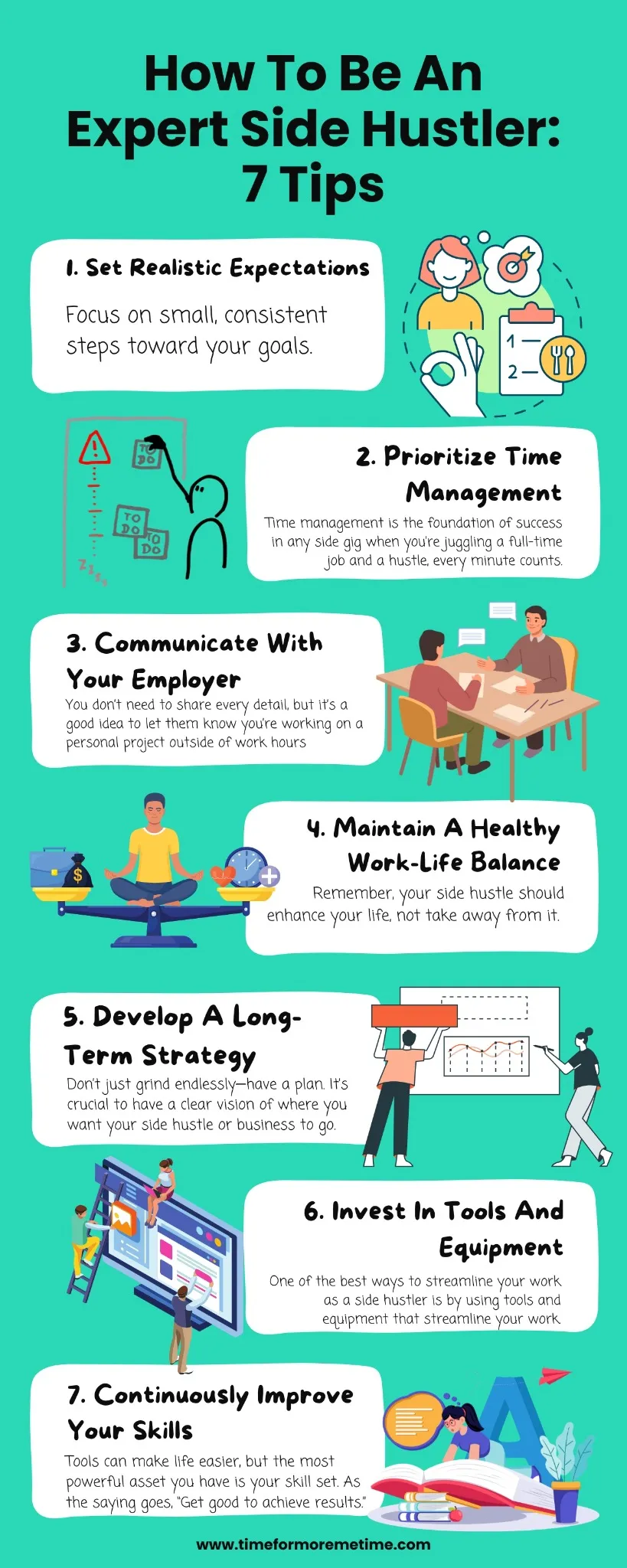
1. Set Realistic Expectations

First things first: let’s talk about setting realistic expectations. You’re not going to build a six-figure side business or earn thousands of dollars overnight while working a 9-to-5. That’s just not how it works. Instead, focus on small, consistent steps toward your goals. For example, dedicate a couple of hours each evening to your side hustle or set aside time on weekends to work on it.
In my case, my side gig has its own schedule, and I also dedicate one to two hours daily to maintaining this website. The key is persistence. Sticking with it and putting in steady effort is what makes all the difference. Remember, Rome wasn’t built in a day, and neither is a successful side hustle.
2. Prioritize Time Management
As I mentioned earlier, setting aside dedicated time for your side hustle is essential. Time management is the foundation of success in any side gig when you’re juggling a full-time job and a hustle, every minute counts.
To make the most of your time, be ruthless about prioritizing tasks and cutting out distractions. Tools like Todoist or Any.do can help you stay organized and focused on what matters.
Don’t hesitate to say no to things that don’t align with your goals. Your time is precious—protect it fiercely. If you commit to working on your hustle for one hour, stick to that hour. Treat your time as the valuable resource it is, and use it wisely.
3. Communicate With Your Employer

Now, let’s talk about the elephant in the room: your employer. If you’re dedicating time to a side hustle, it’s crucial to be transparent with your boss.
You don’t need to share every detail, but it’s a good idea to let them know you’re working on a personal project outside of work hours. Reassure them that it won’t affect your job performance or commitment to your role.
Who knows? Depending on your company’s policies, your employer might support your side hustle—especially if it helps build relevant skills. That said, always check, always check your employment contract or talk to HR to ensure you’re not violating any moonlighting or conflict-of-interest policies
4. Maintain A Healthy Work-Life Balance
I can’t stress this enough: finding a balance between work and play is essential.
Without it, you risk burning out. When you’re hustling hard, it’s easy to let your personal life slip away. That’s why it’s crucial to stop working on your side gig when your planned time is up—no exceptions.
Trust me, an unbalanced work-life situation is a fast track to burnout. Make sure you’re carving out time for the things that matter most to you, whether that’s family, friends, or simply some well-deserved self-care.
Remember, your side hustle should enhance your life, not take away from it. If you’re feeling overwhelmed or stretched too thin, take a step back and reassess your priorities. It’s better to pace yourself than to run out of steam entirely.

5. Develop A Long-Term Strategy
Don’t just grind endlessly—have a plan. It’s crucial to have a clear vision of where you want your side hustle or business to go. What are your long-term goals? What kind of impact do you want to make?
Take the time to think this through and map out a strategy for achieving those goals. This could include creating a detailed business plan, setting realistic milestones, and identifying key metrics to measure your progress.
With a solid plan in place, you’ll stay focused, make smarter decisions, and steadily move toward your ultimate vision.
6. Invest In Tools And Equipment
One of the best ways to make your workflow more efficient is by using tools and equipment that reduce repetitive tasks.
When I started this website, I was completely on my own. There was no one to proofread or check my blog posts, and they were full of mistakes. Realizing this, I spent extra time proofreading, but it was incredibly time-consuming.
Proofreading used to take me around an hour, but with tools like Grammarly, I’m able to speed up the process significantly—especially for catching common grammar and spelling mistakes. While it’s not perfect, it does save time for basic edits.
Do the same—if there’s a tool, service, or piece of equipment that can make your work easier, whether it’s for your side hustle or even your main job, don’t hesitate to invest in it. You’ll thank yourself later for making things much more manageable.
7. Continuously Improve Your Skills

Tools can make life easier, but the most powerful asset you have is your skill set. As the saying goes, “Get good to achieve results.” To stay competitive as a side hustler and make juggling it with your main job more manageable, it’s essential to continuously improve your skills and knowledge.
Invest in yourself—take training courses, attend workshops or conferences, and keep up with the latest industry trends and best practices. The better you get at what you do, the easier it becomes to handle challenges, deliver quality results, and stand out in your field.
Conclusion
Side hustling is more than just earning extra money; it’s a journey of growth and strategy. Despite the challenges, the rewards are worth the effort. The steps outlined here focus not just on managing your side hustle, but on building long-term, sustainable growth and fulfillment.
And if you’re serious about making extra money or managing your time wisely, read our other articles and subscribe to our YouTube channel!
Sources
- Photo: Unsplash: Garrhet Sampson