


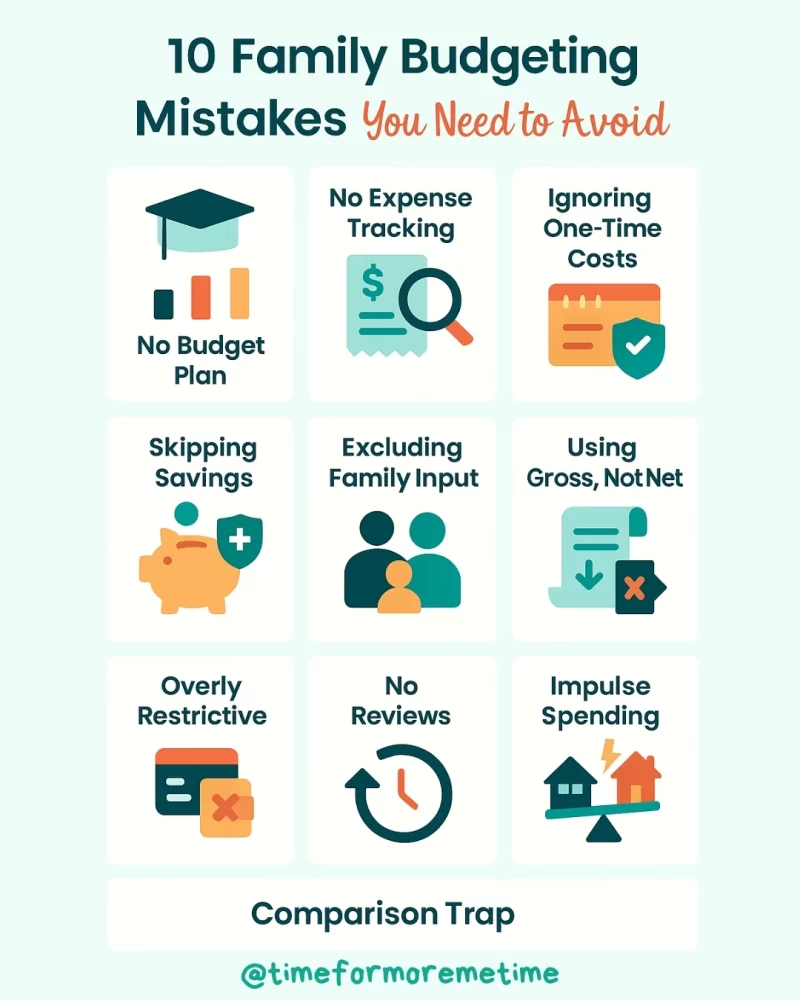
Family budgeting can be tricky, and small mistakes often lead to bigger money problems. Many households don’t realize where they’re slipping until it’s too late. Here are common budgeting mistakes to avoid so you can save smarter, cut stress, and keep your finances on track. Let’s get started!
1. Not Creating Or Sticking To A Budget
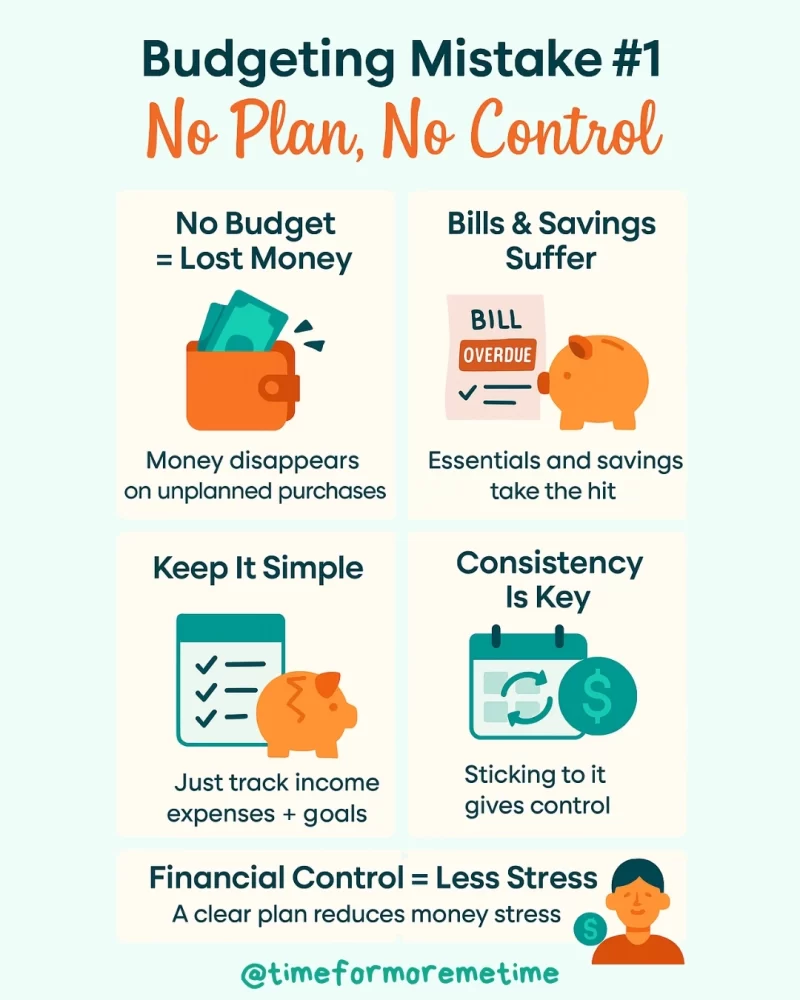
One of the biggest mistakes families make is not having a budget at all—or abandoning it after a few weeks. Without a plan, money often disappears on unplanned purchases, leaving little for bills or savings.
A budget doesn’t need to be complicated; it just needs to outline income, expenses, and goals. Consistency is what makes it work. By setting a clear plan and committing to it, you’ll gain control over your finances and avoid unnecessary money stress.
2. Failing To Track Expenses Accurately
Many families guess where their money goes, which leads to overspending and confusion. Tracking every expense, no matter how small, shows exactly where your cash is being spent. Skipping this step makes it impossible to identify problem areas, like frequent takeout or forgotten subscriptions.
Use a notebook, spreadsheet, or budgeting app to record spending daily. When you see the full picture, you’ll know where to cut back and how to adjust your budget to match reality.
3. Being Unrealistic Or Omitting One-Time Costs
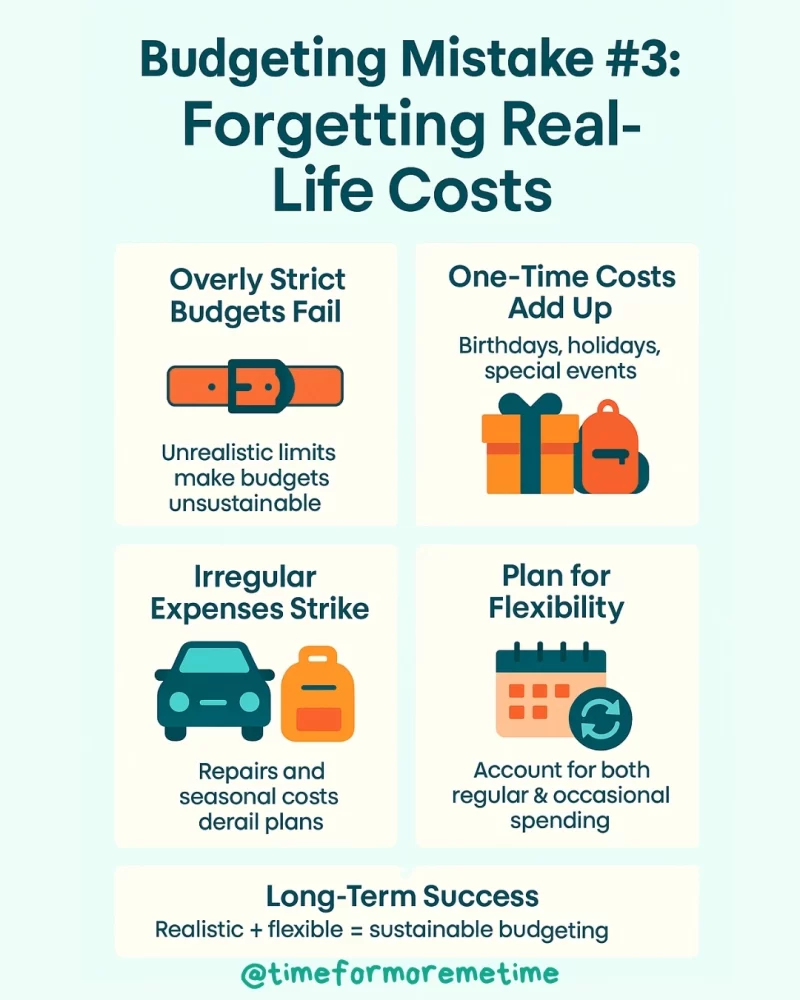
Budgets often fail because they don’t reflect real life. Families sometimes set overly strict limits or forget about irregular costs like birthday gifts, car repairs, or school supplies. When these unexpected expenses arise, the budget feels broken, and frustration sets in.
A better approach is to be realistic with everyday spending and set aside money for occasional or seasonal costs. Planning for both regular and one-time expenses creates a flexible budget that works long-term without constant setbacks.
4. Skipping Fun Or Emergency Savings
Budgets that ignore both fun and emergencies often fail quickly. Families sometimes cut out all leisure spending to save more, but this usually backfires, leading to frustration and overspending later.
Including a small “fun” category allows enjoyment without guilt, while setting aside money for emergencies protects against financial shocks like job loss or medical bills. Together, these two funds provide balance and security. A budget that supports both enjoyment and preparedness is one you’re far more likely to stick with.
5. Not Including Partner Or Family In Planning
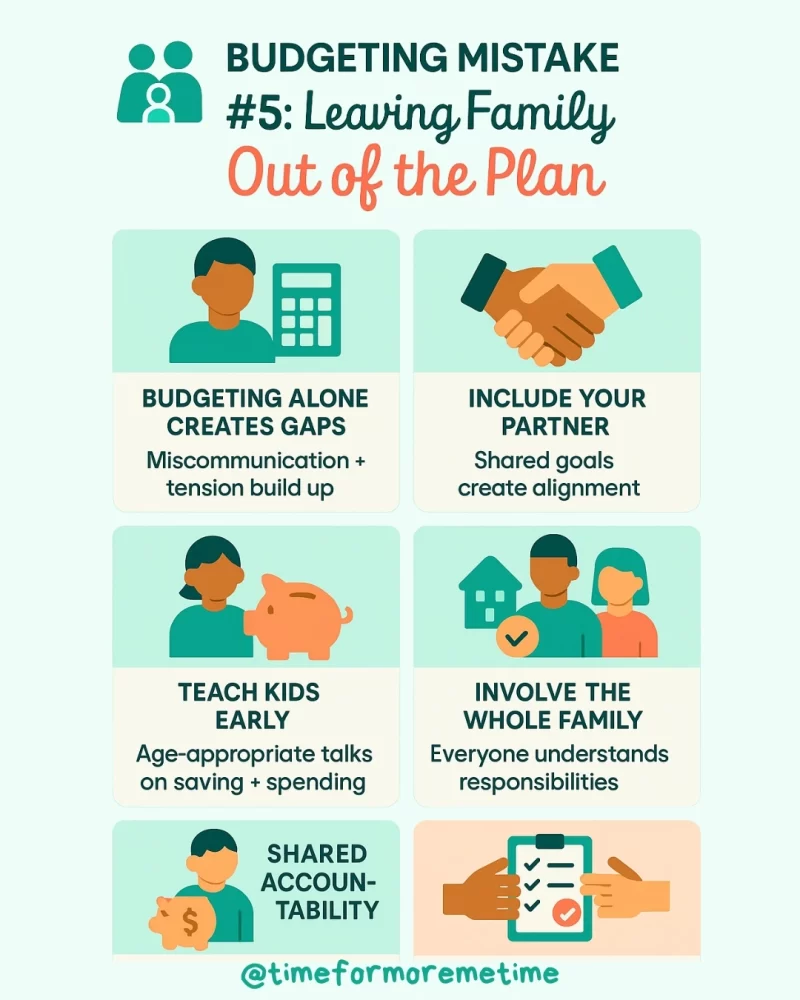
Budgeting in isolation is another common mistake. When only one person handles the budget, it’s easy for miscommunication and tension to build.
A stronger approach involves your partner or even the whole family in the process. This ensures everyone understands the financial goals and feels responsible for sticking to them. Even children can be part of age-appropriate discussions about saving and spending. Working together creates accountability and helps transform budgeting into a shared effort instead of a burden.
6. Relying On Gross Income Instead Of Net
Basing your budget on gross income—the amount before taxes and deductions—can create a false sense of security. Families often overestimate their available funds, leading to overspending and shortfalls.
Instead, budgets should always be built around net income, the actual amount that arrives in your bank account. Using net income keeps spending realistic and ensures your plan reflects what you can truly afford. This simple shift makes your budget more accurate and easier to maintain.
7. Being Too Restrictive Or Giving Up Too Soon
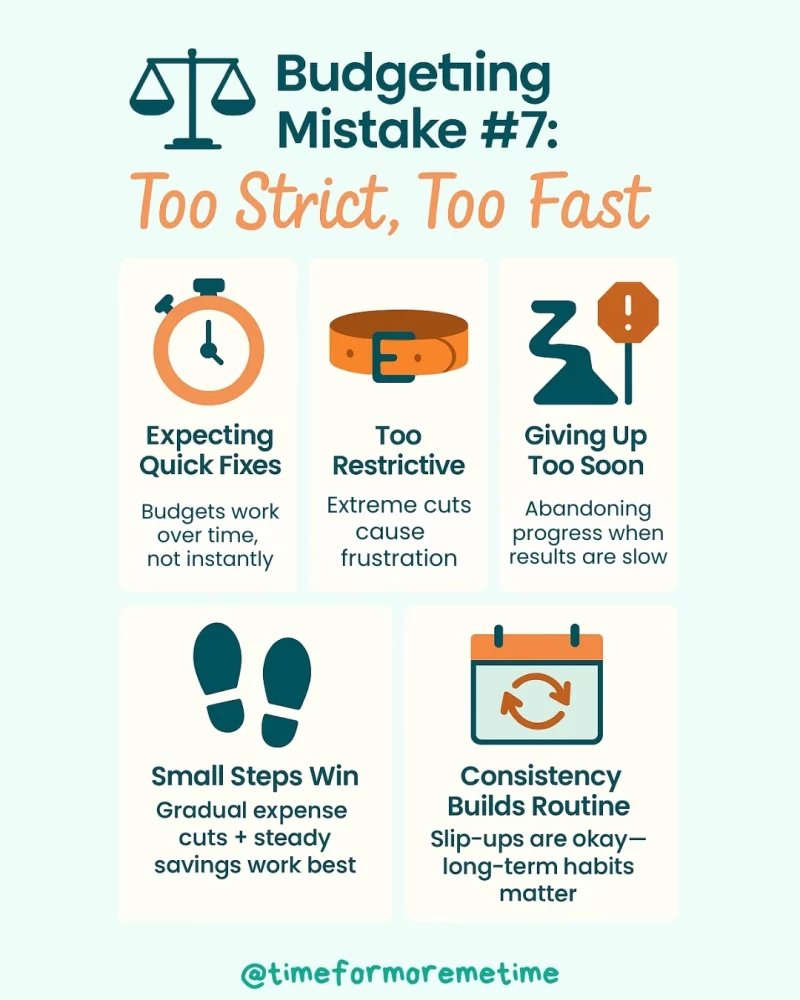
Budgeting is a long-term habit, not a quick fix. Many families expect instant results, and when progress feels slow, they either tighten the budget too much or abandon it entirely.
The problem isn’t the effort—it’s the lack of patience and balance. Small steps, like gradually reducing expenses or building savings over time, are more effective than extreme measures. Sticking with the process, even after slip-ups, helps turn budgeting into a steady routine that supports your family’s financial health.
8. Neglecting To Review And Adjust Regularly
A budget isn’t something you set once and forget. Family needs, income, and expenses change over time, and your plan should reflect those shifts. Failing to review your budget monthly—or at least quarterly—can cause overspending in some areas and missed opportunities in others.
Regular check-ins allow you to spot patterns, make corrections, and stay aligned with your goals. Treating your budget as a living document ensures it continues to work for your family as circumstances evolve.
9. Falling For Emotional Or Impulse Spending
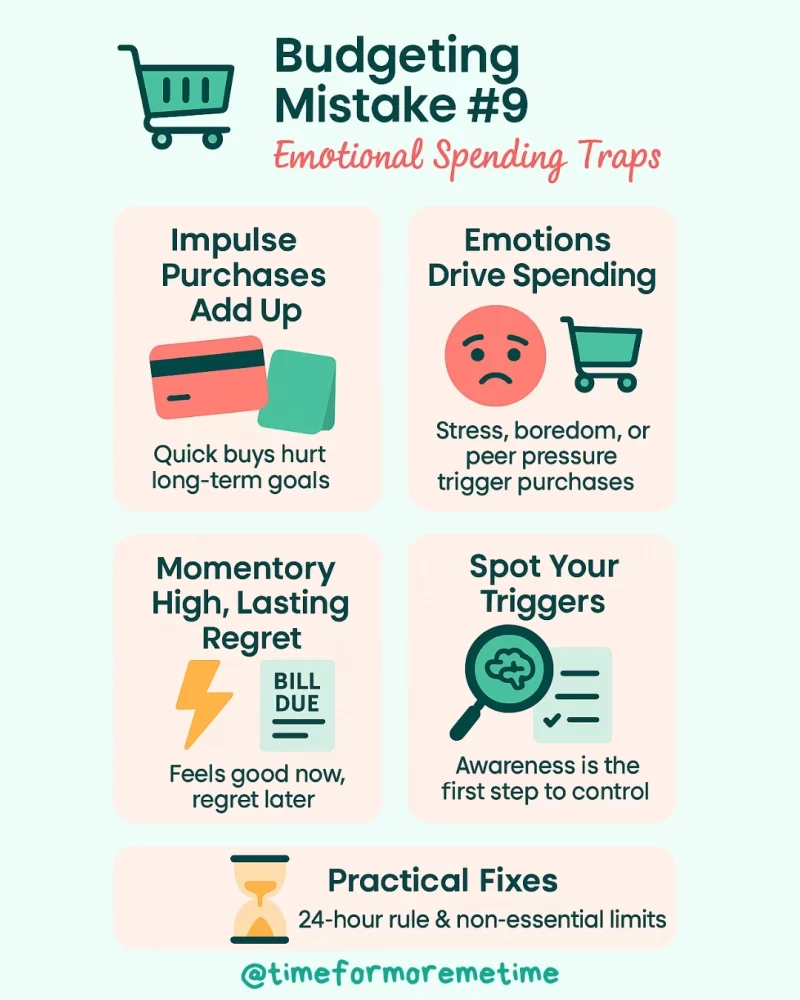
Emotional spending is one of the biggest threats to a solid budget. Stress, boredom, or even peer pressure can push families to buy things they don’t need. These impulse purchases may feel good in the moment, but often create regret when bills come due.
Recognizing triggers is the first step to avoiding them. Simple tactics like waiting 24 hours before buying or setting spending limits for non-essentials can help. Controlling impulse spending keeps your budget steady and your goals on track.
10. Comparing Finances To Other Families
It’s easy to look at what other families have and feel like you’re falling behind. This kind of comparison often leads to overspending on things you don’t actually need, just to keep up appearances.
Every family’s income, priorities, and circumstances are different, so what works for someone else may not work for you. Focusing on your own financial goals instead of comparing helps reduce stress and keeps your budget on track. Progress matters more than keeping up with others.
Conclusion
Avoiding common budgeting mistakes can make family finances much simpler and less stressful. By planning realistically, involving everyone, and staying consistent, you create a budget that actually works. Over time, small improvements add up to better control and peace of mind.
Gained a few insights today? Follow our blog for more practical money tips and check out our YouTube channel for easy guides to smarter financial habits.
Sources
- Photo: Pexels: Mikhail Nilov