

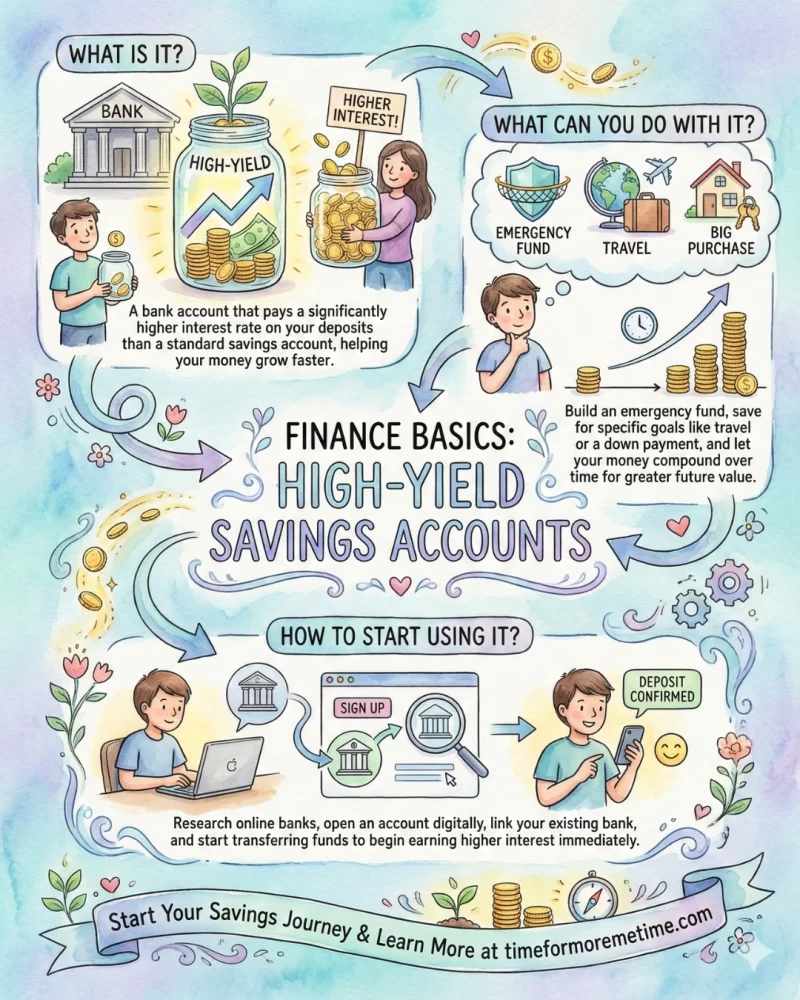
For many, a savings account is just a safe spot for their money. But some accounts can help your money grow much faster. High-yield savings accounts are one of the easiest ways to increase your savings without doing much extra. Let’s get started!
What Is A High-Yield Savings Account
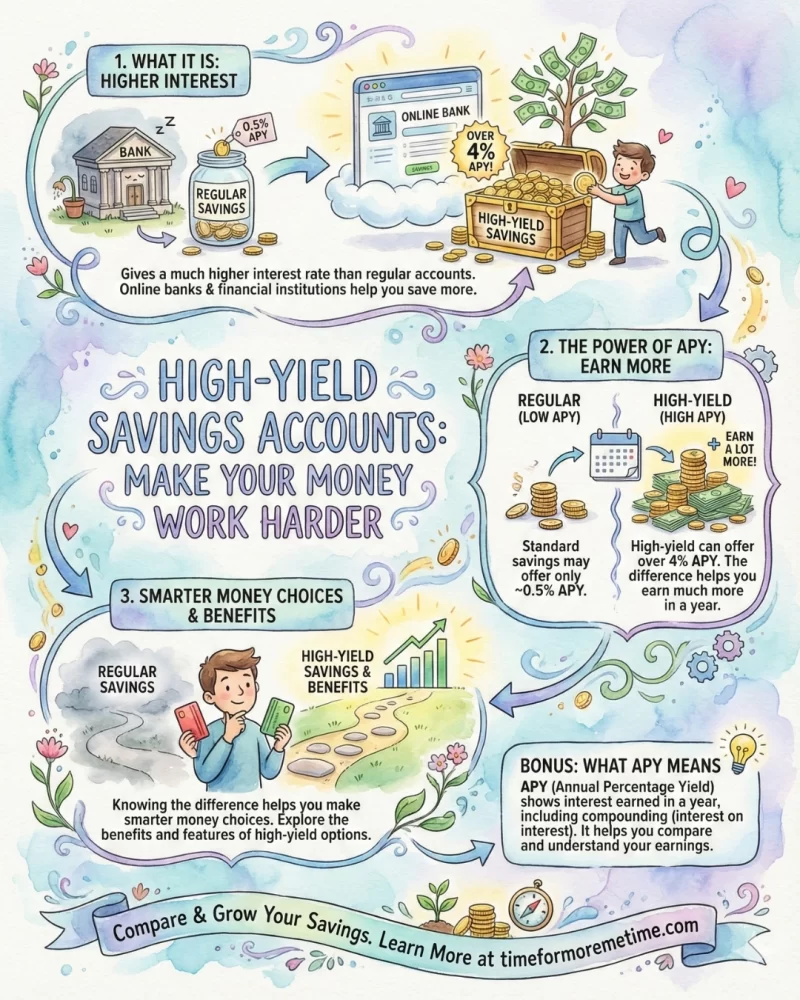
A high-yield savings account is a type of account that gives you a much higher interest rate than regular savings accounts. Banks and online financial institutions have improved these accounts to help you save more money over time.
High-yield savings accounts usually offer better rates, especially at online banks with lower costs. For instance, a standard savings account may provide about 0.5% APY, while many high-yield accounts can offer up to 5% APY. This big difference can help you earn a lot more in a year.
Knowing the difference between regular and high-yield savings accounts can help you make smarter money choices. Now that you know this, you can look into the benefits and features of high-yield savings accounts.
APY, or Annual Percentage Yield, shows how much interest you can earn on an account in one year. It considers compounding interest, which means you earn interest on your interest. APY helps you understand how much money you can make from your savings. This makes it easier to compare different savings options.
What Can You Do With A High-Yield Savings Account
A high-yield savings account is a safe and flexible way to keep and grow your money. Keeping your savings separate from daily spending can help you develop better money habits.
For example, you can create an emergency fund that earns more interest and is easy to access when needed. You can also save for big goals like travel, education, or home repairs, benefiting from faster growth.
This type of account lets you earn passive interest each month without high risks, making it smart for growing your wealth. Setting up automatic transfers makes saving easy and fits into your financial routine.
With these benefits, it’s important to think about various factors before opening a high-yield savings account.
How To Start Using A High-Yield Savings Account
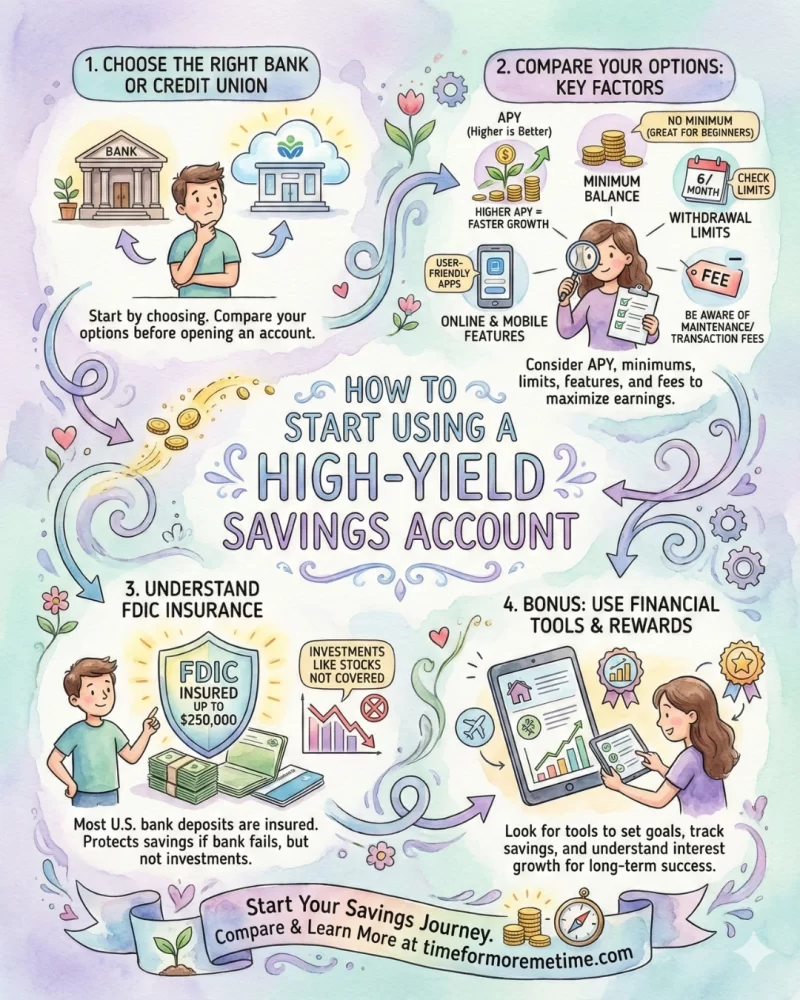
To use a high-yield savings account, start by choosing the right bank or credit union. Before opening an account, it’s essential to compare your options.
Key factors to consider include:
- APY: A higher APY means your savings grow faster.
- Minimum Balance: Some accounts have no minimum, which is great for beginners.
- Withdrawal Limits: Check if the bank limits how many times you can withdraw money each month.
- Online and Mobile Features: Look for user-friendly apps to help manage your savings easily.
- Fees: Be aware of any maintenance or transaction fees that might reduce your earnings.
Remember, most U.S. bank deposits are insured by the Federal Deposit Insurance Corporation (FDIC) up to $250,000. This insurance protects your savings if the bank fails but does not cover investments like stocks.
Some banks may also offer financial planning tools or rewards for long-term savers. These features can help you set goals, track your savings, and understand how interest grows over time. If you need extra help managing your finances, these tools can be very useful.
Conclusion
High-yield savings accounts offer a straightforward method to grow your money safely. With a clear understanding of how they function, you can select the right account and begin building your savings with confidence.
If you’re looking for other financial tips and explanations, subscribe to our blog and follow me on your socials. You might also want to check my YouTube channel. See you there!
Sources
- CNBC Select. (2026). The best high-yield savings accounts of May 2026: Earn up to 5.00%. https://www.cnbc.com/select/best-high-yield-savings-accounts/
- Investopedia. (2024). Are All Bank Accounts Insured by the FDIC? https://www.investopedia.com/ask/answers/08/fdic-insured-bank-account.asp