

Saving money can be really stressful, especially when bills go up but your paycheck stays the same. Many people are anxious because everyday costs are rising. Studies show that almost half of Americans think they aren’t saving enough. This gets worse when you plan for the future and see your savings going down.
I’ve been through similar struggles. I remember sitting in my small New York apartment, upset after my rent went up for the second time in a year. That pushed me to learn how to make my savings grow. I found a high-yield savings account that helps me increase my money while setting clear goals and reducing stress.
From my experience, I can help you become more confident about saving. This guide will explain how to use a high-yield savings account effectively, so your money works harder for you. Let’s get started!
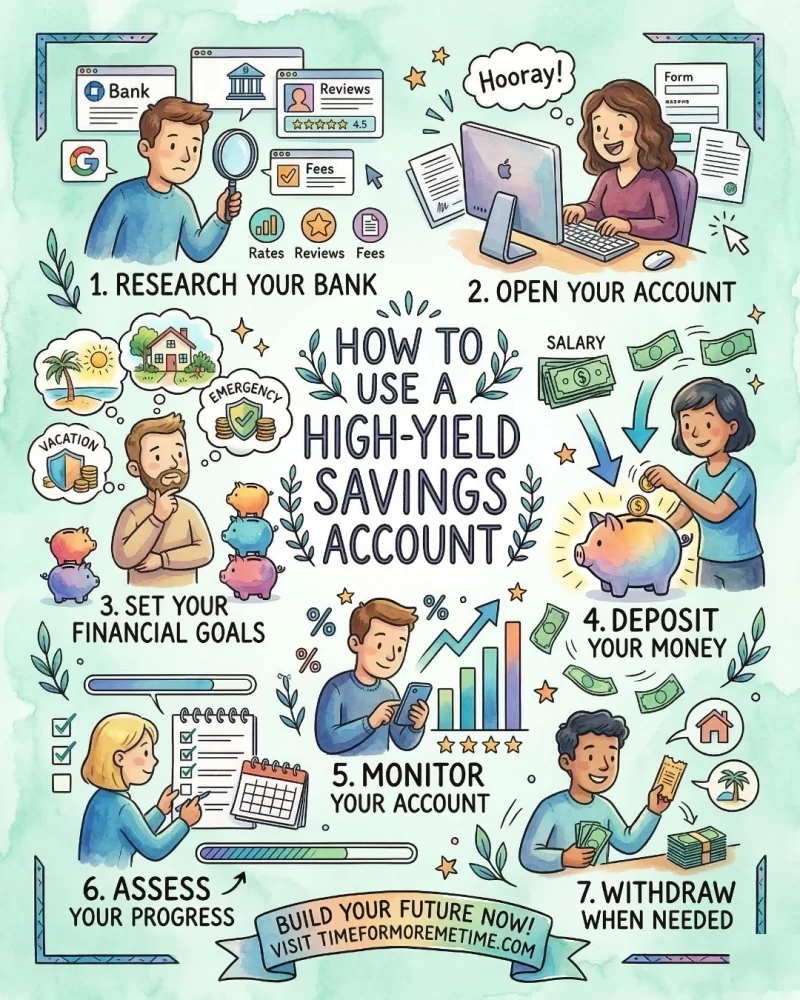
1. Research Your Bank
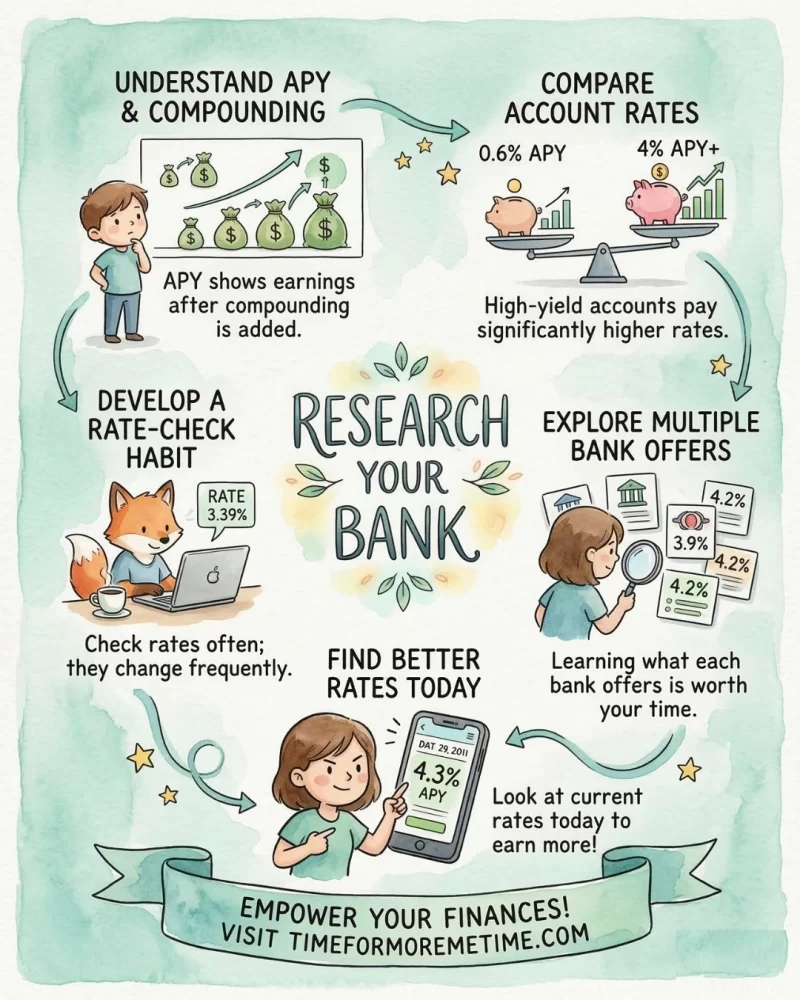
Research and compare accounts so your savings can grow. A high-yield savings account pays a higher interest rate than a regular one, which helps your money grow faster with little work. In February 2026, the average rate for a regular savings account was about 0.6% APY (Annual Percentage Yield), while many high-yield accounts paid around 4% APY or more.
By the way, APY is the rate you earn in one year after compounding is added.
Banks change their rates often, so I made it a habit to check them during my breaks at work. It may feel confusing in the beginning, but learning what each bank offers is worth your time. Look at current rates today to see if you can earn more.
2. Open Your Account
Open a high-yield savings account through the bank’s business website. It’s easy and can be done online in just a few minutes. You only need to give some basic information and pick a bank you trust. I opened mine one quiet Saturday morning at my kitchen table.
Most banks offer accounts with no fees, so you can start without extra stress. This small step helps you take more control of your money. Even though some people worry about the paperwork, I found the process to be really simple.
3. Set Your Financial Goals

Set clear financial goals so you can stay focused on what matters. Your goals can be anything from saving for an emergency fund to planning a vacation or buying new work equipment, and you can even add fun goals like using apps that let you earn money by walking. My first goal was to save enough to cover one month of expenses after my car needed an unexpected repair.
Having a specific target can help you save more because it keeps you motivated, even if progress is slow. Setting smaller goals allows you to achieve things more quickly, which is encouraging. Think about picking one goal you can start working on today; setting a goal makes saving easier and more manageable.
4. Deposit Your Money
Deposit regularly to make your savings grow easily. You can make deposits weekly, monthly, or every payday. I chose to set up automatic transfers so I wouldn’t forget to save.
Having a regular savings schedule usually leads to quicker account growth compared to saving randomly. This method makes saving feel more natural and less stressful. For me, it helped me stay disciplined even during tough months. Automatic deposits are great for busy times when life gets hectic, making sure your savings keep growing without extra effort.
5. Monitor Your Account
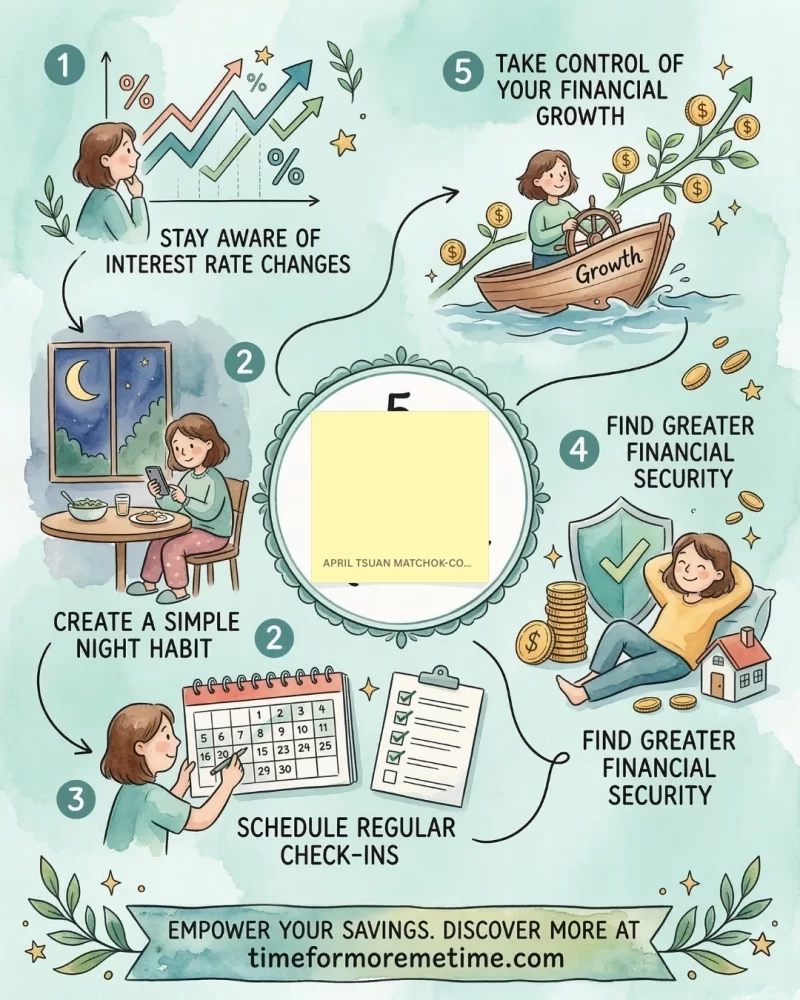
Monitor your account to keep up with changes in interest rates. These rates can change, so being aware of them is helpful. I made it part of my night habits to check my account every couple of weeks, usually after dinner.
Many people watch their accounts to feel more secure about their savings, and this can help you adjust your plans if needed. This simple awareness is a powerful tool.
When was the last time you checked your savings rate? A quick look can show if you’re earning enough, giving you more control over your financial growth.
6. Assess Your Progress
Assess your progress to make sure your savings goals match your current needs. As your life changes, your savings plan should change too. This means reviewing your goals and adjusting your deposits as needed. For example, I increased my savings rate when I took on a side job.
Many people find their savings improve when they update their plans regularly. This helps keep your goals realistic and achievable, so you can stay on track even when things change. Regular assessments help you stay focused and ensure you’re moving in the right direction.
7. Withdraw When Needed
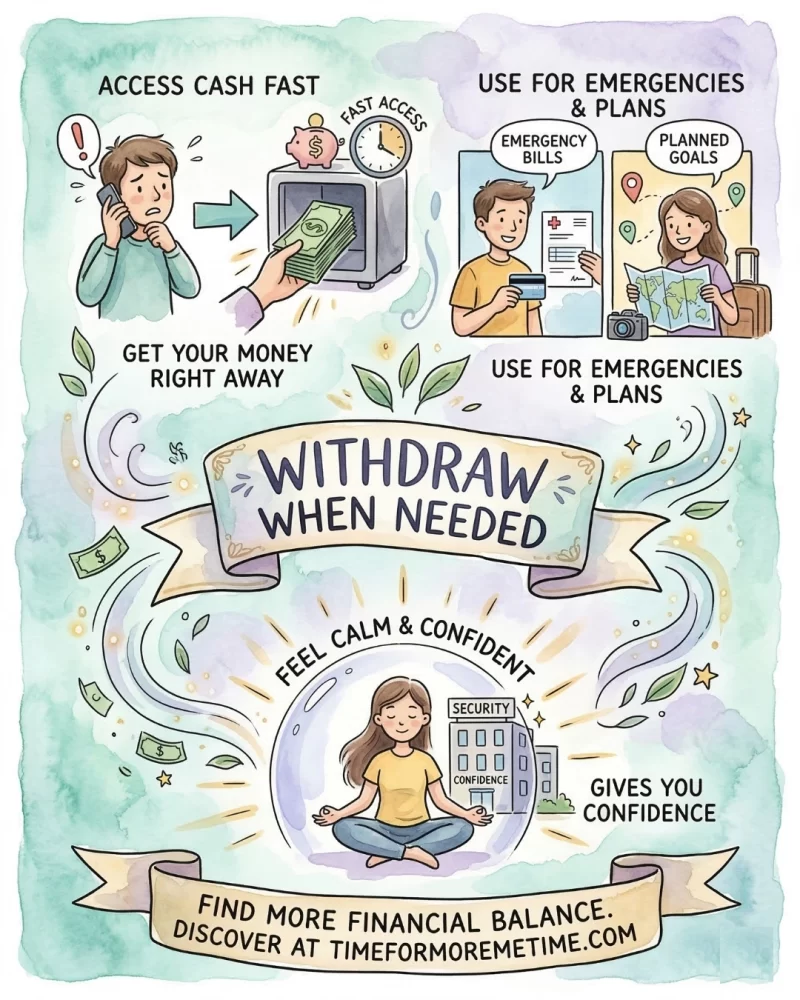
Take money out when you need it. A high-yield savings account helps you save, but it also lets you access your cash fast. You can use it for emergencies or for things you planned for. I once used mine to pay a medical bill that came out of nowhere.
Research shows that people who save money tend to feel less anxious, report higher life satisfaction, and feel more hopeful about the future since they know they can get their money right away. This is why a high-yield savings account works well for both growth and support. It can steady you during stressful moments.
Think about whether you have enough saved for life’s surprises. Even a small amount can help you feel safe. It gives you confidence when problems show up.
Conclusion
A high-yield savings account helps your money grow with less stress. Saving becomes easier when you follow simple steps. Start small and stay consistent. Each step forward makes your financial path smoother.
If you like this type of content, subscribe and follow my social media accounts. Also, be sure to check out my YouTube channel. See you there!
Sources
- Bankrate. (2026). What is the average interest rate for savings accounts? https://www.bankrate.com/banking/savings/average-savings-interest-rates/
- Best Online Banking Accounts. (2026). Best Online Savings Accounts of May 2026. https://www.bestonlinebankingaccounts.com/savings-accounts
- University of Rochester. (n.d.). Monitor Your Online Accounts. https://tech.rochester.edu/security/monitor-your-online-accounts/
- ScienceDirect. (2021). Savings goals and wealth allocation in household financial portfolios. https://www.sciencedirect.com/science/article/abs/pii/S0378426620302892?via%3Dihub
- University of Bristol. (2024). Understanding the Role of Savings in Promoting Positive Wellbeing. https://www.bristol.ac.uk/geography/research/pfrc/themes/capability-behaviours-wellbeing/savings-wellbeing/