

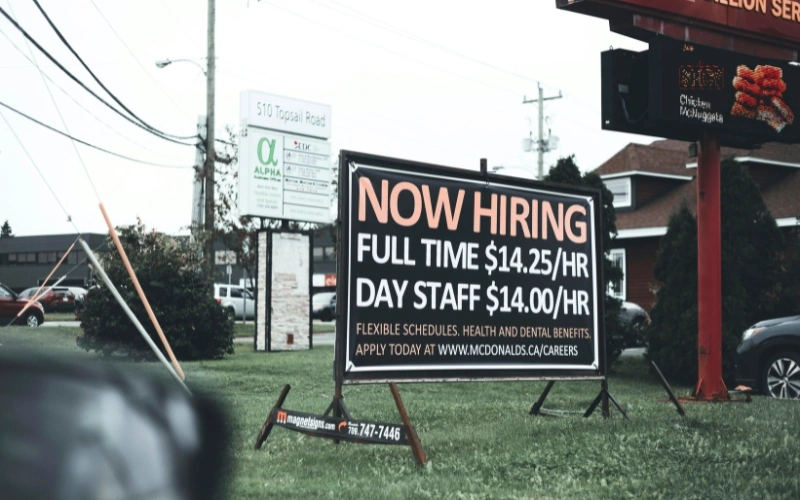
Job searching can take months without getting an offer. Recent data show that the average job search in the US lasts several weeks, and in some fields, it can take longer due to competition and fewer openings. During this time, savings and confidence can run low before you find a job.
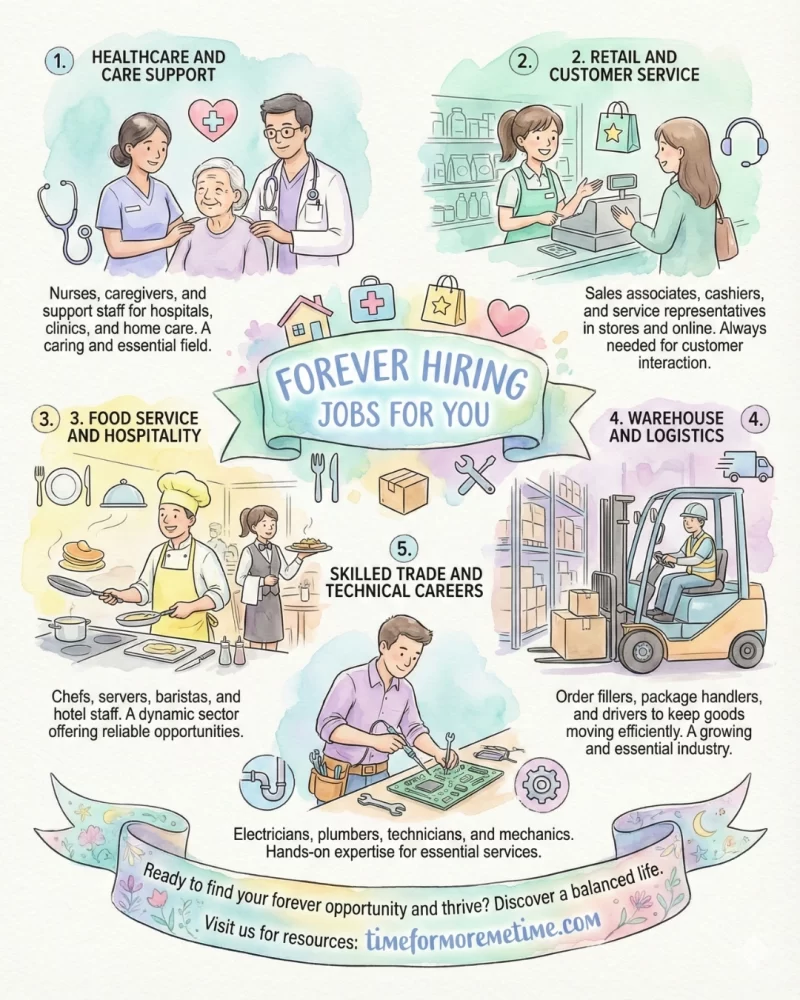
I reached a point where I couldn’t wait for months to find the right job. Before I finished my degrees, I worked as a dishwasher, warehouse helper, and construction laborer. Then I switched to retail sales and roofing projects to keep my income steady. I was lucky to have these jobs, and you might be lucky too, especially since they are forever-hiring jobs. These are jobs you can rely on if you can’t find others.
These are just a few examples. In this post, I’ll share more jobs and industries that hire year-round and explain why they always need workers. Let’s get started!
1. Healthcare And Care Support
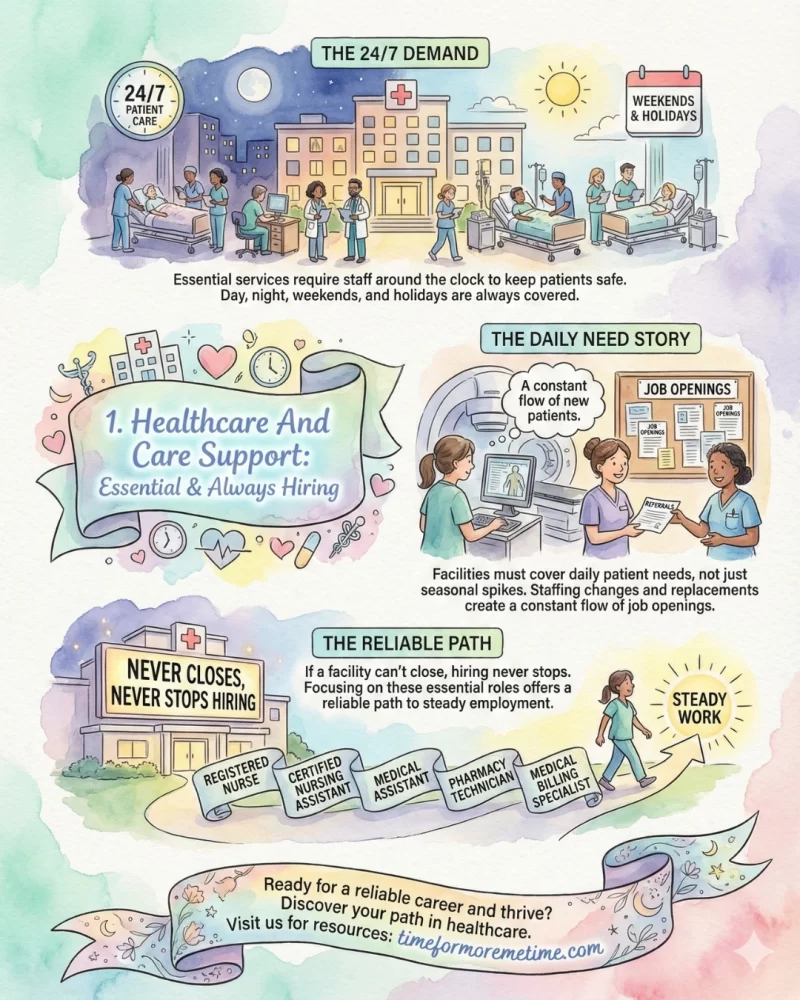
Essential healthcare services require staff around the clock because patient care happens 24/7. Hospitals and clinics must cover day and night shifts, plus weekends and holidays, to keep patients safe. As facilities extend their hours and serve more elderly patients, the demand for staff continues to grow. This means hiring happens throughout the year.
While working as a dosimetrist, I noticed that job openings never really stopped. Radiation therapy departments adjusted staffing based on patient volume, and administrators often listed support roles to ensure coverage. My colleagues in nursing and medical assisting frequently shared job referrals because the need for replacements was constant. This hiring pattern was driven by daily needs, not just seasonal demand.
Healthcare occupations are projected to create about 1.9 million openings each year from 2024 through 2034. Registered nurses, nursing assistants, medical assistants, pharmacy technicians, and medical records specialists are expected to remain in demand. This makes healthcare a practical field for people seeking steady work.
2. Retail And Customer Service
Retail stores need employees for evening, weekend, and holiday shifts, especially during busy sales periods. Staff departures also create regular openings. In April 2026 alone, US retailers reported 661,000 job openings, 599,000 hires, and 557,000 employee separations, showing why recruitment continues throughout the year.
When I worked in retail, I noticed how quickly team rosters changed. Employees left for school, found new jobs, or had scheduling conflicts. Management posted job openings within days to fill those gaps. This was done to keep operations running smoothly, so replacements were hired quickly to ensure checkout lines kept moving and customers got help.
If you walk into a busy store on a Saturday afternoon, you’ll see how important staff coverage is. Registers are always busy, shelves are restocked right away, and supervisors change shifts to keep things moving. This daily pressure means that jobs for sales associates, cashiers, customer support representatives, stock associates, and shift supervisors are always available. In high-volume retail, hiring continues because businesses need full staffing to remain successful.
3. Food Service And Hospitality
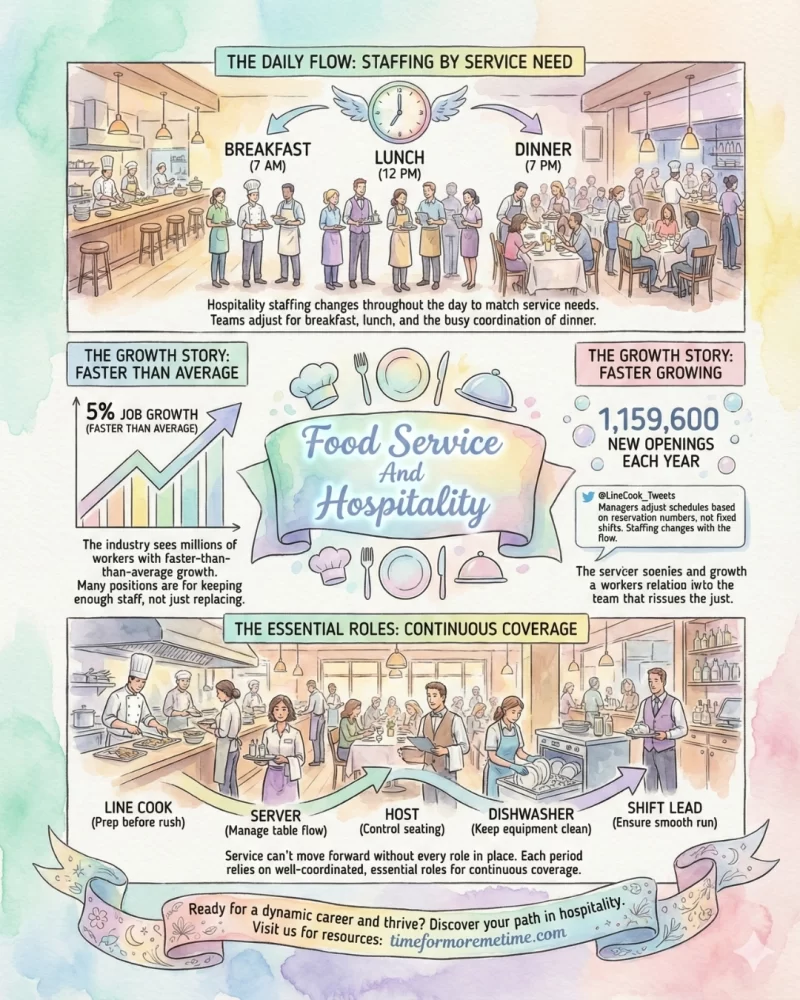
Hospitality staffing changes throughout the day to match service needs. Breakfast teams are different from lunch teams, and dinner service requires even more coordination. I once read a tweet from a line cook who explained that managers adjusted prep cooks’ and servers’ schedules based on reservation numbers rather than using fixed schedules. This means staffing changed with the flow of service.
Daily adjustments happen throughout the food service industry. The Bureau of Labor Statistics reports that millions work in food service in the US. The job growth rate in food service is expected to be 5%, which is faster than average, with around 1,159,600 new openings each year. Many of these positions are to maintain adequate staffing rather than just replace workers.
You can see the need for continuous coverage inside restaurants. Each service period relies on well-coordinated roles. Line cooks prepare food before peak times, servers manage table flow during rush hours, hosts control seating, dishwashers keep equipment clean, and shift leads ensure everything runs smoothly. Service can’t move forward without every role in place.
4. Warehouse And Logistics
Warehouses operate every day because goods need to move constantly. Retailers, hospitals, and manufacturers rely on timely deliveries. Inventory comes in, gets processed, and leaves on strict schedules. A friend who went into logistics told me how his facility tracked output every hour to avoid delays and missed shipments.
Hiring is driven by the volume of goods being moved. Distribution centers measure how much product they handle against their delivery schedules. Logistics jobs have grown into the millions in the US, especially as online shopping increases. This growth is clear in daily operations. Each online order triggers tasks within the warehouse, creating ongoing demand for workers across shifts.
Since the demand for labor increases with more shipments, there are always opportunities for ready applicants. You can apply through company career websites and respond quickly to requirements such as background checks or shift confirmations. In logistics, being prepared and quick to respond is often more important than having a lot of experience.
5. Skilled Trade And Technical Careers
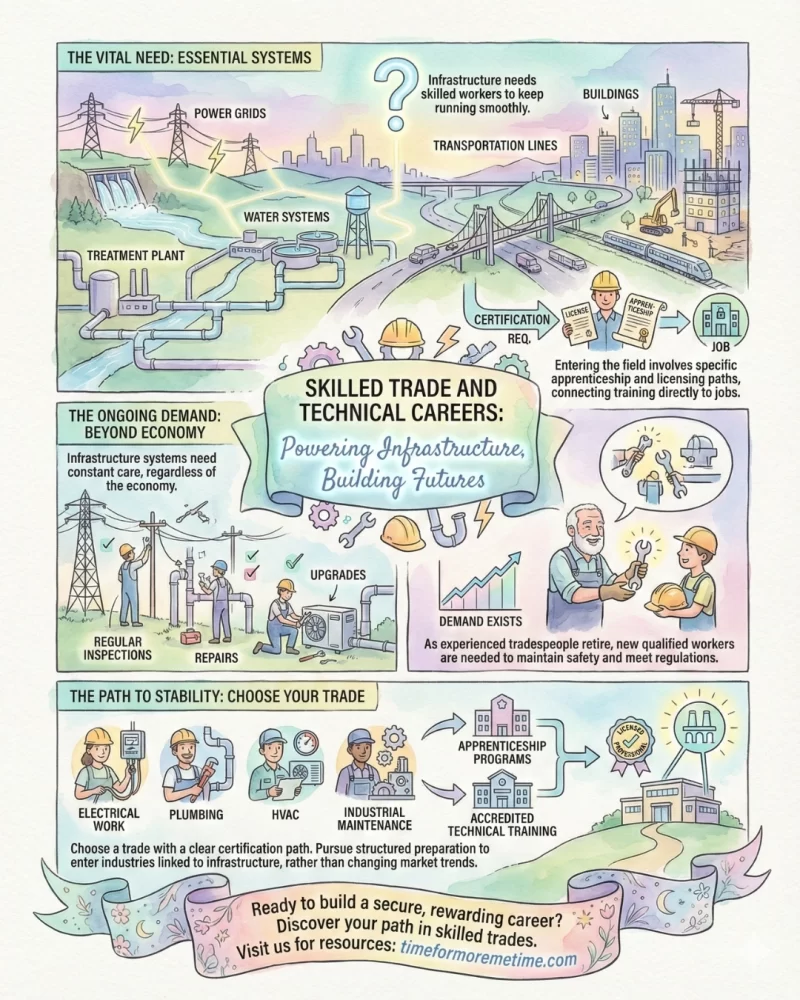
Infrastructure needs skilled workers to keep power grids, water systems, transportation lines, and buildings running smoothly. Because these jobs require certification, entering the field involves following specific apprenticeship and licensing paths. These paths connect training directly to jobs instead of just earning credentials.
Certification requirements also create ongoing job demand. Infrastructure systems need regular inspections, repairs, and upgrades, no matter the state of the economy. As experienced tradespeople retire, qualified workers are needed to maintain safety and comply with regulations. This demand exists because these systems require constant care.
To position yourself for this demand, choose a trade with a clear certification path, such as electrical work, plumbing, HVAC, or industrial maintenance. Then, pursue apprenticeship programs or accredited technical training that leads to a license. Having this structured preparation helps you enter industries where jobs are linked to infrastructure, rather than changing market trends.
Conclusion
Industries tied to daily operations and infrastructure remain open because their work cannot pause. Targeting these sectors reduces search time and increases the likelihood of an interview.
We have more posts about ways to earn extra money, so check our blogs or subscribe to our page. Also, follow us on our socials or visit our YouTube channel for practical tips you can apply right away.
Source
- Photo: Pexels: Erik Mclean
- US Bureau of Labor Statistics. (2025). Healthcare occupations. https://www.bls.gov/ooh/healthcare/
- US Bureau of Labor Statistics. (2026). Job openings and labor turnover survey, April 2026. https://www.bls.gov/news.release/jolts.a.htm
- US Bureau of Labor Statistics. (2025). Food and beverage serving and related workers. https://www.bls.gov/ooh/food-preparation-and-serving/food-and-beverage-serving-and-related-workers.htm