


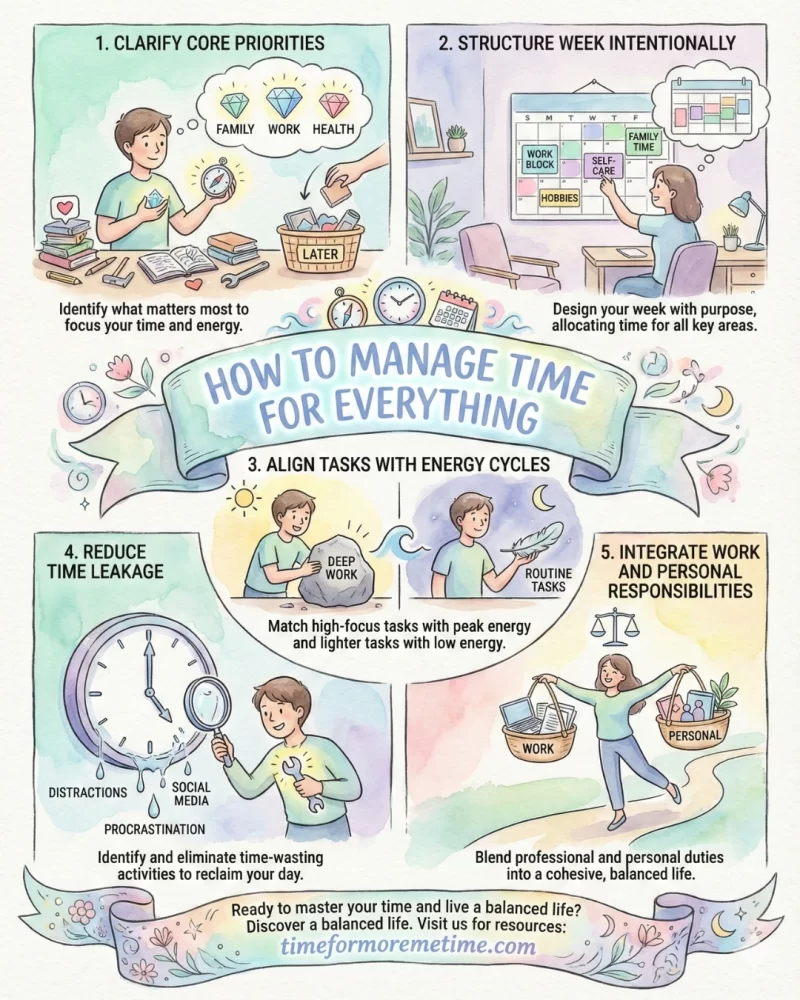
It’s a struggle to fit work deadlines, family responsibilities, and personal goals all into one day. National surveys back that up, showing that many adults report feeling rushed most days because their responsibilities exceed the hours available. As a result, many of us missed tasks and unfinished priorities. A structured way of planning your time can correct this imbalance.
There was a period when I worked full hospital shifts in San Francisco while building my blog in the evenings and managing household responsibilities. I often ended the week with important projects incomplete because I had not reserved dedicated hours for them. Now, I plan each week and give clear time slots to career tasks, financial planning, health, family, and rest, which allows me to complete what I started.
You can also manage time for everything. In this post, I’ll share practical methods for allocating hours, setting limits, and ensuring each area of your life receives consistent time. Let’s get started!
1. Clarify Core Priorities
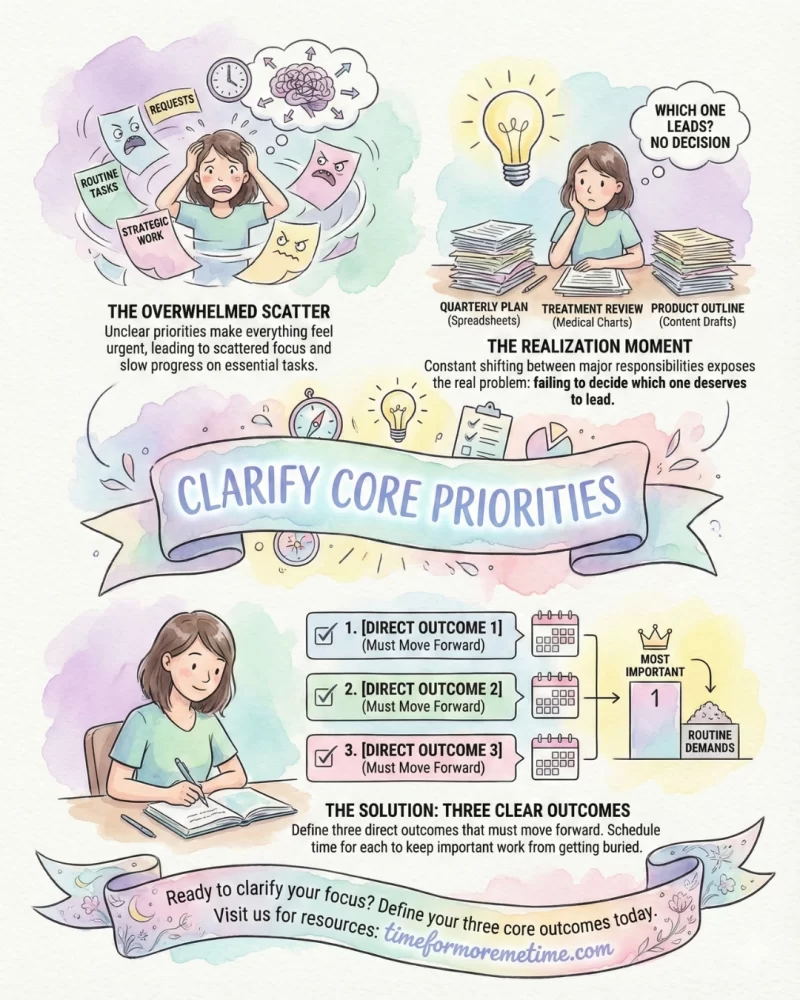
Clarify your main priorities. It can feel overwhelming when priorities are unclear. Every request seems urgent, which makes it hard to focus. Routine tasks end up taking up just as much attention as important strategic work. This leads to scattered focus and slows down your progress on essential tasks.
At one point, I was preparing a quarterly business plan for my blog while also reviewing treatment plans at the hospital and outlining a new digital product. I kept switching between spreadsheets, medical charts, and content drafts that afternoon because everything felt important. That constant shifting across three major responsibilities exposed the real problem: I had never decided which one deserved to lead.
Upon realizing that, I changed my approach. I started defining three outcomes that must move forward before I start working. It’s best to write them in direct language and schedule time for each one. Having a clear ranking keeps your most important work from getting buried under routine demands.
2. Structure Week Intentionally
Plan your week carefully. A week without a plan can lead to reacting instead of being proactive. You might check emails before looking at your goals. You could accept meetings without considering your focus time. Tasks may change based on the most urgent request. Because of this, important projects can get delayed as immediate needs take over your time.
This pattern showed up clearly in messages I received from readers who were missing key deadlines in their small businesses. One sells Etsy products and started each morning inside her inbox instead of working on new product listings. Another working as a manager for a faceless channel accepted freelance calls as they came in and pushed scheduled project time into the evening. Both described long workdays with little progress because their weeks had no defined structure.
To avoid that same cycle, outline your week in advance. Set aside uninterrupted time for your most important projects and label those periods clearly on your calendar. Schedule recovery activities such as workouts, family time, or travel to sustain energy. Also, leave a margin for unexpected tasks so they don’t disrupt planned work. With a deliberate weekly outline, you keep your responsibilities in order and reduce daily scrambling.
3. Align Tasks With Energy Cycles
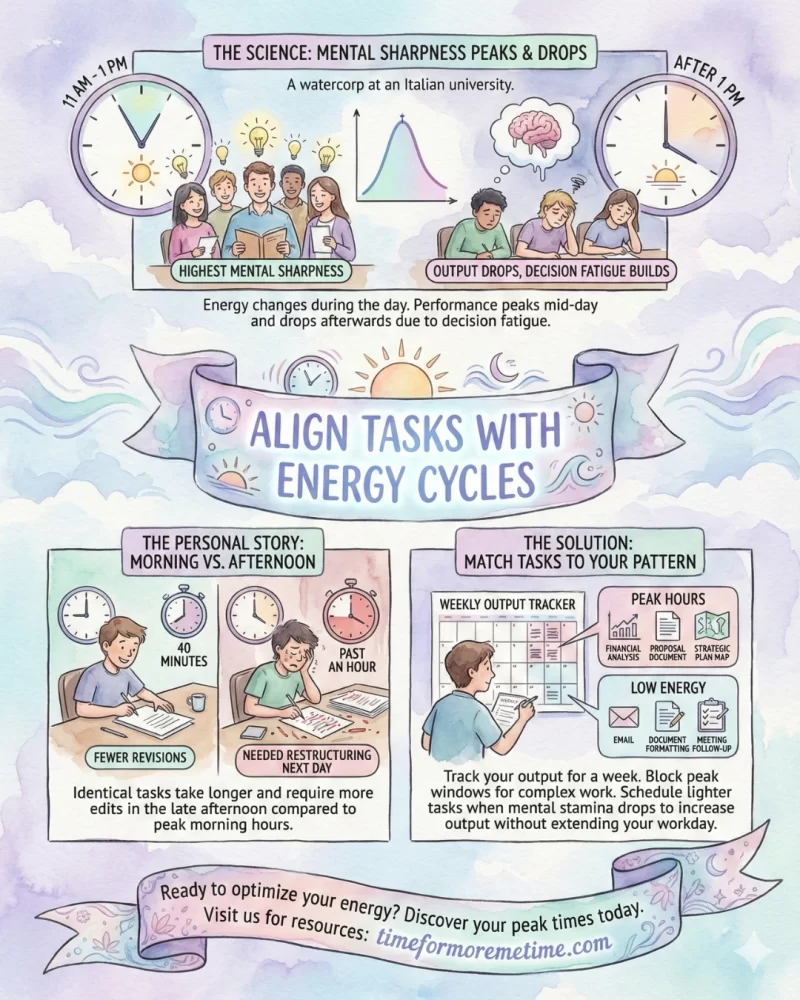
Schedule your tasks based on your energy levels. Your energy changes during the day, and so does your performance. In an Italian university, 100,000 students who took the oral exams had highest mental sharpness between 11 AM and 1 PM. Afterwards, output drops as decision fatigue builds. That’s because productivity improves when demanding work aligns with peak hours and lighter tasks fill lower-energy periods.
During one intensive planning week, I timed how long it took to draft similar sections in the morning versus late afternoon. I quickly completed work before noon with fewer revisions. Drafts written after 4 PM took longer and needed restructuring the next day. The task was identical, but the 9 AM draft took forty minutes while the 4 PM draft stretched past an hour and required edits the next morning.
Instead of treating all hours equally, study your own pattern to avoid wasting time. Track your output for a week and note the hours when you complete complex work with the fewest errors and the fastest pace. Block that exact window for tasks such as financial analysis, proposal writing, or strategic planning. For late afternoons when mental stamina drops, schedule email replies, document formatting, and meeting follow-ups. Matching specific tasks to specific hours increases output without extending your workday.
4. Reduce Time Leakage
Minimize distractions to save time. Small distractions can add up and take away your productive hours each week. Losing just five or ten minutes a few times a day can turn into several hours by Friday. Checking gig apps, taking unscheduled calls, and repeatedly reviewing emails can waste valuable work time. Each interruption seems small on its own, but together, they prevent you from making real progress.
That cumulative reduction became clear when my editor, who works from home, tracked his schedule using 25-minute Pomodoro intervals. He logged each focused session and recorded what interrupted it. The record showed that short YouTube breaks, constant Discord—yes, we use this app instead of Teams and Slack—notifications, and frequent kitchen trips consumed nearly two hours daily. Structured tracking exposed exactly where productive hours disappeared.
If you want to see where your time actually goes, test this for yourself. Run 25-minute blocks for three days and write down what happens inside each one. You might be surprised by how often small interruptions show up. Once you see the pattern in writing, it becomes easier to decide what to remove and what to group into specific time windows. That clarity helps you recover hours without working longer.
5. Integrate Work And Personal Responsibilities
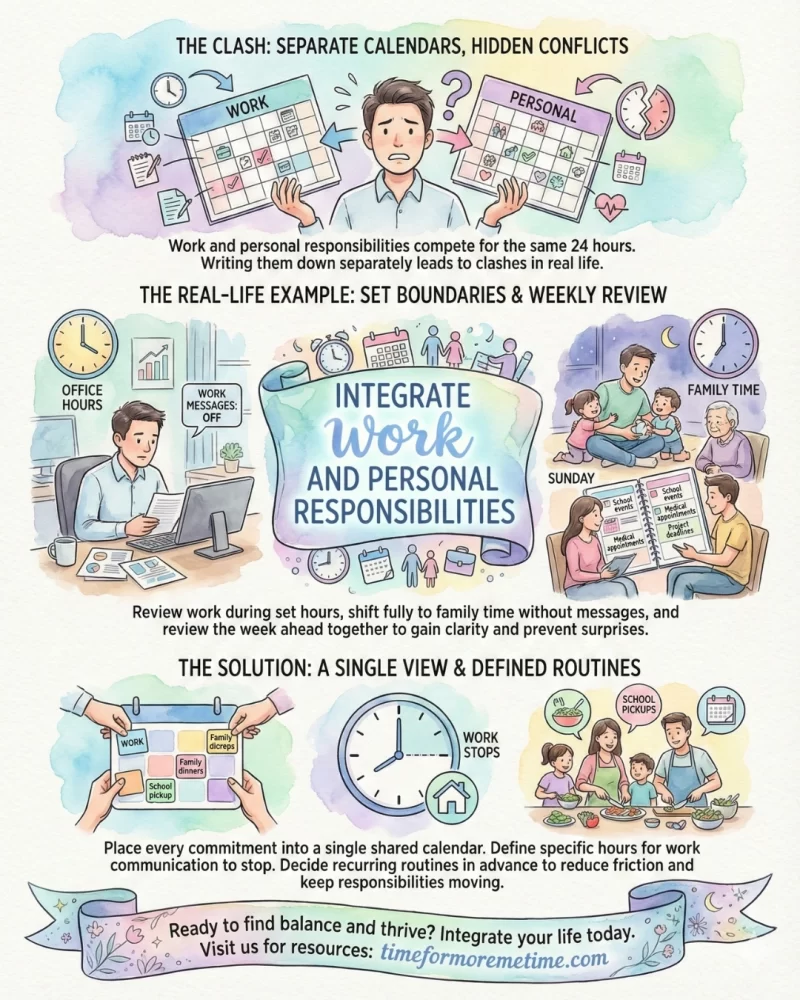
Combine your work and personal tasks. Work and personal responsibilities often overlap, so you need to plan them together. You have only twenty-four hours to fit in meetings, family time, errands, personal goals, and health routines. Since they all compete for the same time, writing them down separately won’t stop them from clashing in real life. Seeing everything in one clear view can help you avoid conflicts before they occur.
I once spoke with a financial analyst who loves free hotels and works full-time while caring for two young children and supporting an elderly parent. He reviews client reports during set office hours, then shifts fully into family time in the early evening without checking work messages. On Sundays, he and his spouse sit down together to review the week ahead, so school events, medical appointments, and project deadlines are in one place. That habit gives both of them clarity and prevents last-minute surprises.
Start by placing every commitment into a single shared calendar so nothing stays hidden. Define specific hours when work communication stops so personal time remains protected. Decide recurring routines in advance, whether that involves meal preparation, school pickups, or weekly planning. With clear expectations across both roles, you can reduce friction and keep responsibilities moving in the right direction.
Conclusion
Managing time for everything requires clear priorities and deliberate structure. When you align your schedule with what matters and control how you use your hours, your workload becomes organized and measurable.
For more practical strategies you can apply immediately, subscribe to the blog, follow us on social media, and visit our YouTube channel for actionable insights.
Source
- Photo: Pexels: Leeloo The First