

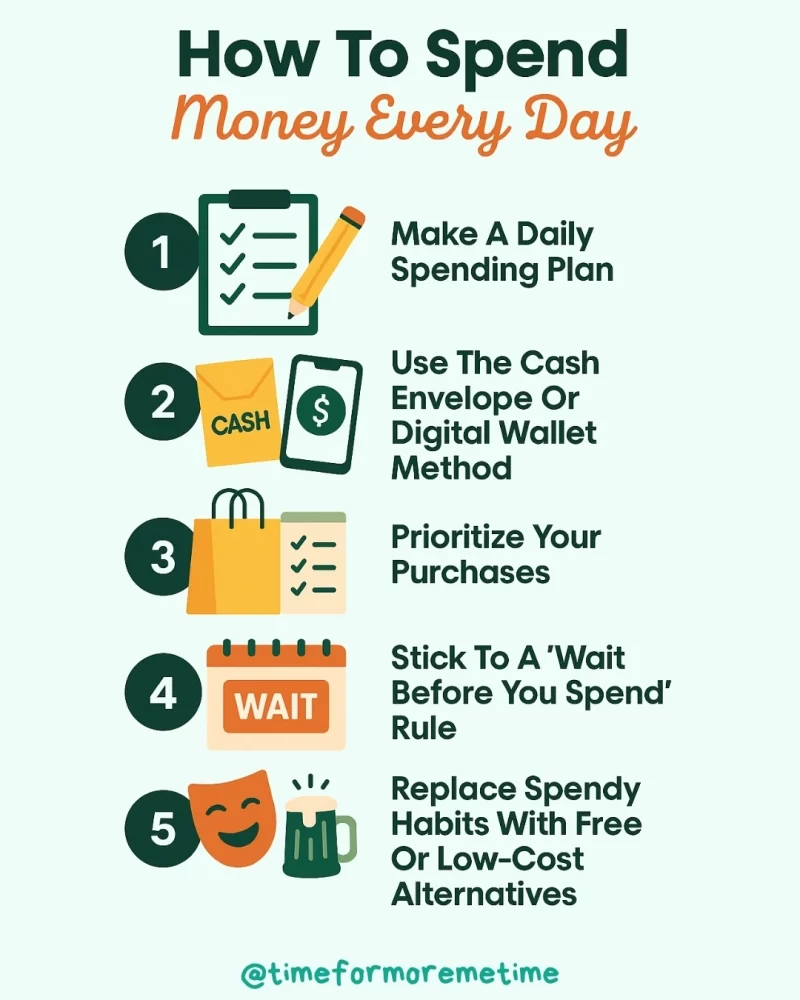
Spending money every day is part of modern life—from your morning coffee to transportation and meals. But daily spending doesn’t have to mean mindless swiping or empty wallets. In this post, I’ll show you how to spend wisely, stay in control, and enjoy your money without guilt. Let’s get started!
1. Make A Daily Spending Plan
A daily spending plan gives your money direction, rather than letting it disappear without purpose. It’s not about restriction—it’s about making room for what matters most. When you decide in advance how much you’ll spend each day, you avoid the trap of mindless purchases and stay in control of your financial habits.
Start by setting a daily spending limit based on your weekly or monthly budget. For example, if you have $150 set aside for discretionary spending this week, divide that by 7 and aim to spend no more than $21 a day. Adjust depending on upcoming events or larger needs later in the week.
Next, create mini-categories in your daily plan: food, transportation, and fun. Keep it simple, and give yourself just enough flexibility to avoid frustration. You can even build in a “treat yourself” allowance—just make sure it fits the plan.
Over time, this system helps you stretch your money further and free up cash for larger goals, such as saving or investing for the future.
2. Use The Cash Envelope Or Digital Wallet Method
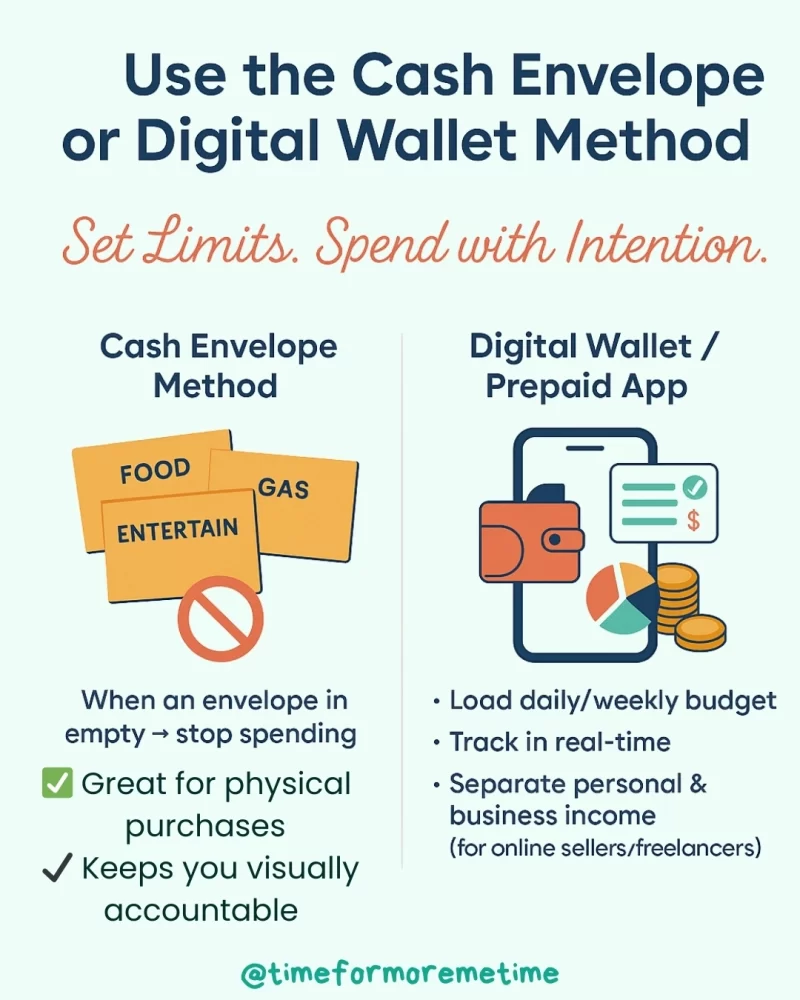
If you struggle with overspending, switching to cash or a digital wallet can help you set real limits and stick to them. The cash envelope method involves dividing your money into physical envelopes labeled for different categories, such as food, gas, or entertainment.
Once an envelope is empty, you stop spending in that category until the next refill. It’s a simple way to avoid overspending and stay accountable.
For a more modern approach, consider using a digital wallet or a prepaid budgeting app. You can load a set amount of money each day and track transactions in real-time. This is especially useful for people who make online purchases or manage side income streams.
If you sell digital products or receive payments from online gigs, transfer a portion of that income into your daily spending account. Separating business earnings from personal spending makes it easier to manage both and helps ensure your everyday purchases stay on budget.
3. Prioritize Your Purchases
Not every expense deserves your money today. Learning to prioritize your purchases helps you spend with purpose and avoid unnecessary regret. Start by taking care of your needs—essentials like food, transportation, and health. These should always come before wants, such as takeout, subscriptions, or impulse buys.
A good rule of thumb is to ask: Will this still matter tomorrow? If the answer is no, consider skipping it.
Limit your spending on “nice-to-have” items and focus more on things that bring long-term value. When in doubt, delay the purchase for 24 hours and reassess later with a clear mind.
Prioritizing daily expenses also creates more room in your budget for savings or investing in financial instruments that grow your wealth over time. Choosing to spend on what truly matters today gives you the freedom and flexibility to build a better financial future.
4. Stick To A “Wait Before You Spend” Rule
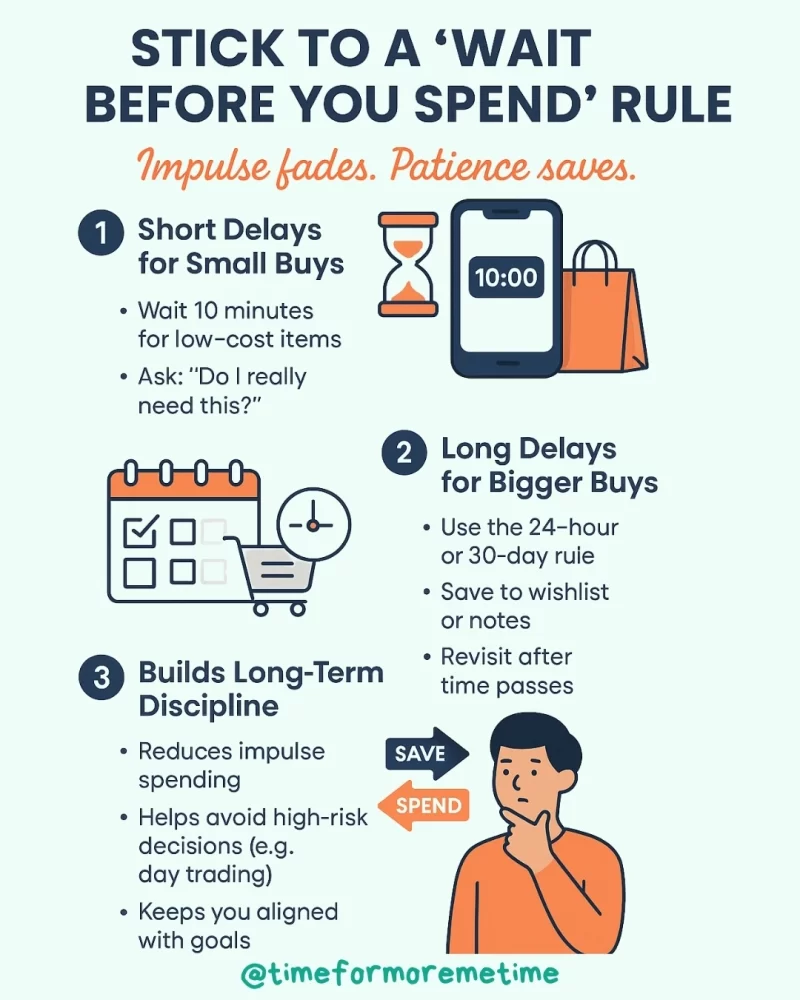
Impulse spending is one of the quickest ways to blow your budget. That’s why building a pause into your decision-making process can make all the difference.
As mentioned, you may want to delay the purchase for 24 hours. Or try a simpler rule—such as waiting 10 minutes before making a non-essential purchase—gives your brain time to question the decision. Often, you’ll realize you don’t need it after all.
For larger purchases, try the 24-hour or 30-day rule. Save the item to a wishlist or note and revisit it the next day or a month later. This delay helps you distinguish between temporary wants and true needs. You’ll be surprised how often the urge to spend fades.
This habit is especially helpful if you’re exploring high-risk financial moves, such as day trading or binary options, which can tempt you into impulsive decisions. Practicing patience in everyday spending helps you develop discipline—so you’re less likely to rush into high-risk choices and more likely to stay aligned with your long-term goals.
5. Replace Spendy Habits With Free Or Low-Cost Alternatives
You don’t have to spend money every day to enjoy life. Many small expenses—such as daily coffee runs, ride shares, or entertainment subscriptions—can be replaced with free or low-cost options without sacrificing comfort or enjoyment. These simple swaps can save you hundreds over time.
Try brewing your own coffee at home instead of stopping at the café. Walk or bike short distances instead of relying on rideshares. Cook meals in bulk rather than grabbing takeout daily. You can also enjoy free entertainment options, such as library books, podcasts, or community events.
Cutting down on daily spending frees up cash that you can redirect toward your savings goals or building passive income streams. Whether it’s contributing to an investment fund or launching a small side project, these savings can help you grow your money over time—without making you feel deprived in the present.
Conclusion
Daily spending doesn’t have to drain your bank account or leave you feeling guilty. With a few smart habits—such as setting limits, delaying purchases, and making intentional choices—you can turn everyday expenses into opportunities to stay on track and feel good about your finances.
Build a system that works for you and enjoy the small wins each day. Want more daily money tips? Subscribe to our YouTube channel or follow us on social media for daily tips on managing your finances.
Sources
- Photo: Unsplash: CardMapr.nl