


Saving doesn’t have to be dramatic to be effective. The 1% Rule proves that even small efforts can lead to meaningful financial progress. In this post, we’ll break down how the 1% rule works, how to use it, and how it can help you build consistent savings—without stress or excessive sacrifices. Let’s get started!
What Is The 1% Rule
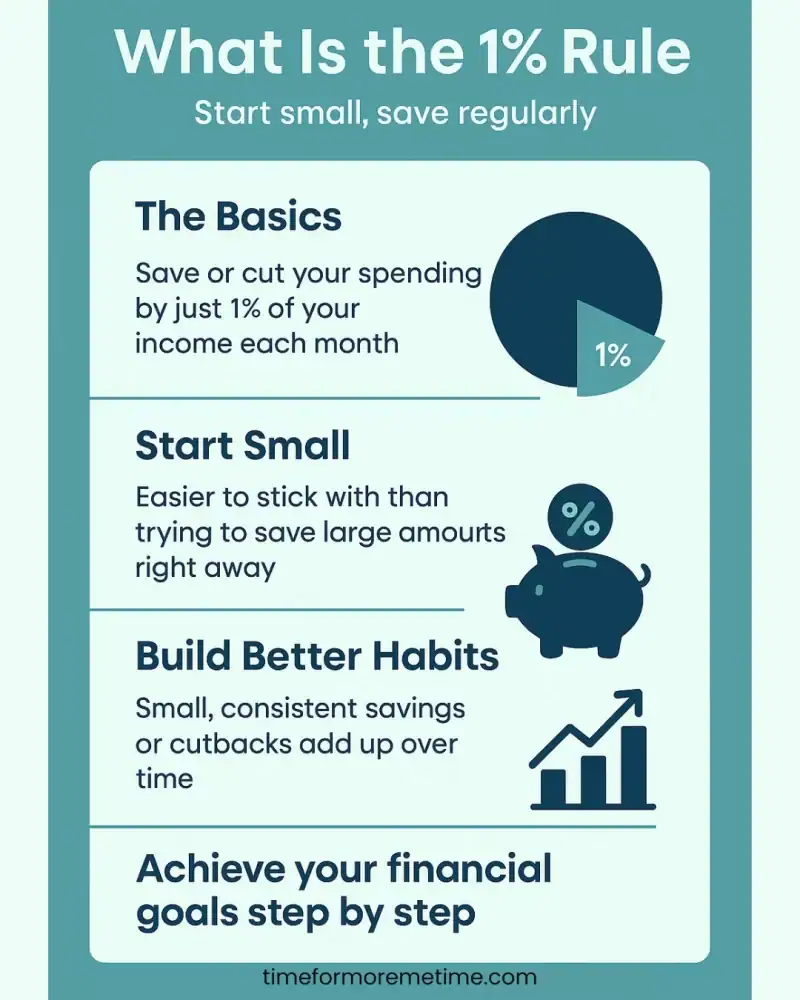
The 1% rule is a savings method that encourages you to begin by saving just 1% of your monthly income or reducing your spending by 1%. The concept is simple: instead of attempting a complete lifestyle shift, you focus on making one small change—and build on that.
Do note that the 1% rule is originally a real estate guideline stating that monthly rent should be about 1% of a property’s purchase price. However, financial experts promote this rule as a micro-savings strategy, encouraging individuals to save 1% of their income regularly to build good financial habits.
The goal is to create a realistic habit that’s easy to commit to. If your take-home pay is $3,000 a month, then 1% equals $30. That small amount is often easier to stick with than trying to save $300 all at once.
You can use the 1% Rule to either increase your savings or decrease your expenses—both approaches work. By saving or freeing up just 1% of your income each month, you’re making continuous progress toward financial stability.
This method is especially helpful if you’re new to budgeting or often feel overwhelmed by financial goals. It makes saving approachable and allows your efforts to grow with time.
How To Use The 1% Rule
The 1% rule doesn’t require complicated tools or deep budgeting knowledge. It’s accessible to anyone and works best when built into your routine. Here’s how to use it:
- Calculate 1%: Multiply your monthly take-home income by 0.01. If you earn $4,000, your 1% savings target is $40.
- Pick a Goal: Decide whether your 1% will go toward savings, investing, or debt repayment. A clear purpose makes the habit easier to maintain.
- Automate Savings: Set up an automatic transfer to a savings account. Treat this like a recurring bill that gets paid every month.
- Cut Back Slightly: If your budget feels tight, look for areas to reduce by just 1%. Cancel a subscription, pack lunch once a week, or adjust your utility usage.
- Track Progress: Use a budgeting app, spreadsheet, or simple notes to monitor your growing savings. Watching your total increase—even slowly—reinforces the habit.
Start with 1%, then reevaluate monthly. Once it feels easy, increase to 2% or more. The goal is to create consistency—not pressure.
How Can The 1% Rule Help You

The 1% rule can be surprisingly effective, especially if you’ve struggled to build savings with traditional budgeting methods. It makes saving feel achievable by focusing on consistency over size. Here are the reasons why:
- Easy to Begin: Saving just 1% is within reach for almost anyone, regardless of income. It builds momentum without causing stress.
- Reduces Friction: The change is so minimal that it doesn’t disrupt your lifestyle. That makes the habit easier to stick with month after month.
- Encourages Growth: As you get used to saving 1%, you’re more likely to increase the amount over time. The behavior scales with your confidence.
- Fits Any Income Level: Whether you earn $2,000 or $10,000 a month, the method adapts to your budget and situation.
- Builds Consistency: Regular contributions, no matter how small, develop long-term saving habits that support your financial goals.
By using the 1% rule consistently, you’ll find that saving becomes less of a burden and more of a routine part of managing your money.
What Are The Drawbacks Of The 1% Rule
The 1% rule is an excellent starting point, but it’s not a one-size-fits-all solution. Depending on your financial goals and urgency, its limitations may become more noticeable. Here are a few to keep in mind:
- Progress May Feel Slow: If you’re saving for a large goal, the 1% rule alone won’t get you there quickly. It’s more about habit-building than rapid results.
- Can Become Too Comfortable: Once you’re used to saving 1%, you might be tempted to stay there. Without increases, your growth will remain limited.
- Not Ideal for Emergency Situations: If you need to save fast—such as building an emergency fund or paying off high-interest debt—you’ll need to pair this with more aggressive strategies.
- Requires Long-Term View: The impact isn’t immediately visible. It takes patience to see meaningful change, especially at the beginning.
- Needs Intentional Scaling: The 1% rule works best when it evolves. Without scaling it up, you may hit a financial plateau.
The 1% rule serves as an effective starting point for building a consistent saving habit, which many people find challenging. By adopting this rule, you can develop the discipline to save regularly. Once this habit is established, you can explore additional money-saving techniques to further enhance your financial growth.
Conclusion
The 1% rule is a practical and stress-free way to build savings over time. By starting with just 1% of your income, you form a habit that can grow into long-term financial progress. It’s not about how much you save—it’s about saving regularly.
To get more helpful money tips, subscribe to our blog, follow us on social media, and check out our YouTube channel for smart and practical videos.
Sources
- Photos: Unsplash: Alexander Grey