

Impulse spending can quietly drain your wallet before you even realize it. If you often regret purchases or struggle to stick to your financial goals, the 30-day rule might be the mindset shift you need. In this post, we’ll explore how it works and how to use it to build better money habits—one decision at a time. Let’s get started!
What Is The 30-Day Rule
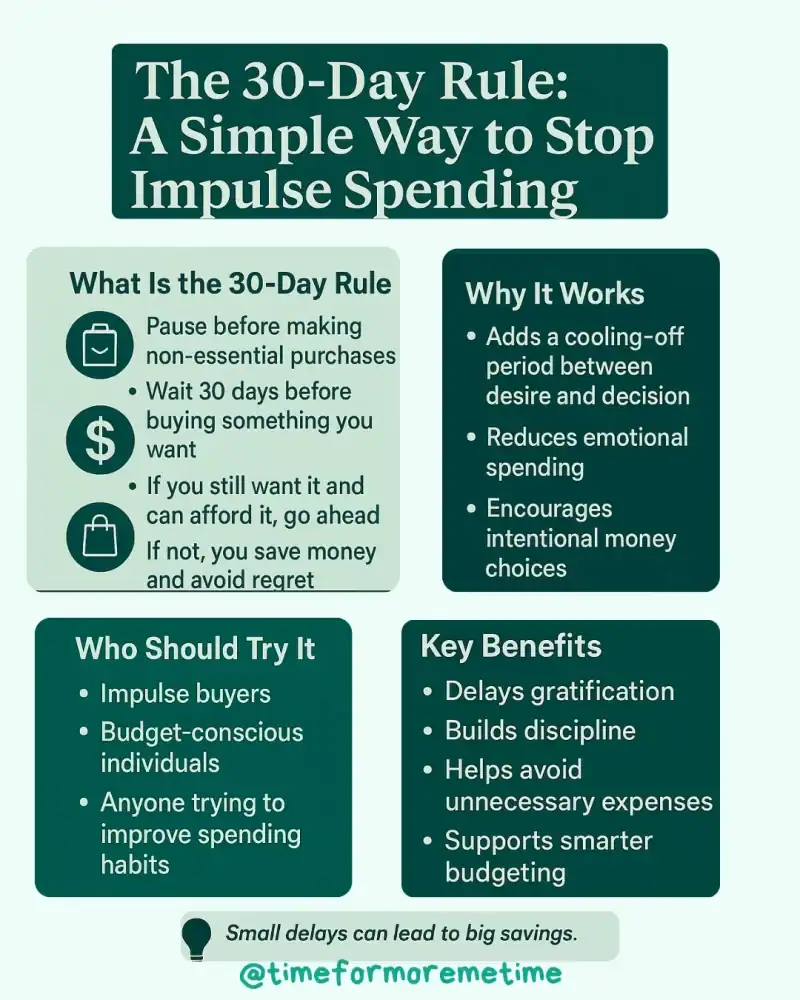
The 30-day rule is a simple yet powerful savings technique that helps you pause before making non-essential purchases. Instead of buying something on impulse, you commit to waiting 30 days before spending any money on it.
After the 30 days are up, if you still want the item—and can afford it—you give yourself permission to buy it. If not, you’ve successfully avoided an unnecessary expense.
This rule creates a buffer between desire and decision, giving your brain time to cool off. By delaying gratification, you reduce emotional spending and make more intentional financial choices. However, this is just one facet of emotional spending you can address. It’s a bit more complex than that.
Regardless, the 30-day rule may become especially useful for impulse buyers and anyone working to stick to a budget.
How To Use The 30-Day Rule
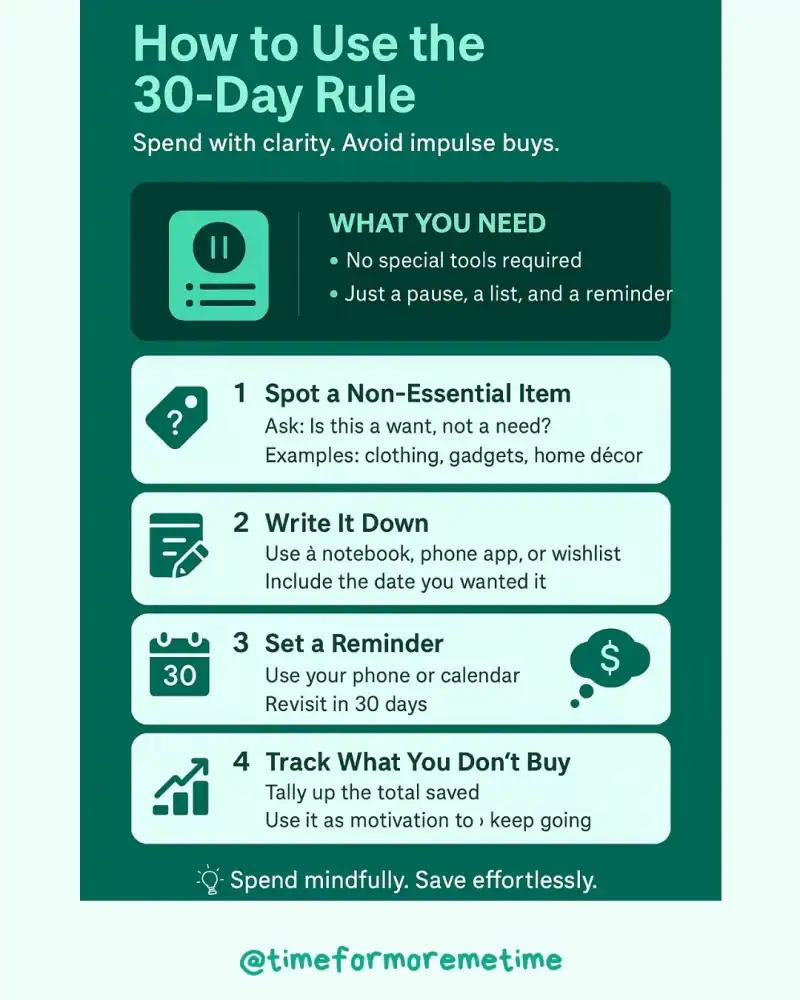
The 30-day rule doesn’t require any special tools—just a willingness to pause and a simple tracking system. Here’s how to start using it in your daily life:
- Recognize a Non-Essential Purchase: The first step is knowing when to apply the rule. If you’re shopping for something that isn’t an urgent need—like clothing, gadgets, or home décor—it’s a candidate for the 30-day rule.
- Write It Down: Instead of buying the item, write it on a list with today’s date. You can keep a physical notebook, a phone note, or even a wish list in your budgeting app.
- Set a Reminder for 30 Days Later: Create a calendar alert or use a budgeting tool that tracks your 30-day hold period. When the 30 days are up, revisit the item and reflect.
- Evaluate Your Desire and Budget: Do some introspection. Do I still want this? Is it worth the cost? Can I afford it without dipping into savings or debt? If the answer is yes, you can choose to buy it guilt-free. If not, you’ve just saved money by waiting.
- Track What You Don’t Buy: Consider tallying up the cost of things you didn’t purchase. Seeing how much you’ve avoided spending can be a huge motivator to keep going.
The 30-day rule isn’t about never spending—it’s about spending with clarity. And with practice, this habit becomes second nature.
How Can The 30-Day Rule Help You
The 30-day rule helps create space between your spending urges and financial decisions. By adding a waiting period, it encourages thoughtfulness, discipline, and better long-term habits that support your financial goals. Here’s how it can support smarter spending:
- Reassess Priorities: Giving yourself 30 days allows the initial excitement to wear off. What felt urgent in the moment often fades into something forgettable.
- Cut Impulse Spending: Waiting interrupts the automatic urge to buy. This pause gives your logical brain time to take over.
- Build Better Habits: Skipping non-essentials means you can redirect that money to things that matter—like savings or debt repayment. And the more you practice self-restraint, the easier it gets. Over time, you gain confidence as a more intentional spender.
By using this method consistently, you’re training yourself to think before spending. That small pause can lead to lasting changes in your financial behavior.
What Are The Drawbacks Of The 30-Day Rule
Although the 30-day rule is easy to follow, it isn’t perfect. Like any money-saving strategy, it has its weak spots—especially if your spending patterns are tied to deeper habits. Here are a few limitations to consider:
- Not Ideal for Urgent Buys: If something is genuinely needed or on a time-limited discount, waiting might cost you. Use your judgment on a case-by-case basis.
- Takes Effort to Maintain: You have to track purchases, set reminders, and follow through. Without a routine, it’s easy to forget.
- May Not Solve Emotional Spending: If overspending is tied to stress or emotion, the 30-day rule may not fully address the issue. Still, it’s a helpful starting point.
Despite these drawbacks, many people find the rule valuable for building discipline and reducing wasteful purchases. When paired with other tools, it becomes a strong foundation for smarter money management.
Conclusion
The 30-day rule is a simple way to pause, reflect, and make smarter financial choices. By creating space between the urge to spend and the decision to buy, you can avoid impulse purchases and protect your long-term goals.
To get more helpful money tips, subscribe to our blog, follow us on social media, and check out our YouTube channel for smart and practical videos.
Sources
- Photos: Unsplash: George Bakos