

Wondering where your money went before the month even ends? You’re not alone. In this post, I’ll walk you through the envelope system—a hands-on budgeting method that helps you control spending, stay within your limits, and start saving with purpose. Let’s get started!
What Is The Envelope System
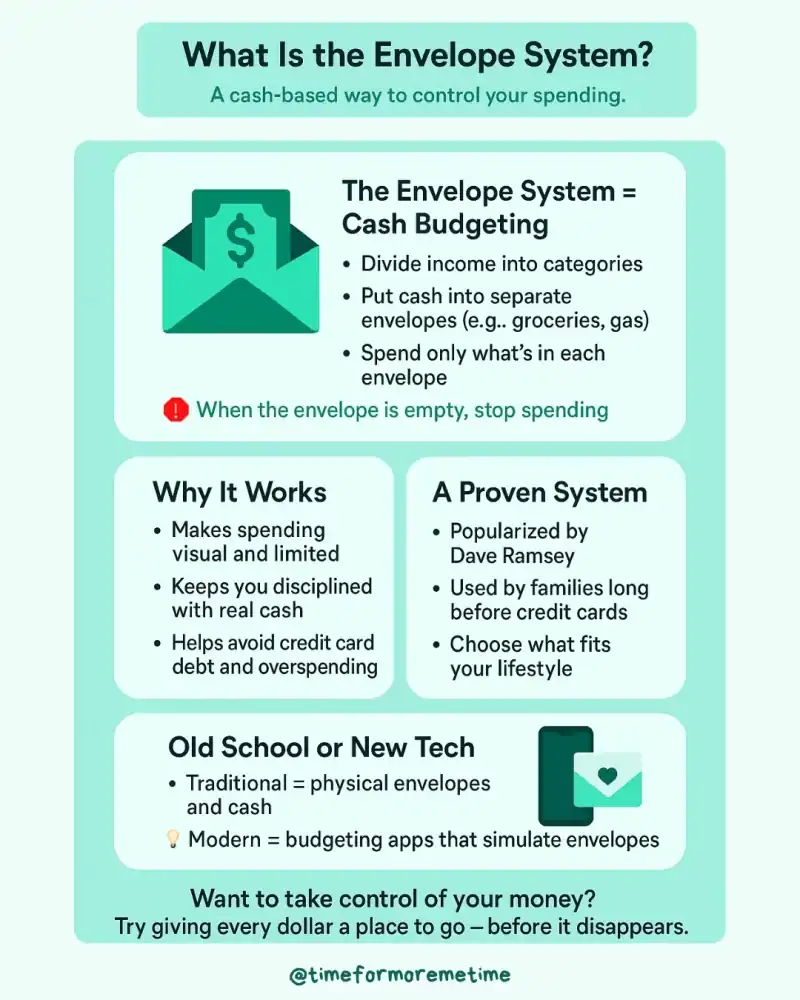
The envelope system is a cash-based budgeting method where you divide your income into spending categories and assign each one to a physical envelope. Each envelope contains a set amount of cash for a specific expense, like groceries, gas, or dining out. Once the money in that envelope is gone, you’re done spending in that category for the month.
The envelope system may sound old-fashioned, but it has stood the test of time. Personal finance expert Dave Ramsey popularized it and has helped countless people break the cycle of living paycheck to paycheck. At its core, the system forces you to spend with intention and avoid the ease of swiping a card or overspending online.
Fun fact: Before credit cards existed, some families had already using the envelope method to plan their weekly budgets. It gave every dollar a job—and ensured no dollar wandered off.
Today, some people use digital tools like budgeting apps that mimic the envelope method; however, the classic version utilizes good old-fashioned cash and envelopes for added accountability.
How To Do The Envelope System
Getting started with the envelope system is easier. Here’s a step-by-step guide:
- List Your Monthly Expenses: Write down all your spending categories. These should be variable expenses, such as groceries, entertainment, and gas, not fixed bills like rent or insurance that you pay online or automatically.
- Set a Budget for Each Category: Based on your income, decide how much you can spend in each category for the month. Be realistic and prioritize needs over wants.
- Label Your Envelopes: Get physical envelopes and write the category name and the budgeted amount on each one.
- Fill Envelopes with Cash: Withdraw the total cash you’ll need for the month and divide it among the envelopes according to your budget. For example, if your grocery budget is $400, place $400 in the “Groceries” envelope.
- Spend Only What’s in the Envelope: When it’s time to shop or pay for something, take cash from the appropriate envelope. Once it’s empty, you stop spending in that category until the next month.
Pro tip: You don’t have to use envelopes for every category. Keep using debit or credit cards for fixed bills, and just apply the envelope method to areas where you tend to overspend.
Most importantly, review your spending at the end of the month. Did you overspend or underspend in any area? Adjust your envelopes next time to better reflect your habits and goals.
How Can The Envelope System Help You
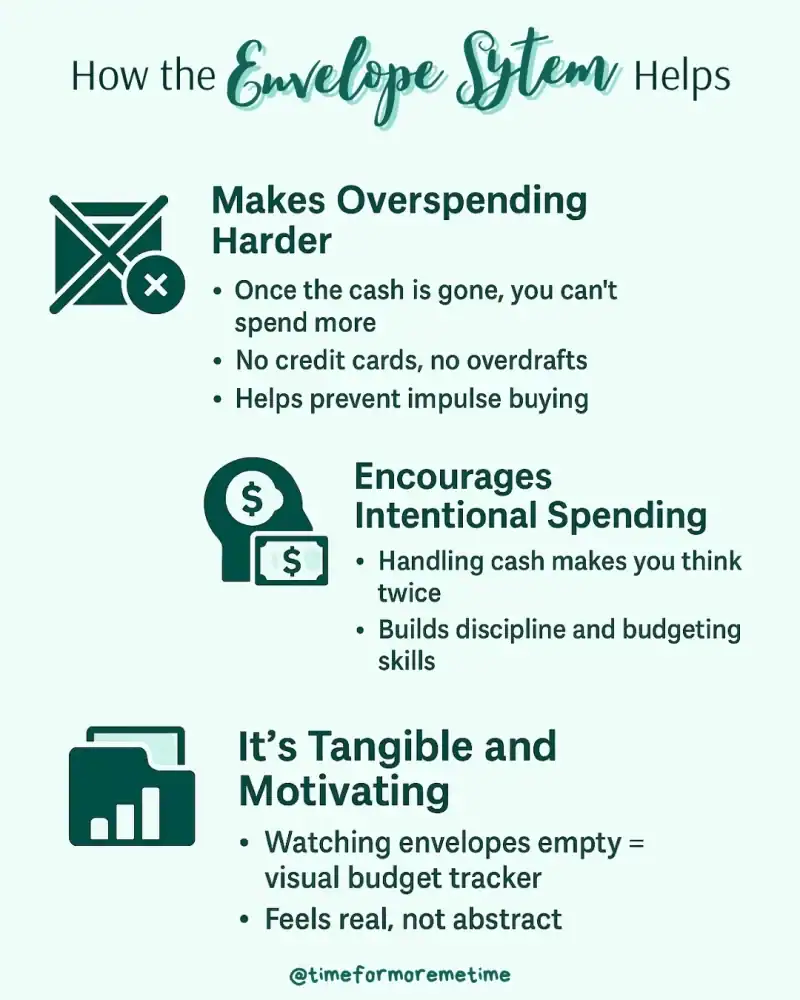
Using the envelope system can transform your financial habits in several powerful ways:
- It Makes Overspending Harder: With cash, once you’re out—you’re out. There’s no credit card to fall back on or overdraft to extend. This physical boundary helps reduce impulse buying and keeps your spending in check.
- It Encourages Intentional Spending: Physically handling money forces you to slow down and think through your purchases. You become more aware of where your money goes, which promotes discipline, builds budgeting habits, and helps you live within your means.
- It’s Tangible and Motivating: Seeing your envelopes fill and empty gives you a clear, visual understanding of your budget. This hands-on approach makes managing money feel more real, and can keep you motivated to stick with your plan.
Over time, the envelope system helps build habits that lead to long-term financial freedom. It’s a great tool for individuals who want to be more intentional with their spending and reduce their reliance on credit.
What Are The Drawbacks Of The Envelope System
While the Envelope System is powerful, it’s not without its downsides. Here are a few potential drawbacks to consider:
- It Can Be Inconvenient In a Digital World: Carrying and using cash may feel outdated, especially when many places encourage or require digital payments. It also limits your ability to make online purchases, which can be restrictive in today’s connected world.
- It Requires Consistent Effort And Coordination: The system needs regular planning—manual budgeting, cash withdrawals, and envelope tracking. For couples or families, staying aligned with shared spending categories can be challenging unless everyone is on the same page and updates frequently.
- There’s More Risk And Less Flexibility: If you lose an envelope or it’s stolen, that cash is likely gone forever. And if emergencies arise, reallocating funds between envelopes or covering unexpected expenses can be more challenging than simply transferring money digitally.
Despite these limitations, many people find the structure and accountability of the Envelope System worthwhile, especially when they want to build discipline and avoid overspending.
Conclusion
The envelope system is a straightforward yet effective way to manage your finances. While it may feel old-fashioned, its results are effective. However, it’s not for everyone, especially in a digital world, but if you struggle with sticking to a budget, this method can be a game-changer—even if temporarily.
To get more helpful money tips, subscribe to our blog, follow us on social media, and check out our YouTube channel for smart and practical videos
Sources
- Photos: Unsplash: Micheile Henderson