


Inflation can feel like a silent thief, quietly stealing your hard-earned money each month. Prices rise, but your paycheck stays the same. Even though US inflation eased to 2.3% in mid-2025, families in San Francisco still face higher rent, food, and utility costs. If your budget feels tighter despite earning the same, you’re not alone—and there are ways to fight back.
I’ve felt that same squeeze. Back in 2023, I stood in a Safeway on Geary Boulevard, realizing my usual $150 grocery run now cost nearly $200. That moment made me rethink how I managed money: not by cutting joy, but by making smarter choices.
This guide shows how to combat inflation through practical steps that strengthen your finances when prices rise. Let’s get started.
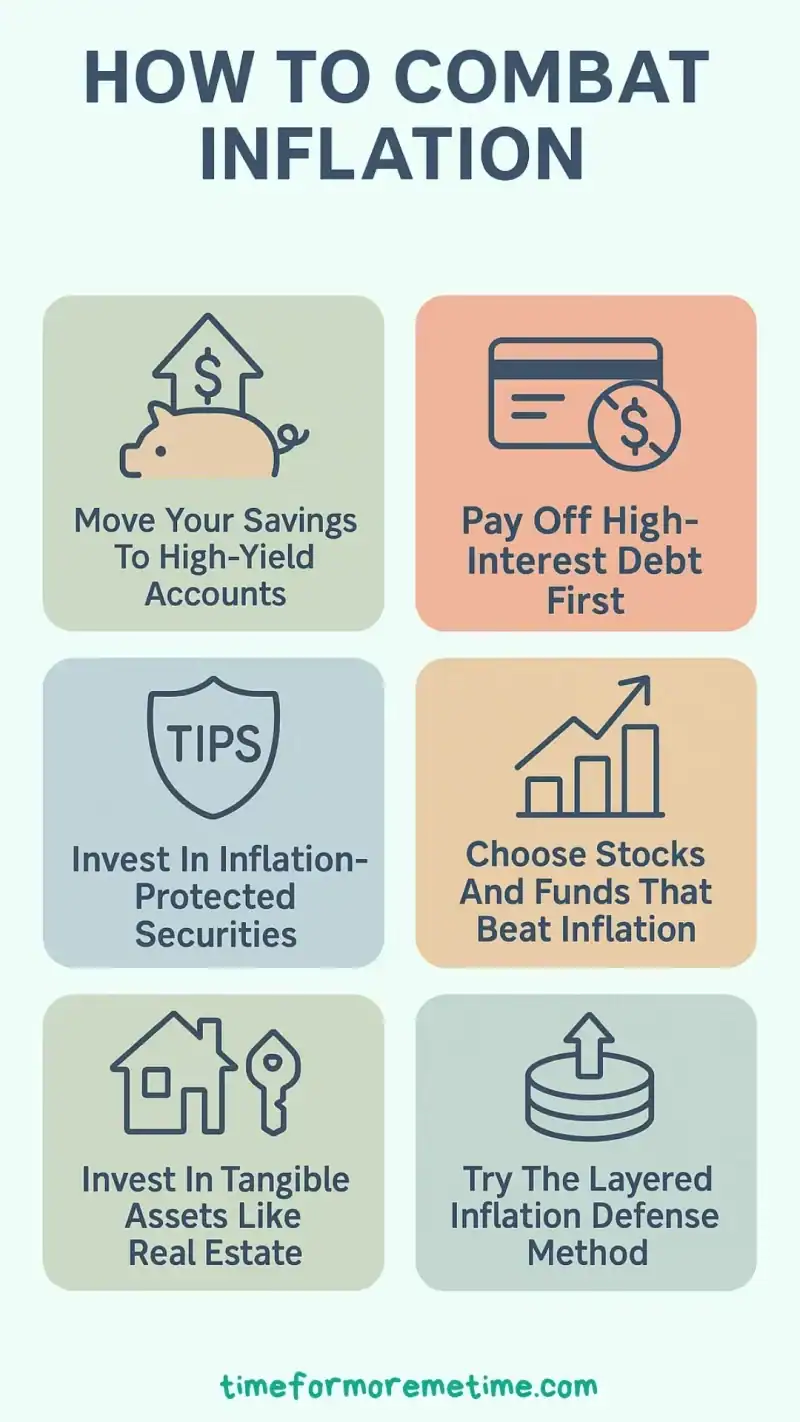
1. Move Your Savings To High-Yield Accounts
Move your savings to high-yield accounts to earn money from interest, which can combat inflation. Traditional savings accounts often pay less than 0.5%, so your money loses value as prices increase. When I shifted my emergency fund to an account earning over 4% Annual Percentage Yield (APY), it finally started working for me.
The average US savings account pays only 0.40%, while online banks now offer 4–5%. That difference determines whether your savings grow or shrink. These accounts are Federal Deposit Insurance Corporation (FDIC)-insured up to $250,000, keeping your funds safe while they earn more.
Before the month ends, check what your bank is offering. A quick switch to a high-yield account could help you earn passive income without changing your lifestyle.
2. Pay Off High-Interest Debt First
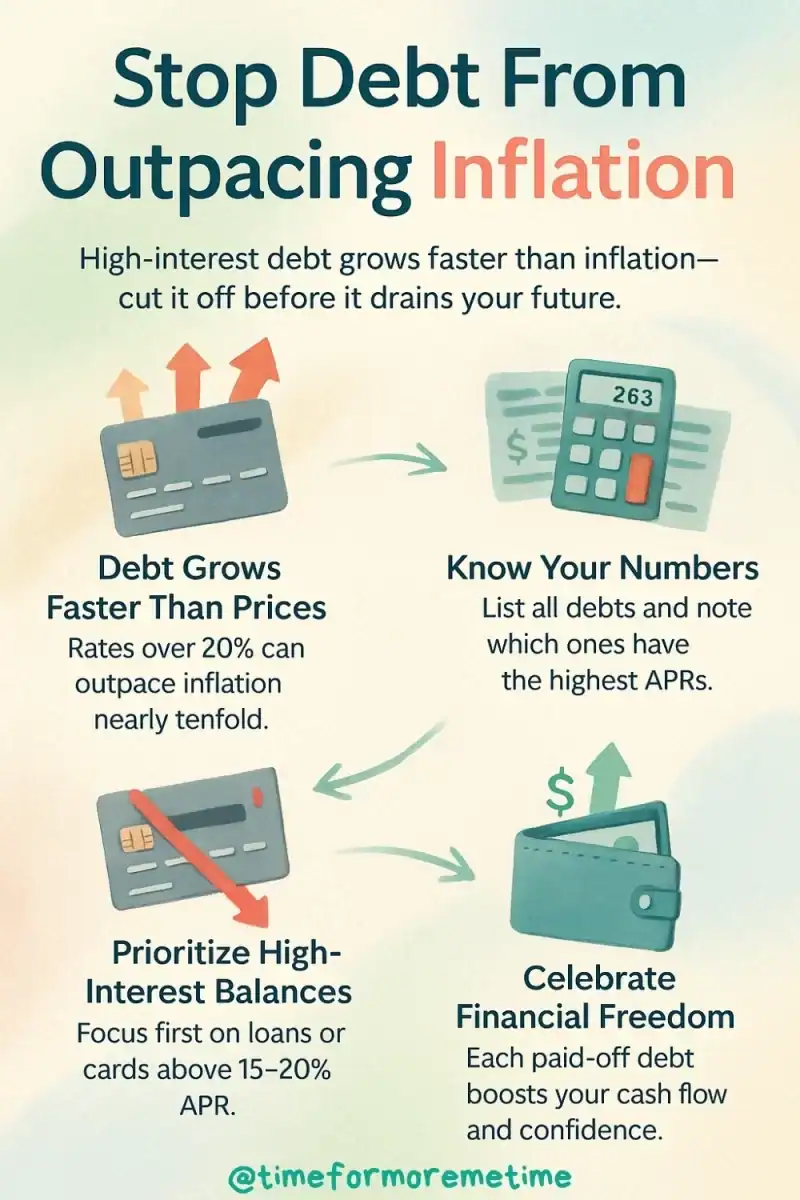
The next defense against inflation is clearing high-interest debt. Credit cards often carry rates that rise faster than inflation itself. When my card hit 22% interest in 2022, I made debt repayment my top priority. The result? It freed up hundreds of dollars each month.
In 2025, the national average credit card rate reached 21%, the highest in more than three decades. At that pace, debt grows nearly ten times faster than inflation. Each payment you make today stops that compounding loss tomorrow.
If you’re unsure where to begin, try the avalanche method. Focus on debts with the highest APR (Annual Percentage Rate) first, then move to smaller ones. As those balances disappear, your confidence—and your cash flow—will grow.
3. Invest In Inflation-Protected Securities
Once your savings and debt are under control, it’s time to protect your money from losing value. Treasury Inflation-Protected Securities (TIPS) adjust their worth based on the Consumer Price Index (CPI), helping your investment rise alongside inflation. I first bought TIPS in 2023 after rent and grocery costs spiked, and it gave me peace of mind knowing my savings stayed strong.
Right now, 10-year TIPS yield about 2% above inflation. That’s a solid return for a low-risk, government-backed investment. Even if inflation slows, TIPS help preserve purchasing power through every cycle.
You can buy TIPS directly through TreasuryDirect.gov or invest in them via exchange-traded funds (ETFs). They’re a practical, hands-off way to keep your savings growing with the economy.
4. Choose Stocks And Funds That Beat Inflation
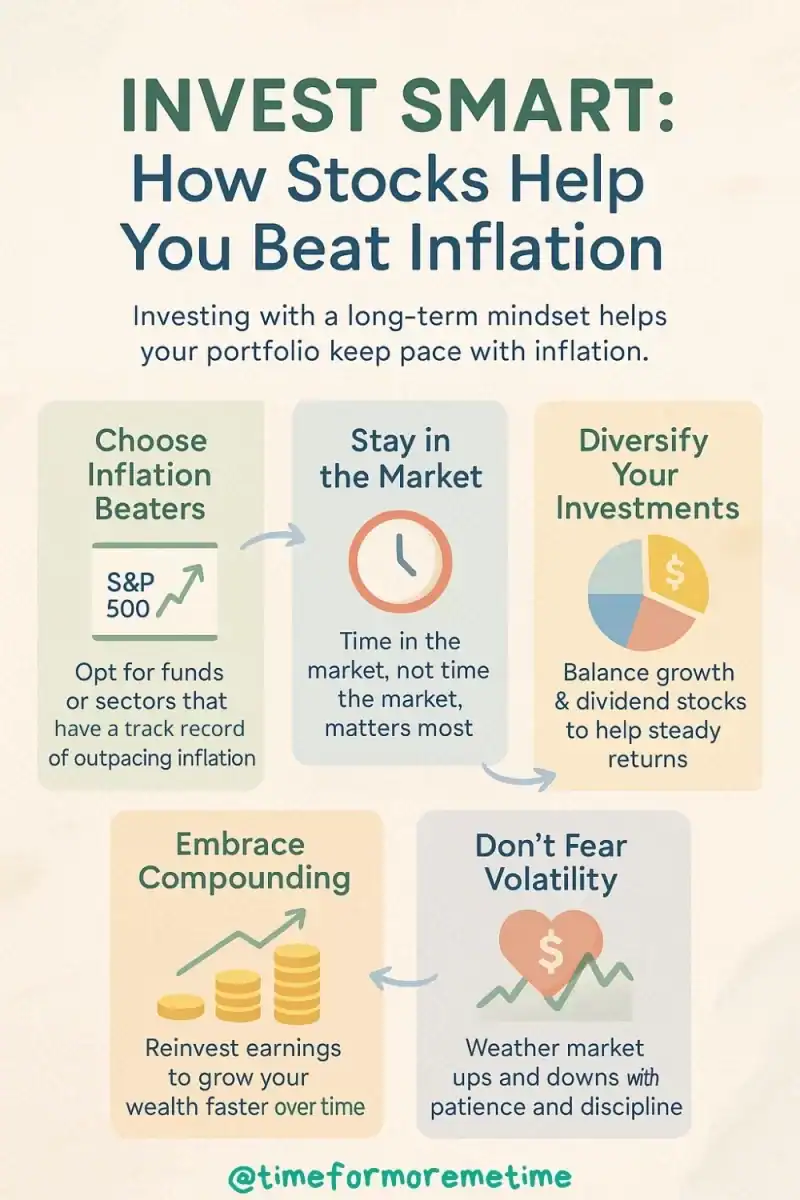
If you’re ready to build wealth long-term, stocks remain one of the best inflation fighters. The S&P 500 has delivered about 10% annual returns on average, and that’s far higher than inflation’s long-term 3% rate. When my index fund rebounded after the 2022 dip, it reminded me that staying invested often beats trying to time the market.
In early 2025, the Federal Reserve began cutting interest rates, and the S&P 500 surged past 5,400—its strongest first half since 2021. That rebound showed how markets reward patience. Diversifying between growth and dividend stocks helps smooth out volatility while compounding wealth steadily.
Instead of fearing inflation, use it as motivation to stay consistent. The stock market rewards those who commit, not those who panic.
5. Invest In Tangible Assets Like Real Estate
Beyond paper assets, tangible ones like real estate can protect you from inflation’s effects. Home values and rental income often rise alongside prices, keeping your money’s worth intact. A friend who bought a duplex in California in 2019 now earns enough rent to cover her mortgage while her property continues to appreciate.
High mortgage rates might make buying seem risky, but fixed-rate loans lock in your payments while your property’s value climbs. Real estate builds equity, a type of savings that inflation can’t shrink.
If homeownership isn’t an option yet, Real Estate Investment Trusts (REITs) provide a way to invest in real estate without owning property. Whether through physical homes or REIT shares, tangible assets bring balance to your portfolio.
6. Try The Layered Inflation Defense Method
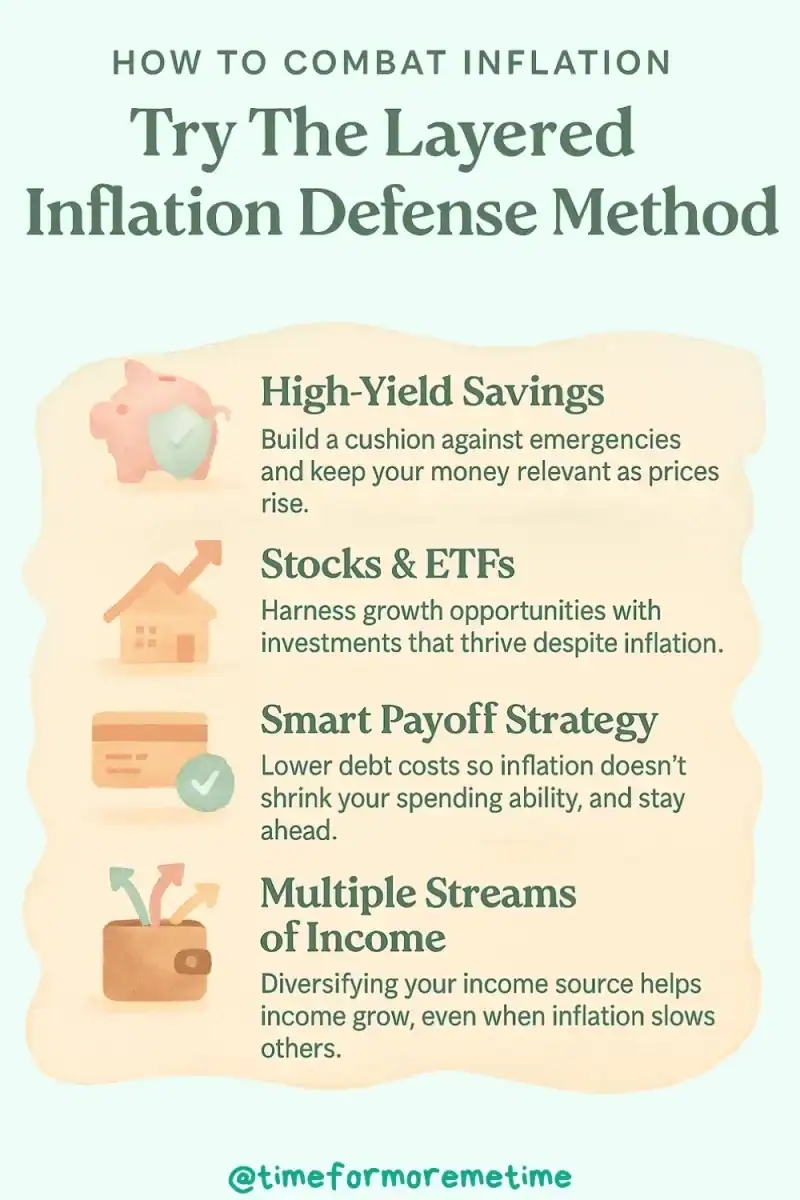
Over the years, I developed what I call my Layered Inflation Defense Method, a mix of savings, debt payoff, and diversified investments. Each layer covers a different type of risk. High-yield savings handle short-term needs, stocks drive growth, and real estate builds lasting stability.
From my experience, 8 out of 10 people rely on only one financial tactic, like saving or investing, and miss the power of combining both. By layering methods, I’ve stayed calm through rate hikes and market dips. When one area slows, another holds steady.
This method turns inflation protection into a habit, not a reaction. It helps you stay ready instead of worried—and that mindset keeps you ahead financially.
Conclusion
Combating inflation is a steady and practical approach to protecting your finances. Building consistent habits like saving more, reducing debt, and investing wisely can strengthen your long-term stability.
To receive more simple and effective money tips, subscribe to our blog, follow us on social media, and visit our YouTube channel for clear, easy-to-follow financial guides.
Source
- Photo: Pexels: Karola G