


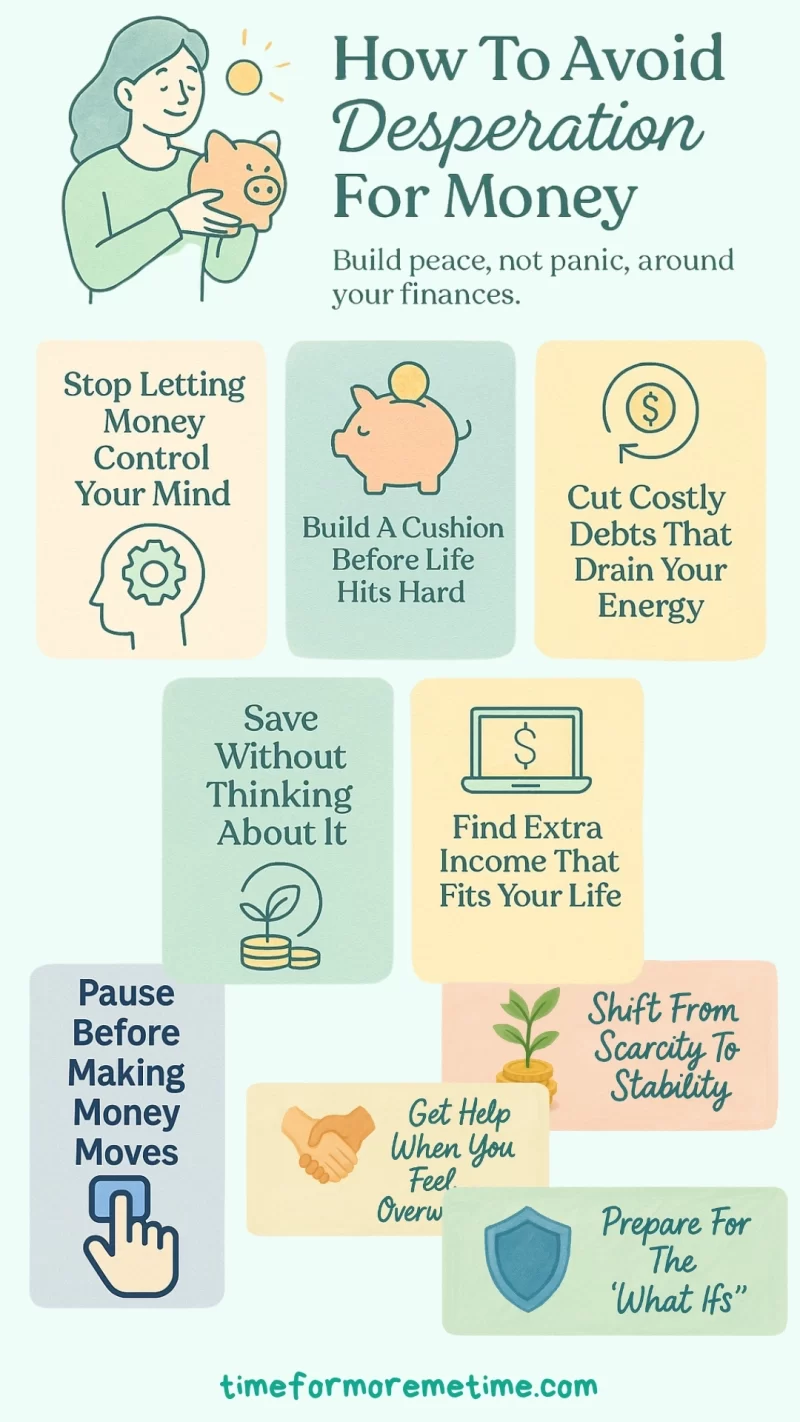
Money stress can make even the most level-headed person feel trapped. That happens, especially when bills pile up or income slows down. As a result, most people resort to high-interest loans, risky investments, or constant anxiety. But you can avoid that by learning how to prevent desperation for money in this post. Let’s get started!
1. Stop Letting Money Control Your Mind
The first step to avoiding financial panic is understanding your relationship with money. When every decision revolves around fear of not having enough, it’s easy to make impulsive choices that worsen your situation.
Take time to separate your emotions from your expenses. Write down what triggers your stress—bills, debt, or uncertainty—and challenge those thoughts with facts. This small act of awareness can help you regain perspective and avoid falling into the cycle of desperation for money.
2. Build A Cushion Before Life Hits Hard
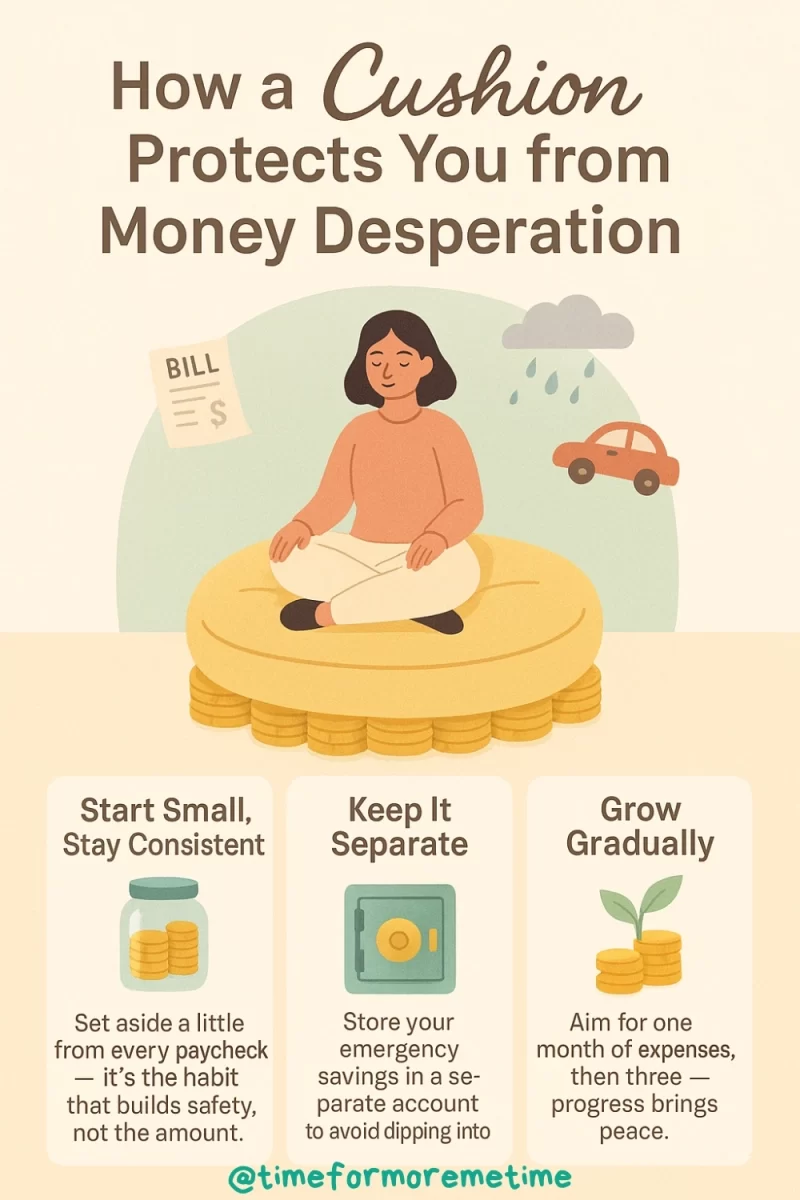
Nothing eases money stress like knowing you have something to fall back on. An emergency fund, even a small one, gives you room to breathe when unexpected costs appear.
Start by saving a little from each paycheck, even if it’s just a few dollars. Consistency matters more than the amount. Over time, this cushion becomes a barrier between you and financial panic. When you prepare early, you don’t have to rely on credit cards, loans, or last-minute fixes.
3. Cut Costly Debts That Drain Your Energy
High-interest debt keeps you trapped in a cycle that feels impossible to escape. The constant payments, fees, and stress can make desperation for money feel endless.
Start by identifying the debts with the highest interest rates—usually credit cards or payday loans—and focus on paying those first. Use strategies like the avalanche or snowball method to build momentum. As your debt decreases, your confidence grows, and you’ll start seeing real progress toward financial freedom.
4. Save Without Thinking About It
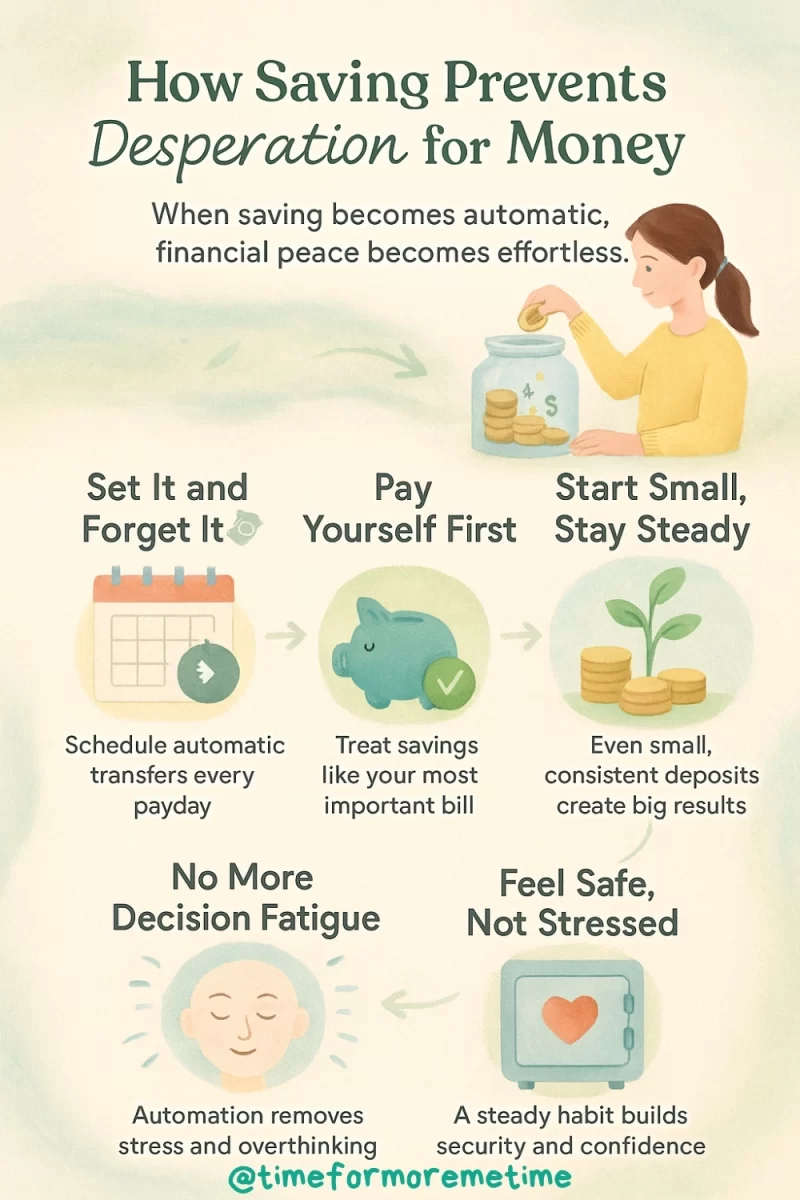
Saving doesn’t have to feel like a chore. The easiest way to stay consistent is to make it automatic. Set up a recurring transfer to your savings account every payday before you even see the money.
Automation takes the pressure off willpower and turns saving into a regular habit. Even small amounts build up faster than you think. When you pay yourself first, you reduce the risk of running short—and that helps you stay clear of desperation for money.
5. Find Extra Income That Fits Your Life
Sometimes, cutting expenses isn’t enough—you need more coming in. Look for flexible ways to earn extra cash that work around your schedule, like freelancing, tutoring, or selling unused items online.
Even a small side hustle can make a big difference when things feel tight. The goal isn’t to overwork yourself but to ease financial strain through steady, manageable effort. With multiple income sources, you’ll feel more secure and less vulnerable to financial emergencies.
6. Pause Before Making Money Moves
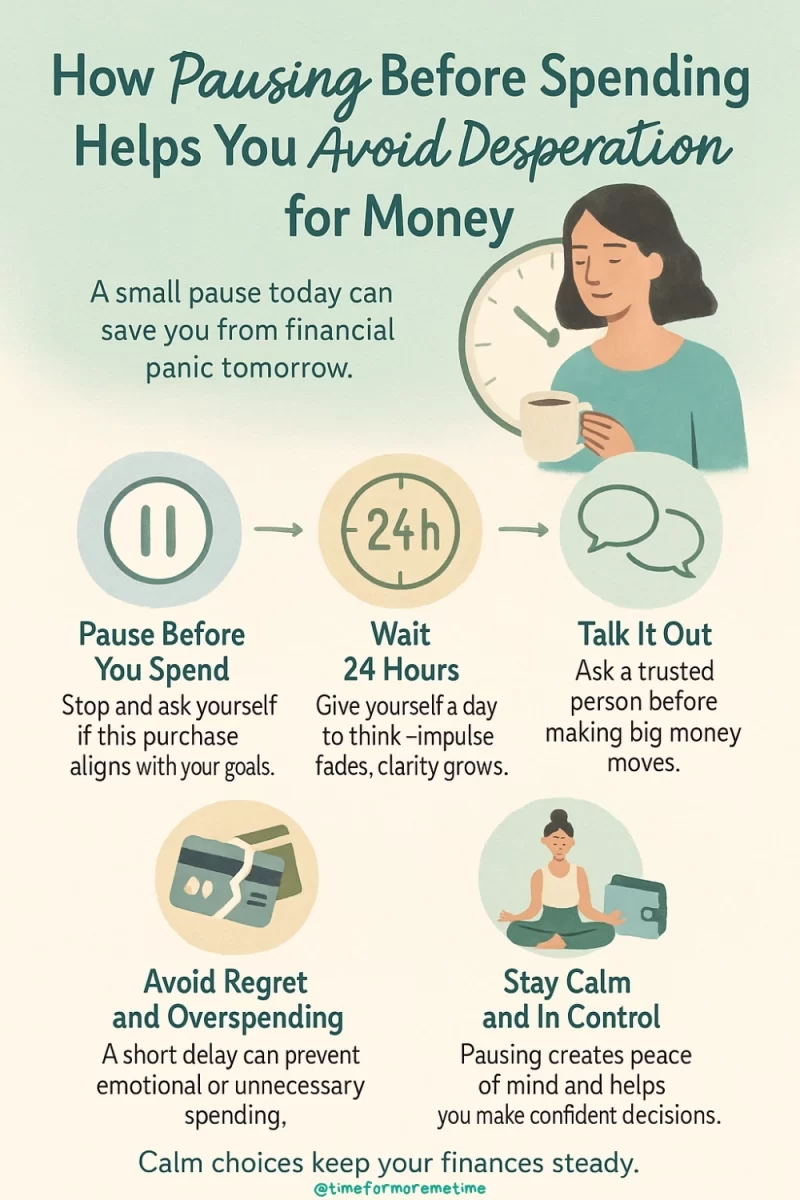
When you’re under pressure, quick decisions can lead to regret. Before agreeing to a loan, investment, or financial commitment, take a step back. Give yourself 24 hours to think it through—or talk it over with someone you trust.
This short pause allows logic to catch up with emotion. It’s often the moment that saves you from impulse spending or risky deals. Avoiding hasty decisions is one of the simplest ways to stay grounded when facing desperation for money.
7. Shift From Scarcity To Stability
Constantly worrying about what you don’t have keeps you stuck in survival mode. A scarcity mindset fuels a desperation for money because it causes you to focus on lack rather than progress.
Start by practicing gratitude for what’s already working—steady income, supportive people, or small wins. Reframe challenges as opportunities to grow instead of signs of failure. Over time, this shift fosters emotional stability, enabling you to make clearer, more confident financial decisions without fear or panic influencing your choices.
8. Get Help When You Feel Overwhelmed

Financial stress doesn’t have to be faced alone. Talking to someone—a trusted friend, financial coach, or support group—can give you clarity and a fresh perspective.
Sharing your struggles often reveals solutions you hadn’t seen before. It also breaks the isolation that deepens anxiety. Seeking guidance doesn’t make you weak—it’s a smart step toward stability. With support and accountability, you can replace desperation for money with thoughtful, consistent action that rebuilds control and confidence.
9. Prepare For The “What Ifs”
Financial peace comes from planning ahead, not reacting to crises. Think about possible challenges like job loss, medical bills, or unexpected repairs—and have a plan in place.
Set up backup income options, insurance coverage, or flexible side projects that you can turn to when needed. This isn’t the same as saving—it’s building resilience. By preparing for surprises before they happen, you protect yourself from panic decisions that often come from desperation for money.
Conclusion
Avoiding desperation for money isn’t about being rich—it’s about being prepared and intentional. When you focus on planning, mindset, and steady action, financial stress loses its grip. Each small step—saving automatically, reducing debt, and staying grounded—moves you closer to stability and peace of mind.
If you found this helpful, consider subscribing to our blog, following us on social media, and visiting our YouTube channel for more practical tips on building confidence and control in your financial life.
Source
- Photo: Pexels: Lukas