


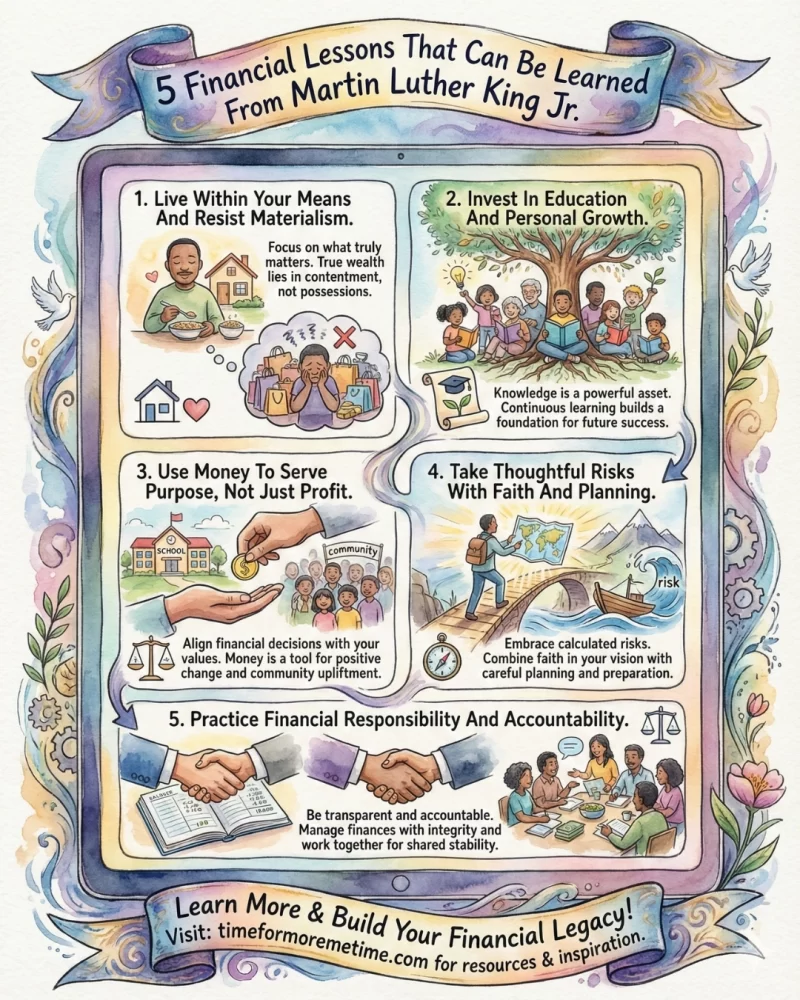
Money decisions often feel separate from our values. Budgets, savings goals, and career choices can become routines focused only on numbers. Over time, we might forget that money shows our priorities, purpose, and responsibility.
Questions about purpose and responsibility were key in how Martin Luther King Jr. spoke about money. Know that aside from civil rights, he talked about poverty, opportunity, and how finance affects dignity and freedom.
If you want to learn how to connect your daily money choices to important principles like stability, contribution, and long-term impact, keep reading. I will share lessons from MLK that can help us with our finances. Let’s get started!
1. Live Within Your Means And Resist Materialism
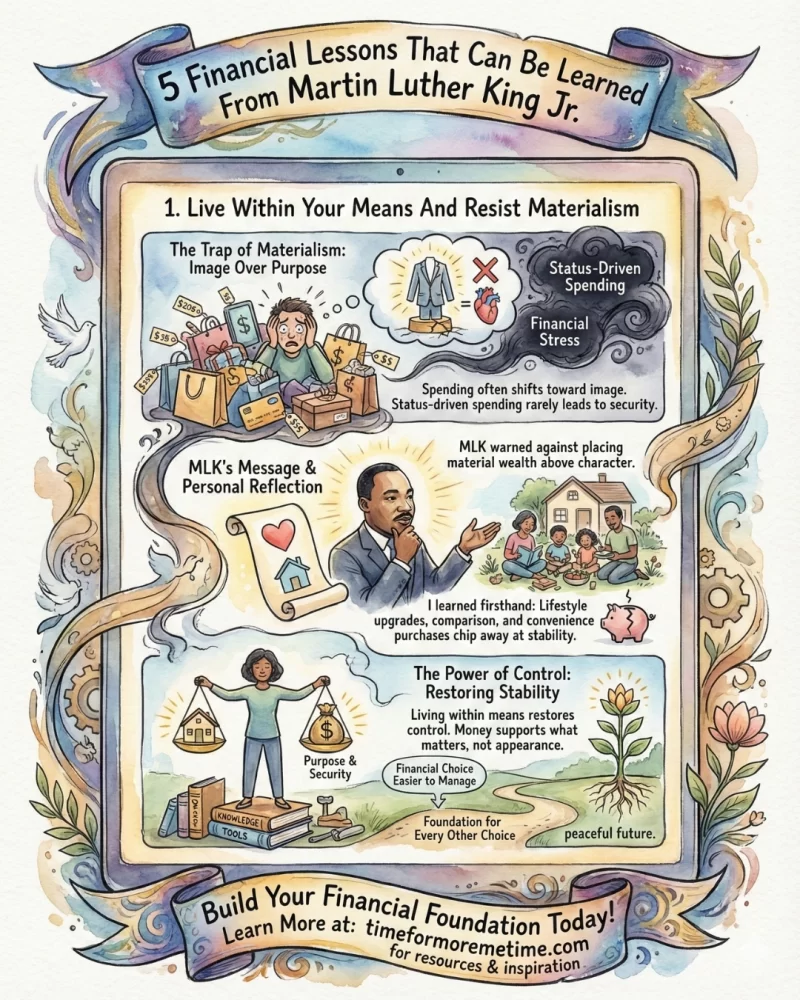
When money loses its connection to values, spending often shifts toward image instead of purpose. Martin Luther King Jr. warned against placing material wealth above character, a message that speaks directly to modern financial behavior. Status-driven spending creates pressure that rarely leads to security.
Overspending usually builds slowly—I learned that first hand. Lifestyle upgrades, comparison, and convenience purchases chip away at stability over time. Financial stress often comes from repeated small choices rather than one major mistake.
Living within your means restores control. It allows money to support what matters instead of driving decisions through obligation or appearance. That foundation makes every other financial choice easier to manage.
2. Invest In Education And Personal Growth
Once money is no longer driven by materialism, the next question becomes where it should be directed. Martin Luther King Jr. believed education and critical thinking were essential to progress because they expand opportunity rather than display wealth. I always believed that this can be applied directly to financial growth.
Investing in skills, knowledge, and adaptability not only strengthens earning potential over time but also reduces dependence on unstable income sources. This kind of growth, which compounds internally, tends to outlast any short-term financial gains.
If you want to cultivate resilience that prepares you to adjust when circumstances change and to make smarter decisions throughout your financial life, prioritize learning. Ultimately, these investments lay a solid foundation for sustainable success and stability.
3. Use Money To Serve Purpose, Not Just Profit
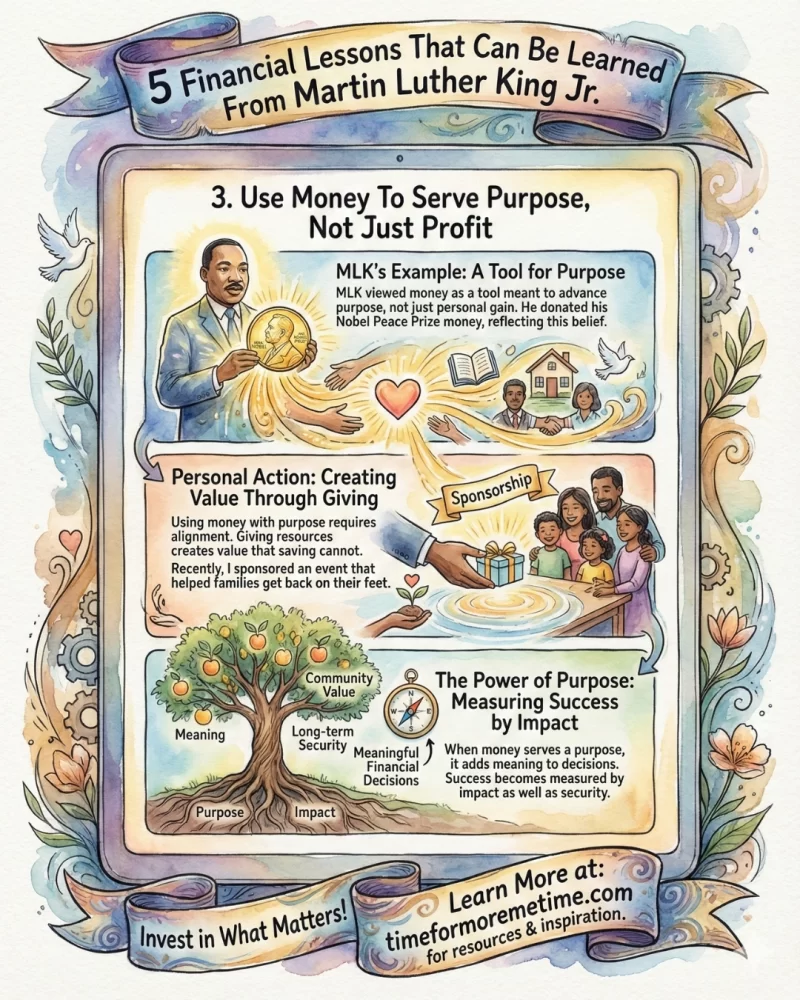
Personal growth strengthens stability, but Martin Luther King Jr. also emphasized responsibility beyond individual success. He viewed money as a tool meant to advance purpose, not just personal gain. His decision to donate his Nobel Peace Prize money clearly reflected that belief.
Using money with purpose requires alignment. Giving time, resources, or financial support to meaningful causes creates value that simply saving money cannot. Recently, I sponsored an event that helped a few families get back on their feet. It may not seem like much, but I hope it made a difference.
When money serves a purpose, it adds meaning to financial decisions. Success becomes measured by impact as well as security.
4. Take Thoughtful Risks With Faith And Planning
Living with purpose often requires action before outcomes are guaranteed. Martin Luther King Jr. spoke about faith as moving forward without seeing every step. That idea applies to financial decisions involving uncertainty.
Thoughtful financial risks include investing in education, changing careers, or committing to long-term goals. For example, I took this path to become a dosimetrist, a profitable career, but it also meant taking on significant student debt.
Always remember that these decisions should be based on preparation, not impulse. They balance belief with responsibility. By approaching risk this way, you can reduce fear. Faith becomes a guide, backed by careful planning.
5. Practice Financial Responsibility And Accountability
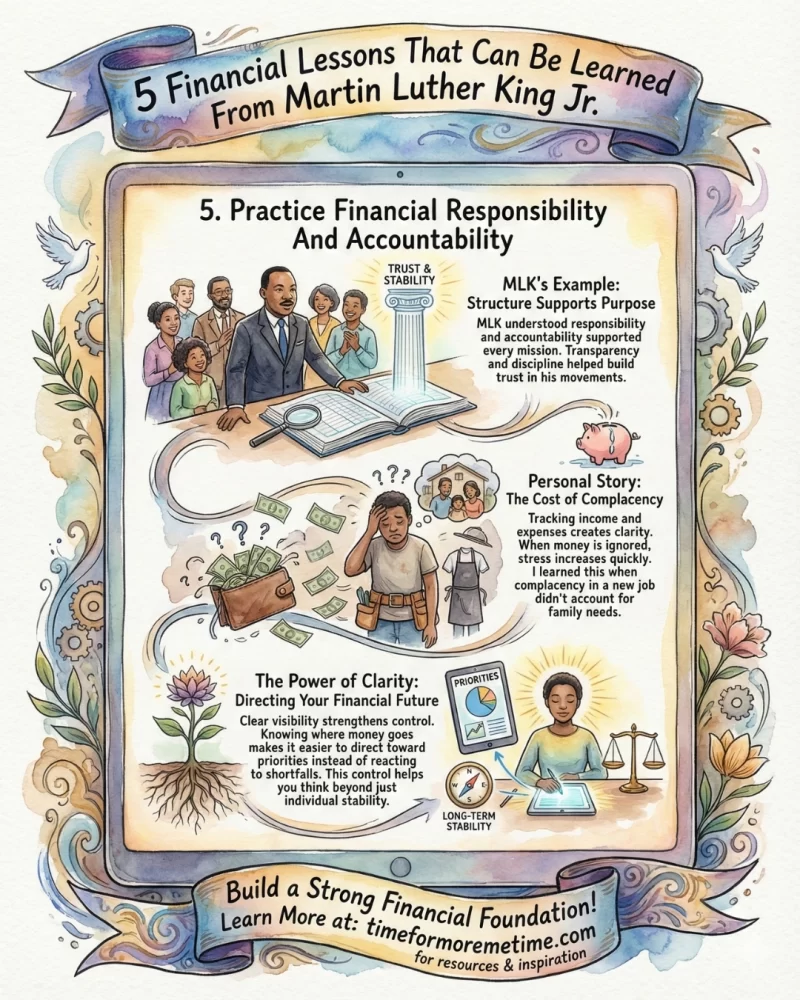
Purpose-driven action still needs structure to last. Martin Luther King Jr. understood that responsibility and accountability supported every mission, including economic ones. Transparency and discipline helped build trust in the movements he led.
This idea applies to personal finance as well. Tracking your income, expenses, and obligations creates clarity. It helps you prevent small issues from becoming big problems. When money is ignored, stress can increase quickly. I learned this when I worked as a roofing helper. I was complacent because I earned more than I did waiting tables, but I realized too late that it wasn’t enough for my family to have a good life.
Remember that having clear visibility strengthens control. Knowing where your money goes makes it easier to direct it toward your priorities instead of reacting to shortfalls. This sense of control helps you think beyond just individual stability.
Conclusion
The financial lessons drawn from Martin Luther King Jr.’s life center on purpose, responsibility, and impact. Money becomes a tool for alignment rather than a measure of worth. These principles apply to everyday decisions as much as long-term plans.
For more posts that connect money choices with real-world values, read our latest content, follow us on social media, and visit our YouTube channel for practical guidance you can apply right away.
Source
- Photo: Pexels: Mikhail Nilov