


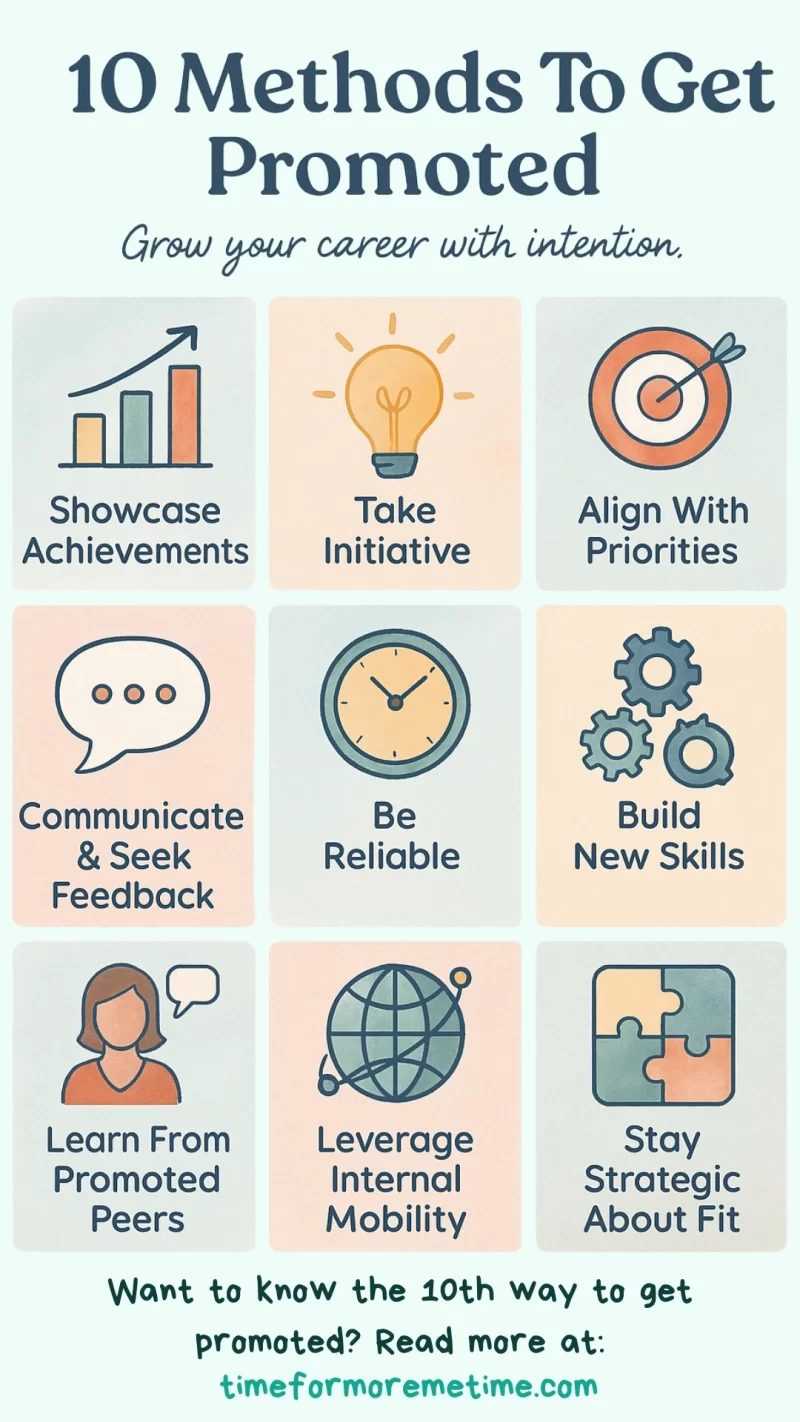
Getting promoted may seem out of reach, but small steps can make a big difference in how your work is noticed. Many people put in long hours yet feel stuck, unsure of what it really takes to move forward. If you’ve felt the same, you’re not alone.
With this guide, you’ll learn practical methods that can help you stand out, build trust with your leaders, and take real steps toward the next level in your career. Let’s get started!
1. Showcase Your Achievements With Data
One of the clearest ways to stand out at work is by backing up your contributions with measurable results. Instead of just saying you completed a project, highlight how it saved money, improved efficiency, or boosted sales. For example, tracking percentages, timelines, or cost reductions makes your impact undeniable.
When promotions are discussed, numbers speak louder than words. By consistently presenting your progress with data, you show that your work adds real value and deserves recognition.
2. Take Initiative And Demonstrate Leadership
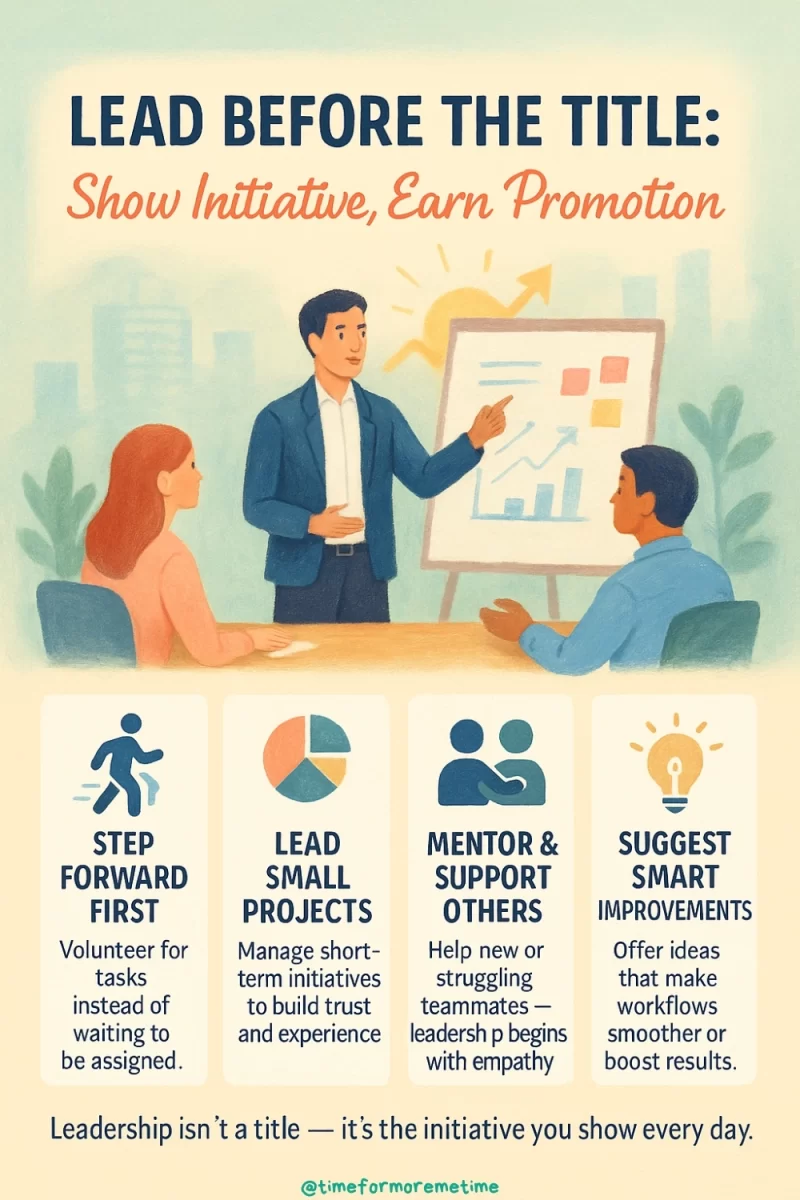
While results matter, promotions also depend on how you handle challenges. Rather than waiting for instructions, step forward and take responsibility for solving problems. For instance, volunteer to lead small projects, mentor a new colleague, or suggest improvements to current processes.
Over time, these actions demonstrate leadership qualities, even without the official title. By consistently showing initiative, you demonstrate your ability to handle larger responsibilities, which naturally positions you as a strong candidate for advancement.
3. Build Visibility With Senior Leaders
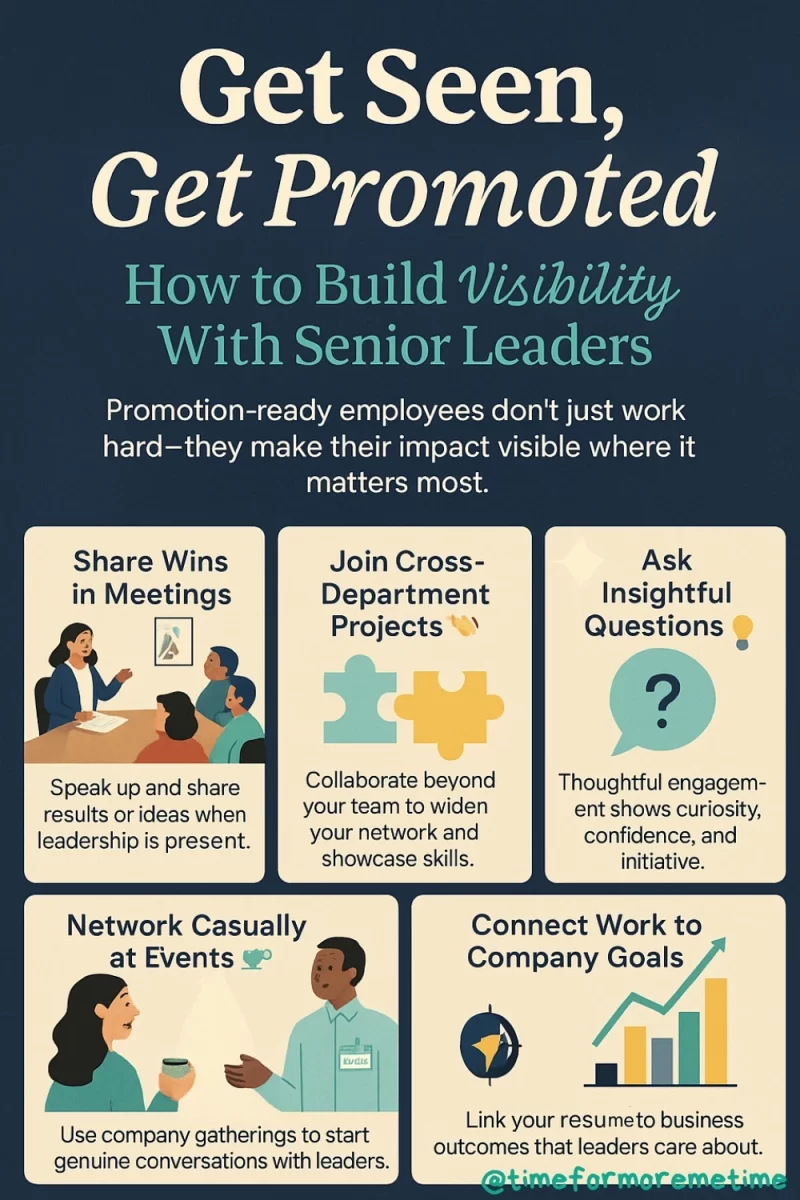
Of course, hard work alone isn’t enough if decision-makers don’t see it. That’s why building visibility with senior leaders is essential. Look for opportunities to share updates in meetings, join cross-department projects, or ask thoughtful questions when leadership is present.
In addition, networking casually during company events can leave a positive impression. When managers know your face and connect it with meaningful contributions, you become top of mind when promotions are considered, giving you an edge over quieter colleagues.
4. Align With What Matters Most
Getting promoted isn’t just about doing your job well—it’s about doing the right things well. Start by understanding what matters most to your manager and the company. If leadership is focused on customer satisfaction or cost savings, make sure your projects support those goals.
By aligning your efforts with top priorities, you prove that you’re not only capable but also strategic. This makes it easier for decision-makers to view you as someone ready for greater responsibility.
5. Communicate Ambitions And Seek Feedback
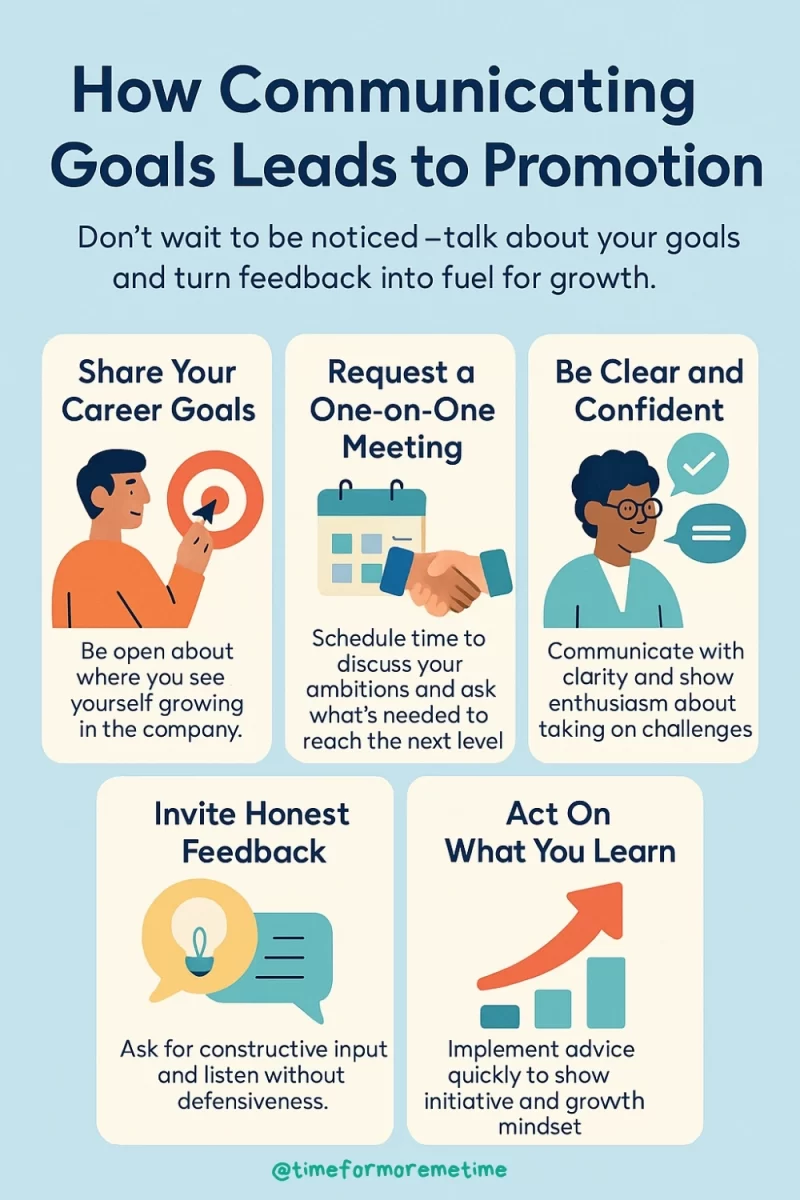
Even if you work hard, managers can’t always guess your career goals. That’s why it’s vital to clearly express your interest in growing within the company.
Schedule a meeting with your supervisor to discuss the requirements for advancing to the next level. At the same time, invite honest feedback and act on it quickly. By showing openness to learn and improve, you position yourself as motivated and coachable—two qualities leaders often look for when considering someone for promotion.
6. Be Reliable And Accessible
Promotions often go to people leaders can count on. It’s not only about being visible, but also about being dependable in everyday tasks. This means meeting deadlines consistently, responding quickly to requests, and supporting teammates when they need help.
Reliability builds trust, and trust is a significant factor in advancement decisions. When managers know you deliver on promises and stay accessible for collaboration, you set yourself apart as someone ready for greater responsibility.
7. Take On Projects That Build New Skills
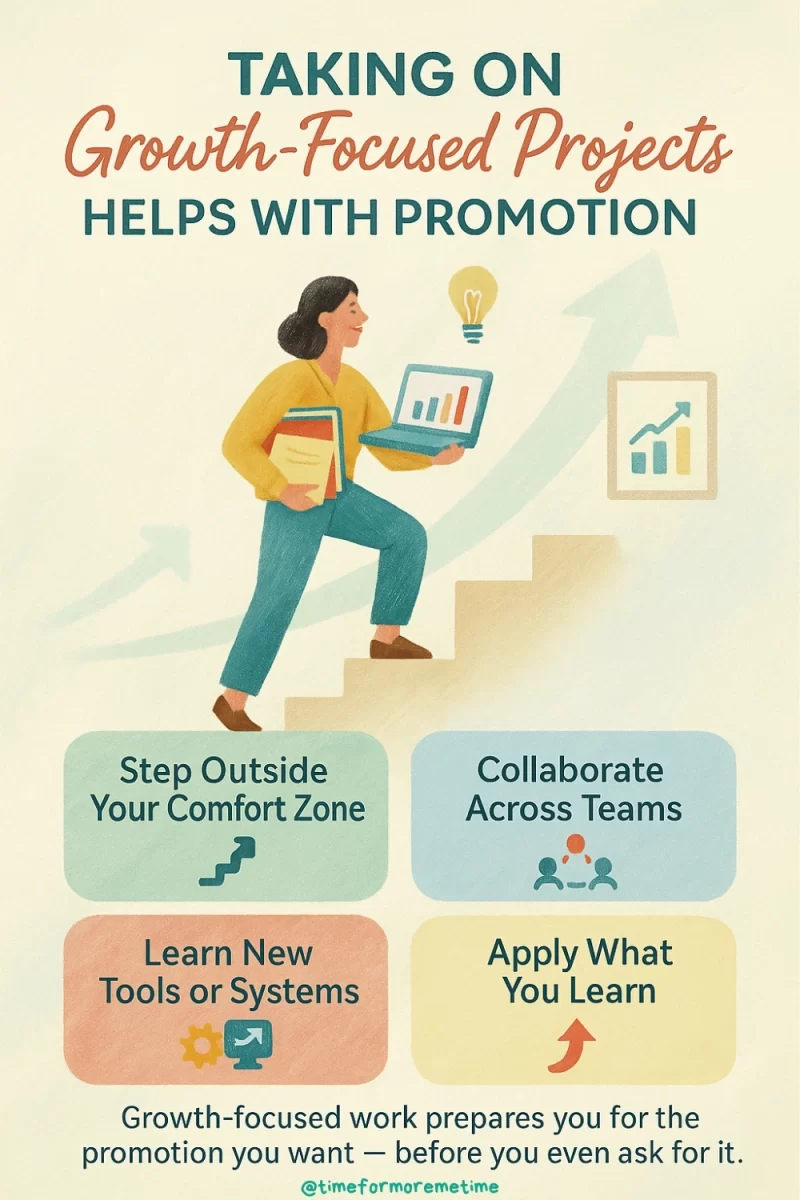
Promotions aren’t just about being noticed—they’re about proving you can handle bigger challenges. That’s why it helps to choose projects that stretch your skills and push you outside your comfort zone.
For example, tackling a cross-functional assignment or learning a new system shows you’re adaptable and growth-minded. These projects may feel demanding, but they give you valuable experience that strengthens your resume and prepares you for leadership roles. Growth through skill-building makes you promotion-ready.
8. Learn From Those Who Got Promoted
Another effective strategy is to observe colleagues who have recently advanced. Pay attention to their habits, how they interact with leaders, and the kind of work they prioritize. By learning from their examples, you can identify patterns and apply them to your own career path.
In addition, don’t hesitate to ask them for advice. Most people are willing to share insights, and their guidance can save you time, effort, and mistakes as you work toward your own promotion.
9. Leverage Internal Mobility And Sponsorship
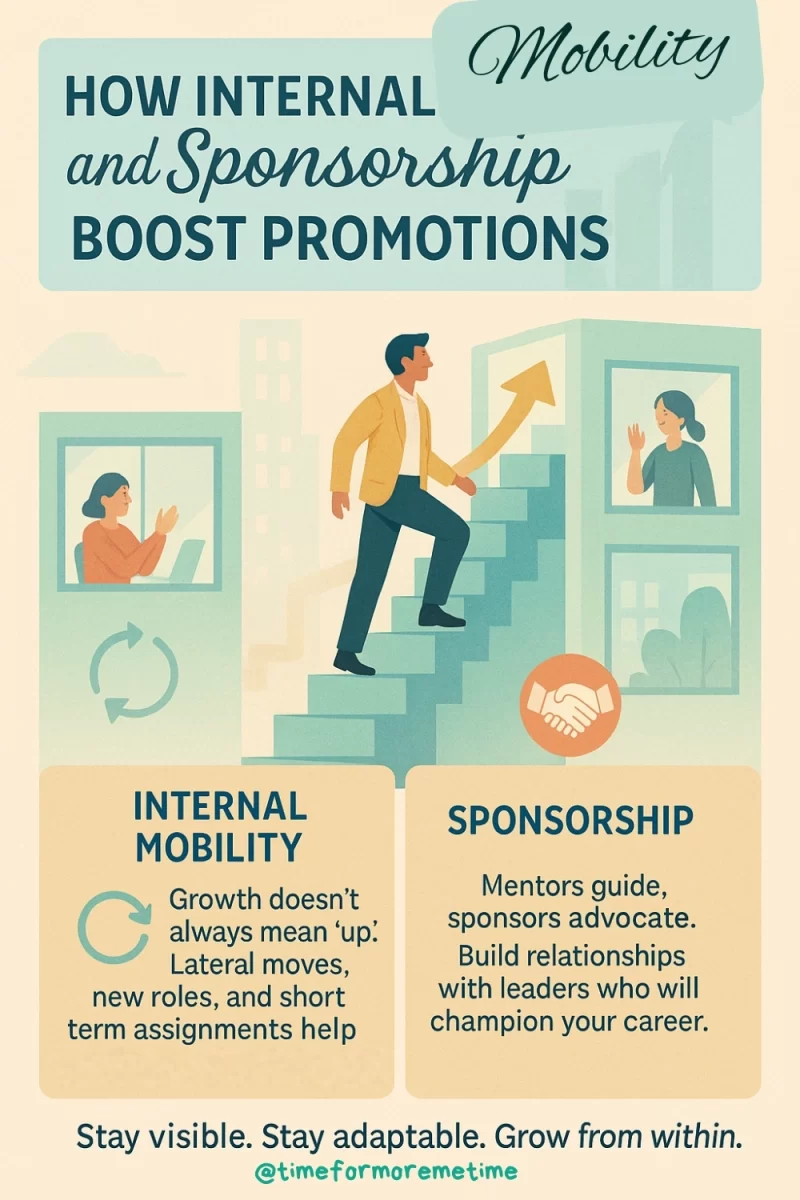
Sometimes, moving up doesn’t happen in a straight line. Internal mobility—such as lateral moves or temporary assignments—can position you for future promotion. At the same time, having a sponsor within the company can make a huge difference.
Unlike mentors who give advice, sponsors actively advocate for your growth and put your name forward for opportunities. By building these relationships and staying open to new roles, you increase your chances of climbing the career ladder from within.
10. Stay Strategic About Your Company Fit
Finally, remember that not every company offers equal chances for advancement. If you’ve applied these methods but feel stuck, it may be time to evaluate your fit. Sometimes seeking opportunities elsewhere creates leverage for growth or provides the promotion you couldn’t find internally.
Staying strategic means knowing when to persist and when to pivot. By focusing on environments that support your ambitions, you keep your career moving forward instead of waiting for opportunities that may never come.
Conclusion
Earning a promotion is less about luck and more about building habits that highlight your value. By applying these methods, you’ll strengthen your reputation, grow your skills, and create opportunities that move your career forward.
Found these tips useful? Subscribe to our blog, follow us on social media, and don’t miss our YouTube channel for more practical insights on career growth and personal development.
Source
- Photo: Pexels: Rebrand Cities