


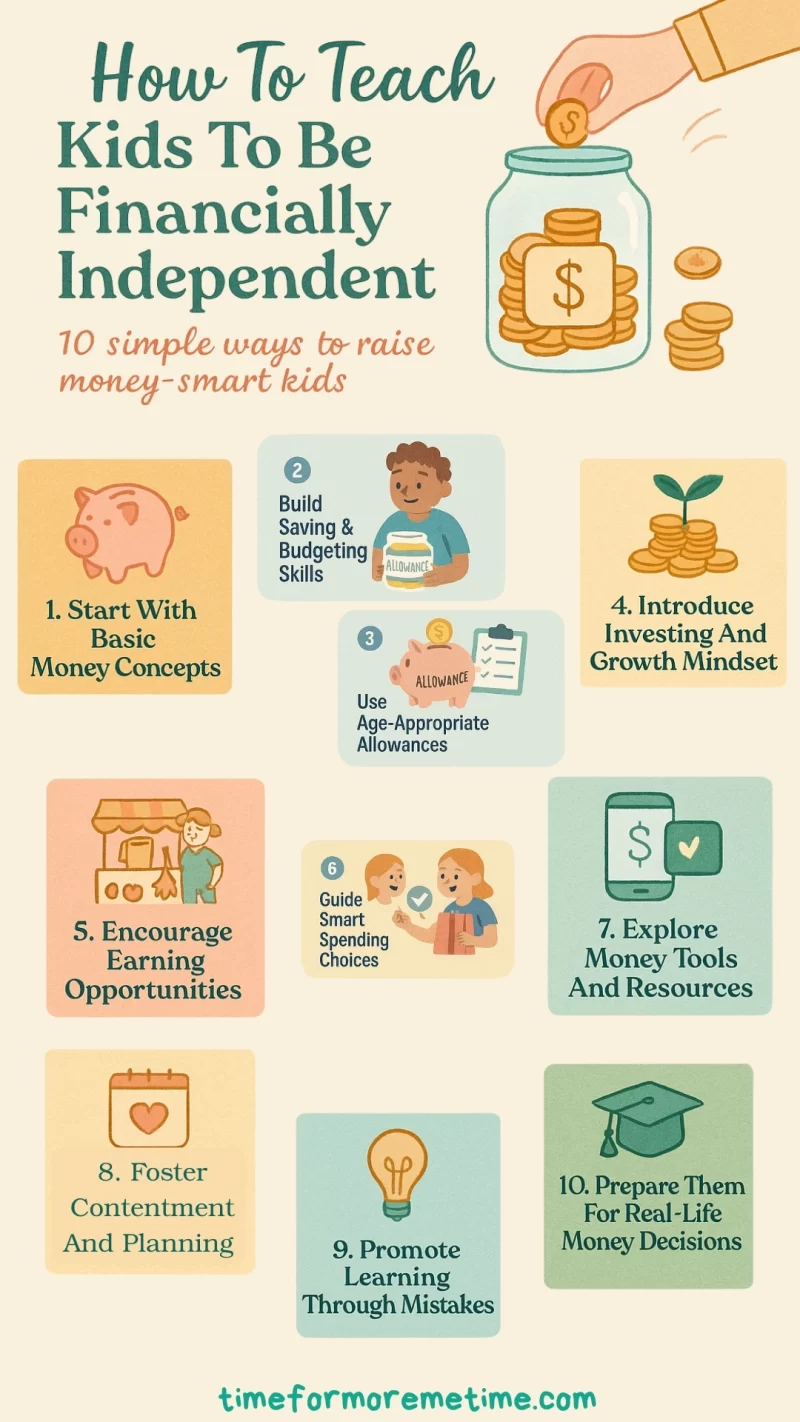
Teaching kids about money may feel overwhelming, but starting early makes all the difference. Many parents want to raise financially independent children, but aren’t sure how to begin. The good news is that simple, practical steps can build lifelong money skills. Here are effective ways to guide your kids toward independence. Let’s get started!
1. Start With Basic Money Concepts
The journey to financial independence begins with simple lessons at a young age. Introduce kids to the value of money by letting them handle coins and bills, or by using clear jars to show how cash grows as they save. Even basic counting games can help them understand that money is limited and must be managed.
These early lessons build a foundation that makes more complex financial topics easier to grasp later. Starting small ensures money management becomes second nature as they grow.
2. Use Age-Appropriate Allowances
An allowance gives children the chance to practice managing their own money, but the amount should match their age and responsibilities. Younger kids might receive a few dollars each week to spend on small items, while older children can get larger amounts to budget for things like clothes or outings.
Some parents tie allowances to chores, while others treat them as a budgeting tool. Either way, allowances provide hands-on learning that helps parents teach kids to be financially independent from an early age.
3. Build Saving And Budgeting Skills
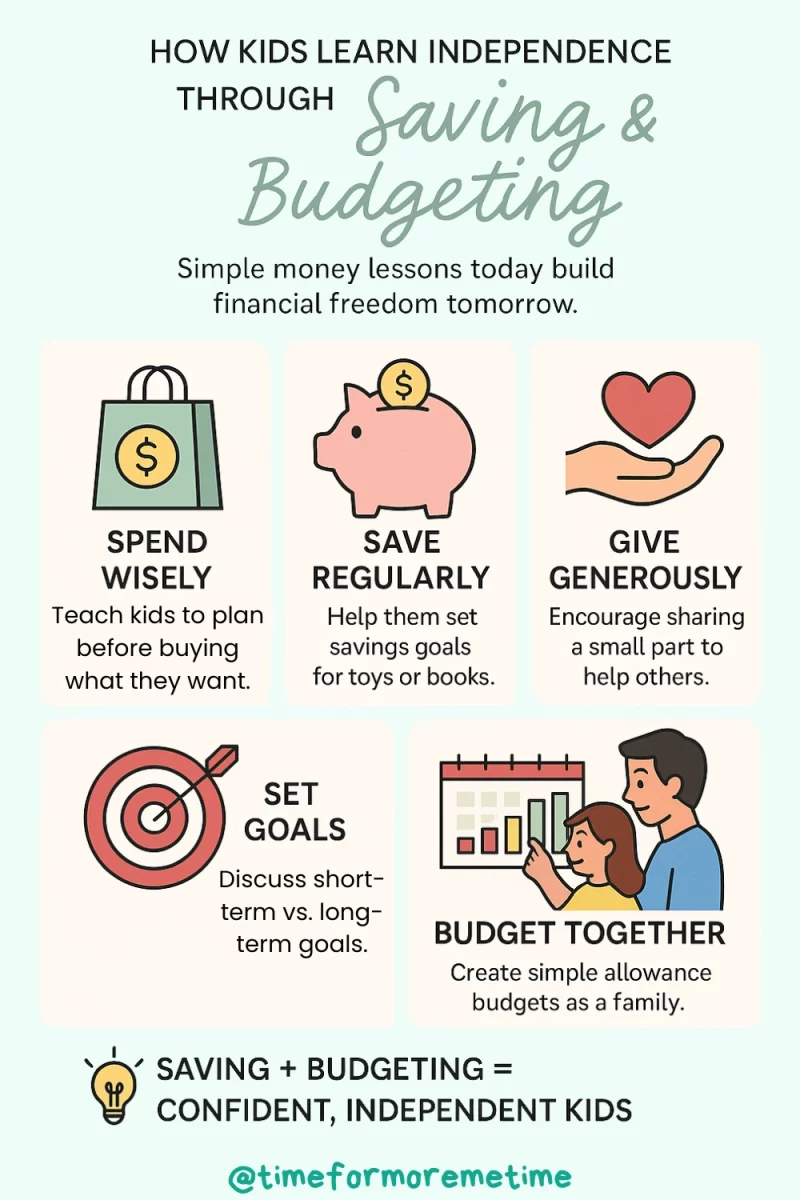
Once kids have money of their own, guide them in learning how to save and budget. A simple method is to split money into three categories: spend, save, and give. This approach creates balance and responsibility while encouraging goal setting.
For example, they can save for a toy, set aside money for long-term goals, and donate to causes they care about. These habits prepare them for adult responsibilities like bills and financial planning, making it easier to teach kids to be financially independent over time.
4. Introduce Investing And Growth Mindset
Saving is important, but learning how money grows through investing takes financial education to the next level. You can start by explaining compound interest with easy examples, like showing how savings grow faster over time when left untouched.
For older kids, consider setting up a custodial account or using investment apps designed for teens. Encouraging a growth mindset shows them that money can work for them, not just be spent. These lessons build confidence and spark curiosity about wealth-building strategies.
5. Encourage Earning Opportunities
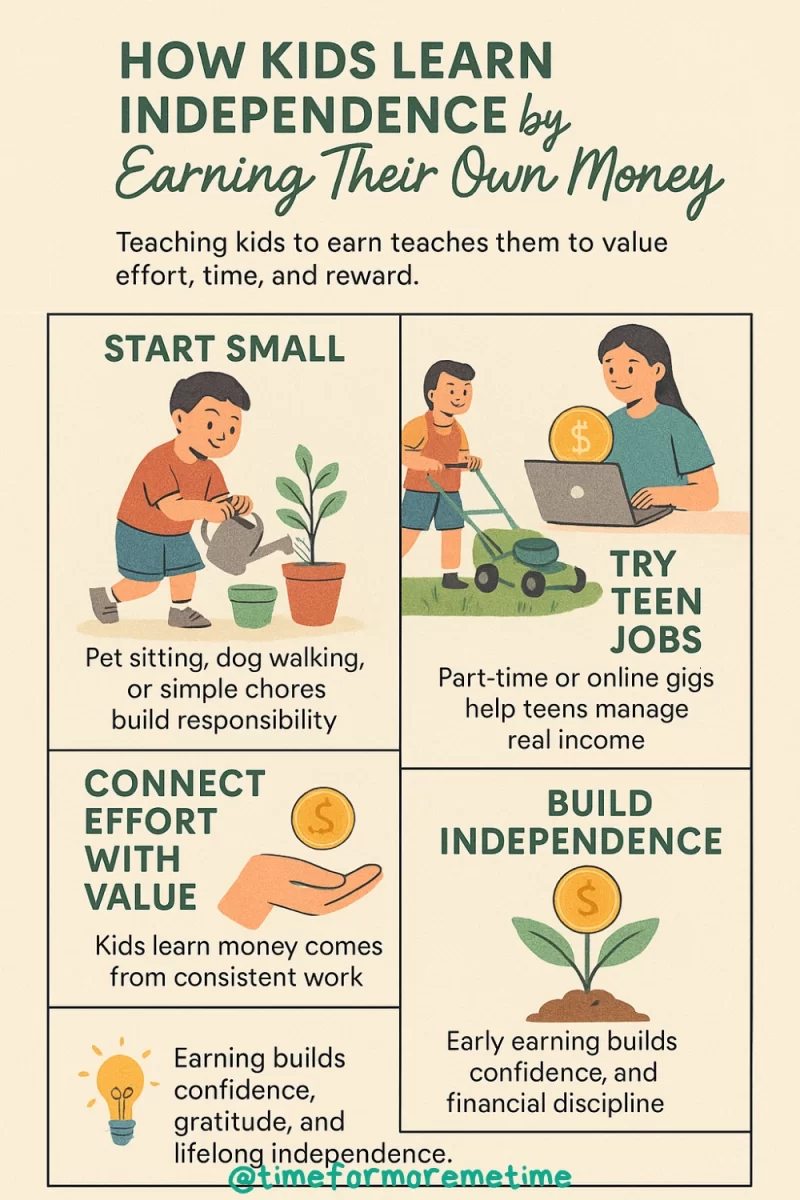
As children grow, encourage them to earn money through small jobs or entrepreneurial activities. Younger kids might start with tasks like pet sitting, babysitting, or mowing lawns, while teens can explore part-time jobs or online gigs.
These experiences teach responsibility and show that money is earned through effort. They also help kids connect the value of hard work with financial rewards, which is an essential step if you want to teach kids to be financially independent as they prepare for adulthood.
6. Guide Smart Spending Choices
Spending money wisely is a crucial part of achieving financial independence, and kids need to see how thoughtful choices can make a difference. Teach them how to compare prices, assess product quality, and determine whether something is a genuine need or just a want.
Encourage them to plan purchases, such as saving up for a desired item rather than making impulsive purchases. By guiding children through these decisions, you help them understand the value of money and the satisfaction of making intentional choices.
7. Explore Money Tools And Resources
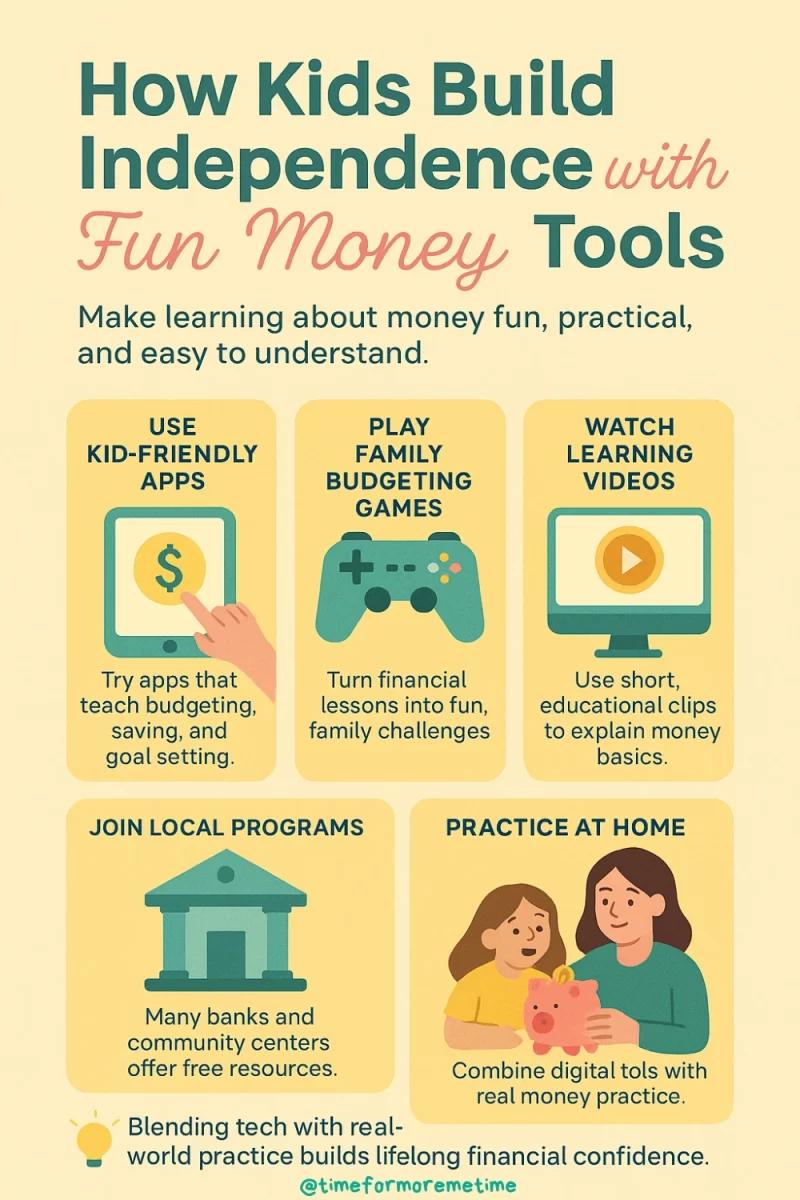
Today’s parents have access to plenty of tools that make financial lessons engaging. Apps designed for kids, family budgeting games, or age-appropriate financial literacy programs can help children learn in fun, practical ways.
Local banks and community programs often provide free resources that reinforce at-home lessons. Pairing these with real-life practice is one of the most effective strategies to teach kids to be financially independent while keeping them engaged.
8. Foster Contentment And Planning
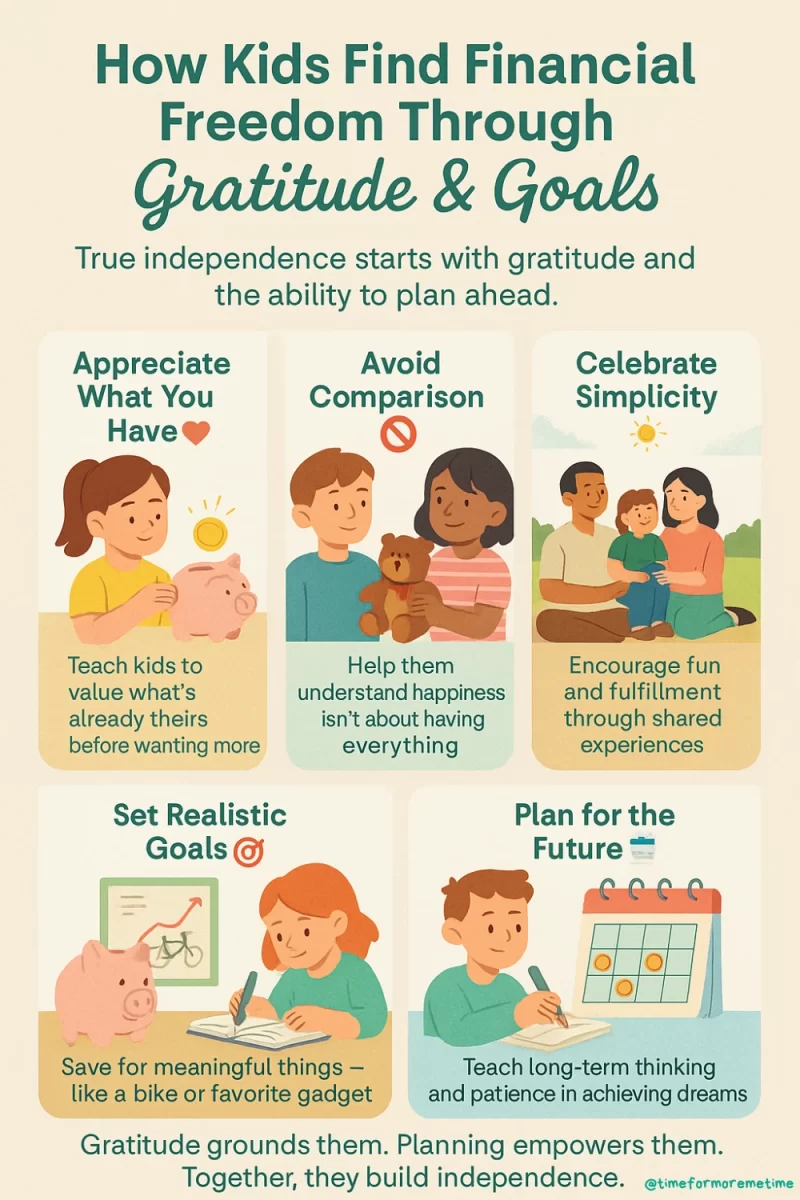
Financial independence isn’t only about earning and saving—it’s also about mindset. Show children the value of contentment, reminding them that happiness doesn’t always come from buying more.
At the same time, encourage long-term planning, such as saving for a bike, a gaming console, or even future education. This balance between gratitude and goal-setting builds healthier financial habits for life.
9. Promote Learning Through Mistakes
Financial independence grows when children take responsibility for their own errors. If they overspend or run out of money, let them feel the impact and reflect on what went wrong.
Parents can act as coaches by asking questions and guiding them toward solutions, such as adjusting spending habits or saving more next time. These lessons build resilience, problem-solving skills, and confidence in handling setbacks.
10. Prepare Them For Real-Life Money Decisions
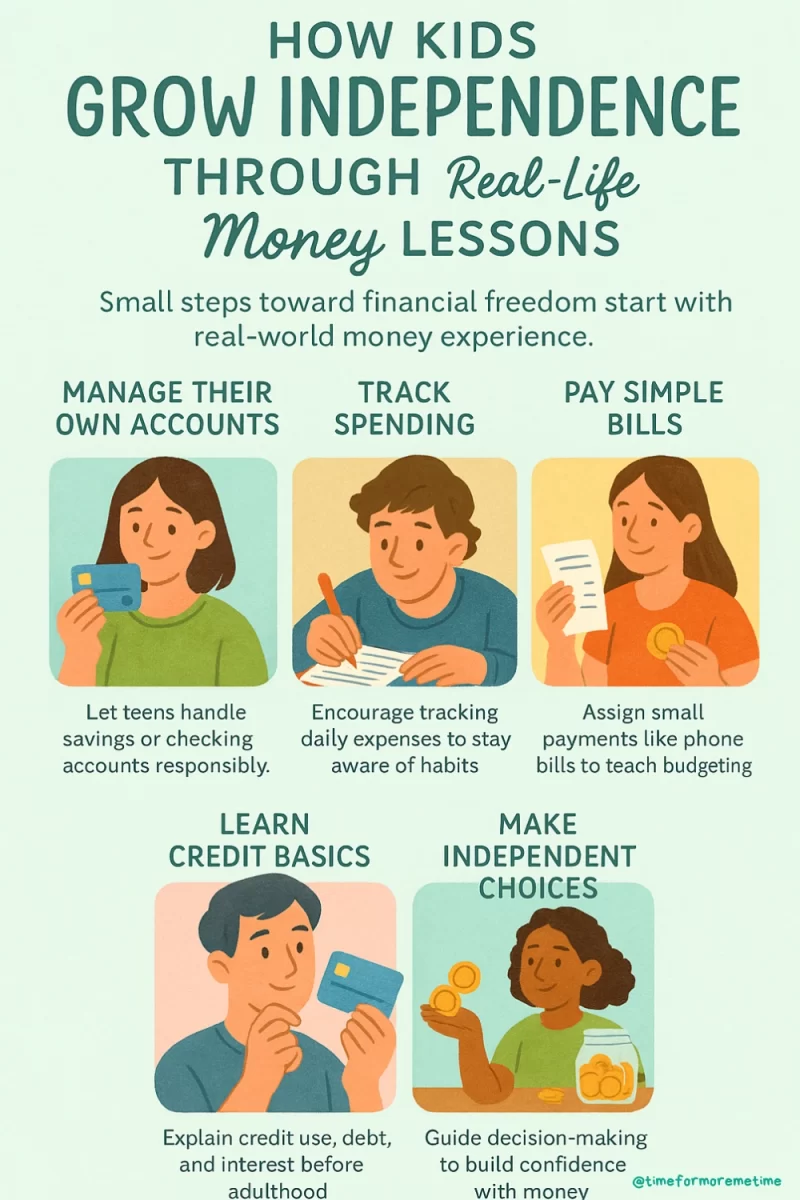
As kids mature, gradually give them more responsibility for their finances. Teens can manage their own bank accounts, track expenses, or pay for certain bills.
Introduce credit basics, such as becoming an authorized user, to help them understand debt and interest before adulthood. These real-world lessons prepare them to navigate money independently and make wiser financial choices.
Conclusion
Helping children develop money skills is not about a single lesson, but rather a series of experiences that shape their habits over time. When you teach kids to be financially independent, you’re giving them more than financial skills—you’re equipping them with discipline, resilience, and the freedom to make wise choices throughout life.
Want more guides like this? Subscribe to our blog, follow us on social media, and visit our YouTube channel for practical money management tips.
Source
- Photos: Pexels: cottonbro studio