
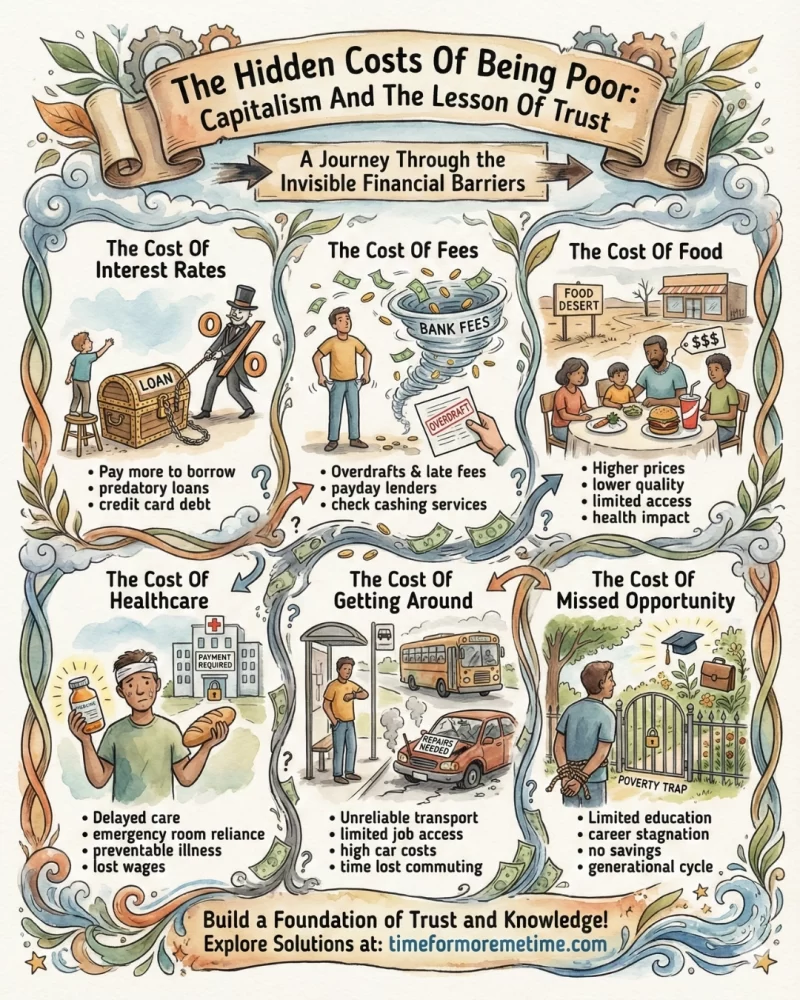
Escaping poverty in America isn’t just about working harder or earning more money. It’s also about learning to deal with the hidden costs that come with being poor—costs that people with money often don’t notice. These everyday penalties add up and make it harder to get ahead, even if you’re trying your best.
Over time, I’ve come to see that these hidden costs teach you how to survive and succeed. They help you learn discipline, foresight, and resilience. If you pay attention, these challenges can help shape habits that lead to success.
Before I explain the hidden costs, let’s talk about capitalism for a moment.
Capitalism And The Lesson Of Trust
Capitalism rewards hard work and creativity, but it also challenges you to manage risk. If you are poor, you face higher fees, higher interest rates, and fewer chances. These problems remind us that trust in money must be earned, but it doesn’t trap us forever.
I learned this lesson in my twenties when I applied for a small loan. My construction hours were cut, and I fell behind on bills. To me, it felt like bad luck. To the bank, I looked unreliable. They offered me a loan at such a high interest rate that I couldn’t afford it.
At first, I thought this was unfair. But later, I realized the bank wasn’t being mean. They were measuring trust. Just as an employer won’t give you responsibility until you prove you’re reliable, banks won’t offer low-interest loans until you show you can handle your money.
This changed how I saw things. The system wasn’t meant to keep me down—it was designed to help me learn.
The Cost Of Interest Rates
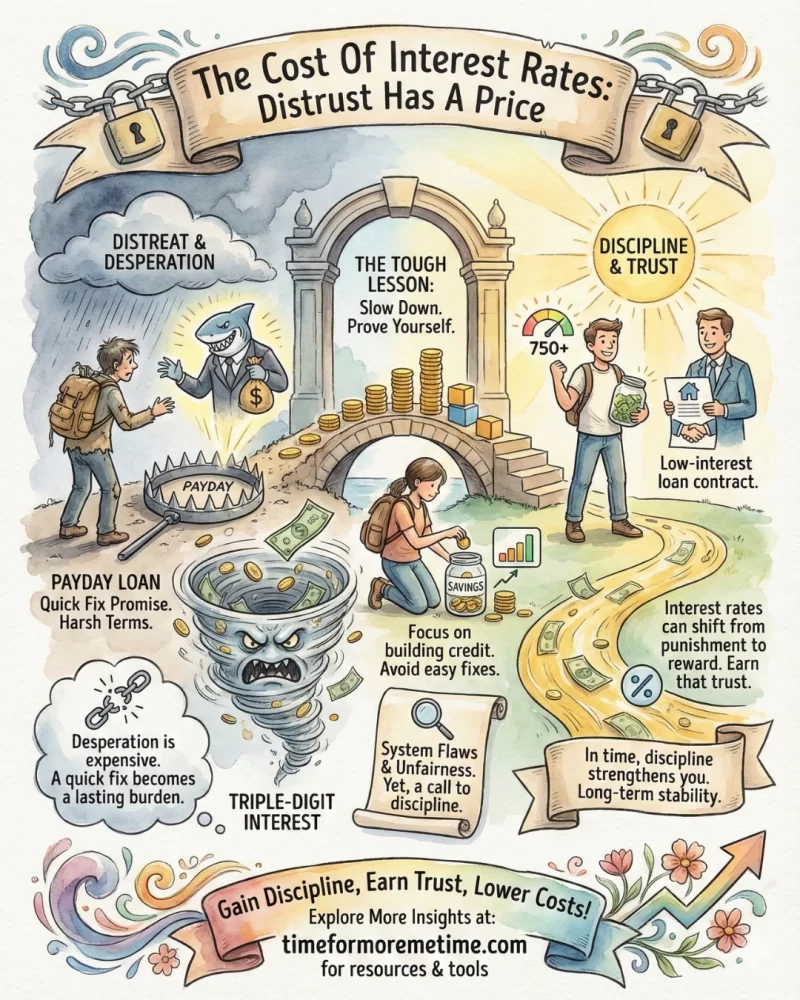
For those who are poor, distrust has a price. Lenders don’t consider your hard work or good intentions. They only look at your credit score, your past, and the risk you pose. If they don’t trust you, they charge you more. Higher interest rates become the price you pay to access loans and financial help.
Take payday loans, for example. They promise quick cash to help you until payday. But the terms can be harsh. Triple-digit interest rates can turn a $500 loan into $650 or more in just weeks. I’ve seen friends trapped in this cycle, paying off a small loan for months or even years.
At first glance, this seems cruel and unfair—because it is. However, there’s a tough lesson behind it: desperation is expensive. Every time you reach for a quick fix, you pay a high price. The system, despite its flaws, is essentially saying, “slow down, prove yourself, and find another way.”
This doesn’t mean we should excuse predatory loans—they’re dangerous and unfair. But when you’re at the bottom, you sometimes have no choice but to play along. It’s important to think of it as temporary. Focus on building your credit, saving what you can, and avoiding easy fixes that become lasting burdens.
In time, the discipline you gain from these tough lessons will strengthen you. Interest rates can shift from being a punishment to a reward. The same system that once charged you a lot may eventually trust you enough to charge you less—if you can hold on long enough to earn that trust.
The Cost Of Fees
Overdraft fees, late fees, and reconnection charges are quiet lessons in money management.
When I was barely getting by, I dreaded checking my bank account. A small mistake or a bill arriving a day early could lead to a $35 overdraft fee. Sometimes, I’d face two or three in a row. A $20 mistake could quickly turn into a $100 problem.
At the time, it felt like the system was punishing me for being poor. But looking back, those fees taught me important things about timing, tracking, and having extra money set aside. Wealthier people don’t face these lessons as often because they have safety nets. For me, those painful fees forced me to create habits like budgeting closely, double-checking payment dates, and eventually building an emergency fund.
The Cost Of Food

One of the hardest parts of being poor is that unhealthy food is often cheaper and easier to find than healthy food. If you go to a dollar store with ten dollars, you can buy enough processed meals to last a week. But if you try to buy fresh fruits and lean meat with that same ten dollars, you might only get a bag or two.
When I was a kid, our meals often consisted of bread or canned goods. Fresh meat was a special treat. I remember standing in the grocery aisle with my mom when she had to put back apples because they were too expensive. Instead, she chose a box of cookies because it lasted longer.
At the time, it felt discouraging, but those choices taught me how to be resourceful. I learned to stretch food, cook with what I had, and make the best of limited options. This resourcefulness helped me as an adult. When I earned enough to buy healthier food, I already had the skills to meal-plan, reduce waste, and budget for groceries.
Being poor teaches you to be creative with little, and that creativity can become a valuable skill for life.
The Cost Of Healthcare
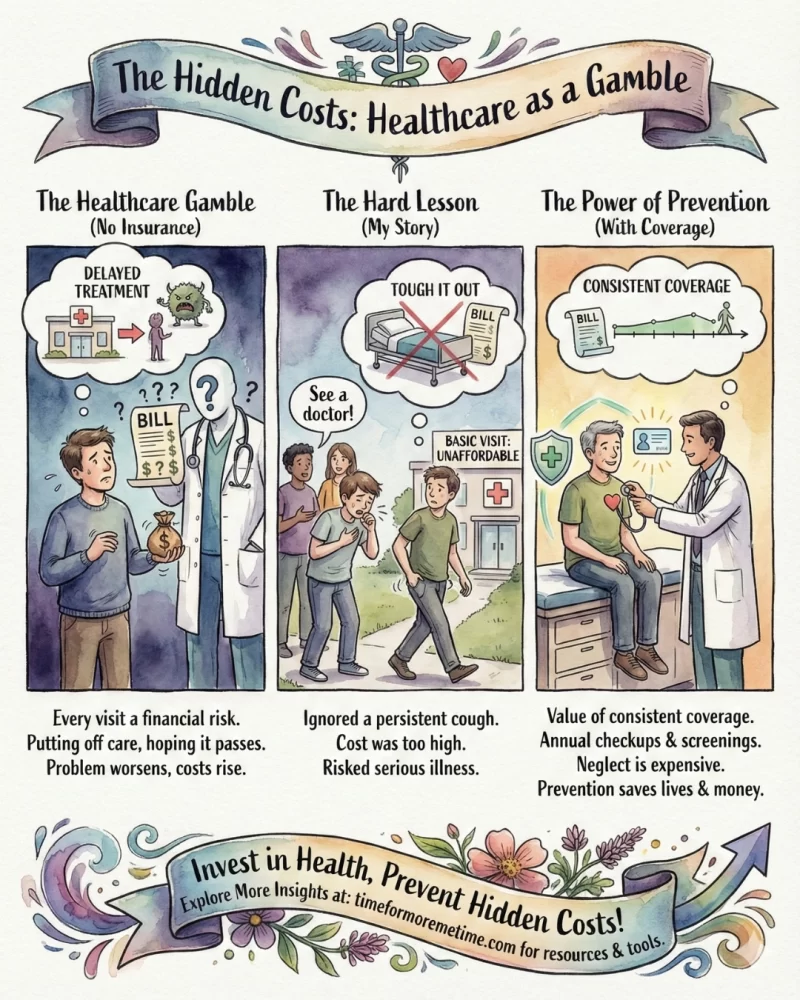
Healthcare is another hidden cost—not really hidden. Without insurance, every doctor’s visit feels like a financial gamble. When you’re poor, you often put off treatment, hoping the issue will go away. By the time you seek care, the problem is usually worse and more expensive.
I learned this the hard way. Before I turned 20, I had a cough that lasted for weeks. Friends told me to see a doctor, but without insurance, even a basic visit cost more than I could pay. I decided to tough it out. Luckily, it went away, but it could have been something serious.
Those years made me realize how important prevention is. When I finally got consistent health coverage as a radiation therapist, I made sure to take advantage of it. I never overlooked annual checkups or screenings. Poverty taught me that neglecting health is expensive, while prevention can save both money and lives in the end.
The Cost Of Getting Around
Reliable transportation is something many people take for granted. But for those who are poor, every mile costs something.
For years, I drove an old car that broke down every other month. I couldn’t afford a better one, so I spent hundreds of dollars on repairs. If I had the money to buy a decent vehicle upfront, I could have saved thousands. But poverty doesn’t allow for that.
When my car was in the shop, I had to rely on buses. This meant waking up two hours early to get to work, carrying groceries across town, and missing opportunities because the bus schedules didn’t match the job sites.
Those years taught me something important: the real cost of poverty is time—not just money. They also helped me learn how to schedule better, be patient during delays, and appreciate efficiency. Now, when I save hours with a reliable car, I see time as valuable as money.
The Cost Of Missed Opportunity
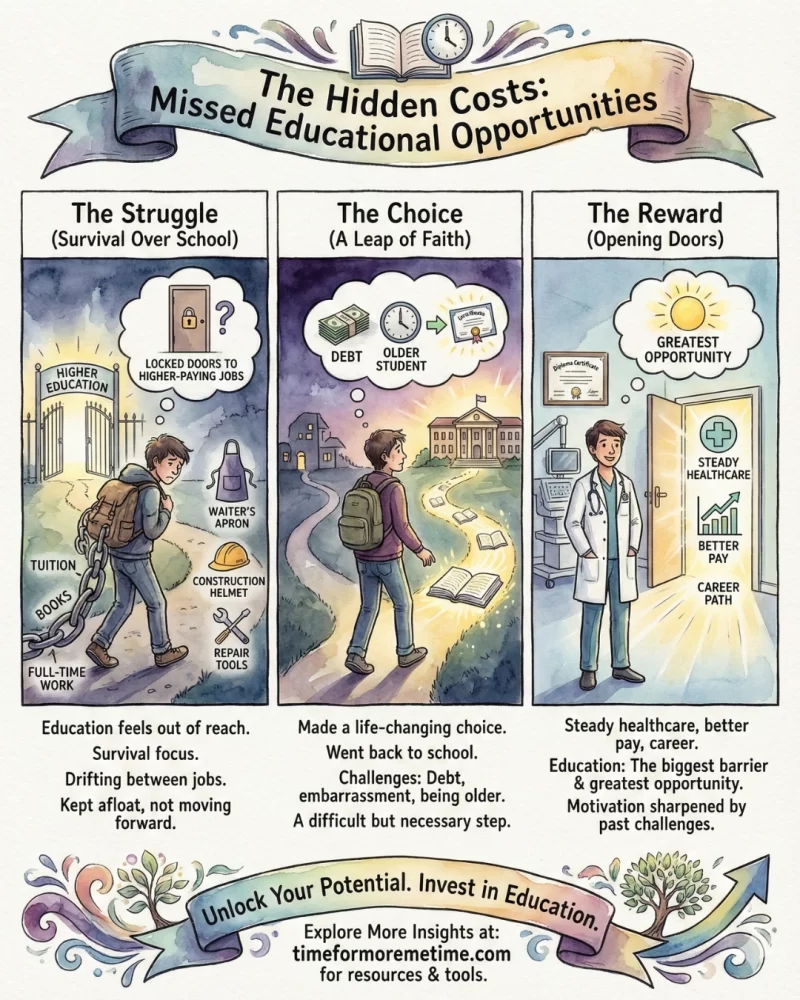
One of the biggest hidden costs of poverty is education. Tuition, books, and the need to work full-time make higher education feel out of reach. Without it, many higher-paying jobs are locked away.
I understand this struggle well. I dropped out of high school at 16—not because I didn’t care, but because I needed to focus on survival. I had to work. For the next 15 years, I drifted between jobs: waiter, construction helper, and odd repair gigs. They kept me afloat but never helped me move forward.
After years of being just okay financially, I made a choice that changed my life: I went back to school. It wasn’t easy. I was older than my classmates, had debt, and often felt embarrassed. But that step opened doors for me—steady healthcare, better pay, and eventually a career as a dosimetrist.
The lesson here? Education can be both the biggest barrier and the greatest opportunity. Poverty shows you the challenges of life without education, which sharpens your motivation to take that chance when it finally comes.
Conclusion
The hidden costs of being poor are real and burdensome. They create a web that traps people. For years, I thought this web only held me down. Over time, I realized it was teaching me how to survive and succeed.
Each cost carried a lesson. Poverty isn’t kind or fair, but it teaches what wealth often hides. Growing up poor means you can’t waste money, time, or health. You learn tough lessons the hard way, but if you view them as preparation, they can help you thrive.
Looking back, I don’t romanticize those years. Hunger was painful, fees were unfair, and the system felt cold. Yet those struggles built my resilience. Poverty taught me survival skills that later became tools for success.
So, what is the hidden cost of being poor? It’s more than just money. It includes time, health, opportunity, and peace of mind. The hidden gift is that these costs push you to grow, require responsibility, and force you to master the system.
Poverty acts as a tough teacher. It may charge you more, but it trains you in ways comfort never will. If you embrace those lessons, you can turn the struggles of poverty into skills that set you free.
By the way, I know this is different from my usual posts, but I wanted to break away from my normal routine. It feels refreshing. If you enjoyed this, let me know. Also, please subscribe to my blog, follow me on social media, and check out my YouTube channel. See you there!
Source
- Photo: Unsplash: Steve Mushero