


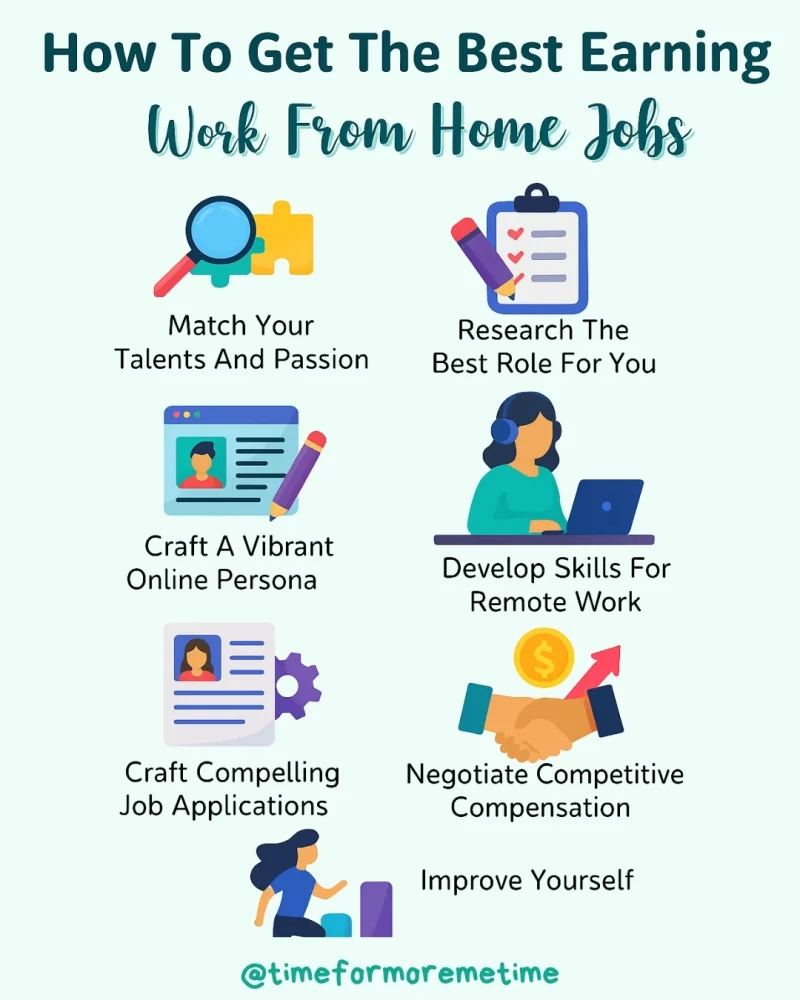
Looking for a new job and tired of the daily grind? You’re in luck! I have insider tips on landing high-paying work-from-home jobs. Say goodbye to commuting and office politics—just you, your laptop, and maybe some comfy sweatpants. With so many options available, it can be overwhelming to start.
Fortunately, I made this guide to help you find and choose the best remote jobs today. Grab a cup of coffee, get comfortable, and let’s get started!
1. Match Your Talents And Passion
While you may prefer high paying remote jobs, landing the right position involves more than just salary. It’s about knowing where to look and ensuring you stand out when online opportunities arise.
Start by aligning your personal talents and hobbies with potential jobs. Reflect on your strengths and weaknesses: What are you naturally good at? What challenges are you currently facing?
Remember that being honest with yourself is crucial. Understanding your skills will simplify the process of finding a remote job that suits you. For instance, if you excel in analytical thinking and problem-solving, roles like data analyst or project manager could be a great fit.
Moreover, consider what you love doing. When you’re passionate about your work, it feels less like a job. Think about what excites you—do you lose track of time when writing or designing? Is there a thrill in solving complex issues? Let your passions guide you as you search for the perfect work-from-home opportunity.
2. Research The Best Role For You
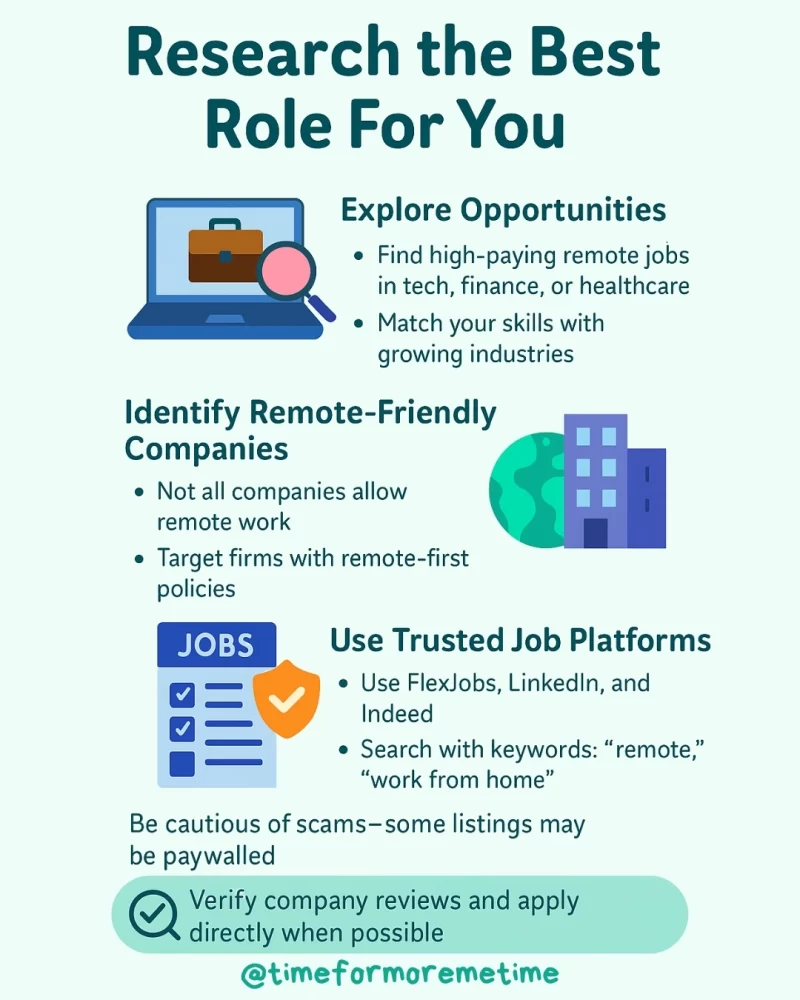
With a clear understanding of your talents and passions, it’s time to explore rewarding remote work opportunities. Fortunately, you have plenty of options.
High-paying work-from-home jobs are available, especially in fields like tech, finance, and healthcare. Identify industries that align with your skills and interests to maximize your chances of success.
While many companies offer flexible work arrangements, not all embrace remote positions. Research organizations known for their remote work policies.
Use platforms like FlexJobs to find companies eager to hire remotely. General job search sites like Indeed and LinkedIn can also be useful—just remember to include keywords like “remote” or “work from home.”
By the way, please be aware that job boards like FlexJobs may contain job ads posted by scammers. Exercise caution when applying. Additionally, some listings may require a subscription to access more job opportunities.
3. Craft A Vibrant Online Persona
Exploring job platforms is just the beginning; you need to leverage them to build your online persona. In today’s job market, enhancing your online presence is essential, as employers frequently search for candidates online. Think of your online persona as your digital handshake—an introduction that showcases your skills, experience, and unique personality.
Optimize your professional profiles on platforms like LinkedIn, GitHub, and Twitter. Keep your profiles tidy, updated, and filled with your key skills and past achievements.
Also, use specific keywords related to your desired positions and industries to attract potential employers to your profiles. Don’t forget to upload a professional photo and craft an engaging narrative that highlights what sets you apart.
Lastly, if you have a portfolio of work or notable accomplishments, be sure to showcase them on your profiles.
4. Develop Skills For Remote Work
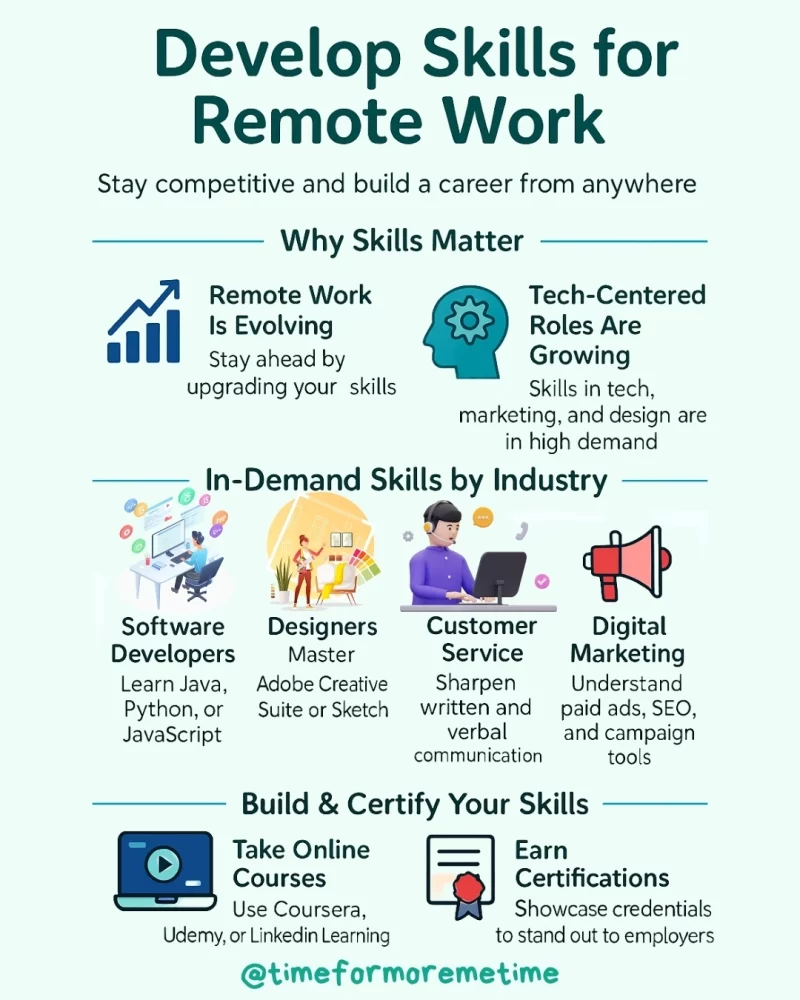
The job market is constantly evolving, and remote work is no exception. To stay competitive, it’s essential to continuously sharpen the skills that are in high demand among remote employers.
Depending on your field, specific technical skills may be crucial. For example, software and mobile developers should be proficient in programming languages like Java, Python, or JavaScript. Designers, on the other hand, need to master tools such as Adobe Creative Suite or Sketch. If you’re in customer service, strong communication skills are vital, while marketing positions often require the ability to run effective campaigns.
Consider which tech skills are highly valued in your industry. Enhancing these abilities could be a smart move for your career. Fortunately, there are plenty of online courses and tutorials available that can help you improve your technical skills and earn valuable certifications.
5. Craft Compelling Job Applications
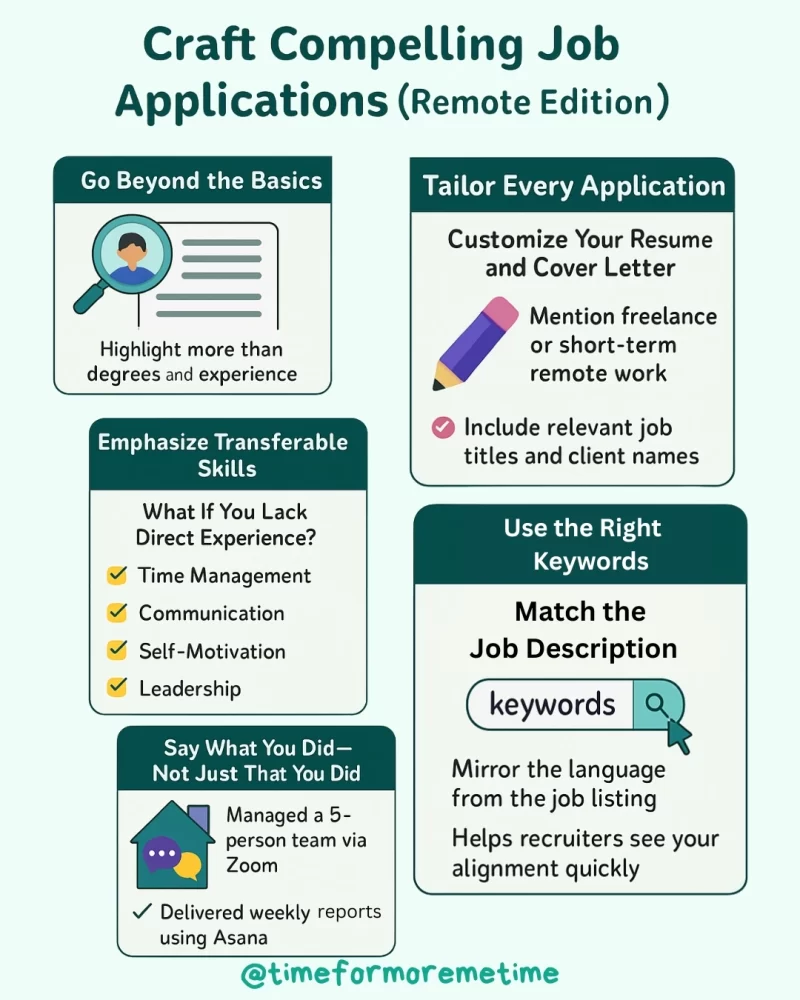
Once you identify companies hiring remote workers, it’s time to apply. Your application should go beyond simply meeting basic requirements like a degree or years of experience; it should clearly demonstrate your fit for the role.
Tailor your resume and cover letter specifically for the remote position. Highlight any relevant remote work experience, even if it was a short-term project or freelance gig. For instance, if you’ve worked as a business development writer, be sure to include that if it relates to the job you’re applying for.
If you lack direct remote experience or a relevant degree, emphasize transferable skills such as strong communication, time management, leadership, and the ability to work independently. Incorporate keywords from the job description to show your understanding of the role’s requirements.
When detailing your remote work experience, avoid vague statements like “worked remotely.” Instead, provide specific examples of how you collaborated with team members, managed projects, and communicated effectively while working from home. For instance, say “Product Manager for five years at…” or “Account Manager for David Beckham…” This clarity helps recruiters quickly grasp your experience.
Take to heart that experience speaks volumes. Recruiters will view you as an expert in your field based on the roles you’ve held.
If you’ve used remote tools like Zoom, Slack, or any project management software, mention those as well. Demonstrating familiarity with these technologies showcases your readiness for remote work.
6. Negotiate Competitive Compensation
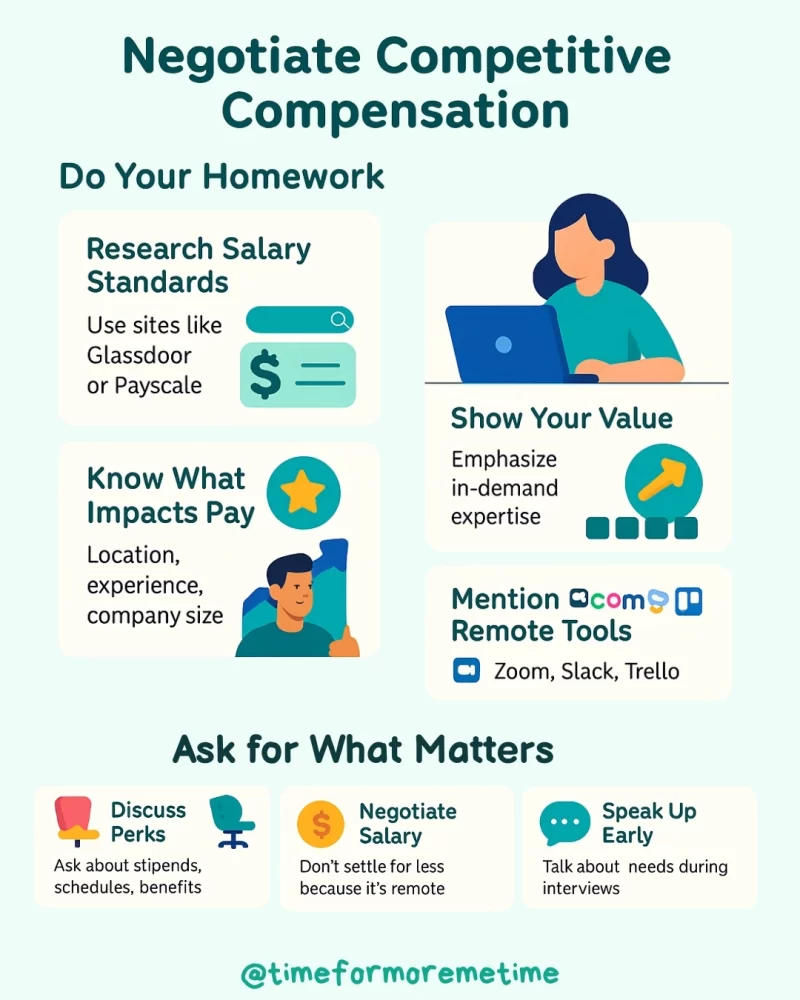
After you ace your job application, prepare yourself to negotiate. Just because you’re working from home doesn’t mean you should accept lower compensation. Many remote roles offer competitive salaries and benefits comparable to office jobs.
Before negotiating, research salary standards for your role and industry using resources like Payscale or Glassdoor to understand the average salary range. Remember, compensation can vary based on factors like location, experience, and company size, so having a general idea will boost your confidence.
When discussing pay, highlight your skills and experiences that make you a valuable asset. If you have specialized skills or a successful track record, use that as leverage. For example, if you’re a software developer skilled in a high-demand programming language, or a senior sales executive with a history of closing deals, emphasize those strengths.
Also, consider discussing remote work arrangements and perks during negotiations. Companies may offer benefits like home office stipends, flexible schedules, or opportunities for skill development. If specific perks are important to you, such as a particular schedule for childcare, bring them up early in the conversation.
Do note that many online jobs may offer low pay due to high competition, especially from candidates abroad. If you have limited experience on your resume or are applying for roles outside your skill set, you may receive lower salary offers.
7. Improve Yourself
Working from home shouldn’t hinder your professional development. In fact, sharpening your skills is essential, especially since hands-on training and networking opportunities are limited.
One effective way to continue your growth as a remote worker is to pursue online learning. There are countless online classes available on various topics, from engaging video lessons to interactive webinars.
Participating in virtual conferences and webinars is another excellent way to stay connected and learn. Many industry events have transitioned online, making it easier to attend from anywhere. For example, if you want to enhance your knowledge as a sales or marketing manager, look for expert-led streams and conferences.
Don’t miss opportunities to attend industry-related events—they’re valuable for networking and skill enhancement. If you can’t join live, many events offer recordings or summaries for later access.
Conclusion
There you have it—tips to secure high-paying work-from-home jobs, whether as a business development manager, marketing director, senior project manager, or Java developer. The opportunities are vast if you know how to leverage them.
If you find this helpful, be sure to subscribe to my newsletter. Also, follow me on my socials and watch my videos on my YouTube channel. Thanks!
Sources
- Photos: Unsplash: Helena Lopes