


Starting a business can feel overwhelming, especially if you’re unsure where to start. Many small businesses fail in their first few years, often because of poor planning. I felt this pressure while helping my friend develop an eCommerce idea during my long shifts at UCSF in San Francisco in 2020.
During my lunch breaks, I would sit in the staff lounge with a notepad next to my scrubs. I jotted down rough ideas for a print-on-demand business my friend John wanted to start. Those early notes were messy, but they showed me what to include in a real plan and what to ignore. Over time, I learned to turn those ideas into a clear and useful plan.
Having faced these challenges, I want to help you create a successful business plan. This guide will break down each step so you can plan clearly, set realistic goals, and build a solid foundation for growth. Let’s get started!
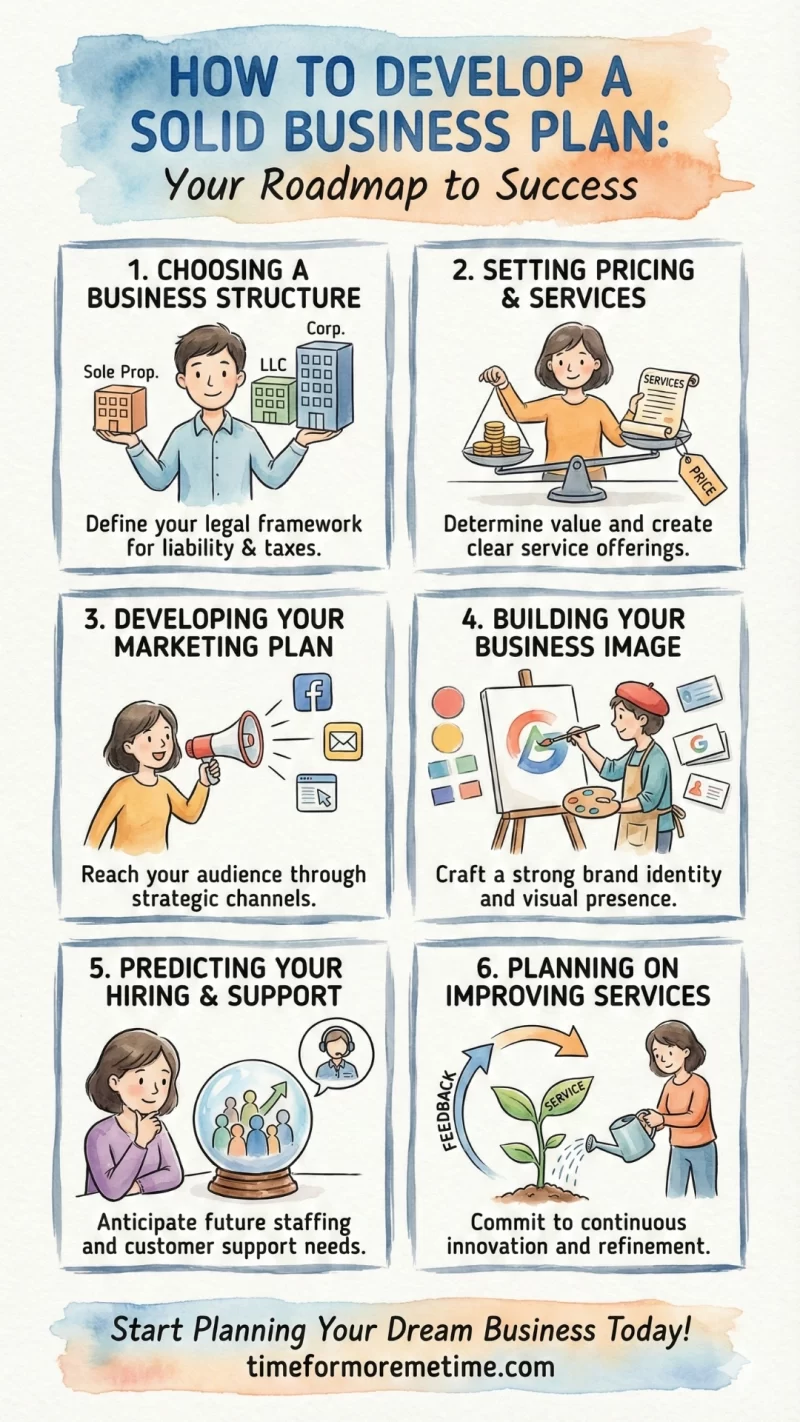
Choosing A Business Structure
Choosing your business structure is one of the first steps in creating a solid plan. This choice affects how your business will operate, how you handle risks, and how you manage growth.
Many entrepreneurs skip this step and encounter problems later because their structure doesn’t align with their goals. Understanding your options early can help you plan confidently. Here are the main structures to consider:
- Sole Proprietorship: This is the simplest option. You have full control, but any debts or liabilities are your personal responsibility.
- Partnership: This allows you to share responsibilities with someone you trust.
- Limited Liability Company (LLC): This option protects your personal assets and is often chosen by online sellers expecting growth.
Each structure suits different goals, so your choice should depend on your comfort with risk, finances, and long-term vision.
In John’s case, I originally chose a sole proprietorship to help him get started quickly. However, I soon realized that an LLC would have offered better protection as sales grew. Planning ahead about your business structure is crucial for a solid foundation. Fortunately, we adjusted our plan and decided on an LLC.
Setting Pricing And Services
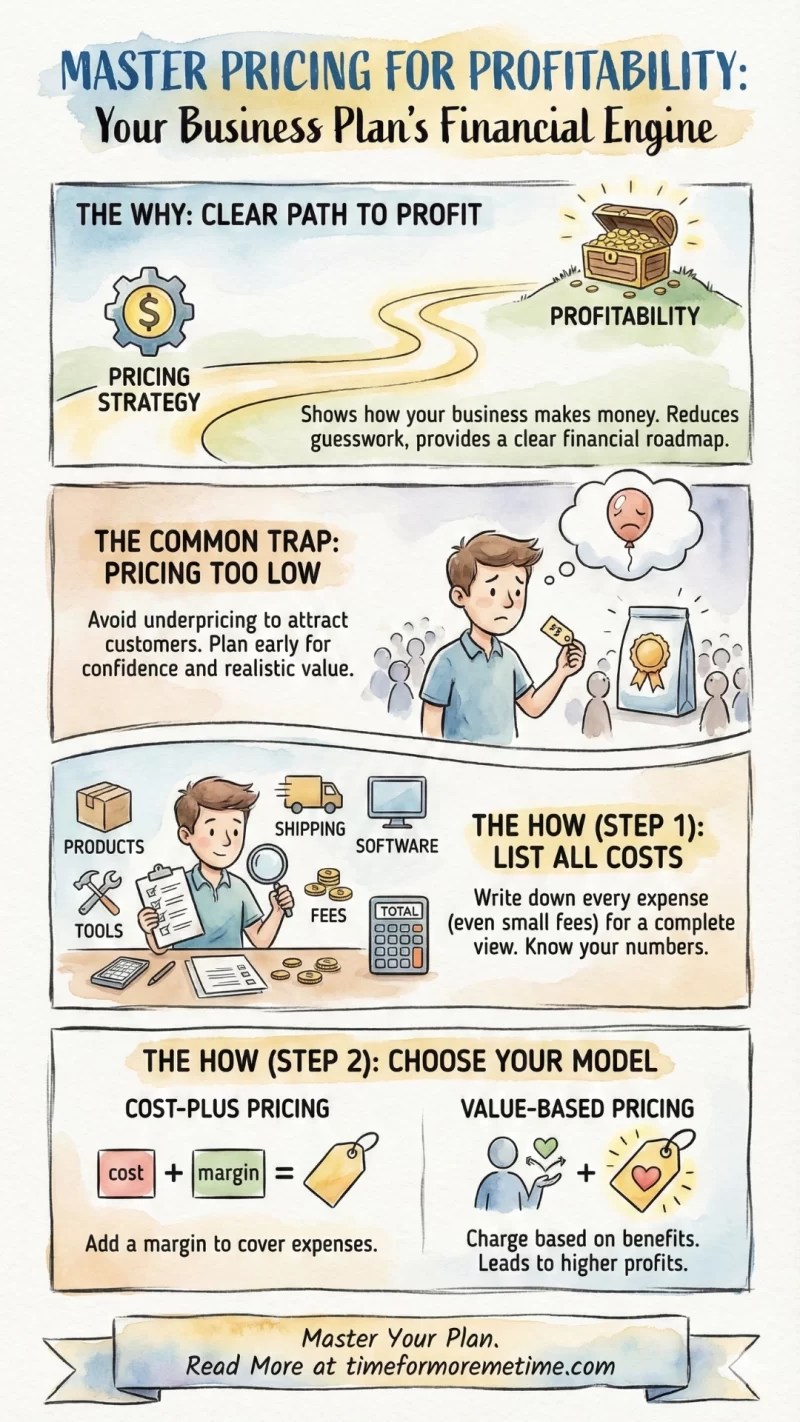
Setting prices is a key part of your business plan because it shows how your business will make money. A clear pricing strategy provides a path to profitability and reduces guesswork.
New entrepreneurs often struggle by setting prices too low to attract customers. Planning your pricing early helps you avoid this mistake, makes your business model realistic, and gives you confidence that your products provide value.
Start by listing all your costs, including products, tools, shipping, software, and payment fees. Don’t forget the small fees that add up; writing down every expense gives you a complete view.
Once you understand your costs, choose a pricing model. You can use cost-plus pricing, where you add a margin to cover your expenses, or value-based pricing, which charges based on the benefits to customers. Both models work, but value-based pricing can lead to higher profits.
Developing Your Marketing Plan
Creating a plan to reach customers is essential for a strong business. A clear marketing strategy shows how people will find your business and understand your product’s value. Don’t skip this step and expect customers to come without effort. Including marketing in your plan removes uncertainty and provides a clear path for growth.
First, identify your target audience. Think about who needs your product most, like busy parents, hobbyists, or small business owners. Knowing your audience helps you craft a clear message. Next, choose where to reach them, such as social media, email, or a website. Even a basic plan outlining your audience, message, and channels can guide your marketing efforts.
When I wrote the first marketing plan for John’s print-on-demand business, I quickly realized that long descriptions could confuse buyers—it’s just printed designs, after all. Once I simplified the message and highlighted clear benefits, I even wanted to keep John’s products for myself. Detailed marketing planning helps you avoid wasting effort and ensures your strategy will attract real customers.
Building Your Business Image
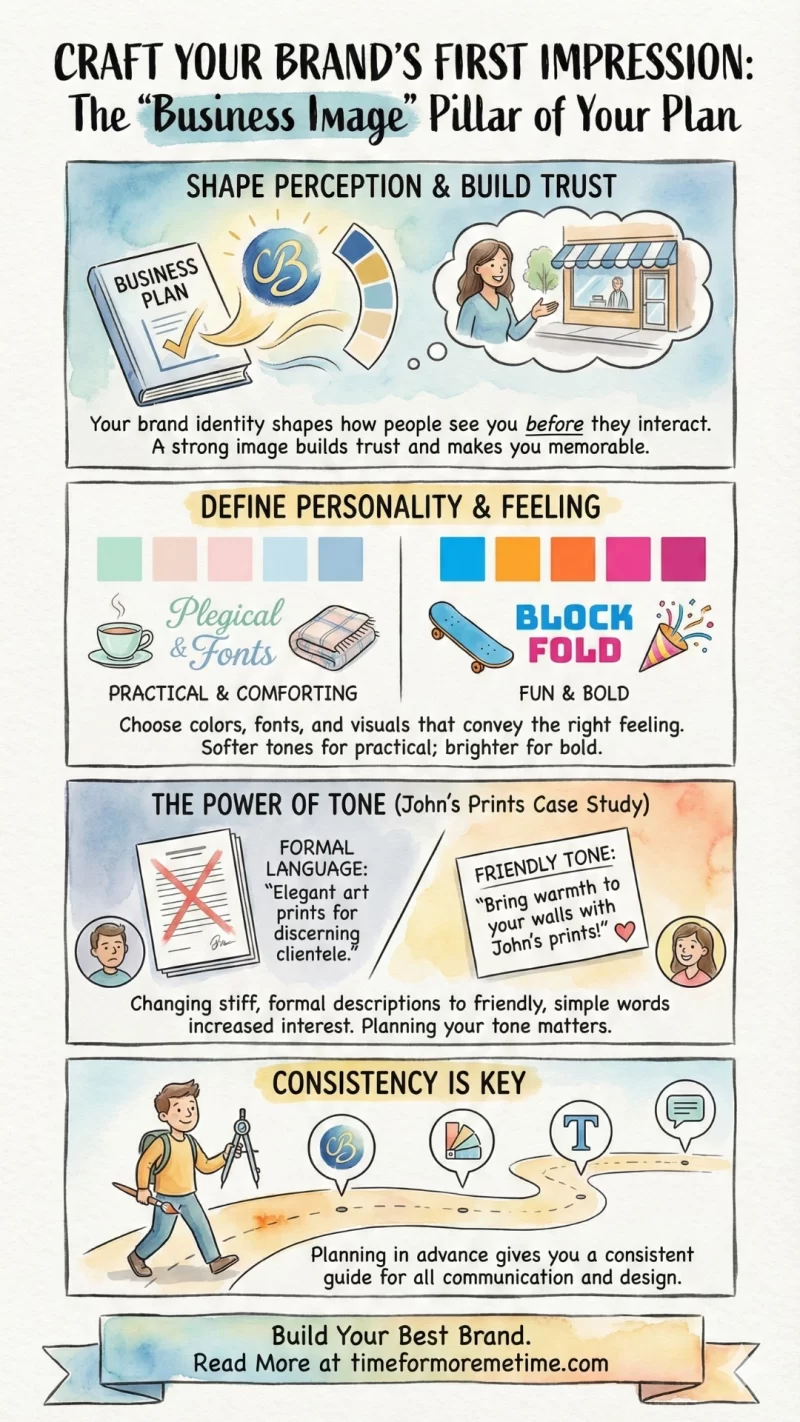
Creating your business image is a key step in developing a solid plan. Your brand identity shapes how people see your business before they interact with it. Clearly defining your image in your plan helps you make consistent choices for logos, colors, photos, and messaging. A strong image builds trust and makes your business memorable.
Decide on the personality of your brand. Choose colors, fonts, and visuals that convey the feeling you want your customers to have. Softer tones work well for practical products, while brighter colors are great for fun and bold items. Many online sellers enhance customer perception by planning their visuals and tone before launching.
When I wrote product descriptions for John’s prints, I initially used stiff, formal language. Changing them to friendly, simple words made the brand feel approachable and increased interest. Planning your business image in advance gives you a consistent guide for communication and design.
Predicting Your Hiring And Support
Planning for support is an essential part of a strong business plan. Even if you start small, thinking ahead about who can help makes your business more scalable. Including roles and responsibilities in your plan ensures work can be done efficiently as your business grows.
Identify tasks and processes that might need support, such as customer service, social media, or order management. Consider what type of people you will hire. Will they share your values or have the technical skills you need? Will you hire virtual assistants or freelancers for routine tasks, or look for local hires and specialists?
In John’s business, our first planned hire was a virtual assistant. I explained that I would guide him through the technical and legal parts of running a business, learned in business school, but after that, he would be on his own. I encouraged him to hire a virtual assistant who could help with various tasks and take over my responsibilities.
Fortunately, he did hire one, which greatly reduced his workload after I moved from being a volunteer to a hands-off investor. Planning for hiring helps your business grow smoothly without becoming chaotic.
Planning On Improving Services
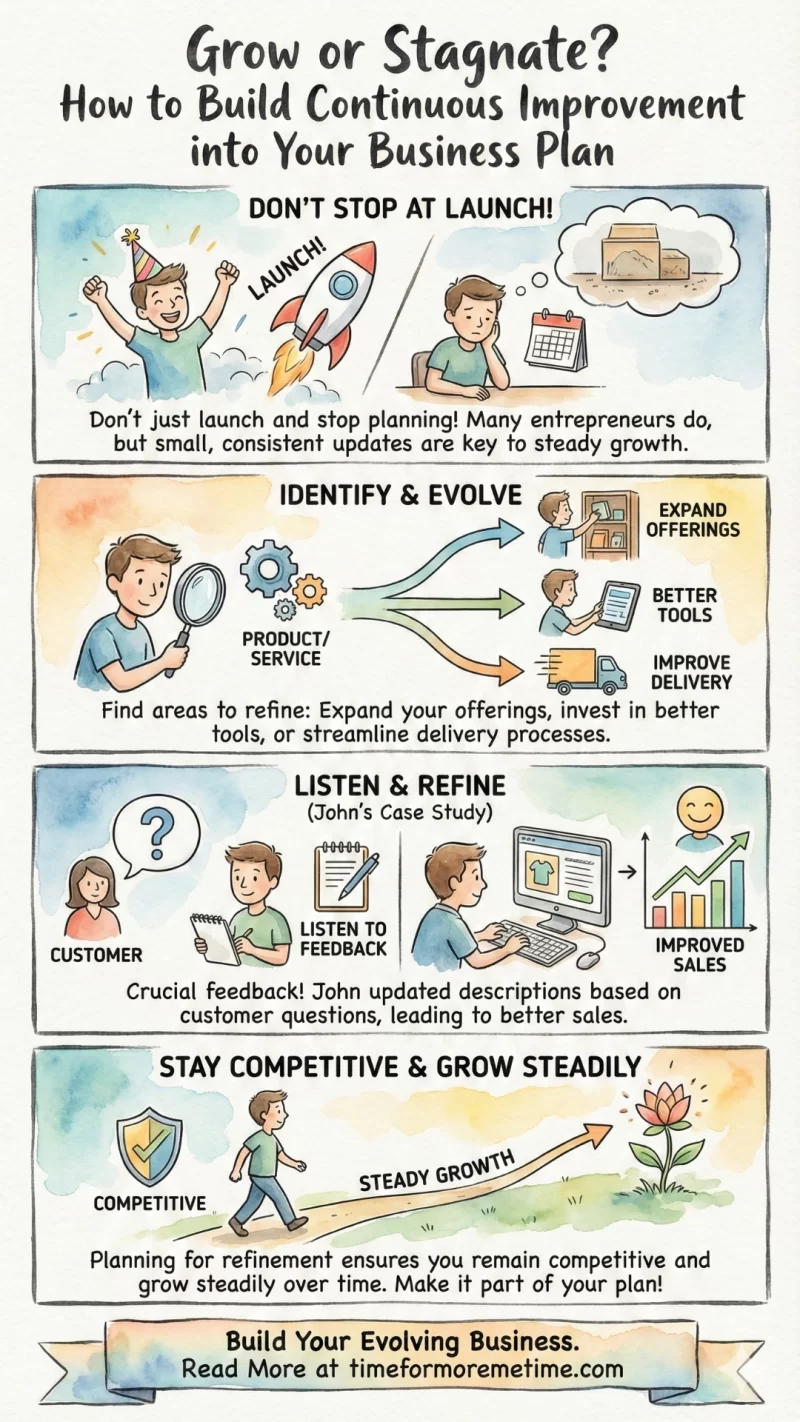
Including continuous improvement in your business plan helps your business grow steadily. Planning how to refine products or services ensures you remain competitive over time. Many new entrepreneurs stop planning after launching, but small updates can make a significant difference.
Identify areas where your products or services can evolve. You might expand your offerings, invest in better tools, or improve delivery processes. Listening to customer feedback is crucial. In John’s print-on-demand business, I indicated on his business plan that he needs to update product descriptions based on customer questions later. He did, and it led to improved sales.
Conclusion
Building a solid business plan requires careful thought, time, and decision-making. Each step works together to move your business forward. Following a clear plan helps you avoid common mistakes and stay focused on growth.
If you found this information helpful, consider subscribing or following me on social media. Don’t forget to check out my YouTube channel. See you there!
Source
- Photo: Unsplash: Daria Nepriakhina