


Freelance writing can be confusing. You may know how to write, but making money from it isn’t always easy. Many new writers feel lost and don’t know where to begin. This is normal, but with steady steps, you can build a successful writing career.
I started freelance writing in 2017 to earn extra money. I still remember writing my first sample in a small café in Atwater. I was nervous and unsure if my work was good enough. With practice and a clear plan, I learned to earn money and gain confidence.
After a few weeks, I joined a content farm and enjoyed the work. My medical background helped me write valuable health articles, but the pay was low. In the end, I left because the pay wasn’t enough to justify the amount of time I was spending on it.
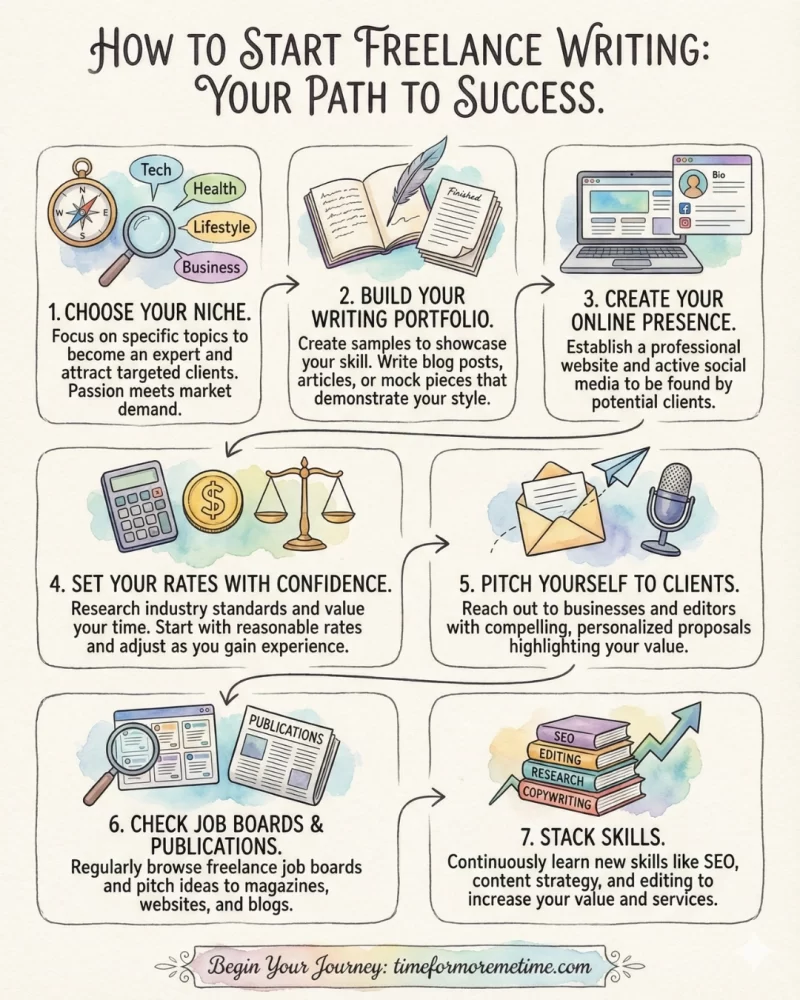
Now, I want to help you begin your freelance writing journey. I’ll share what I learned about choosing a niche, building writing samples, setting rates, pitching ideas, and growing your online presence. Let’s get started!
Choose Your Niche
A niche helps you stay focused and gives clients a clear reason to hire you. A niche is a topic you enjoy and know well. It keeps your writing simple and makes your work stronger. I chose personal finance at first because I spent years studying money management and saw how it helped my life and of course, medical and health related topics.
Remember that many writers earn more when they choose a niche because clients prefer someone who understands their field. This makes sense because readers want clear and simple information. If you already like topics such as fitness, business, or technology, you can start there. Picking a niche also helps you build a portfolio faster since you know what samples to create.
Why does this matter to you? It gives you direction so you do not waste time jumping from topic to topic. What niche fits your voice right now? When you choose one, read work from other writers in that area. This will help you shape your own writing style and prepare you for real projects.
Build Your Writing Portfolio
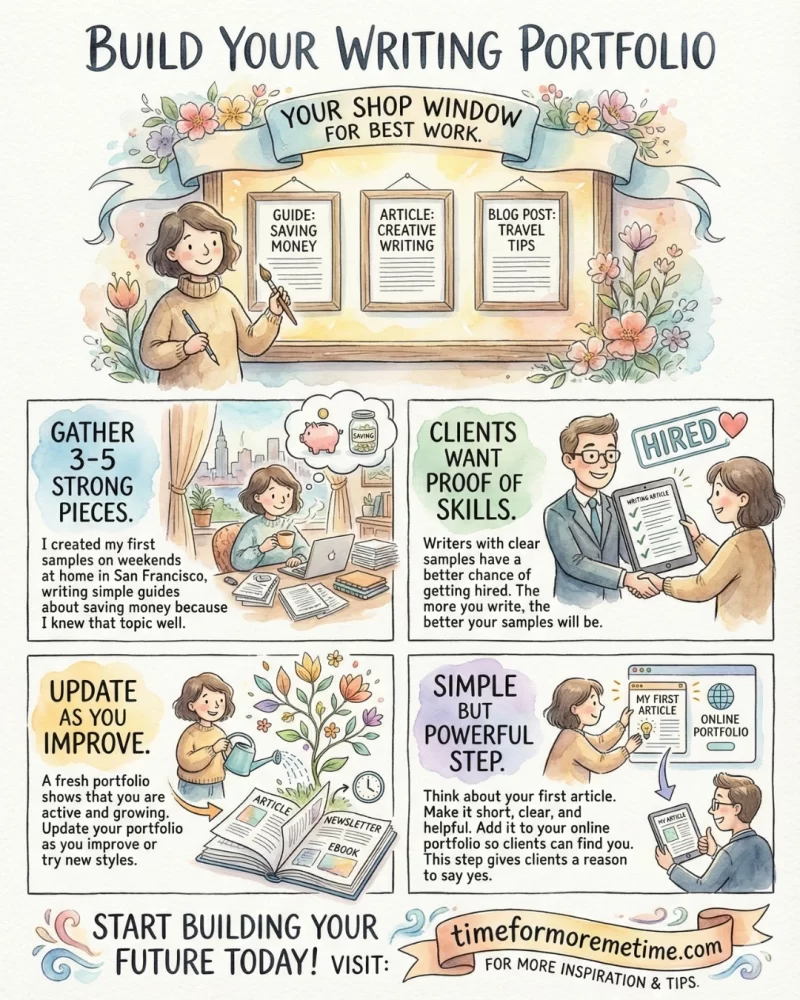
A portfolio shows clients what you can do. It acts like a shop window for your best work. Gather three to five strong pieces that fit your niche. I created my first samples on weekends at home in San Francisco, writing simple guides about saving money because I knew that topic well.
Writers with clear samples have a better chance of getting hired because clients want proof of your skills. The more you write, the better your samples will be. Update your portfolio as you improve or try new styles. A fresh portfolio shows that you are active and growing.
Think about your first article. Make it short, clear, and helpful. Add it to your online portfolio so clients can find you. This step is simple but powerful because it gives clients a reason to say yes.
Create Your Online Presence
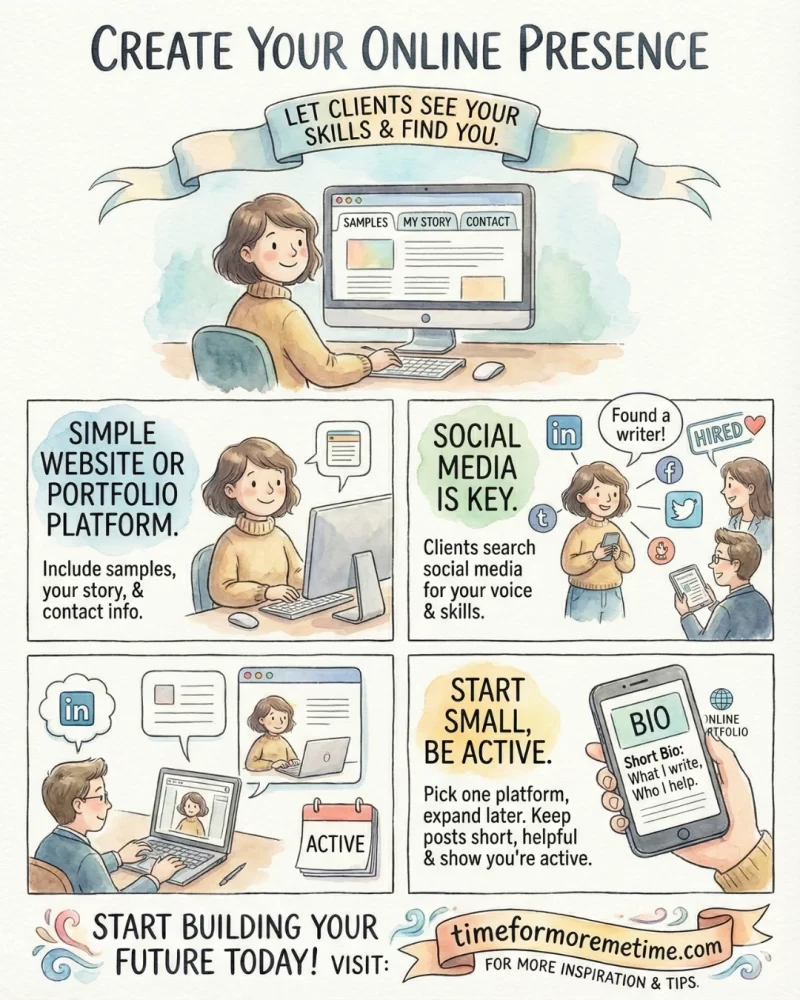
A strong online presence lets clients see your skills. You can make a simple website or use a portfolio platform. Include your samples, your story, and your contact information.
In my case, I didn’t focus much on building an online presence. Being a native English speaker in the US with a college education helped me skip this part. However, I believe having an online presence can improve your chances of getting hired.
Most clients find writers online, so your profiles are important. Many clients search for writers on social media because it shows their voice and skills. This means your online presence can bring work even when you’re not actively looking. Add a short bio that explains what you write and who you help.
Go with one platform first and expand from there. Keep your posts short and helpful. You don’t need to post every day; just show that you are active and easy to reach.
Set Your Rates With Confidence
Your rate reflects your value. New writers often worry about pricing because they don’t want to scare clients away. You’ll feel more confident when you research what writers in your niche charge. This helps you find fair rates. Before I set my first price—before my gig at the content farm—I looked online to see where I fit based on my skills and time.
Writers who know their worth earn better income because they avoid low-paying work. Many clients respect clear pricing because it shows confidence. Your time is valuable, and your writing deserves fair pay. It might be tough to state your rate at first, but it gets easier with practice.
Think about what rate feels right for your current level. Set a number that values your time, and adjust it as you grow. The right clients will pay for quality work and good communication.
Pitch Yourself To Clients
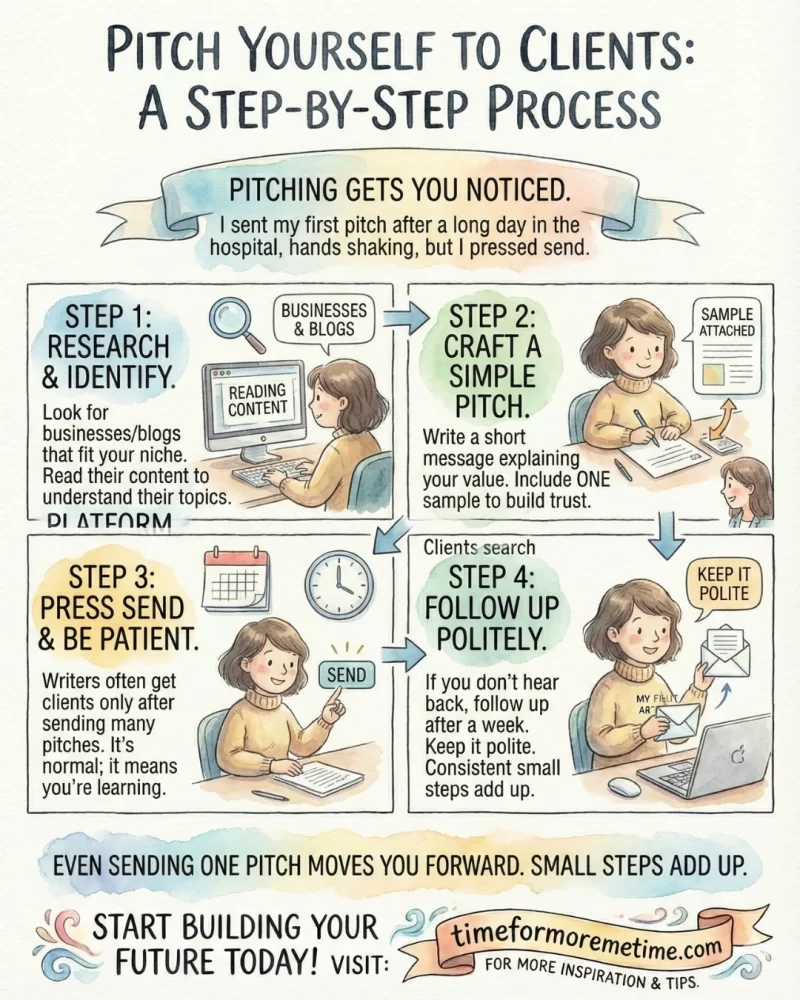
Pitching helps you get noticed. A pitch is a short message that explains what you write and how you can help. Look for businesses or blogs that fit your niche. Read their content to understand what topics they care about. I sent my first pitch at my desk after a long day in the hospital, and even though my hands shook, I pressed send.
Writers often get clients only after sending many pitches; this is normal. It just means you’re learning. Your pitch should be simple and include one sample to build trust with clients. If you don’t hear back, follow up after a week, but keep it polite.
Even sending one pitch moves you forward. Small steps add up quickly when you stay consistent.
Check Job Boards And Publications
Job boards help you find open writing roles. Some boards post new work daily, allowing you to build practice and experience. Look for listings on topics you know well; this saves time and helps you write stronger proposals. I used to check job boards on Fiverr and Upwork during my lunch breaks when I was new.
Writers often find their first paid job on these boards because they connect beginners with simple tasks. This gives you a safe place to start. If a publication accepts pitches, read its articles to understand the tone they prefer. This will help you craft a pitch that feels natural to them.
Try one job board and check the latest posts. Choose one listing that fits your niche. Use it as a chance to practice your pitch and learn what clients want.
Stack Skills
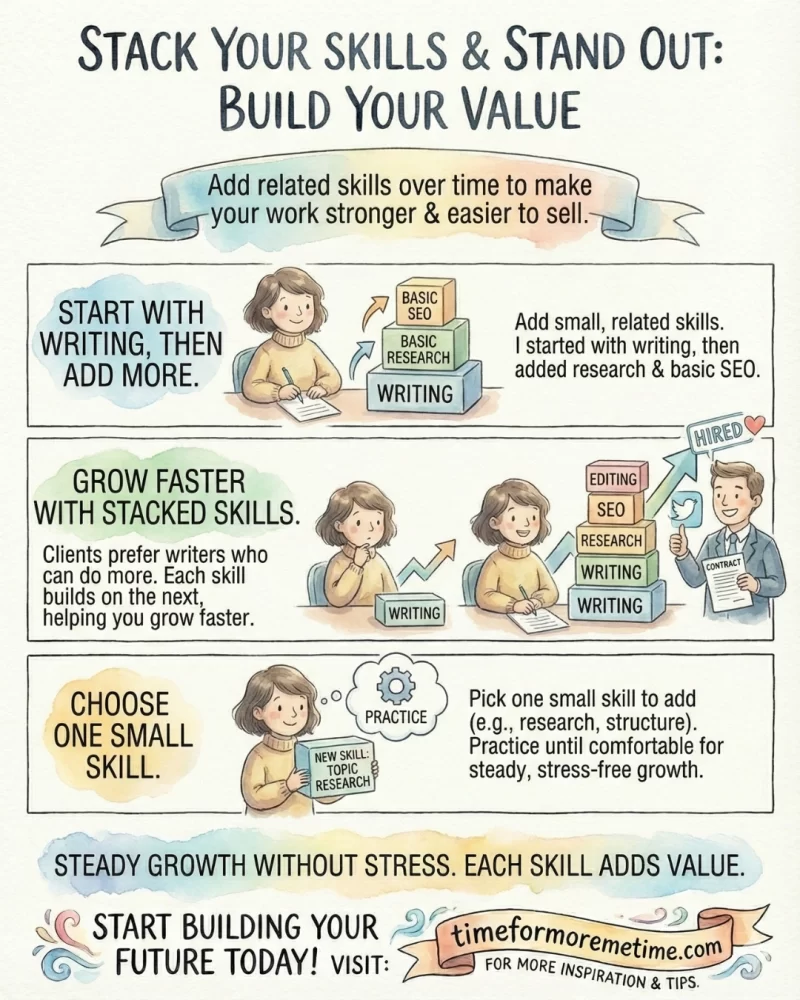
Stacking skills helps you stand out. This means adding small, related skills over time. I started with writing, then added simple research, and later learned basic SEO. These steps made my work stronger and easier to sell.
From my experience at the content farm, I noticed that colleagues who stacked skills grew faster. Clients prefer writers who can do a bit more. I saw how each skill built on the next, helping everyone improve.
Choose one small skill to add to your writing. It could be basic topic research or learning how to structure an article. Practice it until you feel comfortable. This approach allows steady growth without stress.
Conclusion
Freelance writing gets easier when you follow a clear path. These steps helped me build my writing career even while working long days at the hospital. You can do the same with steady action. Start with one small step today.
And if you enjoyed this content, be sure to subscribe to my blog, follow my socials, and check out my YouTube channel. See you there!
Source
- Photo: Unsplash: Icons8 Team