


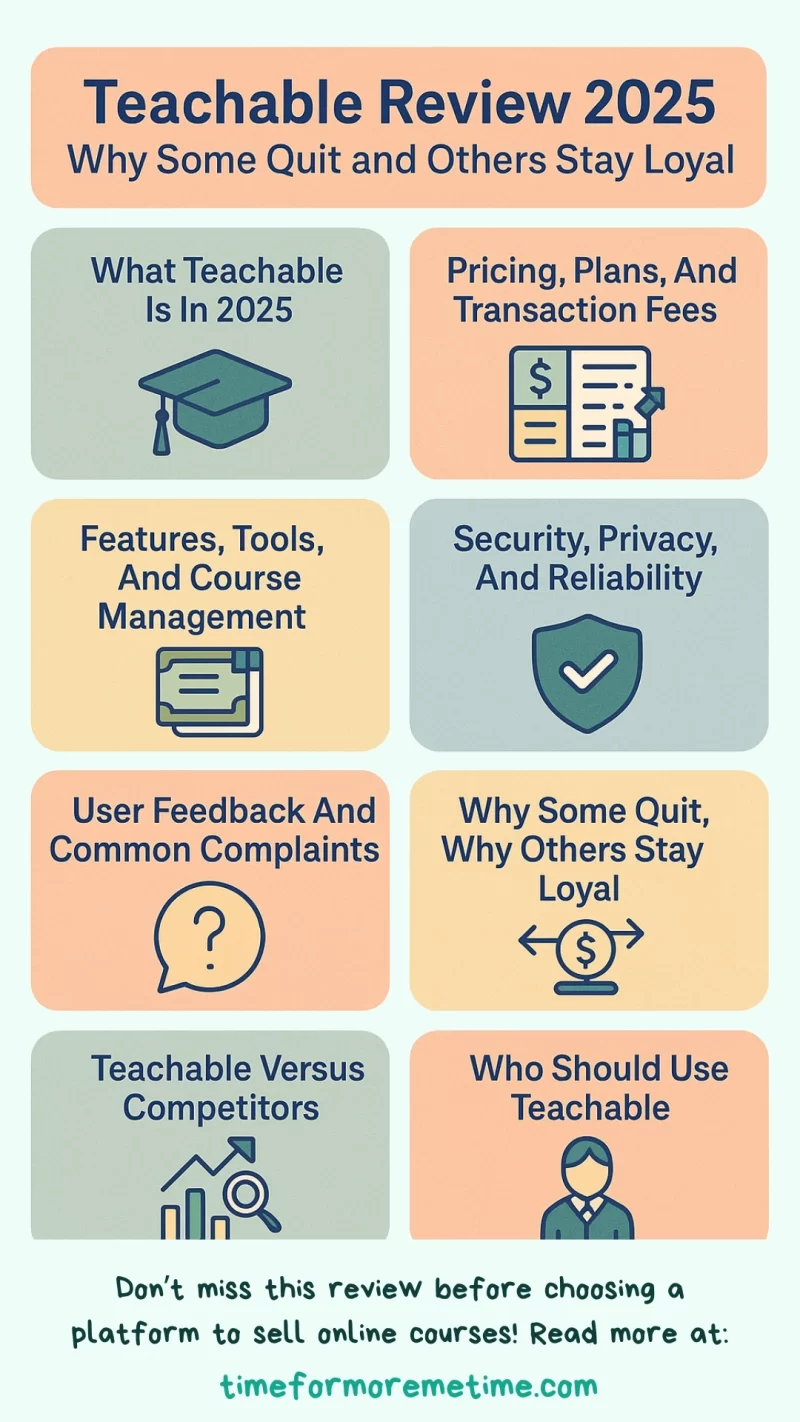
Creating and selling online courses can be exciting, but it often comes with confusion about platforms, fees, and features. Many creators turn to Teachable for its promise of simplicity and support—but not everyone stays satisfied. If you want to know why this happens, read on to help you decide if it’s still the right platform in 2025. Let’s get started!
What Teachable Is In 2025
Teachable remains one of the most popular platforms for creating and selling online courses. Founded in 2013, it has evolved into a user-friendly hub that enables instructors, coaches, and small business owners to share their expertise without requiring technical skills.
In 2025, Teachable remains focused on simplicity, offering built-in tools for course creation, payment collection, and student engagement. Whether you’re a first-time creator or an experienced educator, it provides a straightforward setup process that allows you to turn knowledge into income through structured lessons and memberships.
Pricing, Plans, And Transaction Fees
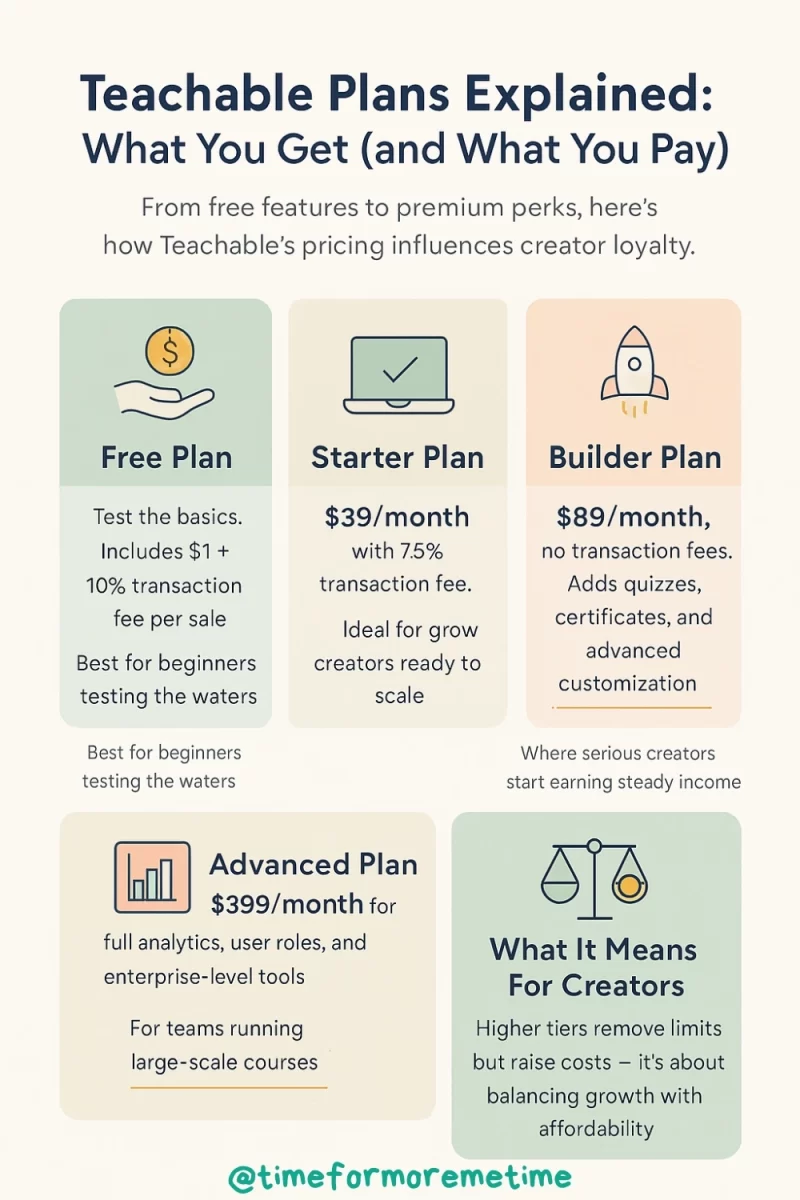
Teachable offers flexible pricing depending on your needs. The Free Plan allows users to test the basics, but it includes a $1 plus a 10% transaction fee per sale. The Starter plan, priced at $39 per month, reduces the cost to 7.5%, while the Builder plan, at $89 per month, eliminates transaction fees and adds features such as graded quizzes and certificates.
For larger teams, the Advanced plan starts at $399 per month, providing advanced analytics and user role management. Though Teachable’s fees can add up, its clear pricing structure helps creators choose a plan that aligns with their business size and goals.
Features, Tools, And Course Management
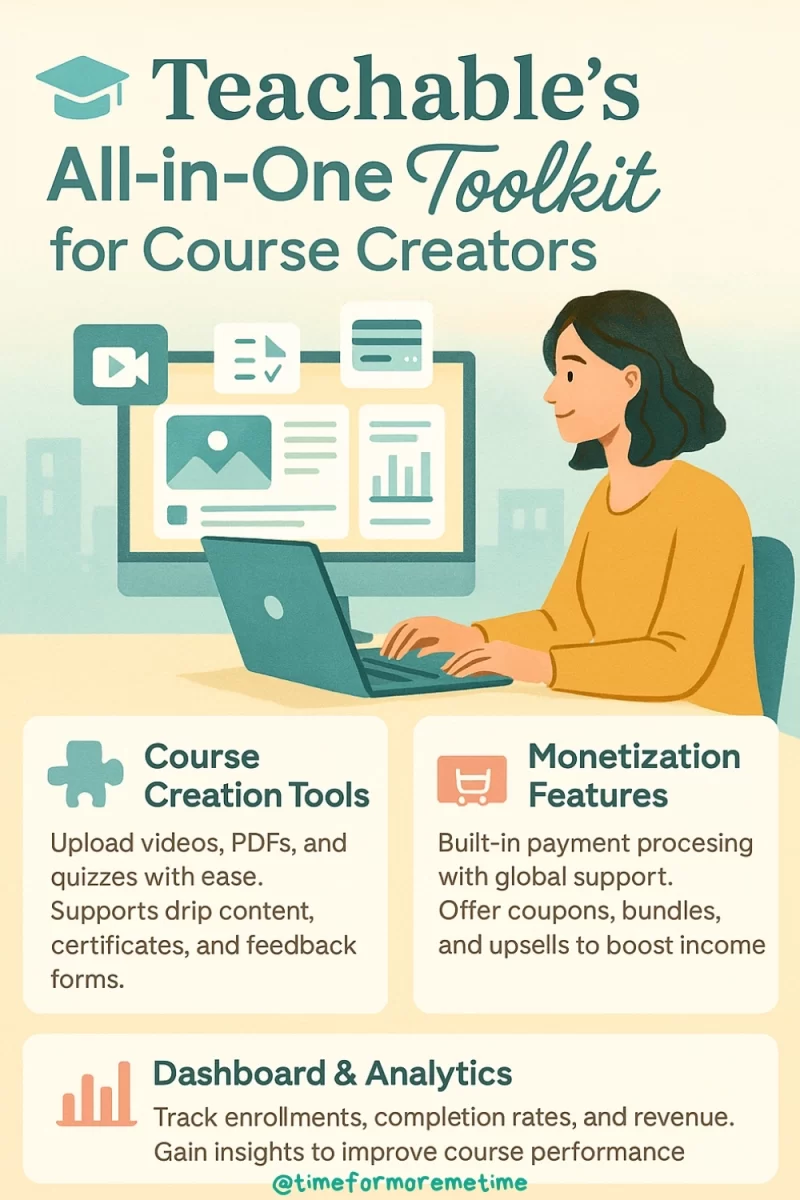
Teachable’s strength lies in its ease of use and all-in-one design. The drag-and-drop course builder allows you to upload videos, PDFs, and quizzes effortlessly. It supports drip content, completion certificates, and student feedback tools, creating an engaging learning experience.
For monetization, Teachable includes built-in payment processing with global currency support and one-click checkout. You can also create coupons, bundles, and upsells to increase sales.
Moreover, the dashboard tracks revenue, enrollments, and completion rates, providing creators with valuable insights into their performance. Altogether, these tools make managing courses simpler and more efficient—no coding required.
Security, Privacy, And Reliability
Teachable prioritizes the security and privacy of both instructors and students. The platform uses SSL encryption and secure payment gateways to protect financial data during transactions.
Not only that, but user accounts are safeguarded with two-factor authentication and data backups that ensure courses and student information remain secure in the event of technical issues.
In terms of reliability, Teachable maintains consistent uptime and strong server performance, allowing creators to manage their courses smoothly. It also complies with privacy laws, such as GDPR, ensuring that personal data is handled responsibly. These measures give users confidence that their content and customers are well protected.
User Feedback And Common Complaints
In 2025, most users appreciate Teachable’s ease of use and quick course setup. Reviews often highlight how intuitive the dashboard is, especially for beginners launching their first online course. Instructors also value its automated email system and built-in payment processing, which reduces administrative work.
However, not all experiences are positive. Some creators report high transaction fees in lower-tier plans and limited design customization. Others mention slower customer support during peak times.
Despite these issues, Teachable still maintains a solid reputation for reliability and simplicity, with many users rating it above 4.3 out of 5 on platforms like Capterra.
Why Some Quit, Why Others Stay Loyal

Teachable’s mixed reputation stems from its balance of strengths and limitations. Some creators quit due to rising costs, limited marketing tools, and a lack of control over their branding. Those seeking advanced automation or detailed funnel management often migrate to competitors like Kajabi or Thinkific.
On the other hand, loyal users stay for its stability, familiar interface, and continuous platform updates. For educators who value simplicity and minimal tech maintenance, Teachable remains a reliable choice. Its straightforward setup and consistent payout system keep many long-time creators satisfied, even as newer platforms enter the market.
Teachable Versus Competitors

When compared to competitors like Thinkific, Kajabi, and Podia, Teachable holds its ground through simplicity and affordability. Its course builder is beginner-friendly, and it requires little to no technical setup—something creators appreciate. Thinkific offers stronger site design options, while Kajabi excels in marketing automation, but both come at higher costs.
Podia competes closely on pricing and community features, yet Teachable still wins for reliability and streamlined course delivery. For creators who want a straightforward way to launch and sell digital courses without complex integrations, Teachable remains one of the most accessible choices.
Who Should Use Teachable
Teachable is best suited for solo creators, educators, and small businesses who want to share knowledge online without worrying about tech details. It’s ideal for those building digital courses, coaching programs, or membership sites with straightforward content delivery.
Beginners benefit most from its ease of use and built-in support, while professionals can appreciate its scalable payment and analytics tools. However, larger enterprises or marketers seeking advanced customization might find Teachable too limited. For most course creators, it offers an efficient balance between control, convenience, and cost.
Verdict: Should You Use Teachable In 2025?
Teachable proves that building and selling courses online doesn’t have to be complicated. Although its popularity is due to its easy setup, reliable performance, and strong core tools, you should still consider its rising fees and limited design options. All of which can affect your reputation and earnings when selling online courses.
If you’re interested in learning about other platforms to sell online courses, consider subscribing to our blog, following us on social media, and visiting our YouTube channel for more honest reviews.
Source
- Photo: Pexels: RDNE Stock project