


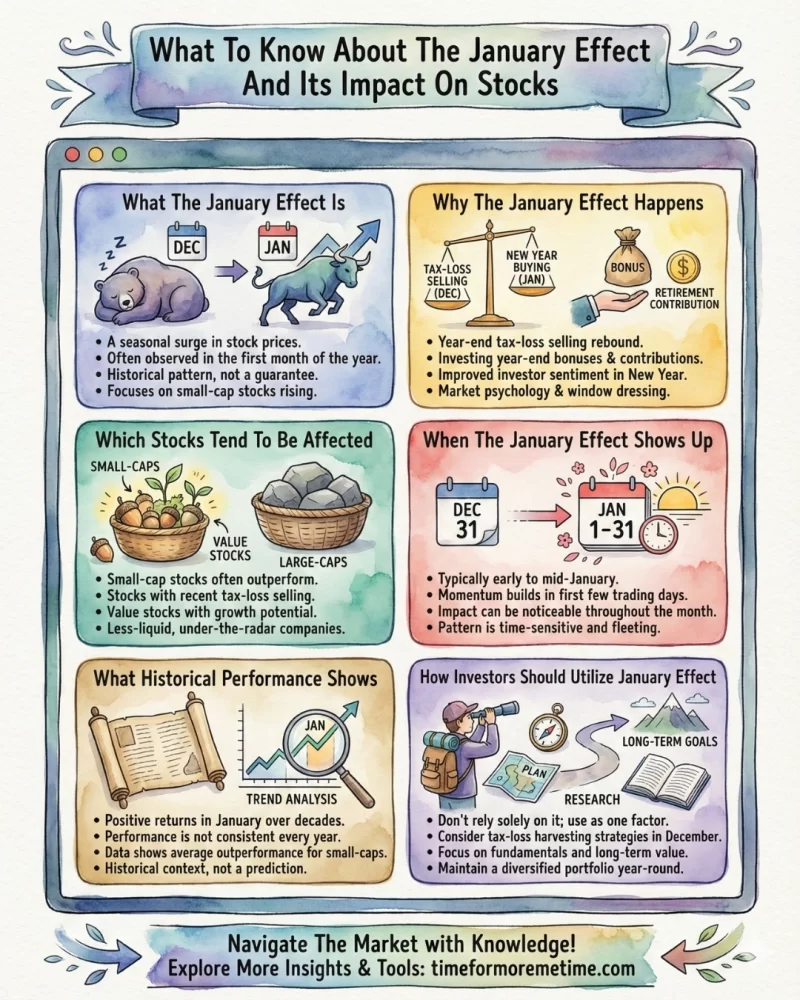
January stock changes can be confusing. Prices may jump up quickly without any obvious news or earnings reports. This happens often enough that investors talk about it every year. When I first started investing in stocks and crypto, I thought this was just because of Christmas and New Year celebrations. But I learned it’s actually called the January Effect.
This pattern affects how people look at market performance at the start of the year. Early gains can sway decisions more than they should, even if not much has really changed. People’s expectations can drive their reactions just as much as the price changes.
In this post, I’ll explain what the January Effect is and how to use this knowledge to better understand market behavior, instead of just reacting to shifts that happen because of the calendar. Let’s get started!
What The January Effect Is
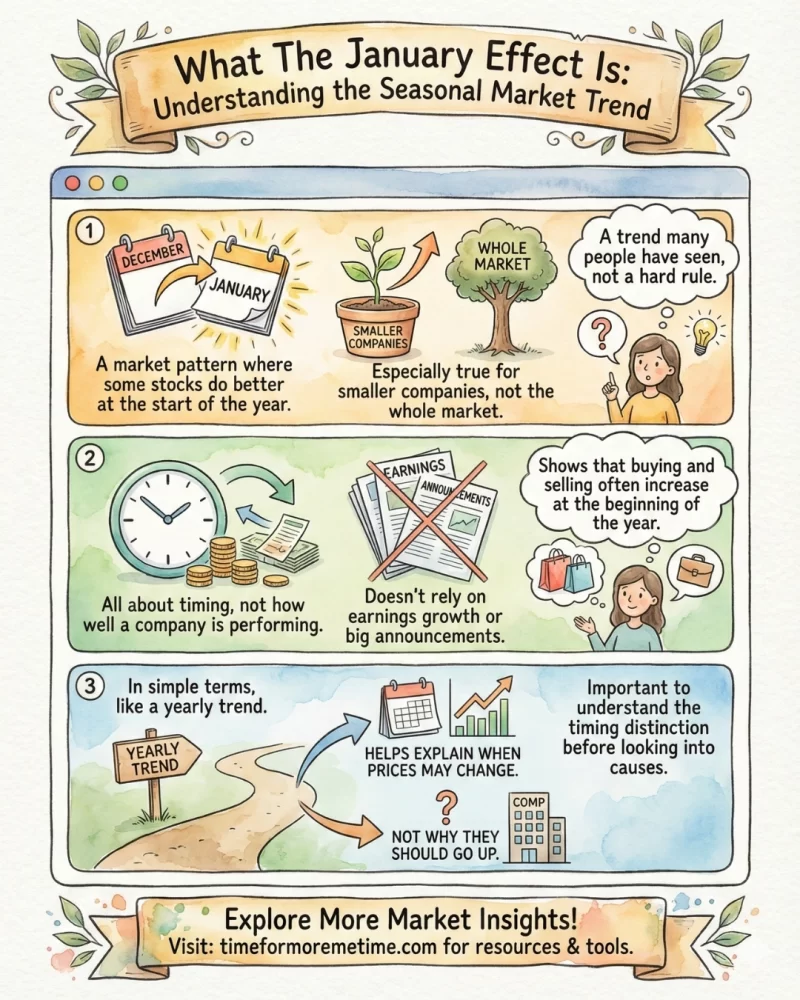
The January Effect is a market pattern where some stocks do better at the start of the year. This is especially true for smaller companies, not the whole market. It’s not a hard rule, but rather a trend that many people have seen. At first, I thought I was the only one who noticed this.
This effect is all about timing, not how well a company is performing. It doesn’t rely on earnings growth or big announcements. Instead, it shows that buying and selling often increase at the beginning of the year. I initially thought this was mainly due to holiday spending and job trends.
In simple terms, the January Effect is like a yearly trend. It helps explain when stock prices may change, but not why they should go up. This distinction is important to understand before looking into its causes or limits.
Why The January Effect Happens
To understand the January Effect, we need to look at why it occurs. The reason is tied to how investors behave at the end of the year, rather than changes in business performance. In December, selling can push prices lower for a bit.
From what I’ve noticed, many economic changes occur during this month, big and small. You see discounts, promotions, and marketing that change prices. These factors often lead to faster sales and quick money flows.
When the selling pressure fades in January, prices can bounce back. This rise is more about when trades occur than any new information. Smaller stocks usually react faster because they need fewer trades to change their prices.
According to what I’ve read, another reason for the January Effect is tax-loss selling. This makes sense because investors often sell losing stocks in December to realize tax losses, which temporarily pushes prices down. When this selling pressure stops in January, prices can bounce back—especially for small-cap stocks, which I’ll discuss in the next section.
These behaviors explain why the January Effect appears in some years and not in others. It’s about how investors feel and act, rather than just the calendar.
Which Stocks Tend To Be Affected
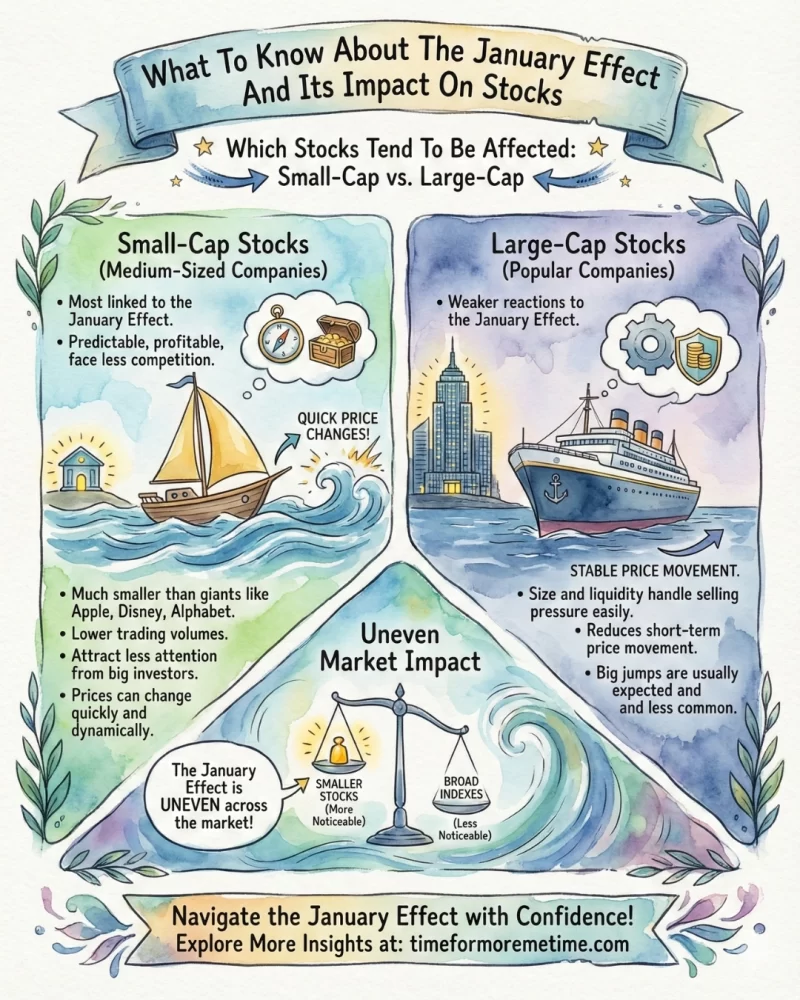
Small-cap stocks are most often linked to the January Effect. These stocks come from medium-sized companies, which I often invest in because they can be predictable, profitable, and face less competition. They are much smaller than popular companies like Apple, Disney, and Alphabet. Because of this, small-cap stocks usually have lower trading volumes and attract less attention from big investors. This allows their prices to change quickly.
In contrast, larger companies tend to show weaker reactions to the January Effect. Their size and liquidity allow them to handle buying and selling pressure more easily, which reduces short-term price movement. While some larger stocks may experience big jumps, these are usually expected if they moved significantly at the end of the year.
Because of these differences, the January Effect is uneven across the market. It’s more noticeable in smaller stocks than in broad indexes.
When The January Effect Shows Up
The January Effect rarely lasts all month. In many cases, the price movements happen early in January, sometimes within the first few trading days. I recently noticed that these changes could happen even faster, lasting only five to seven days before everything returns to normal.
As markets have become quicker, some of this activity has started even earlier. Buying can begin before January, which shortens the time we see the effect. This makes it harder to notice consistently.
Timing is very important here. Expectations often shift before prices do, which makes the January Effect less visible.
What Historical Performance Shows
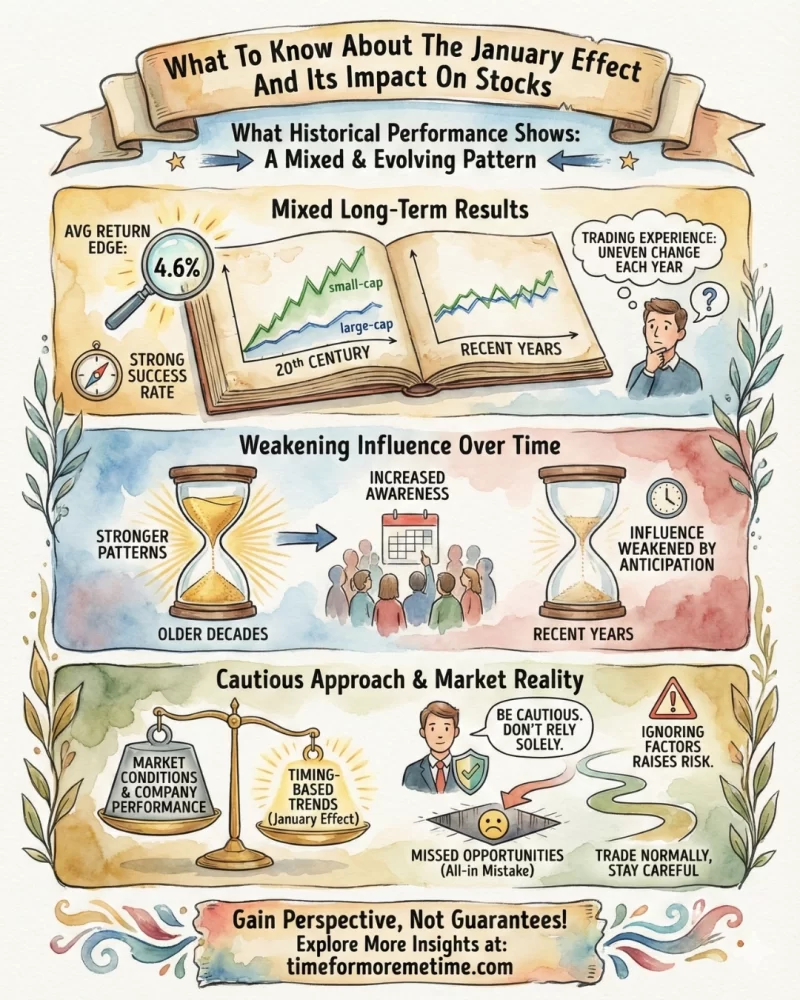
Looking at long-term performance shows mixed results. In my years of trading, I’ve always seen it happen. Across large portions of the 20th century, small-cap stocks frequently outperformed large caps in January, with an average return edge of 4.6% and a strong success rate over time. The only change each year is how much the stocks I’m watching improve or decline.
However, according to my initial research when I found about this effect, older decades showed stronger patterns than recent years. As more people became aware of this effect, its influence weakened. This anticipation has reduced its impact.
This uneven history reminds us to be cautious. So, be aware of the January Effect for the stocks you’re monitoring, but don’t rely solely on it. Trade normally, and stay careful.
Remember that this effect may lead to false assumptions, and when those expectations don’t happen, frustration sets in. In my fourth year of trading and third year of noticing this effect, I made the mistake of putting all my money into one stock. While I didn’t lose a lot, I missed opportunities with my other stocks.
This happens because timing-based trends don’t operate alone. Market conditions and company performance are still more important. Ignoring these factors raises risk. Understanding these limits helps prevent emotional reactions. Being aware of the January Effect gives perspective, but it doesn’t guarantee anything.
How Investors Should Utilize the January Effect
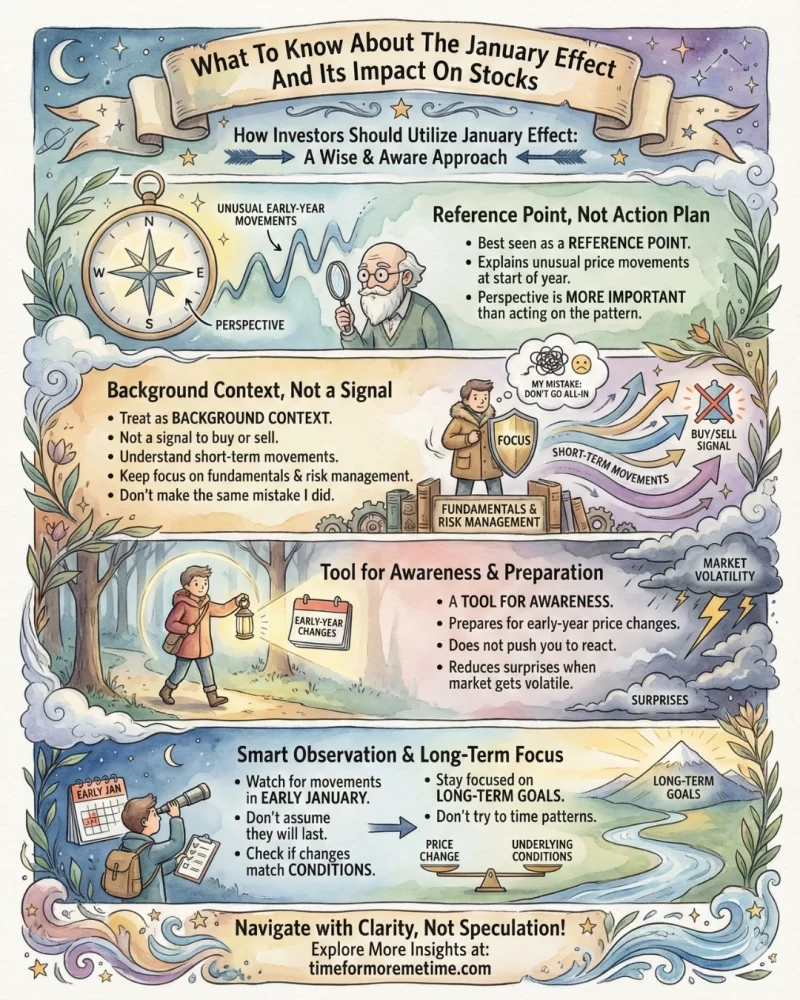
When viewed correctly, the January Effect is best seen as a reference point. It helps explain why price movements at the start of the year can seem unusual. This perspective is more important than just acting on the pattern.
Treat it as background context, not a signal to buy or sell. Use it to understand short-term movements while keeping your focus on fundamentals and risk management. Don’t make the same mistake I did.
Always remember that the January Effect is a tool for awareness. It prepares you for early-year price changes without pushing you to react. This awareness helps reduce surprises when the market gets volatile.
Watch for movements in early January, but don’t assume they will last. Check if price changes match the underlying conditions, and then stay focused on your long-term goals instead of trying to time patterns.
Many investors prefer this approach because it helps avoid chasing temporary price swings. It provides clarity instead of speculation and helps maintain consistency.
Conclusion
The January Effect highlights how investor behavior can influence stock prices at the start of the year. Understanding it provides context for early movement without encouraging speculation.
For more practical insights, read our latest posts, follow us on social media, and visit our YouTube channel for clear guidance you can apply confidently.
Source
- Photo: Pexels: Hanna Pad