


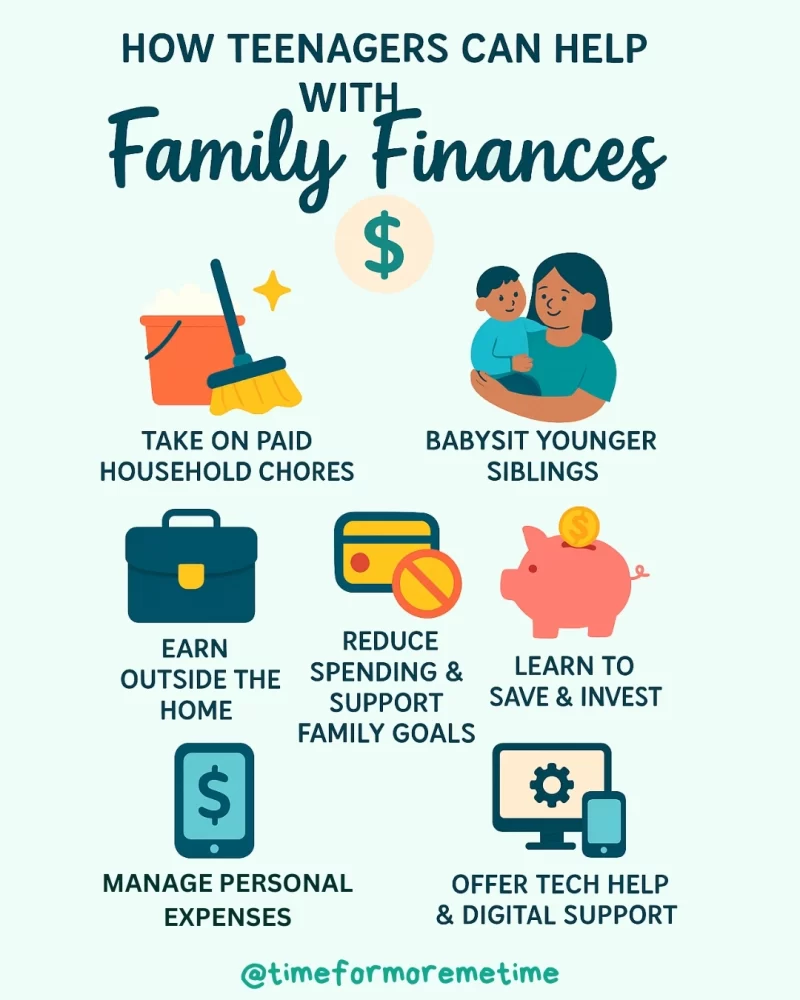
Many families are dealing with higher living costs, and it’s natural to wonder how teenagers can help at home. Teens don’t need full-time jobs to make a difference—there are simple, age-appropriate ways they can ease small expenses and learn real-life money skills along the way. In this post, you’ll find clear and practical tips that show how teenagers can support their family’s finances in everyday ways. Let’s get started!
1. Take On Paid Household Chores
One of the simplest ways teens can contribute is by taking on extra household tasks. This goes beyond making their bed or doing the dishes. Parents can offer compensation for jobs they might otherwise outsource, like mowing the lawn, deep cleaning the bathroom, washing the car, or organizing the garage.
This arrangement saves money on hiring help while teaching teens the value of effort and income. To make it more organized, families can use budgeting apps that track chores, payouts, and savings goals. It helps teens see their progress, manage what they earn, and build smart habits early on.
2. Babysit Younger Siblings
Childcare is a major expense for many families. If teens are mature and responsible, watching younger siblings in the afternoons, during school breaks, or on occasional weekends can help cut expenses that would otherwise go toward babysitters or daycare.
To make this effective, treat it like a real job. Parents can outline expectations such as meal prep, helping with homework, bedtime routines, and emergency procedures. This not only reduces childcare costs but also builds valuable life skills and a stronger sense of responsibility.
3. Earn Outside The Home
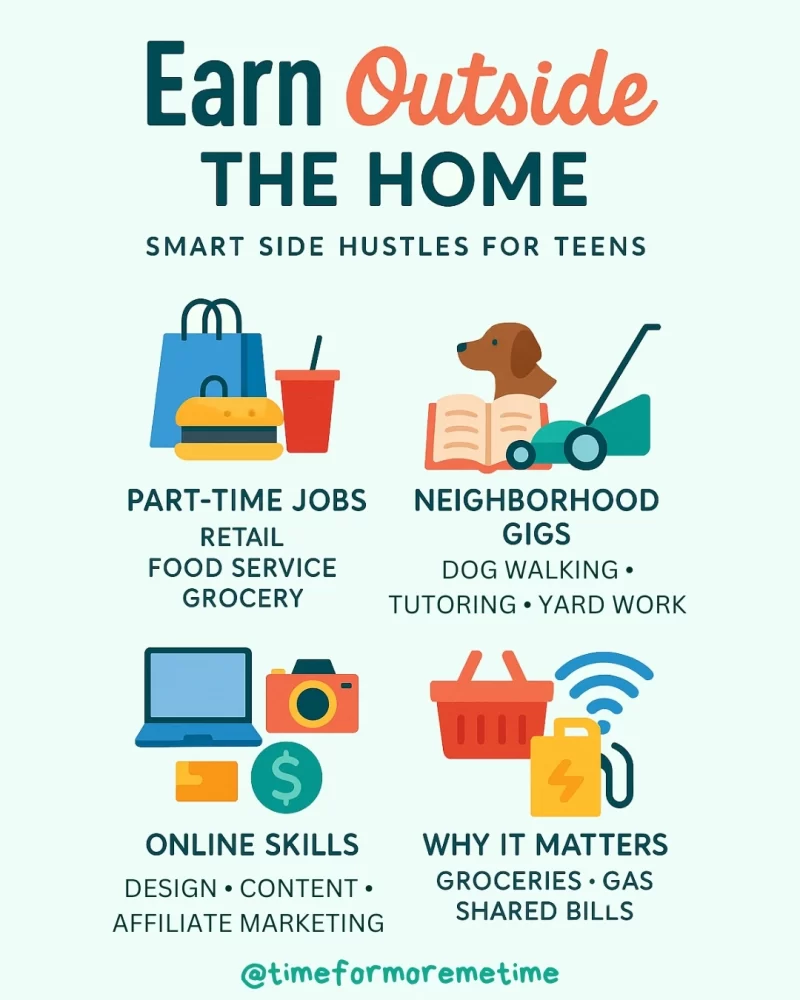
Many teens can explore part-time jobs or small side hustles that fit into their schedules. Local options include retail work, fast-food shifts, grocery bagging, or delivery driving (for older teens). For those who prefer flexible work, offering neighborhood services like tutoring, dog walking, or lawn care can bring in steady income.
Teens with creative or tech skills can also earn money online. Some design graphics, write content, or even do affiliate marketing by promoting products on platforms like Instagram, YouTube, or blogs—with guidance from parents. This allows them to earn commissions by sharing links to things they already use or enjoy, all while learning valuable marketing and communication skills.
Even small amounts earned from jobs or side gigs can be used to help cover shared costs at home—like groceries, gas, or internet. Encouraging teens to contribute a portion of their earnings teaches them the real cost of living and helps them feel more connected to the family’s financial health.
4. Reduce Spending And Support Family Goals
Teens can contribute to the household by helping reduce everyday expenses. They can compare prices while grocery shopping, help review phone or streaming plans, and use cashback apps or coupon codes before making purchases. These small actions can lead to noticeable savings over time.
You can also encourage them to cook simple meals at home instead of ordering takeout, or try a “no-spend weekend” challenge as a family. These habits not only save money but also teach teens how to make more thoughtful spending choices.
Beyond cutting costs, teens can also support broader family goals. Whether it’s saving for a vacation, holiday gifts, or an emergency fund, involving them in the process helps build ownership and awareness. Even saving a few dollars a week toward a family goal reinforces discipline, planning, and teamwork.
Be like their financial advisors where you set regular conversations about shared goals and progress to teach similar lessons.
5. Manage Personal Expenses
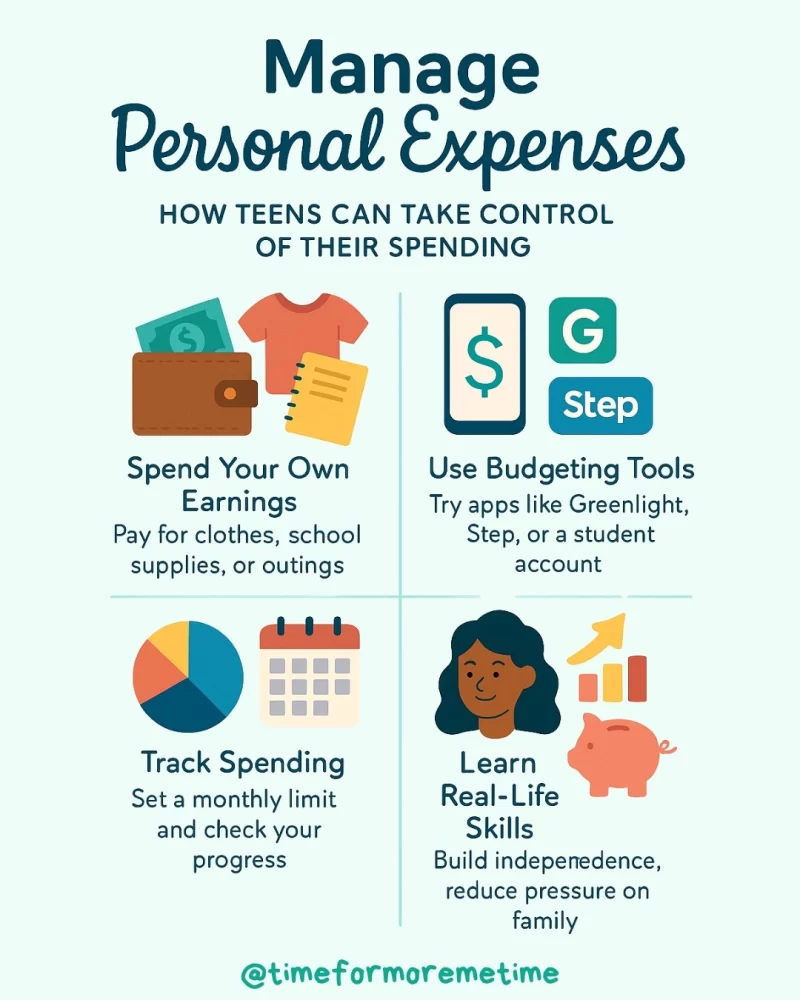
Instead of relying on parents to pay for everything, teens can start managing their own spending. They can use their earnings to cover personal expenses like school supplies, clothes, or social outings. This helps stretch the family budget and builds everyday money skills.
To stay on track, teens can use apps like Greenlight or Step, or open a teen-friendly checking account to monitor spending. Setting a monthly budget and tracking purchases gives them real-time insight into how their choices affect their finances.
While they may not be ready to invest in financial instruments like stocks or bonds just yet, learning how to manage basic spending is a key first step. It teaches independence, builds confidence, and reduces financial pressure on the household.
6. Learn To Save And Invest
Helping the family doesn’t always mean paying bills—it can also mean planning for the future. Teens can start saving in a dedicated account or open a custodial Roth IRA with a parent’s help.
Apps like Greenlight and Fidelity Youth allow supervised investing with small amounts of money. Teens can set personal savings goals—whether it’s for a car, future college expenses, or even long-term family support.
Learning to grow their money early builds habits that will serve them and their families for years to come.
7. Offer Tech Help and Digital Support

Most teens are more tech-savvy than their parents. That’s a huge asset. Teens can help compare budgeting apps, set up spreadsheets, or help their parents explore online banking or bill payment tools.
If the family has a side hustle or small business, teens can pitch in with graphic design, flyers, product photos, or even simple websites. They can also help declutter the house by photographing and listing unused items for sale online.
These contributions don’t just save time—they also help families earn and stay organized.
Conclusion
Teens don’t need a full-time income to make a real difference at home. From helping with chores and childcare to managing their own spending and using tech skills to support family goals, there are plenty of simple ways they can contribute. These small actions add up—teaching lifelong habits while easing daily expenses.
Want more tips on saving money, building smart habits, and making better use of your time? Subscribe to our blog, follow us on social media, and check out our YouTube channel for more practical guides.
Source
- Photo: Pexels: Ron Lach