
When I was a young wee lad, I learned firsthand what it means to stretch every dollar. There were times when my family had to go without electricity for days because the bill was too high, and we just couldn’t afford it. So, we forced ourselves to reduce our monthly utility bills.
I still remember bundling up under layers of blankets in the winter, lighting candles at night, and boiling water for baths, even if we actually have electricity, gas, and water. We just want to save as much as we can—we had to find ways how to reduce monthly utility bills just to make sure we’ll survive the next month.
Now, as an adult, I’ve made it my mission to avoid ever going through that again. I’ve spent years researching and implementing the best strategies for lowering utility bills while still living comfortably.
Here’s what worked for me—and how you can do the same.
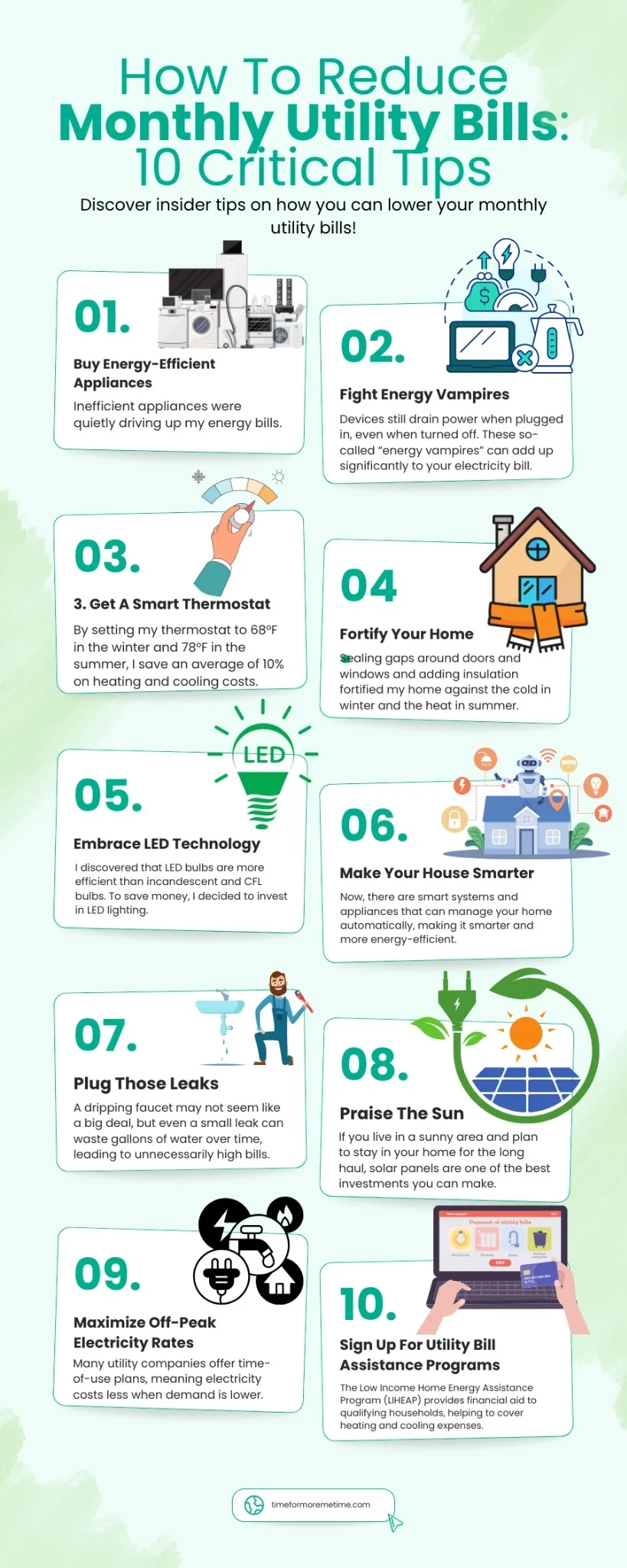
1. Buy Energy-Efficient Appliances
For a long time, I thought replacing appliances was an unnecessary expense. However, after conducting some research, I realized that inefficient appliances were quietly driving up my energy bills.
I discovered that aging appliances can quietly push up household electricity use. The average US household consumes about 10,500 kWh per year, or 875 kWh each month. One clear example is an old refrigerator, which can use about 35% more energy than an ENERGY STAR model. Refrigerators over 15 years old may also cost more than $80 annually to run, making them a practical place to look for savings.
This realization changed my perspective on replacing appliances.
Taking action on this insight turned out to be one of the best financial decisions I’ve made. Although the initial cost seemed high, I quickly recouped my investment within a year.
By replacing outdated appliances with energy-efficient models, households can save approximately $450 annually on energy bills. Investing in these upgrades not only reduces energy consumption but also leads to noticeable decreases in utility costs.
Start by replacing your refrigerator and washing machine, upgrading old dishwashers, and investing in more efficient HVAC systems and water heaters. Be sure to choose models with modern power management features to maximize your savings.
2. Fight Energy Vampires
I remember my mom running around the house, unplugging everything before we left. At the time, I just thought she was just being paranoid—but she was right.
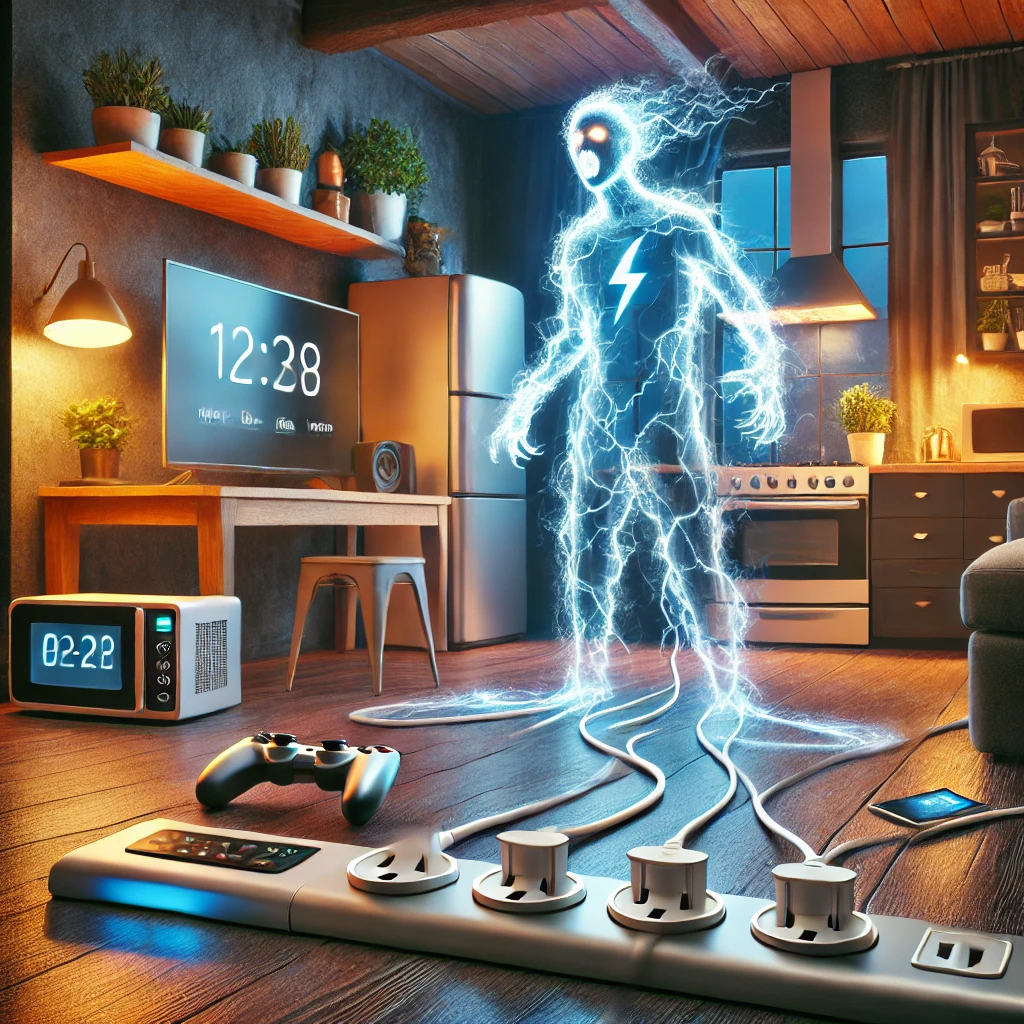
I learned later that devices still drain power when plugged in, even when turned off. These so-called “energy vampires” can add up significantly to your electricity bill.
Devices like TVs, gaming consoles, microwaves, and even phone chargers consume energy and can add up to $440 to your electricity bills even when they’re in standby mode.
I did an experiment one month where I unplugged everything that wasn’t in use, and my energy bill dropped by about 10%!
So now I use smart power strips that automatically cut off power to idle devices. These power strips can detect when a device is not in use and shut down power to it, eliminating unnecessary consumption.
For instance, my home office setup includes a smart strip that turns off my printer, monitor, and speakers when my computer is shut down. It’s a simple change, but it saves me money every month without requiring extra effort.
If you haven’t already, investing in a few smart power strips can help eliminate wasted electricity and lower your bill with minimal hassle.
3. Get A Smart Thermostat
When I was younger, we had to turn off the heater at night to save on the gas bill, no matter how cold it got. Nowadays, I benefit from a more comfortable solution: using a smart thermostat.
By setting my thermostat to 68°F in the winter and 78°F in the summer, I save an average of 10% on heating and cooling costs. That’s another 10%!
Lowering your thermostat by 1°F during winter can save about 1% on your energy bill. An ENERGY STAR smart thermostat can make these adjustments automatically, helping households save about 8% on heating and cooling costs, or roughly $50 a year, without giving up comfort.
A smart thermostat automatically adjusts the temperature, ensuring I don’t waste energy and helping to lower my gas and electricity bills. Most programmable thermostats allow you to create schedules based on when you’re home, asleep, or away. With mine, I programmed it to lower the temperature while I sleep and warm up just before I wake, ensuring comfort without unnecessary heating costs.
This small change is an easy way to reduce monthly utility costs while maintaining comfort. Plus, I don’t have to manually adjust the thermostat! It’s less of a hassle and helps me forget the times my parents would swat my hand whenever I touched it.
4. Fortify Your Home
I still remember stuffing towels at the bottom of the doors to keep the cold out. Now, I take a more effective approach by sealing gaps around doors and windows and adding insulation. This small fix has fortified my home against the cold in winter and the heat in summer, reducing my reliance on heating and air conditioning.
I recently upgraded my attic insulation and noticed a 15% reduction in heating and cooling costs within a few months. That result matches EPA estimates showing that air sealing and insulation can lower these costs by an average of 15%. Proper insulation slows heat transfer, helping your home maintain a steady temperature without forcing the HVAC system to work as hard.
Here are some effective measures to consider:
- Weatherstripping around windows and doors
- Applying caulk to seal cracks
- Using thermal curtains
- Installing door sweeps to block drafts
- Using insulating film on windows
- Ensuring air vents are clear of furniture and debris
- Placing rugs on hardwood floors
All of these contribute to better insulation. If these measures aren’t enough and your home is particularly drafty, consider a professional energy audit to pinpoint exactly where you’re losing the most heat or cool air.
5. Embrace LED Technology

In the past, it was common to use a single lightbulb for an entire room to conserve electricity, especially for those trying to cut costs. But that approach won’t suffice today. While there are good bulbs available, relying on just one can leave your home looking like a dark cave.
When I moved out of my family home, I still had that habit. But over time, I discovered that LED bulbs are more efficient than incandescent and CFL bulbs. To save money, I decided to invest in LED lighting.
Honestly, I was not planning to include this section from the article, thinking it was common sense that all Americans would be using only LED bulbs by now. After all, it’s been more than a decade since they became commercially available, cheap, and widespread!
Switching from incandescent bulbs can cut lighting energy use by up to 90%, while the bulbs may last 25 times longer. The Department of Energy estimates that a typical household can save about $225 a year, making LEDs a practical way to lower electricity costs and replace bulbs less often.
In addition to being energy-efficient, new types of LED bulbs are also smart. They allow you to control lighting remotely and even change color temperature to optimize energy usage.
Beyond switching bulbs, making small adjustments to how you use lighting can also help. Using natural daylight whenever possible, turning off lights when leaving a room, and utilizing dimmer switches are easy ways to conserve energy.
6. Make Your House Smarter
Most kids don’t realize how good they have it when it comes to technology. Maybe that’s the same feeling the older generation in my neighborhood had toward me and my friends, but that’s another story altogether.
During my family’s days of struggles, we made a concerted effort to reduce our monthly utility bills. We turned everything off when we weren’t using it. Lights stayed off unless absolutely necessary, and appliances were only plugged in when in use. If not, we’d never hear the end of it!
Now, there are smart systems and appliances that can manage your home automatically, making it smarter and more energy-efficient.
When I discovered this technology, I jumped in and integrated smart home devices to provide real-time monitoring and control over my energy consumption. With this tech, I can connect to my smart meter and track which appliances use the most energy.
This level of control makes online bill payment easier since I can anticipate my costs and adjust accordingly. It also allows me to schedule my washing machine to run during off-peak hours or automatically turn off non-essential electronics when I leave the house.
Another game-changer has been smart plugs and motion sensor lights. I used to leave lamps and small appliances plugged in all day for convenience, but now smart plugs automatically shut off power to them when they’re not in use.
Smart thermostats also play a significant role by adjusting the temperature based on my schedule, preventing wasted heating or cooling. With all these tools combined, I’ve cut my energy bill by nearly 20%, and I barely have to think about it.
Some utility providers even offer discounts or cashback for paying your bill online. The best part is that many of them offer online tools to track electricity usage in real time, helping you identify areas where you can make further cuts.
7. Plug Those Leaks

Ever had a leak under the kitchen sink, and when the water bill arrived, you’re in shock—it was nearly double what you usually paid? If you’re unaware of the leak, you may have spent an entire Saturday trying to track it down, and once you did, it was clear how much money had literally gone down the drain.
Thus, it’s a priority to check for leaks regularly. A dripping faucet may not seem like a big deal, but even a small leak can waste gallons of water over time, leading to unnecessarily high bills.
Another one of the easiest ways I’ve reduced my water bill is by installing low-flow fixtures, including showerheads and faucet aerators. These small changes help conserve water without sacrificing water pressure.
US households spent an average of $412 per month on electricity, natural gas, and water in 2025. Cutting those costs by just 5% could save about $21 per month or $247 per year, showing how small adjustments can add up.
Another habit I picked up was being mindful of how I use water daily. I don’t let the faucet run while brushing my teeth, and I’ve started using a rain barrel to collect water for my garden. It might not seem like much, but over time, these small adjustments make a big difference in both my wallet and the environment.
If you’re looking for an easy way to cut costs, start by fixing leaks and making small tweaks to your daily water usage. Or if you ever notice an unusually high bill, check if you’ve received a duplicate bill before making a payment to avoid overpaying.
8. Praise The Sun
If someone had told me as a kid that one day I’d be producing my own electricity, I wouldn’t have believed it. Before, we worried about paying the electric bill every month, and the idea of being energy-independent seemed impossible.
Now, it is, and installing solar on my home seems like a great idea. Unfortunately, I haven’t acted on it yet. Despite how affordable panels can be, installing a solar system in California is still expensive, even with government rebates. My budget is still feeling the pinch from renovating my parents’ home, but once that’s settled, I’ll definitely revisit this idea.
However, if you have the capacity to invest in a solar system, go for it! With proper management of your electricity usage, you can potentially reduce your bills to zero. In some months, you might even generate more power than you use, which means the utility company pays you!
By the way, keep in mind that net metering—the setup where you can give back juice to the grid—isn’t available in all states and with all electric providers, so be sure to check with your local power distributor before hoping to be compensated for your system’s excess.
Beyond the savings, there’s something incredibly satisfying about producing your own clean energy. You won’t have to worry about rate hikes from the power company, and you’ll feel good about reducing your carbon footprint.
If you live in a sunny area and plan to stay in your home for the long haul, solar panels are one of the best investments you can make. So, praise the sun!
9. Maximize Off-Peak Electricity Rates
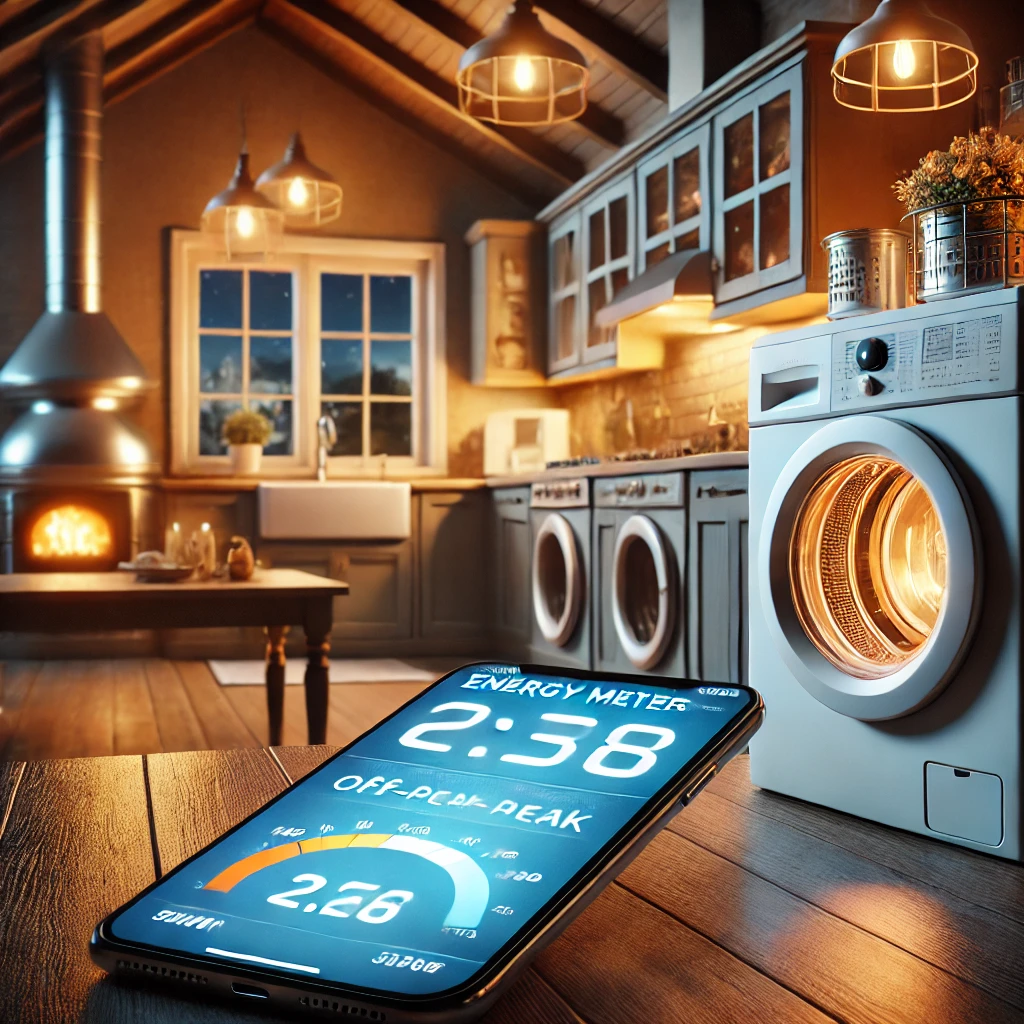
Back when we were struggling to pay the bills—I know, I know, I’ve said this story a million times here—my parents unknowingly followed an energy-saving hack that I still use today—running appliances at night.
Running heat-producing appliances later in the day can keep indoor temperatures more comfortable and may also reduce electricity costs. Some time-of-use plans charge up to 50% less during off-peak hours. Moving $40 of monthly electricity use to those lower-rate periods could save about $20, depending on your utility’s pricing schedule.
Another small change that helped was setting my water heater on a timer so it only runs when needed. Before, I had it heating water 24/7, which wasted energy. Now, it’s set to heat only during times when I actually need hot water, and my bill has noticeably decreased.
I also checked with my electric company to see when their peak and off-peak hours are, since they can vary by location. You can check your provider’s view pay bill options to help you determine your cheapest hours of use.
Some companies even offer “super off-peak” discounts, which I take advantage of whenever possible. If you’re not already using a time-of-use plan, it’s worth looking into—it’s one of the simplest ways to lower your electricity bill without making major changes to your lifestyle.
10. Sign Up For Utility Bill Assistance Programs
Back then, we had to make tough financial choices. When money was tight, we often had to decide between buying groceries or keeping the lights on. Unfortunately, this is a reality that many families still face today.
Thankfully, many utility companies and government agencies offer assistance programs to help alleviate the burden of high energy costs. The Low Income Home Energy Assistance Program (LIHEAP) provides financial aid to qualifying households, helping to cover heating and cooling expenses. Many states also have weatherization assistance programs that fund home improvements, such as insulation and energy-efficient upgrades, to reduce long-term costs.
If you need broader financial assistance beyond utility bills, the government offers multiple programs designed to support individuals and families in need. These programs can provide additional relief and resources to help manage everyday expenses.
While this isn’t a long-term solution for reducing your monthly utility costs, it’s definitely an option to consider if you’re facing tough times.
Conclusion
Utility costs force more households to make difficult trade-offs than you might expect. A 2024 analysis of US Census Bureau data found that 34.3% of adults had reduced or skipped necessities such as food or medicine at least once to cover an energy bill. Another 23.4% were unable to pay part or all of a utility bill, showing how quickly rising energy costs can strain a limited budget.
In this case, we need to sacrifice a bit with our utilities to save some money. However, lowering utility bills doesn’t have to mean making extreme sacrifices—it’s about making smart, intentional choices that lead to long-term savings.
No matter your financial situation, the tips I shared here can help you reduce your utility bills without sacrificing comfort. Small changes add up, and the more proactive you are, the greater the savings.
Start with just one or two strategies, track your progress, and watch as your monthly costs begin to drop. In the end, the goal is not just to save money but to create a more sustainable and financially secure future.
Want to learn more saving money tips? Check the other articles or subscribe to my YouTube channel!
Sources
- Photo: Unsplash: SumUp
- US Energy Information Administration. (2023). Electricity use in homes. https://www.eia.gov/energyexplained/use-of-energy/electricity-use-in-homes.php
- ENERGY STAR. (n.d.). ENERGY STAR impacts. https://www.energystar.gov/about/impacts
- New York Post. (2025). These ‘vampire appliances’ are costing you up to $440 a year. https://nypost.com/2025/02/04/real-estate/these-vampire-appliances-are-costing-you-up-to-440-a-year/
- US Department of Energy. (2023). Turn down the temperature, but don’t let your pipes freeze! https://www.energy.gov/energysaver/articles/turn-down-temperature-dont-let-your-pipes-freeze
- ENERGY STAR. (n.d.). ENERGY STAR smart thermostats FAQs for EEPS. https://www.energystar.gov/products/heating_cooling/smart_thermostats/smart_thermostat_faq
- ENERGY STAR. (n.d.). Why seal and insulate? https://www.energystar.gov/saveathome/seal_insulate/why-seal-and-insulate
- US Department of Energy. (n.d.). Lighting choices to save you money. https://www.energy.gov/energysaver/lighting-choices-save-you-money
- Xcel Energy. (n.d.). Time-of-use pricing. https://co.my.xcelenergy.com/s/billing-payment/residential-rates/time-of-use-pricing
- LendingTree. (2024). More than a third of Americans cut back on or skip household necessities to pay energy bills, led by Southern states. https://www.lendingtree.com/personal/energy-bills-study/