


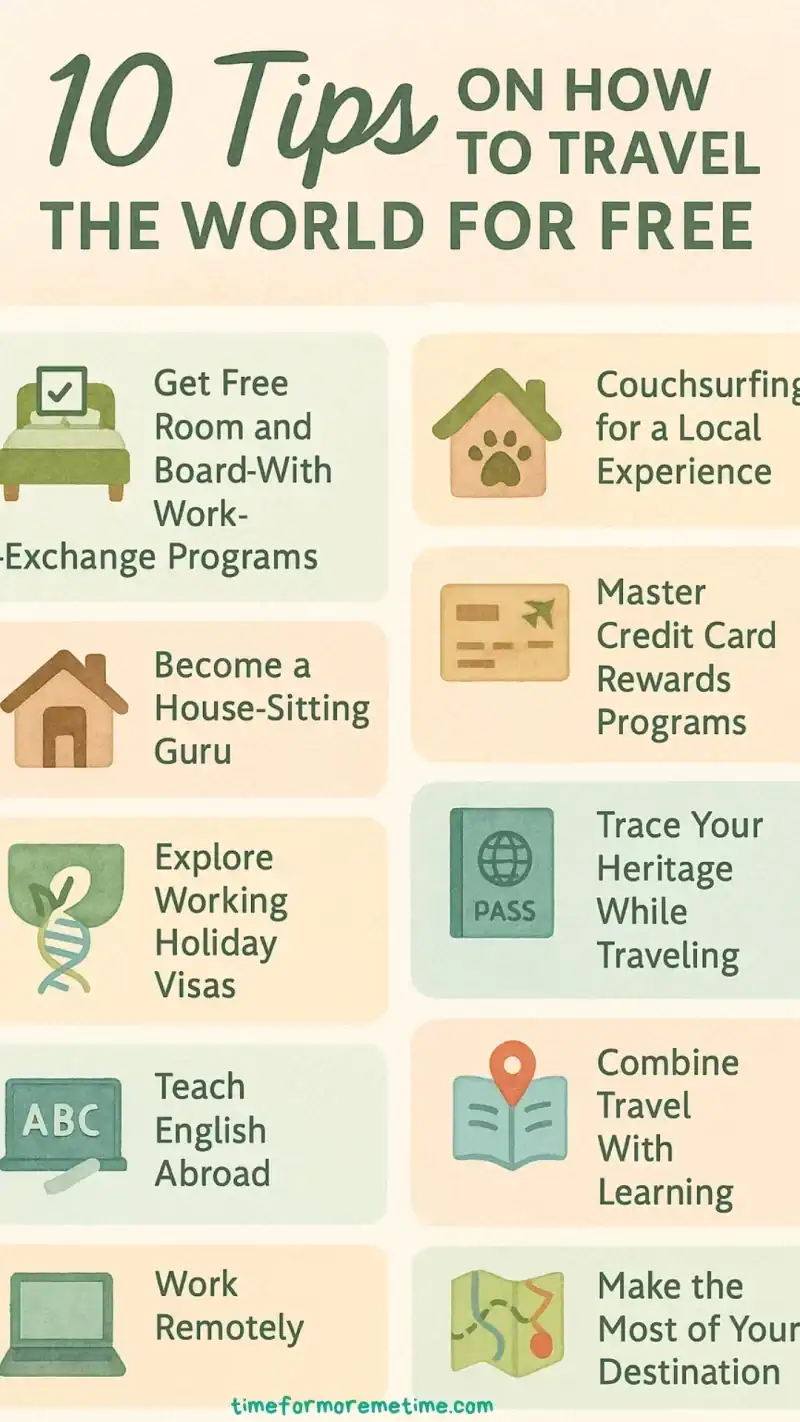
Traveling the world often feels like a distant dream when you see the high costs. With airfare and hotel prices rising in early 2024, many believe international travel is unaffordable. For the past few years, I’ve been checking flight deals during lunch, wishing I could visit new places.
I used to think travel was only for the wealthy. But after a long week of work in San Francisco in 2016, I found a travel site and booked my first volunteer trip to Portugal. I spent two weeks helping to repaint a hostel in exchange for a bed and meals, and it changed my perspective on travel.
Since then, I’ve met many travelers using similar approaches to explore Europe, Asia, and South America on a budget. I’ve learned how to make these strategies sustainable without breaking the bank.
In this guide, you’ll find ten practical ways to travel the world for little to no cost, including work exchanges, couch-surfing, and teaching abroad. You’ll also learn how to stay safe, make friends, and choose methods that suit your lifestyle. Let’s get started!
1. Get Free Room And Board With Work-Exchange Programs
Work-exchange programs are an excellent way to travel for free by trading your time and skills for food and a place to stay. Websites like Workaway and WWOOF connect you with hosts who need help. You might work a few hours a day in exchange for accommodation, and some even provide meals or local tours.
For example, when I volunteered on a coffee farm in Costa Rica, I received three meals a day, a private room, and breathtaking sunrise views, which felt more valuable than any paycheck.
Each year, thousands of travelers join these programs, looking for affordable and meaningful travel experiences. Even if you think you lack the right skills, most hosts simply want reliable, friendly people to help out.
Would you spend four hours gardening for a free stay in Tuscany? To get started, create a Workaway profile, showcase basic skills like cooking or cleaning, and search for opportunities by country and duration.
2. Try Couchsurfing For A Local Experience
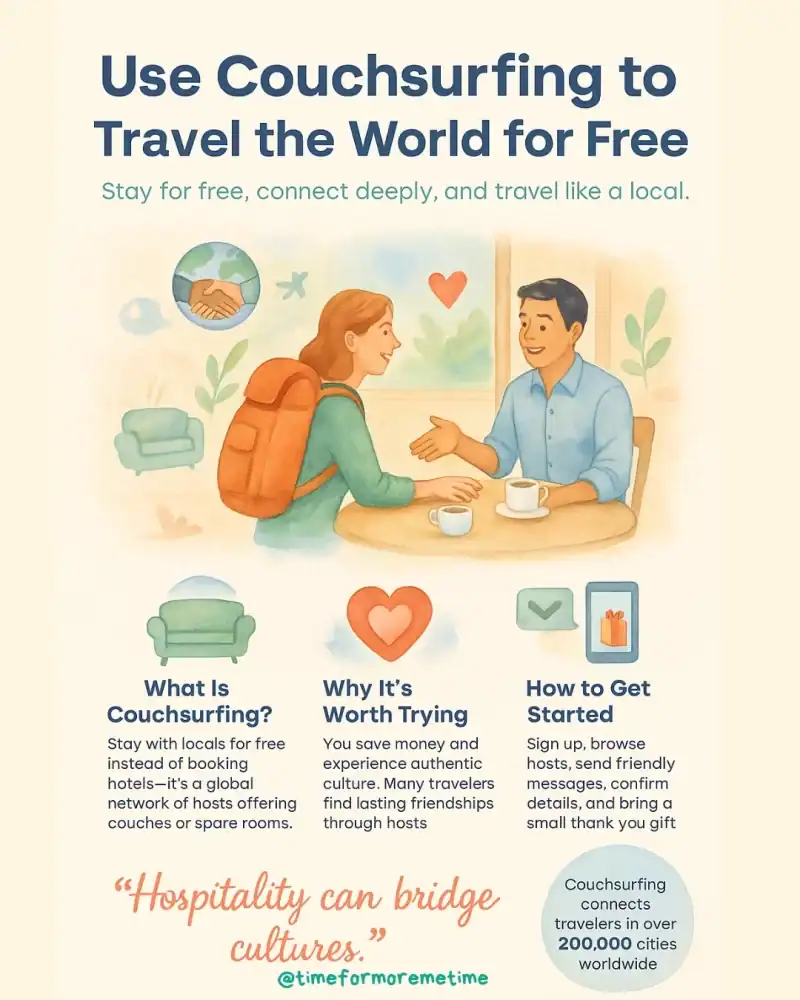
Couchsurfing connects travelers with locals who offer free places to stay and a chance to experience the culture. Instead of booking a hotel, you can stay with a host on their couch or in a private room at no cost. This not only saves money but helps you make friendships that can last beyond your trip. For example, during a visit to Tokyo, a traveler I met online stayed with a retired teacher through Couchsurfing. They shared travel stories and explored hidden ramen shops together, which she wouldn’t have discovered on her own.
Couchsurfing has communities in over 200,000 cities worldwide, making it an accessible and affordable travel option. It shows how open people are to connecting and helping visitors. You might wonder about safety, and it is generally safe if you take some precautions. Choose verified hosts with positive reviews, communicate with them before finalizing your stay, and trust your instincts.
Using Couchsurfing allows you to save money and see the city from a local’s perspective. Sign up, browse hosts in your chosen city, send friendly messages, and confirm details before arriving. Bringing a small thank-you gift is a nice touch that shows appreciation and helps build connections. After a few experiences, you’ll realize that hospitality exists and that generosity can bridge cultures.
3. Become A House-Sitting Guru
House-sitting is a great way to stay in beautiful homes around the world for free while helping homeowners care for their property or pets. Websites like TrustedHousesitters and MindMyHouse connect travelers with people who need responsible sitters while they’re away. You get free accommodation in exchange for looking after their home, plants, or animals. For instance, a friend I met in Lisbon house-sat for two months in a villa in Bali, caring for two golden retrievers while working remotely, saving over $3,000 on accommodation.
According to TrustedHousesitters, many listings are added daily across popular house-sitting platforms, especially in Europe and Australia. This means your dream trip could already be waiting! To get started, apply early, complete your profile, and gather a few references. If you’re worried about lack of experience, start small by house-sitting for friends or locally to build trust.
Imagine waking up in another country, making coffee in a new kitchen, and calling it home. Apply for your first house-sitting gig, stay in touch with homeowners, and treat their home like your own. It’s one of the safest and most rewarding ways to travel longer for less. As your positive reviews grow, more hosts will trust you with opportunities in new destinations.
4. Master Credit Card Rewards Programs
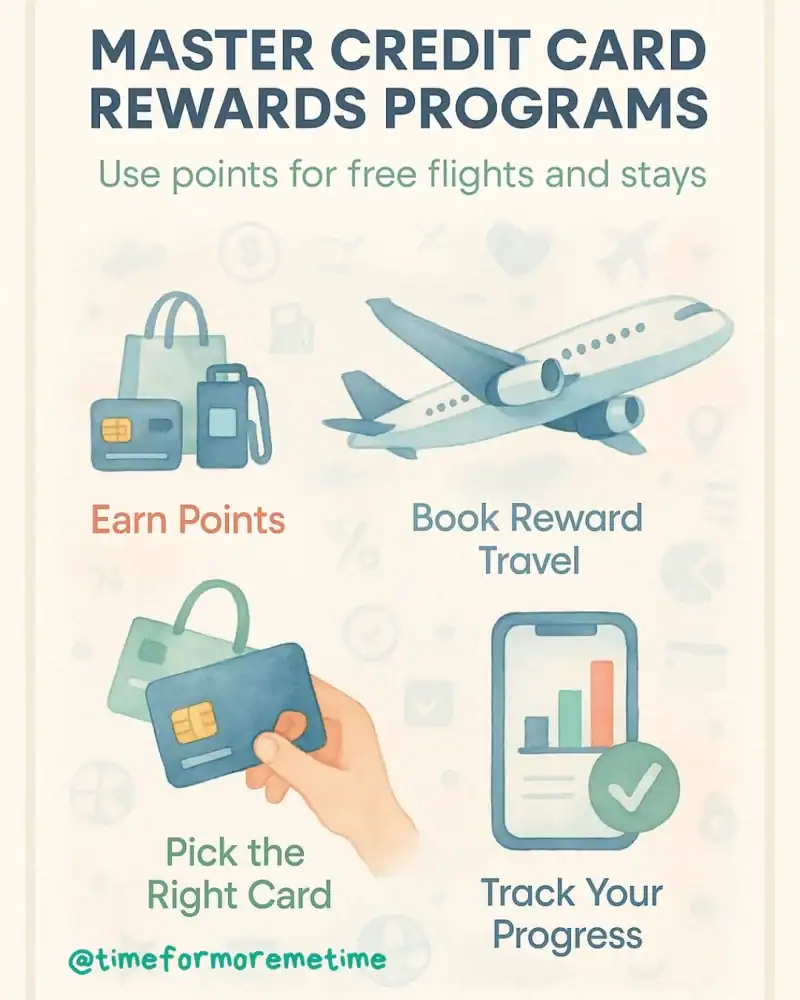
Credit card rewards can turn your everyday purchases into free flights and hotel stays. By using travel rewards cards strategically, you earn points or miles for expenses you already have, which you can redeem for airfare, lodging, or upgrades. For instance, I booked a round-trip flight from San Francisco to Paris using travel points earned from a year of grocery and gas purchases, paying only $56 in taxes.
Many US travelers redeem reward points for at least one flight each year. With responsible credit card use, you can support your travels. Just remember, rewards work best if you pay off your balance in full each month.
Imagine arriving at your dream destination knowing your ticket cost nothing but time and planning. Start by researching travel-focused credit cards that fit your spending habits. Some offer generous sign-up bonuses that can get you a free flight after reaching a spending limit.
Use your cards wisely and track your points with apps like AwardWallet. With a solid plan, every grocery trip or online purchase could bring you closer to your next adventure.
5. Explore Working Holiday Visas
Working holiday visas allow you to live and work abroad while funding your travels, combining adventure with income. Countries like Australia, New Zealand, and Canada offer year-long visas for young adults, usually under 30 or 35, to take part-time or seasonal jobs while exploring the host country.
For example, I met a traveler in Sydney who worked part-time at a surf shop while backpacking along the coast. By the end of the year, he had saved enough for a trip to New Zealand, all while building an impressive résumé with international experience.
Each year, tens of thousands of travelers apply for working holiday visas, with Australia being a top destination. You don’t need special skills or degrees; most jobs are entry-level positions in hospitality, farm work, or retail.
Imagine earning money while exploring a new country instead of watching your savings dwindle. Check the eligibility requirements early, as age limits and income needs vary. Make sure to save enough for initial expenses, then apply through official immigration sites. Once approved, you’ll learn what many long-term travelers already know: living abroad is an invaluable experience.
6. Trace Your Heritage While Traveling
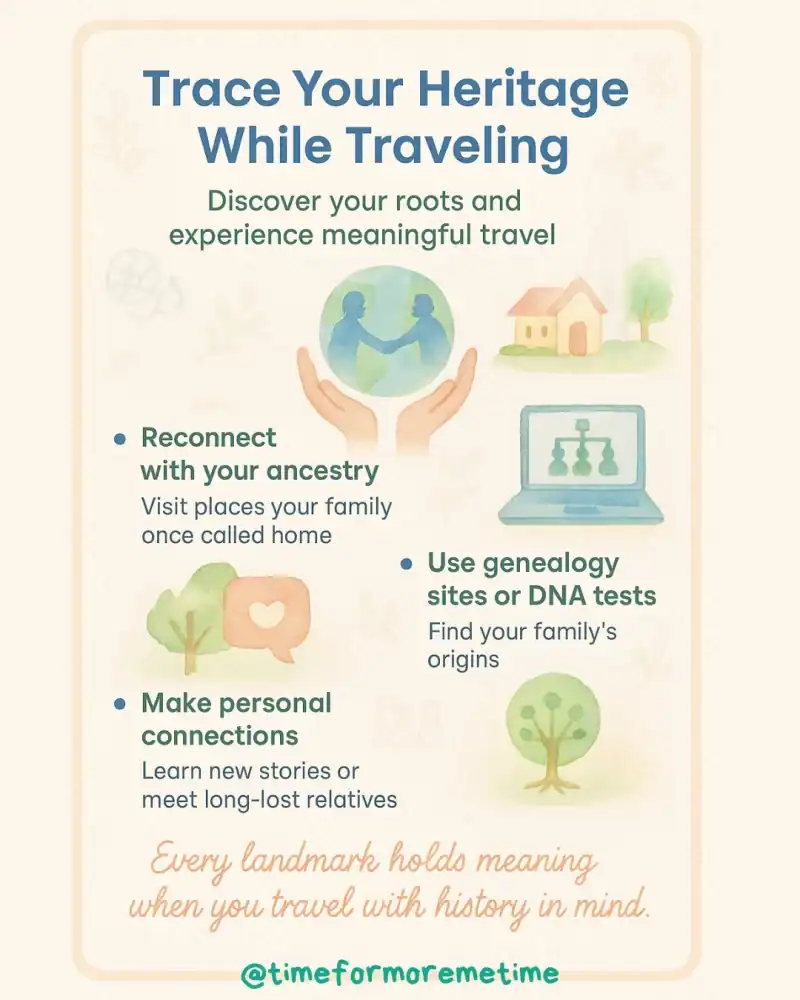
Heritage travel allows you to connect with your ancestry while exploring places your family once called home. This can mean visiting your grandparents’ village in Italy or your family’s old neighborhood in Mexico City.
For example, a friend traveled to Guadalajara and visited the church where his great-grandparents were married. Finding their names in old records made his trip much more meaningful than any tourist site.
Genealogy tourism is growing rapidly. Many travelers now use DNA tests and ancestry websites to plan heritage-inspired trips. Many discover long-lost relatives or family stories they never knew about. You can start by taking a simple ancestry test or talking to older relatives—who knows where it might lead?
Imagine walking the same streets as your ancestors. Use genealogy sites to find your family’s origins, plan a trip around that area, and let your curiosity shape your journey. Every landmark becomes special when you travel with your history in mind.
7. Teach English Abroad
Teaching English abroad is a great way to earn money while exploring new places. Countries like South Korea, Japan, and Thailand hire English speakers—even those without teaching degrees—to work in schools or private centers.
When I was in college, I was invited to teach in Seoul for two years, where they offered to cover my rent, travel, and student loans. I declined the offer because dosimetry is more important to me.
Tens of thousands English teachers are hired each year, making the opportunities somewhat modestly available for native speakers. Knowing the local language is a plus, but not required; most programs provide training and expect you to teach entirely in English.
To get started, earn a TEFL certification, which is often required. Apply through reputable recruiters or government programs like EPIK or JET. Teaching abroad is a great way to experience a new country without going broke.
8. Work Remotely While Traveling
Remote work gives you the freedom to earn anywhere with Wi-Fi, blending career growth and exploration. From freelancers to medical professionals like me, millions of workers now take their laptops to beaches, coffee shops, and co-working hubs worldwide. This is how my editor April gets to travel freely as she’s also a freelance writer.
Could your best work happen outside your office walls? Ask your employer about remote policies, or start a freelance side gig that allows location freedom. Once you experience productivity with a view, the idea of a traditional desk job might never feel the same. I, for one, am okay if my team goes abroad as long as they can do what I ask of them.
9. Combine Travel With Learning
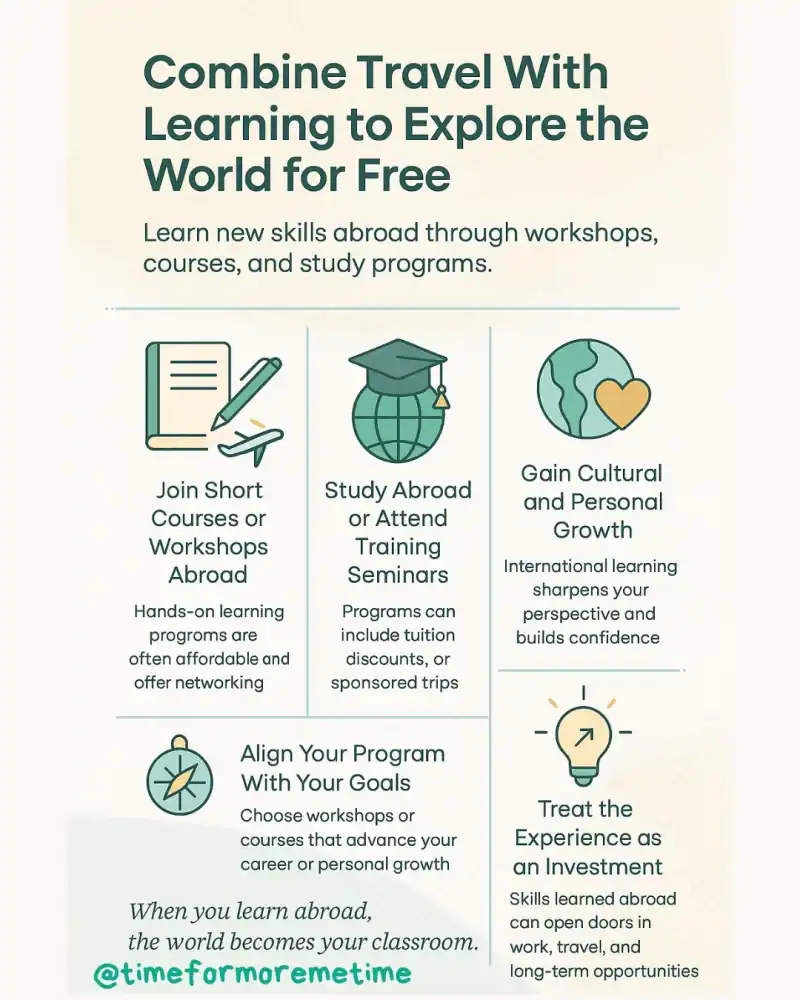
Educational travel allows you to enhance your skills and broaden your perspective. This can include short courses, study abroad programs, or workshops in other countries. For example, when I studied radiologic technology, I attended a medical training seminar in Toronto, where I learned as much about culture and patience as I did about physics.
Each year, global education programs attract hundreds of thousands of students. Combining learning and travel can transform an ordinary trip into a significant career or personal growth opportunity. Choose a course or program that aligns with your goals, treating it as an investment in your career and confidence. When you learn abroad, the world becomes your classroom, making each lesson more impactful.
10. Make The Most Of Your Destination
Plan trips with purpose and personal growth in mind, rather than simply following trends or social media. Since I began traveling, I vowed that each trip would honor life, whether it’s a quiet weekend away or a solo adventure.
From my experience, the most meaningful trips weren’t the most expensive; they had a clear purpose. Traveling with intention can make even a nearby city feel like a new world. If travel seems too expensive, start small—a road trip or a weekend of volunteering can be just as transformative as an international trip.
Before booking, ask yourself: What do I want to feel, learn, or give? This question can reshape your travel experience. While this might not be traveling for free, it ensures your trip is so valuable that it outweighs the cost, making it feel nearly free.
Conclusion
Traveling doesn’t have to deplete your savings or sanity. Whether it’s house-sitting, working remotely, or exploring your heritage, this guide shows there are always ways to explore the world without overspending.
Start where you are, save when you can, and travel when you’re ready.
If you enjoy this type of content, please subscribe to my blog, follow me on social media, and check out my YouTube channel. Thanks!