


Losing money to a fake online job can be frustrating, especially when you’re just trying to earn a legitimate income from home. In early 2024, the Federal Trade Commission (FTC) reported that US residents lost millions to job scams. Many of these scams appeared convincing, featuring professional websites and fake recruiters. Scammers excel at building trust, but knowing how they operate can help you protect yourself.
I experienced job scams while looking for online work as a college student. I once found a remote admin job that promised $1,200 a week, but it required a $50 setup fee. That small request alerted me to the scam, saving me from more significant losses. Since then, I’ve learned to quickly identify fake listings and help others avoid them.
This article outlines clear signs of online job scams so you can protect your time, money, and personal information. Let’s get started!
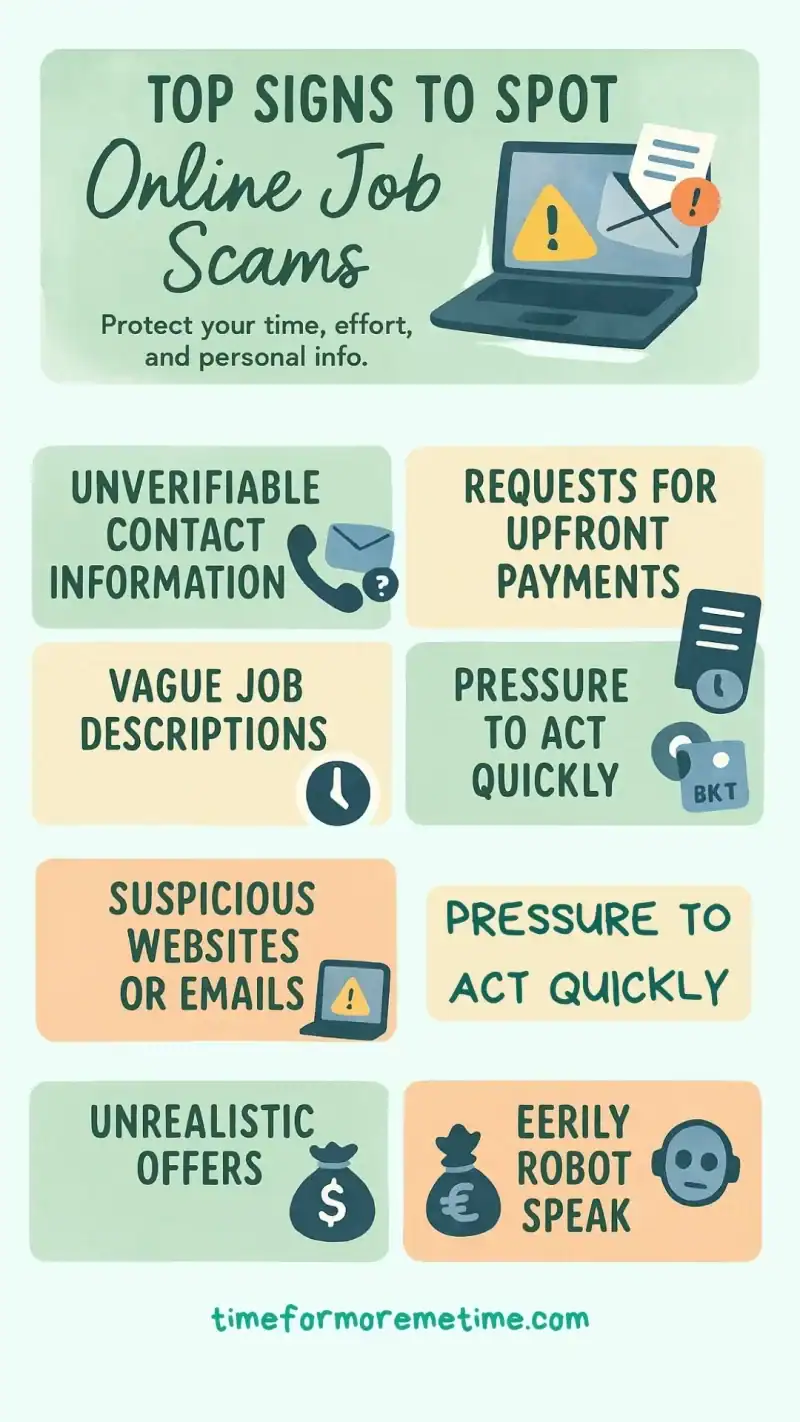
1. Unverifiable Contact Information
Legitimate companies make it easy for you to contact them by providing a verified business address, phone number, and professional email. When I started hiring freelancers for my blog, I noticed that reliable professionals always shared clear contact details and transparent profiles. The same principle applies when you’re looking for a job.
Fake job listings often hide or fake contact information to appear legitimate. This makes sense—scammers want to avoid being traced, so they keep everything vague or fake. If you’ve ever hesitated to apply for a job because the company seemed hard to contact, that’s your instinct trying to protect you.
Would you trust a business that doesn’t want to be found? Probably not. Before applying, search the company’s address and contact details on Google Maps or LinkedIn. If nothing comes up, it’s safer to skip it. Legitimate companies prioritize accessibility. Scammers, on the other hand, hide in plain sight.
2. Requests For Upfront Payments
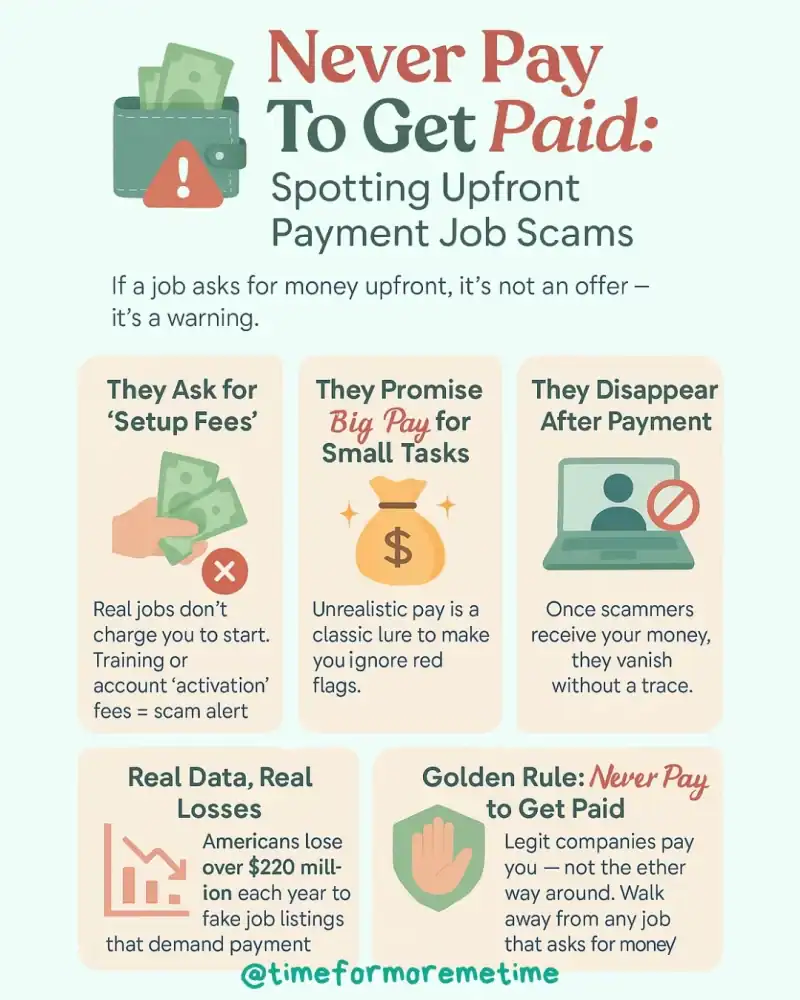
No real employer will ever ask you to pay before you start working. If you’re told to pay for training, setup fees, or access, it’s likely a scam. Years ago, I received a job offer that sounded perfect until they asked for $40 to activate my account—I didn’t send money of course.
The FTC reports that thousands of US job seekers lose a total of $220 million each year to online job scams that ask for upfront payment. Scammers use this tactic because it’s easy: once they have your money, they vanish. It can be tempting to jump at a job that seems like a great opportunity, but if you’re asked for money, take a moment to pause and reconsider.
Why would anyone pay to work? If a company asks for money first, walk away. Real employers pay you and not the other way around. Protect yourself by remembering this rule: never pay to get paid.
3. Vague Job Descriptions
If a job post doesn’t clearly outline the responsibilities, pay, and required skills, it’s a red flag. Legitimate employers provide this information so you know what to expect. Recently, a friend applied for a remote data job that was fake and just collected resumes for identity theft.
It’s been discussed heavily on the internet that many hiring managers leave job postings active even after they’ve filled the positions, with some keeping them up for over half a year. This suggests that many listings are misleading and might not represent actual jobs. It’s frustrating to spend time applying for positions that don’t even exist.
Have you ever waited weeks for a response from a job that vanished? Research the company before applying and check reviews on sites like Glassdoor or Indeed. Real opportunities are clear. If the job description feels vague, it likely is.
4. Pressure To Act Quickly
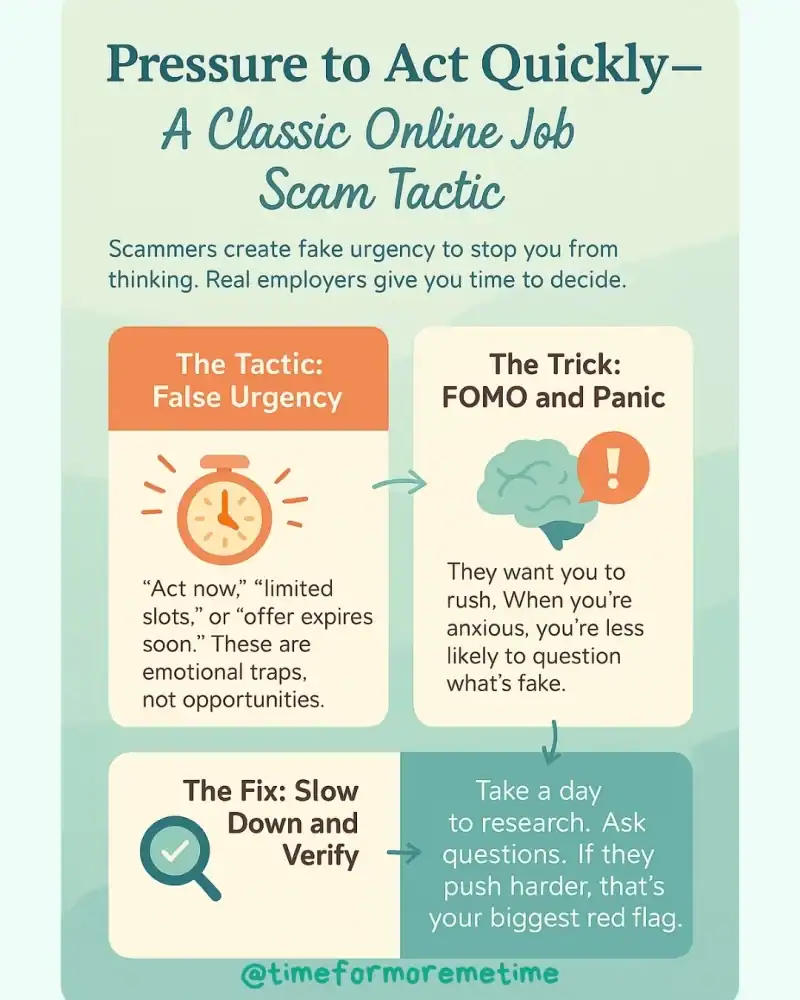
Scammers often rush you into making decisions by creating a sense of urgency. They might say there are only a few spots left or even set a tight deadline. For example, I once received an email claiming I had just two hours to accept a remote assistant job. I ignored it; treating job offers like flash sales is both foolish and insulting—that is what I thought at the time.
Scams using urgency tactics are greatly increasing. This pressure is a psychological trick designed to stop you from checking facts. Everyone experiences that fear of missing out (FOMO), but real job opportunities don’t rush you.
If someone pressures you to make a quick decision, pause and take a step back. Take a day to verify the details or talk to someone you trust. A legitimate employer will respect your need for time, while a scammer will not. Even if the opportunity is real, do you really want to work for a boss who rushes you into decisions?
5. Strange Payment Methods
Be cautious if a job offers to pay you in unusual ways. Legitimate employers typically use secure methods like direct deposit or PayPal, while scammers prefer untraceable payments. For example, one of my team members took a virtual assistant job that paid with cryptocurrency, but the funds never arrived, leaving him frustrated.
The FTC reported a 50% increase in cryptocurrency-related job scams in 2024. Payments through crypto or gift cards are risky because they are hard to trace and easy for scammers to exploit. It’s tempting to trust someone who seems professional, but scammers rely on that trust.
If a job offers payment through cryptocurrency or gift cards, walk away. Stick to verified platforms and known payment methods. A legitimate employer values both transparency and security. In any case, would you really want to get paid in crypto?
6. Suspicious Websites Or Emails
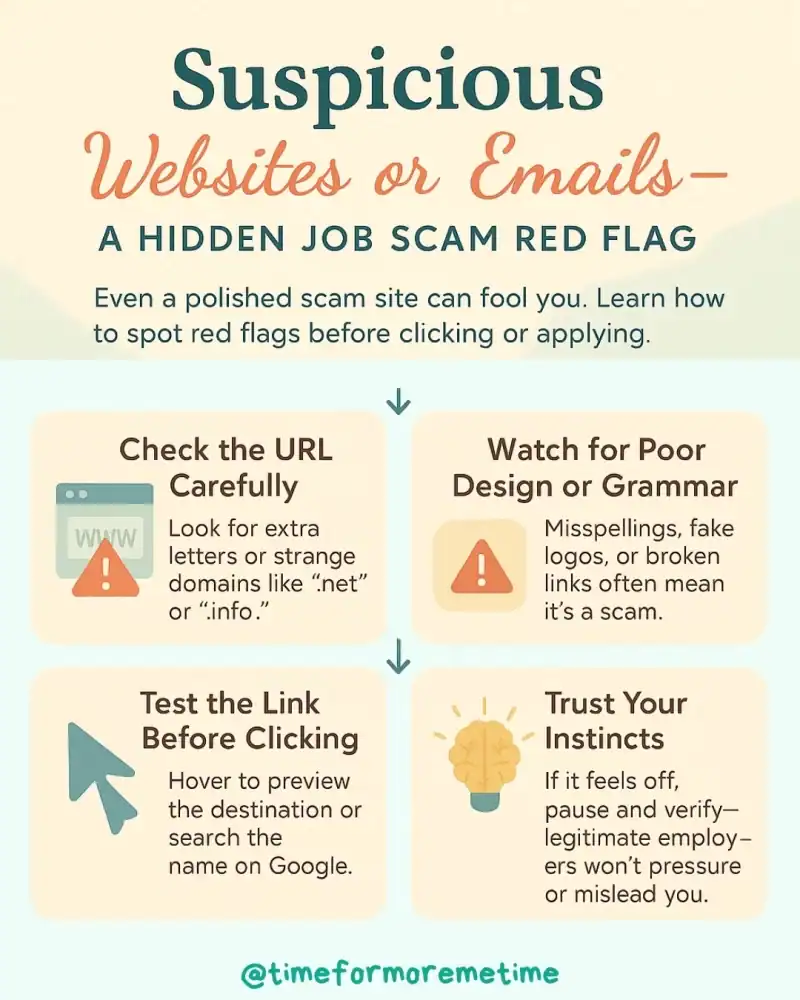
A poorly designed website or email is often a sign of a scam. Look for poor spelling, broken links, and fake logos. I once received a fake Indeed email that seemed real until I noticed the address ended in .net. I felt proud for recognizing it as a phishing attempt.
Phishing and fake websites caused losses exceeding millions in the US alone. Even smart people fall for these scams because the sites can look convincing. You don’t need to be tech-savvy to protect yourself; a quick Google search can save you money.
Always check the website’s URL before clicking on any link. If the site looks unprofessional or has many errors, don’t trust it. Real businesses invest in quality websites, but scammers do not. I’m sure you’ve experienced this and quickly moved on.
7. Unrealistic Offers
If a job sounds too good to be true, it probably is. Promises of high pay for little work are classic scams. I once received a message offering $1,500 a week just for checking emails, but they vanished after I asked for company details.
Many fake investment and job offers are reported worldwide yearly. Scammers use high earnings to lure in desperate job seekers, and it’s tempting to believe the offer, especially when money is tight.
Real jobs don’t promise instant wealth. Most employers try to minimize costs; that’s how business works. If something feels off, take a step back and verify the details through official channels or trusted job boards. It’s better to miss a fake opportunity than to lose real money.
8. Eeringly Robot Speak
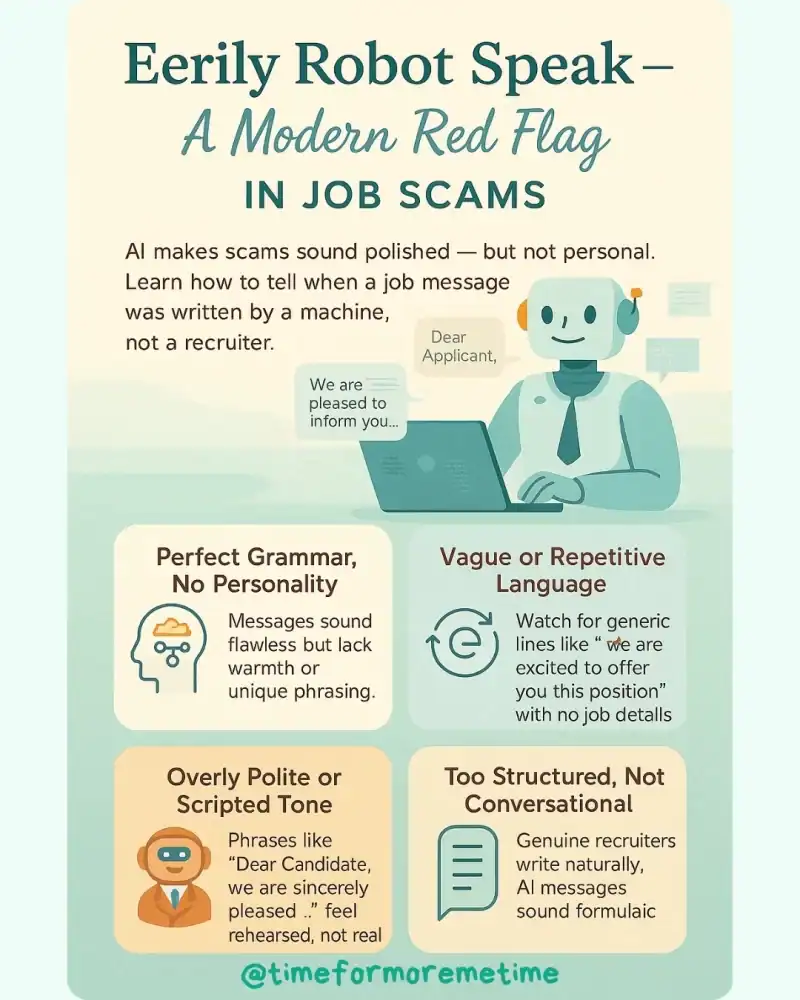
I’ve noticed that scammers are increasingly using AI to write their messages, which is a warning sign. At first, these messages may seem professional, but they often lack specific details and genuine emotion.
With free AI tools available, scammers can easily fix common issues like vague job descriptions and poor grammar. Their messages may look smooth but feel lifeless, as if written by a machine trying too hard to sound human. If a job message seems overly polite or too structured, it’s a red flag.
This is tricky because some legitimate recruiters also use AI, which is convenient for them. However, I’ve observed that around 70% of scam messages show signs of AI-generated text—perfect grammar but no warmth or spontaneity.
Be cautious, especially if a job ad or communication feels robotic.
Conclusion
Job scams are becoming more advanced, but you can protect yourself by recognizing these warning signs. Stay calm, do your research, and never send money or personal information without verifying the company first. Safeguarding your time and safety is just as important as finding the right job.
If you found this helpful, consider subscribing to our blog, following us on social media, and visiting our YouTube channel. See you there!
Sources
- Photo: Unsplash: Ernie Journeys