


Building savings can feel difficult, especially when there never seems to be enough left at the end of the month. But what if saving was built into your routine from the start? In this post, we’ll break down the 10% rule—a simple strategy that helps you save consistently, stay on track, and move closer to your financial goals without feeling deprived. Let’s get started!
What Is The 10% Rule
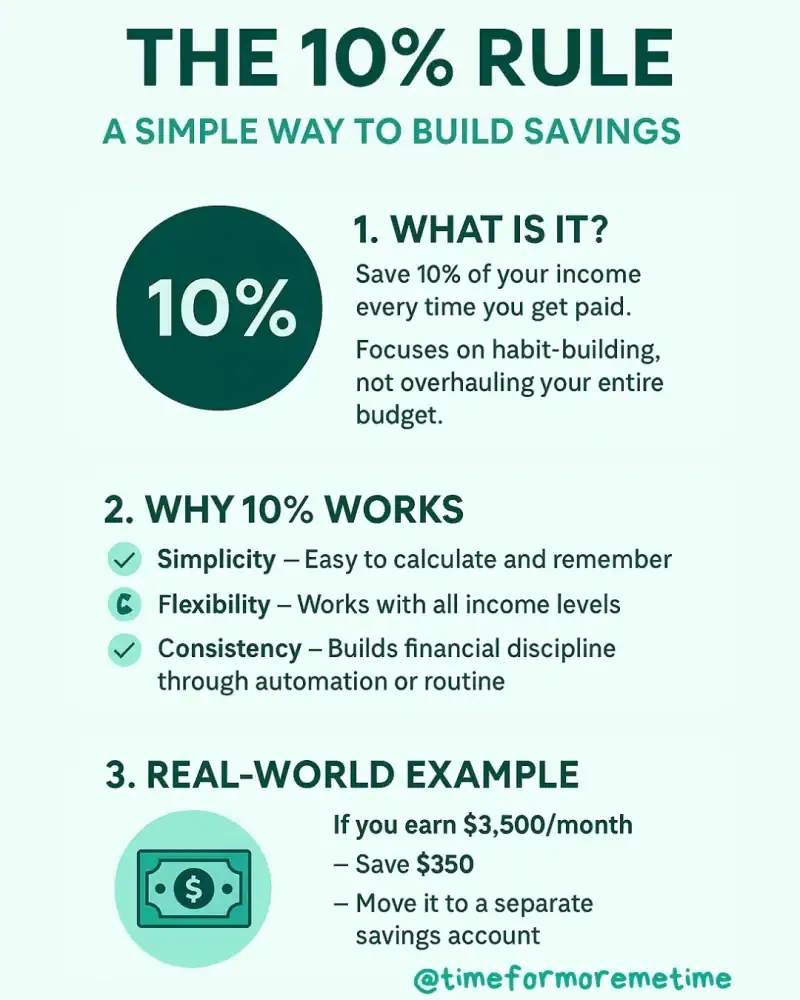
The 10% rule is a straightforward saving strategy where you commit to setting aside 10% of your earnings each time you get paid. Instead of reinventing your entire financial plan, this approach focuses on forming one consistent habit—automatically saving a portion of your income before you spend it.
It’s a well-known guideline in personal finance, often recommended as a foundational step toward financial health. Whether you’re building an emergency fund or working toward bigger goals, this rule offers a clear target that’s easy to remember and apply.
For example, if your monthly income is $3,500, then your savings goal under this rule would be $350. You can move it to a separate savings account manually or through automatic transfers—the method doesn’t matter as much as doing it regularly.
The 10% rule works well because it takes the guesswork out of saving. It’s flexible across income levels, easy to adapt as your financial situation evolves, and helps you take steady action without overcomplicating your budget.
How To Use The 10% Rule
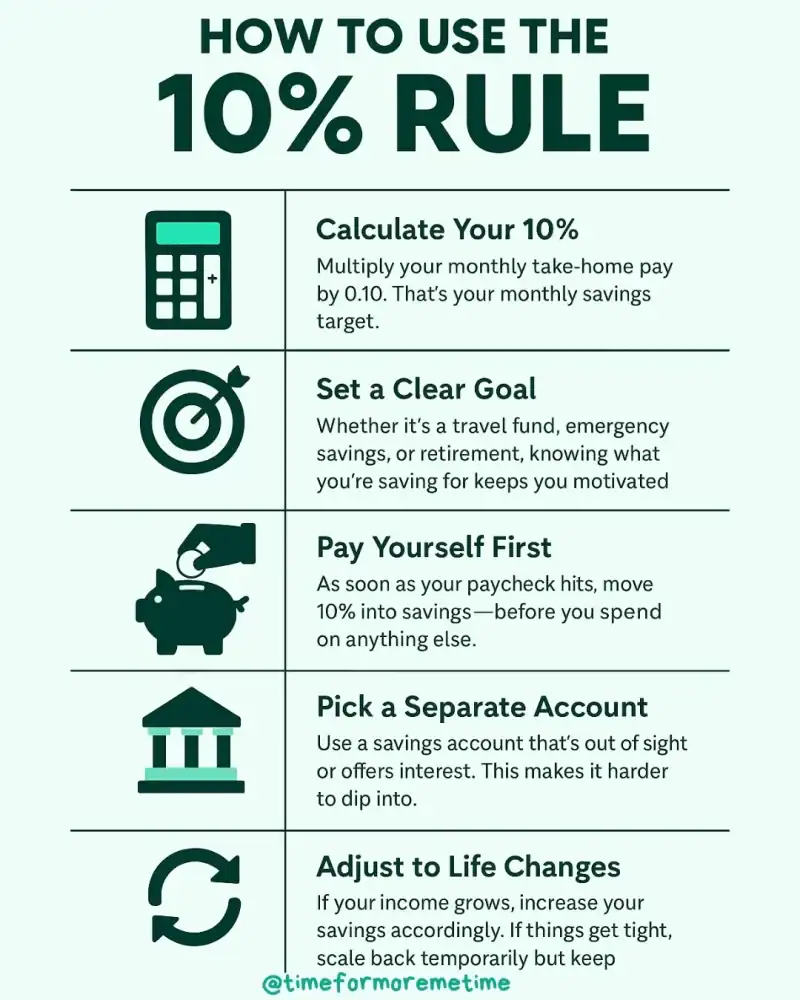
Setting up the 10% rule doesn’t require a complicated financial plan. All it takes is a decision to start and a system to help you stay consistent. Here’s how to apply it:
- Calculate Your 10%: Multiply your monthly take-home pay by 0.10. That’s your monthly savings target.
- Set a Clear Goal: Whether it’s a travel fund, emergency savings, or retirement, knowing what you’re saving for keeps you motivated.
- Pay Yourself First: As soon as your paycheck hits, move 10% into savings—before you spend on anything else.
- Pick a Separate Account: Use a savings account that’s out of sight or offers interest. This makes it harder to dip into.
- Adjust to Life Changes: If your income grows, increase your savings accordingly. If things get tight, scale back temporarily but keep the habit going.
You don’t need to be perfect to make this work. What matters most is that your savings grow automatically and consistently.
How Can The 10% Rule Help You
Saving just 10% each month may not seem like much at first—but over time, it creates lasting impact. It simplifies your finances and helps you move steadily toward your money goals. Here’s what makes it so effective:
- Builds Predictable Savings: Treating savings like a monthly expense builds momentum automatically—no guesswork needed.
- Encourages Mindful Spending: When you save first, you become more intentional about what’s left.
- Works With Any Income: The percentage-based approach means it adjusts to fit your unique financial situation.
- Lowers Stress Levels: A healthy savings cushion can prevent panic during emergencies and unexpected bills.
- Helps You Stay Goal-Oriented: Whether short- or long-term, this rule gives you a reliable structure to move toward what matters.
By staying consistent, you’re not just building a bank balance; you’re building financial confidence.
What Are The Drawbacks Of The 10% Rule
While the 10% rule is simple and practical, it isn’t perfect for everyone. Depending on your income, lifestyle, or financial priorities, you may face certain challenges. Consider these points:
- Not Always Realistic: If your budget is tight, setting aside 10% might be difficult. Even saving 3–5% is a great place to start.
- Slower for Big Goals: If you’re working toward a large purchase or fast debt payoff, this method alone might not be enough.
- Creates False Confidence: Some assume that saving 10% is sufficient for everything—when in reality, long-term goals like retirement may need more.
- Feels Inflexible During Hard Times: Life happens. Treat the 10% rule as a guide, not a rigid mandate.
- May Not Prioritize Debt: If you’re juggling high-interest loans or credit cards, focusing on repayment first might offer greater financial relief.
Despite these drawbacks, the 10% rule offers a strong foundation. It’s simple enough to follow, yet powerful enough to build real momentum over time.
Conclusion
The 10% rule is a reliable, beginner-friendly way to build financial stability, one paycheck at a time. By saving a consistent portion of your income, you create structure, reduce stress, and set yourself up for long-term success.
To get more helpful money tips, subscribe to our blog, follow us on social media, and check out our YouTube channel for smart and practical videos.
Sources
- Photos: Unsplash: Allef Vinicius