

Struggling to figure out where your money goes each month? You’re not alone. Zero-based budgeting provides a clear, structured approach to taking complete control of your finances by assigning every dollar a specific purpose. In this post, we’ll walk through how it works, how to use it, and how it can transform your spending habits from scattered to strategic. Let’s get started!
What Is Zero-Based Budgeting
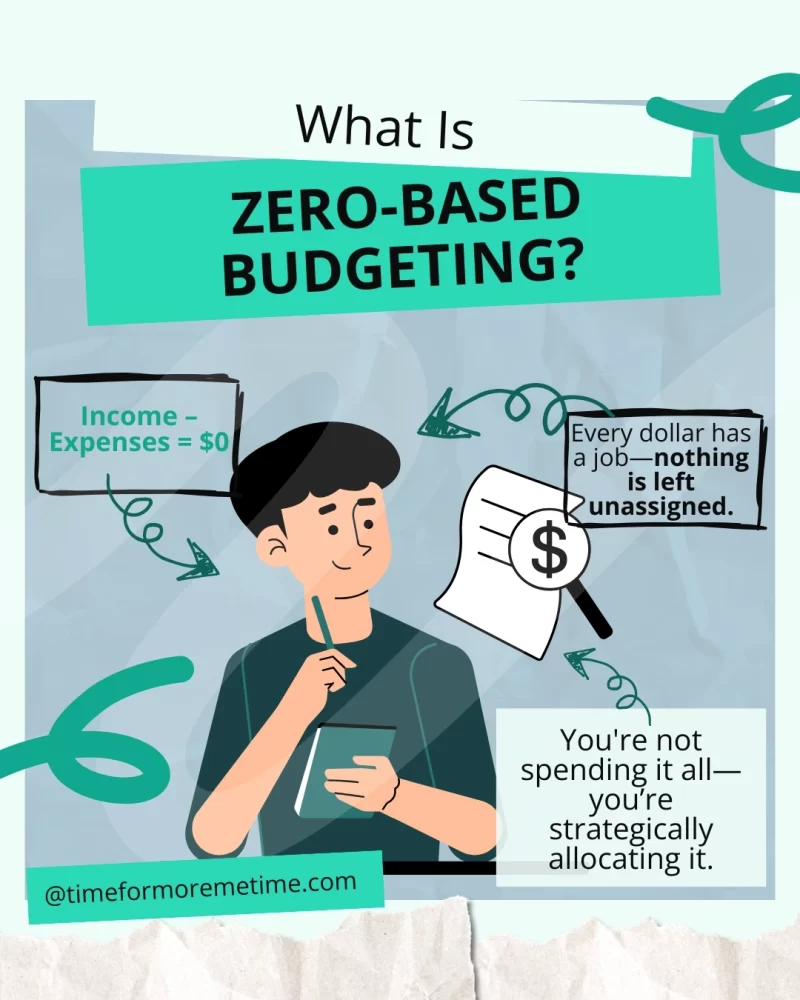
Zero-based budgeting is a method where your income minus your expenses equals zero by the end of the month. That doesn’t mean you spend all your money—it means you assign every dollar to a category, whether it’s bills, savings, debt, or discretionary spending.
The goal is to give every dollar a purpose so none of it is left floating around without direction. If you make $3,000 in a month, you plan exactly how that $3,000 will be spent, saved, or invested—until there’s zero left unassigned.
This budgeting method stands out because it forces you to account for all your money in advance. Unlike traditional budgets that might use last month’s spending as a guide, zero-based budgeting starts fresh every cycle, giving you full control over each dollar.
This approach works especially well for people who want to be more intentional with their money. It’s also ideal for those who tend to overspend when they leave extra funds unaccounted for.
How To Use Zero-Based Budgeting
Getting started with zero-based budgeting may require some planning, but once you understand the system, it becomes a powerful financial tool. Here’s how to use it:
- Calculate Your Income: List all sources of income for the month—salaries, freelance work, side gigs, or any expected inflows.
- List Your Expenses: Break down your monthly expenses into fixed (like rent and utilities) and variable (like groceries, gas, and entertainment).
- Assign Every Dollar: Start assigning your income to different expense categories until every dollar is allocated. This includes savings, debt repayment, and fun money.
- Adjust As Needed: Throughout the month, track your spending and make minor adjustments. If you overspend in one category, take from another—never go over your total income.
- Review and Reset: At the end of the month, review what worked and what didn’t. Then repeat the process with your new income and goals.
You can use a spreadsheet, budgeting app, or even pen and paper—the key is to be detailed and honest. The more accurate you are, the more effective your budget will be.
How Can Zero-Based Budgeting Help You
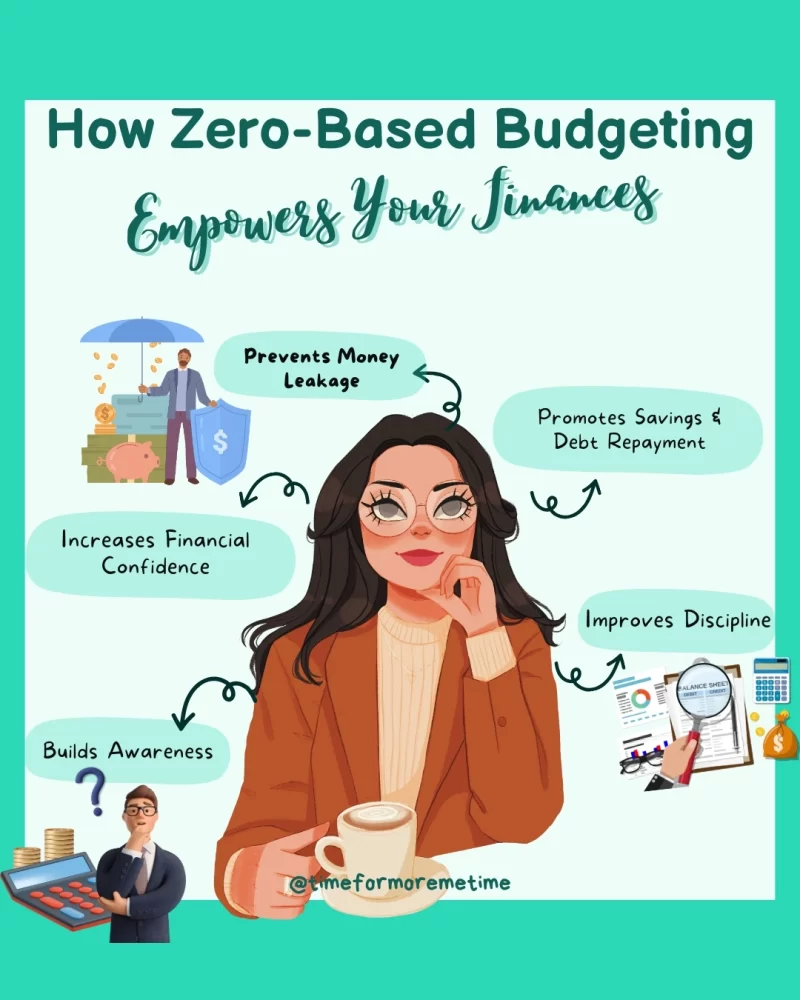
Zero-based budgeting gives you complete visibility into your spending habits. It creates a framework that supports more intentional and goal-driven money decisions. Here’s what makes it effective:
- Builds Awareness: When you assign every dollar a role, you gain a clearer understanding of where your money goes and what needs to change.
- Improves Discipline: It forces you to make decisions in advance, reducing impulsive spending and emotional purchases.
- Promotes Savings and Debt Repayment: By making savings and debt part of your budget, you’re more likely to prioritize them.
- Prevents Money Leakage: With no unassigned funds, it’s harder to waste money on random expenses.
- Increases Financial Confidence: Knowing your exact plan each month gives you a sense of control and security.
Over time, zero-based budgeting becomes more than a financial tool—it turns into a habit that supports consistent, mindful spending and saving.
What Are The Drawbacks Of Zero-Based Budgeting
While zero-based budgeting offers structure, it also requires effort and consistency. Depending on your financial habits or income type, you might encounter some drawbacks. Here’s what to consider:
- Time-Intensive Setup: Planning every dollar can be time-consuming at first, especially if your income or expenses vary month to month.
- Requires Constant Tracking: It demands regular attention and updates to avoid overspending in one category and underspending in another.
- Less Flexible for Irregular Income: For freelancers or gig workers, accurately predicting income to assign every dollar can be challenging.
- May Feel Restrictive: Since every dollar is planned, spontaneous spending or unexpected events can create stress if not accounted for.
- Initial Learning Curve: It may take a few months to become accustomed to the process and develop the discipline necessary to adhere to it.
Despite these drawbacks, many people find the structure and clarity of zero-based budgeting to be worthwhile. With time and practice, it becomes easier to manage and adjust.
Conclusion
Zero-based budgeting delivers on its promise by helping you plan each dollar with purpose. It reduces waste, encourages saving, and puts your money to work. This method pairs well with other saving strategies, making it a reliable starting point for anyone trying to manage their finances more intentionally.
To get more helpful money tips, subscribe to our blog, follow us on social media, and check out our YouTube channel for smart and practical videos.
Sources
- Photos: Unsplash: Microsoft 365