



College life offers numerous opportunities, but expenses can add up quickly. The truth is, it’s not complicated to save money in college. If you’re looking for practical tips to cut costs and make your budget last longer without missing out on the experience, you’re in the right place. Let’s get started!
1. Apply For Financial Aid And Scholarships
When I was in college, financial aid became a lifeline. At first, I focused only on big scholarships, but I quickly realized that even the smaller ones mattered. By applying to everything I qualified for, I managed to cover a significant portion of my tuition.
In addition, grants reduced my overall costs, freeing up money for essentials. More importantly, I discovered that local organizations and alumni groups often had hidden opportunities. As a result, I avoided taking on larger student loans.
2. Create And Stick To A Realistic Budget
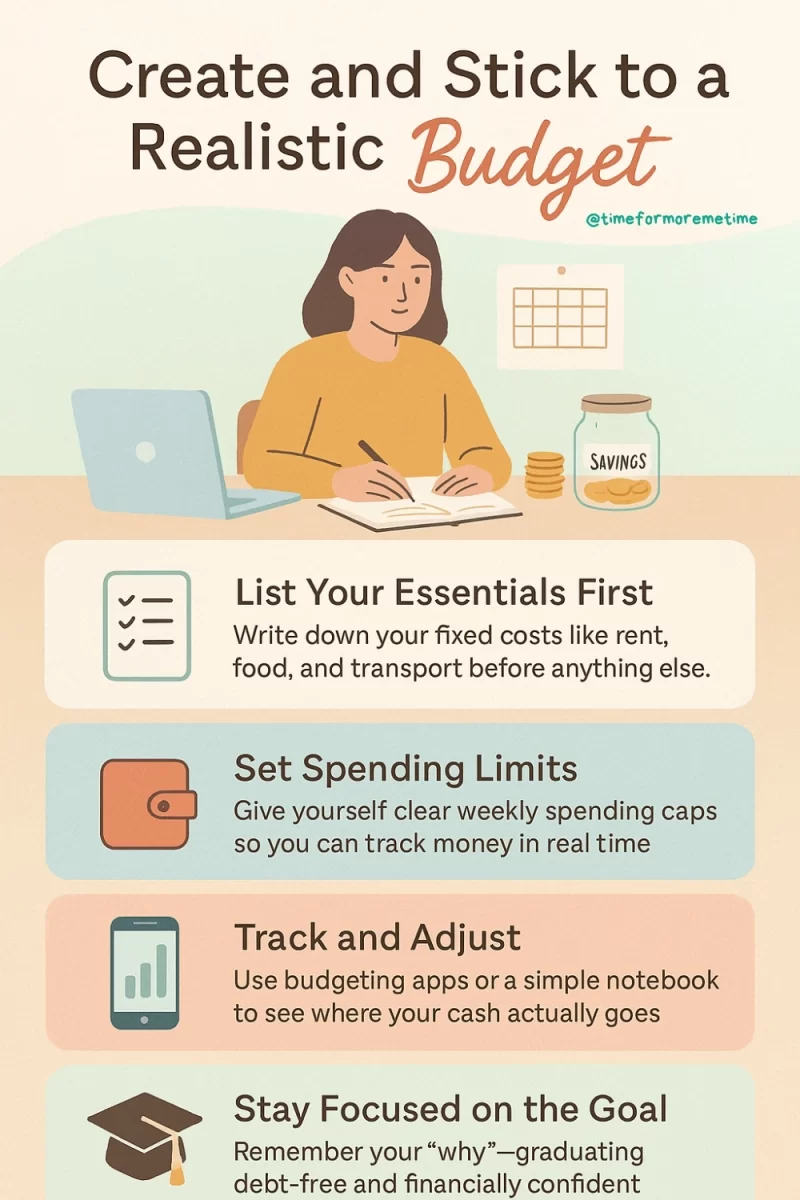
While financial aid helped, I still needed a plan to manage daily expenses. That’s when I created a simple budget that tracked rent, food, transportation, and savings. Whenever I was tempted to splurge, I reminded myself of my bigger goal: graduating without drowning in debt.
Over time, this practice taught me discipline and control. Most importantly, sticking to my budget gave me peace of mind. Even though it wasn’t always fun, it allowed me to stay focused and financially stable.
3. Cut Textbook Costs Smartly
Of course, budgeting only worked if I found ways to cut unnecessary costs. One of the biggest savings came from textbooks. Instead of buying new, I rented online, searched for used copies, or shared with classmates.
In some cases, professors placed free editions in the library, which saved me hundreds. For example, one semester I saved over $200 by avoiding the campus bookstore. By doing this consistently, I redirected those savings toward groceries and transportation, easing the pressure of student life.
4. Take Advantage Of Student Discounts Everywhere
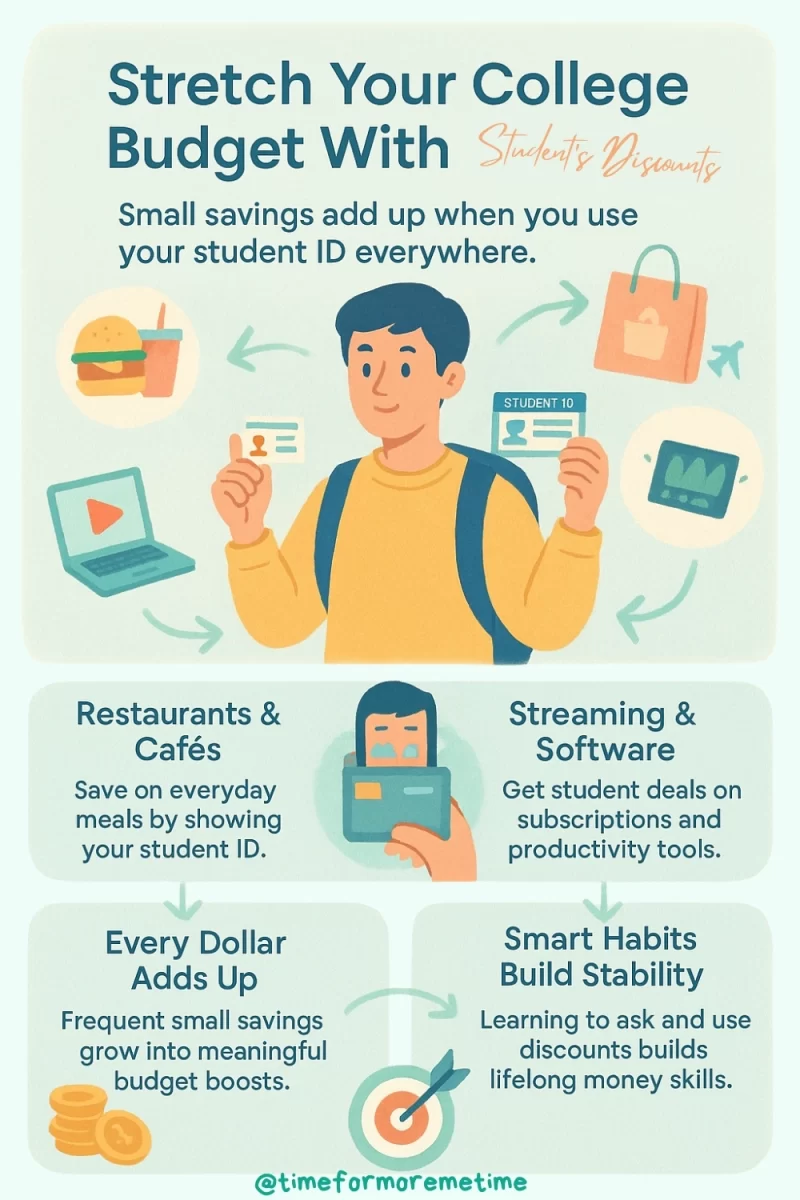
Another way I stretched my college budget was by using student discounts. At first, I didn’t realize how many places offered them—from movie theaters and restaurants to software and streaming services.
Once I started asking, I saved a few dollars here and there, which added up quickly. For example, I bought software at half price and enjoyed discounted meals near campus. By making it a habit to use my student ID, I found that everyday expenses became far more manageable.
5. Be Smart About Food And Meals
Food was another area where costs could spiral if I wasn’t careful. Instead of eating out often, I learned to cook simple meals in bulk, which saved both time and money. I also packed snacks between classes so I wouldn’t be tempted by vending machines.
On weekends, I occasionally treated myself, but only when it fit my budget. By balancing home-cooked meals with occasional outings, I cut my food spending significantly while still enjoying the social side of college life.
6. Choose The Right Housing And Transport Options
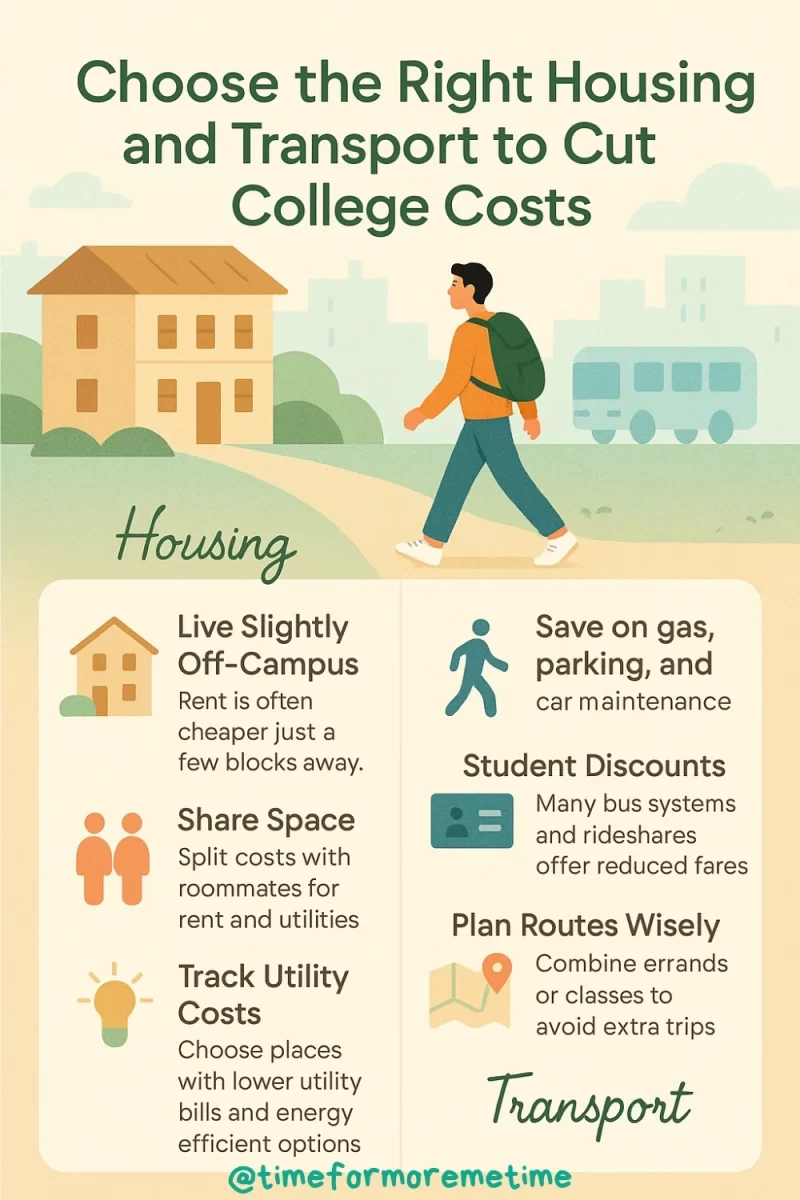
Housing and transportation were some of the biggest expenses during my college years, so I had to make smart choices. I lived slightly off-campus, where rent was cheaper, and shared an apartment with roommates to split costs.
For transportation, I relied on public transit and walked whenever possible, which saved me gas and parking fees. These choices weren’t always the most convenient, but they kept my monthly expenses low. Over time, these savings helped me avoid relying too heavily on loans.
7. Build Your Own Income With Part-Time Work
Back in the 90s, part-time jobs looked a bit different from what they do today. I remember working shifts at a local fast-food chain, helping out in a grocery store, and even doing some manual labor like moving furniture on weekends.
The pay wasn’t much, but it covered gas, food, and the occasional night out. Those jobs also taught me discipline, responsibility, and the value of hard work. By earning my own income, I felt more independent and less reliant on loans.
8. Reduce Everyday Expenses Through DIY And Mindful Spending
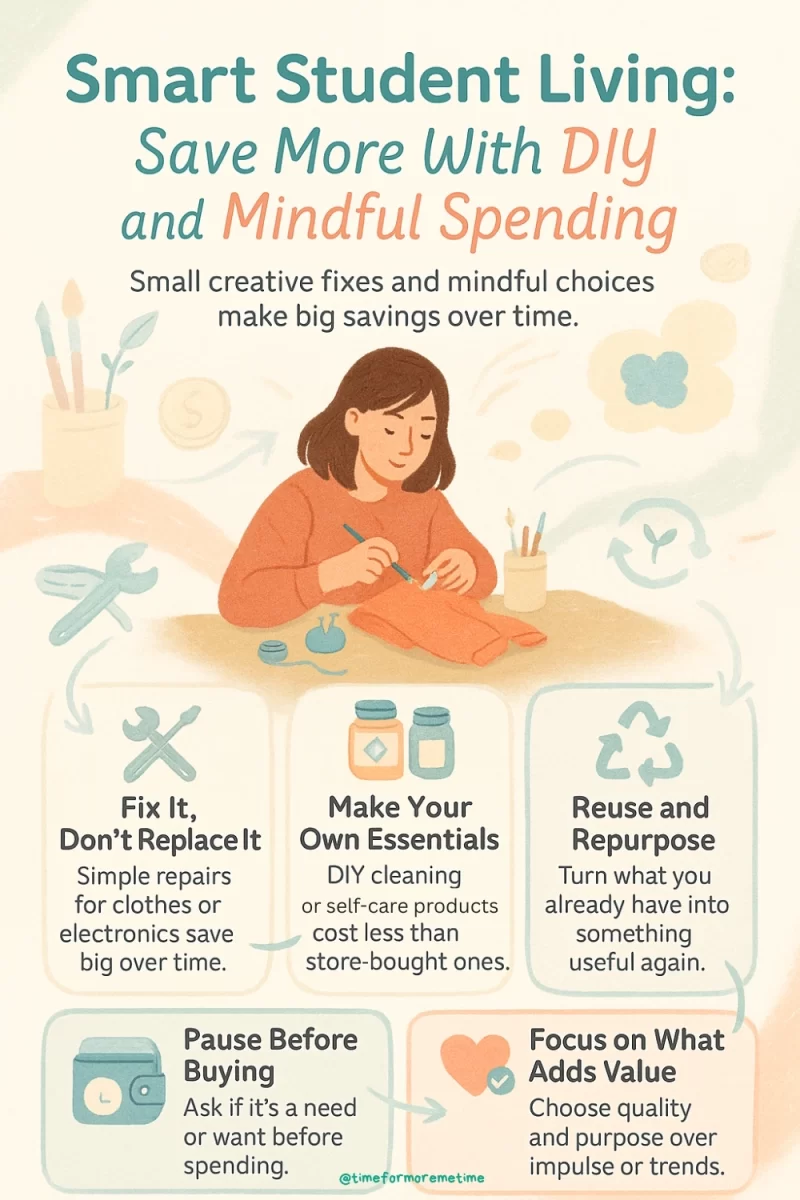
Little expenses can sneak up quickly, so I found creative ways to cut them down. For instance, I learned simple DIY fixes for clothes and electronics instead of replacing them.
I also practiced mindful spending—asking myself if I truly needed something before buying it. This habit made me more intentional with my money and helped me avoid impulse purchases. Over time, those small choices added up, giving me extra cash to put toward savings or unexpected costs that came my way.
Conclusion
Saving money in college isn’t about making huge sacrifices—it’s about making small, consistent choices that add up over time. Looking back, these habits not only helped me graduate with less debt but also shaped the way I manage money today. If I could do it, so can you—start small, stay consistent, and make your college years financially rewarding.
Want more money-saving strategies and practical advice? Follow my YouTube channel for weekly tips, and share this post with someone who could use a little extra financial guidance.
Source
- Photo: Pexels: Pixabay