



Balancing work and life isn’t about doing less—it’s about doing what matters most, without burning out. With more people working remotely or managing irregular schedules, maintaining balance has become both more important and more challenging. In this post, I’ll share real-life tips to help you protect your time, mental health, and personal goals. Let’s get started!
1. Set Boundaries Between Work And Life
Setting clear boundaries between work and personal life is key to protecting your energy, focus, and overall well-being. When you log off at a set time and resist checking emails after hours, you create space to unwind, reconnect with loved ones, and recharge for the next day.
This separation also helps you stay mindful of your habits—especially how you manage your personal expenses. Without the constant blur between work and life, you’re less likely to engage in stress spending or impulsive purchases. Instead, you gain clarity, control, and the discipline needed to balance both your time and finances.
2. Build A Flexible But Structured Routine
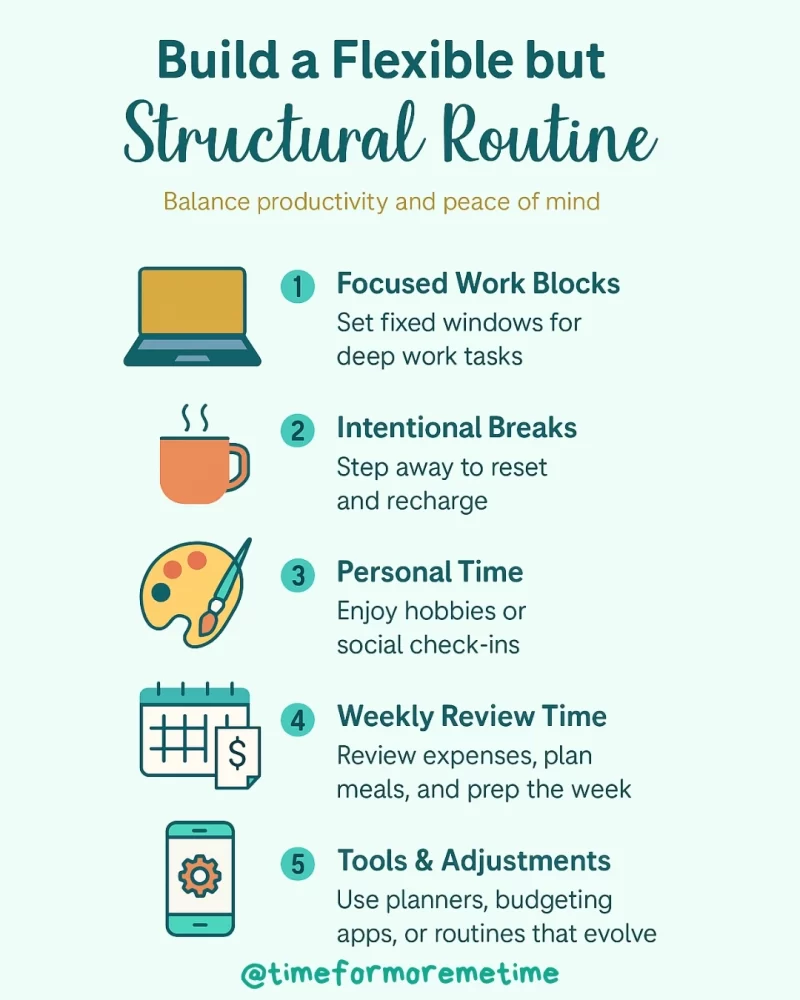
Building a flexible but structured routine helps you stay productive without feeling overwhelmed. Instead of following a rigid schedule, aim for a daily rhythm that includes focused work sessions, intentional breaks, and time for personal activities. This approach enables you to adapt to unexpected changes while maintaining a clear sense of direction and progress.
A well-balanced routine also supports your financial well-being. By setting aside time each week to review spending, plan errands, or prepare meals, you create space for better decision-making. When paired with the right budgeting tools, your routine becomes a system that supports both your time and your money—leading to less stress and more clarity in everyday life.
3. Prioritize Health And Rest
Prioritizing health and rest isn’t just good for your well-being—it’s one of the smartest long-term decisions you can make. When you get enough sleep, take breaks, and move your body regularly, you’re not just recharging—you’re increasing your ability to focus, make sound decisions, and manage stress.
Think of it as investing money—but with your time and energy. Just as you wouldn’t drain your savings account without a plan, you shouldn’t exhaust yourself without recovery. By protecting your physical and mental health now, you’re investing in greater productivity, fewer sick days, and a better quality of life down the road.
4. Protect Personal Time—Guilt‑Free
Protecting your personal time is essential for long-term well-being. It’s easy to feel guilty for taking a break or saying no, but without true downtime, your energy, focus, and creativity will suffer. Setting firm boundaries around evenings, weekends, or lunch breaks helps you stay grounded and present in your personal life.
Use that protected time intentionally—whether it’s for rest, hobbies, or building something meaningful outside of work. Many people now use their free hours to create or sell digital products, turning their passion projects into income streams. Guarding your time isn’t just about relaxation—it can also open doors to new opportunities that align with your values and goals.
5. Manage Technology And Digital Boundaries
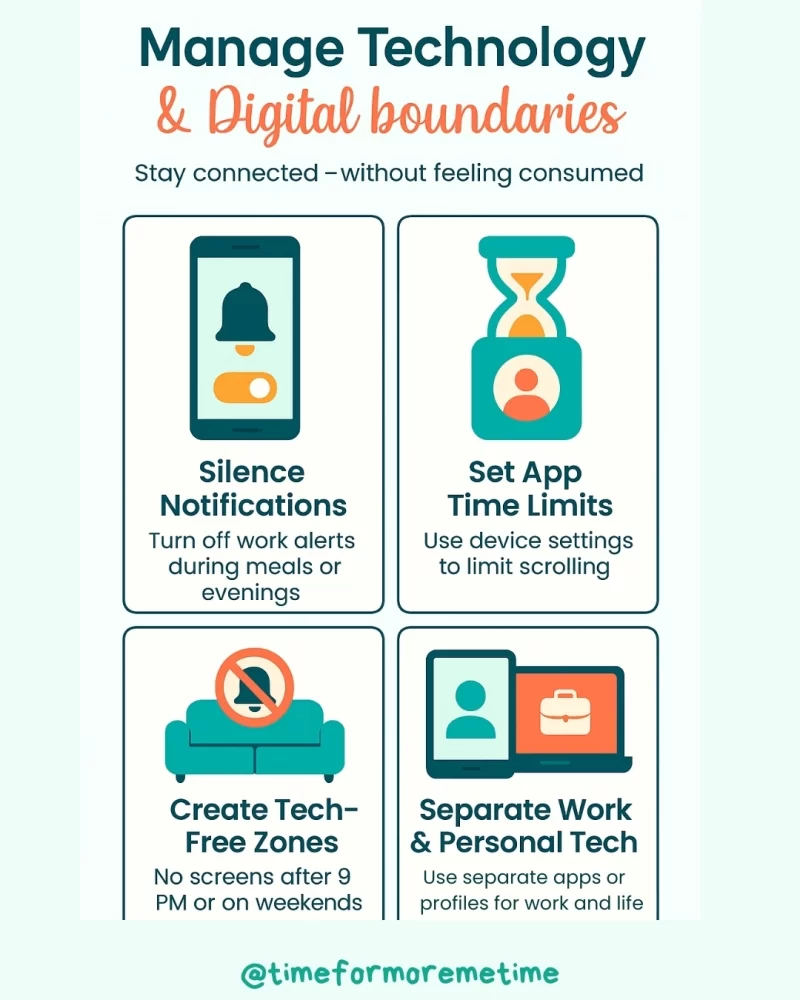
Technology makes work more efficient, but it can also make it hard to switch off. When your phone, email, and messaging apps follow you everywhere, the line between work and life gets blurry fast. That’s why setting digital boundaries is critical—especially after hours.
Try silencing work notifications during meals or setting app limits in the evening to help you stay focused. Create tech-free zones or times—such as no screens after 9 p.m. or on weekends. These small shifts protect your focus and reduce mental fatigue.
When you separate your online work life from your personal time, you can maintain balance, clarity, and control over your daily routine.
6. Communicate With Clarity
Clear communication is one of the most underrated yet essential tools for maintaining a work-life balance. When expectations are vague or boundaries are not clearly defined, it’s easy for workloads to accumulate and personal time to become scarce.
Speaking up about your capacity, preferred work hours, and task priorities isn’t overstepping—it’s smart planning.
Being upfront with managers or clients about what’s realistic helps prevent burnout and builds mutual respect. The same principle applies in personal life: clearly communicating your needs makes relationships stronger and your time more intentional.
Think of it like managing financial instruments—you wouldn’t invest without understanding the terms or long-term impact. Similarly, transparent communication enables you to manage time, energy, and responsibilities with greater control and fewer surprises.
7. Make Time For What Fills You Up
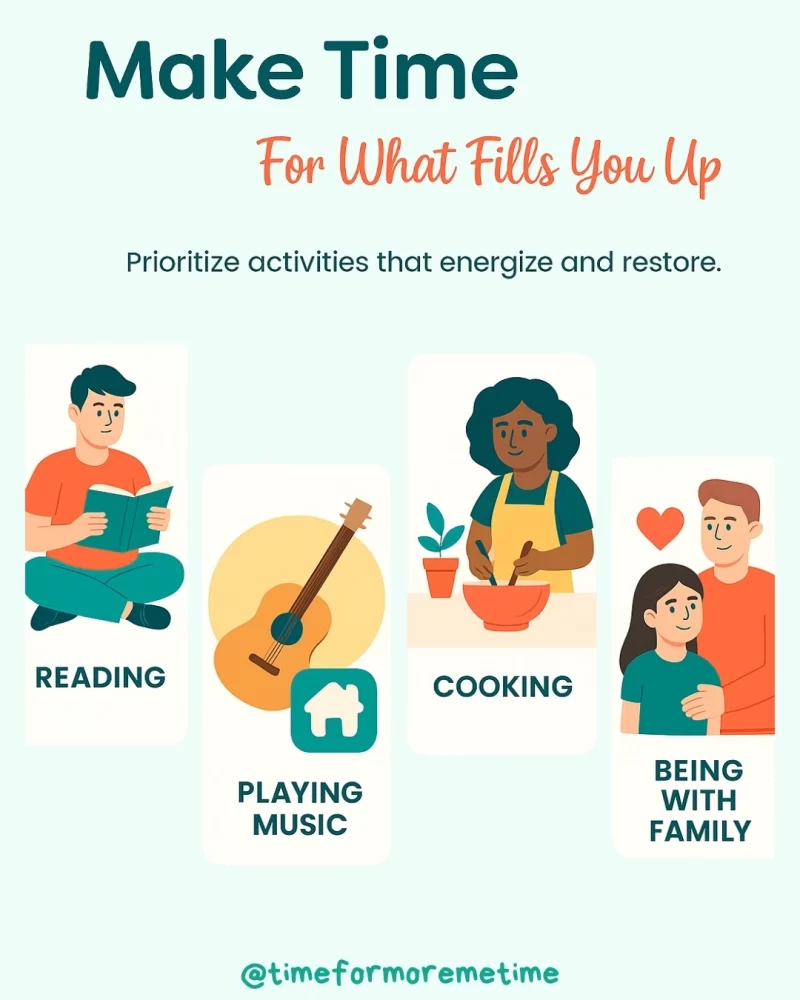
Not every hour needs to be optimized for output. Some of the most valuable time you spend is the time that restores your energy, creativity, and sense of identity. Whether it’s reading, cooking, playing music, or being fully present with family, these moments are essential—not extra.
What fills you up will look different for everyone. For some, it’s rest. For others, it’s pursuing goals outside of work, such as building a blog, learning a new skill, or gradually creating a source of passive income that aligns with their interests.
The key is to choose what genuinely energizes you—not what looks productive from the outside. When you do, work becomes more sustainable, and life becomes more satisfying.
Conclusion
Maintaining a healthy work-life balance is achievable—and it starts with simple, intentional choices. Use these practical tips to protect your time, recharge your energy, and create a routine that supports both your work and personal life.
Ready to build a better balance? Subscribe to our blog, follow us on social media, and check out our YouTube channel for more time-saving and life-improving strategies.
Sources
- Photo: Unsplash: Aziz Acharki