


If hesitation keeps hijacking your productivity, the 5-second rule might be just what you need. This time management method is all about acting quickly and decisively to break the habit of overthinking. In this post, I’ll introduce you to the 5-second rule, so you can start making faster choices, crush procrastination, and take control of your time. Let’s get started!
What Is The 5-Second Rule
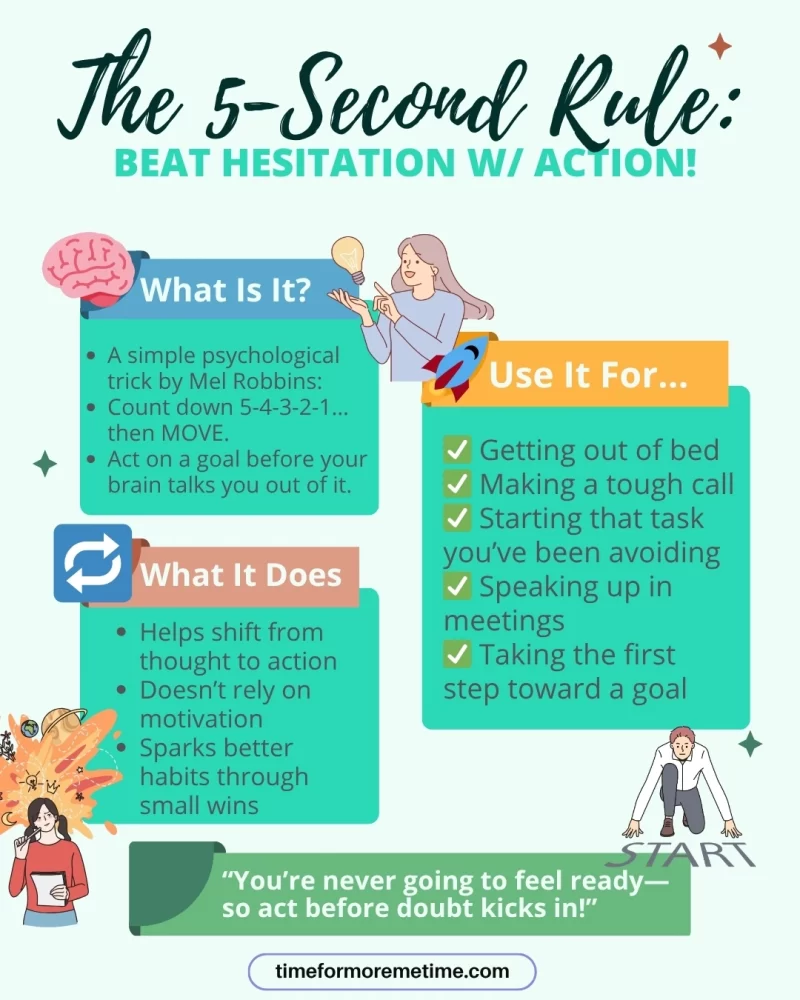
The 5-second rule is a psychological tool developed by author and motivational speaker Mel Robbins. The concept is simple: when you have an impulse to act on a goal, you count down from five—5-4-3-2-1—and physically move or decide before your brain has time to talk you out of it.
This approach works by interrupting habitual hesitation and creating a small window of momentum. Instead of waiting for motivation to show up, you make it through action.
Whether it’s getting out of bed, making a difficult call, or starting a task you’ve been avoiding, the 5-second rule helps you bypass mental resistance and shift into motion.
It’s grounded in neuroscience, too. When you count backward, you engage the prefrontal cortex—the part of the brain involved in decision-making and focus. That split-second shift helps disrupt fear, overthinking, and excuses, allowing you to take charge of your behavior.
The rule doesn’t guarantee long-term discipline on its own, but it does serve as a trigger that can build momentum toward more productive habits.
Why Should You Use The 5-Second Rule
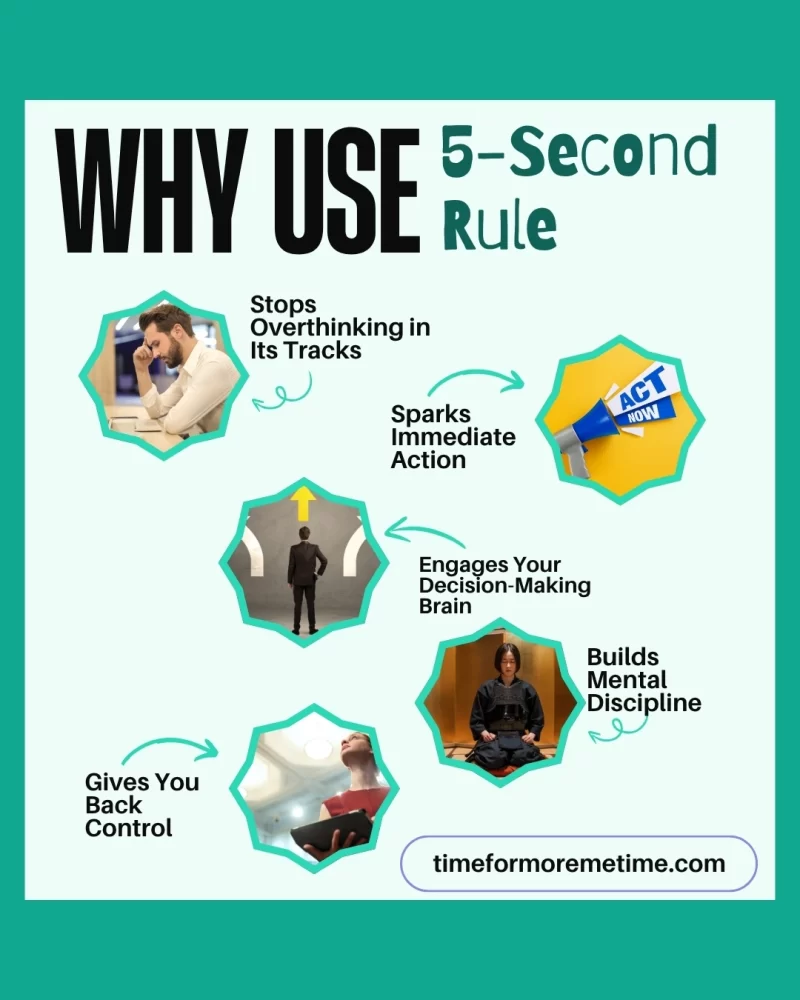
Using the 5-second rule helps reduce hesitation and self-doubt, which are two major barriers to productivity. When you give your mind too much time, it often defaults to comfort or fear, keeping you stuck. This rule interrupts that pattern with a simple, actionable step.
It’s particularly effective for tasks that don’t require deep planning but do require initiation. You know what you need to do—you just don’t want to start. That’s where this method shines: it bridges the gap between knowing and doing.
The rule is also incredibly versatile. It can help with waking up early, starting a workout, speaking up in meetings, reducing social anxiety, or following through on a new habit. You don’t need special tools or schedules—just a willingness to count down and act.
Best of all, it puts you back in control. The act of counting becomes a ritual that signals to your brain it’s time to go, helping you build trust in your ability to follow through.
How To Start Using The 5-Second Rule
The 5-second rule doesn’t require complex setups or planning. It’s a behavior-based technique that works best when used immediately in the moment of hesitation. Here’s how to start using it:
- Notice the Instinct: When you feel the urge to take action—like sending an email, getting out of bed, or starting a task—recognize it.
- Start the Countdown: Immediately count down in reverse: 5-4-3-2-1. Don’t count up—this creates a sense of urgency rather than delay.
- Physically Move: When you reach “1,” act. Stand up, click send, walk into the room—take any physical step toward completing the action.
- Repeat as Needed: Use it multiple times a day. The more you use the rule, the more natural it becomes to override resistance.
- Pair With a Goal: Tie the rule to small daily goals, like write for 10 minutes or get up with the first alarm. This builds direction alongside the habit.
The power of this technique lies in repetition. Every time you use it, you’re reinforcing a new response pattern that favors action over avoidance.
What Are The Drawbacks Of The 5-Second Rule
Despite its strengths, the 5-second rule may not be suitable for every situation. While it’s great for quick actions and simple decisions, there are some limitations to be aware of. Here’s what to consider:
- Limited Depth: The rule gets you started, but it doesn’t substitute for planning or deeper habit development. If you’re unclear on what to do, counting won’t help.
- Not a Cure-All: It’s not designed for tasks that require analysis or multi-step preparation. Jumping into complex decisions too quickly can backfire.
- Needs Self-Awareness: You have to catch yourself hesitating. If you’re not in tune with your behaviors, you may miss the window to act.
- Can Lose Effectiveness: Like any habit, it can feel stale if overused without purpose. It’s most effective when paired with meaningful actions.
- Doesn’t Address Root Issues: If your hesitation is rooted in fear, trauma, or deep procrastination habits, you may need more structured support alongside this method.
Despite these limitations, the 5-second rule remains a practical and straightforward tool for kick-starting action and building momentum. It’s a great entry point into a more proactive mindset.
Conclusion
The 5-second rule delivers on its promise by helping you break the cycle of hesitation and take quick action. It’s a low-effort strategy that works in real time. Used consistently, it helps train your brain to act decisively, making it easier to beat procrastination and stay productive.
To get more time-saving tips and practical tools, subscribe to our blog, follow us on social media, and check out our YouTube channel.
Sources
- Photos: Unsplash: Julia Potter