


When everything feels urgent, it’s hard to know what to do first—and that’s when productivity takes a hit. In this article, I’ll introduce you to the Eisenhower Matrix, a simple tool that helps you decide what to work on, what to schedule, what to delegate, and what to ignore. Let’s get started!
What Is The Eisenhower Matrix Time Management Technique
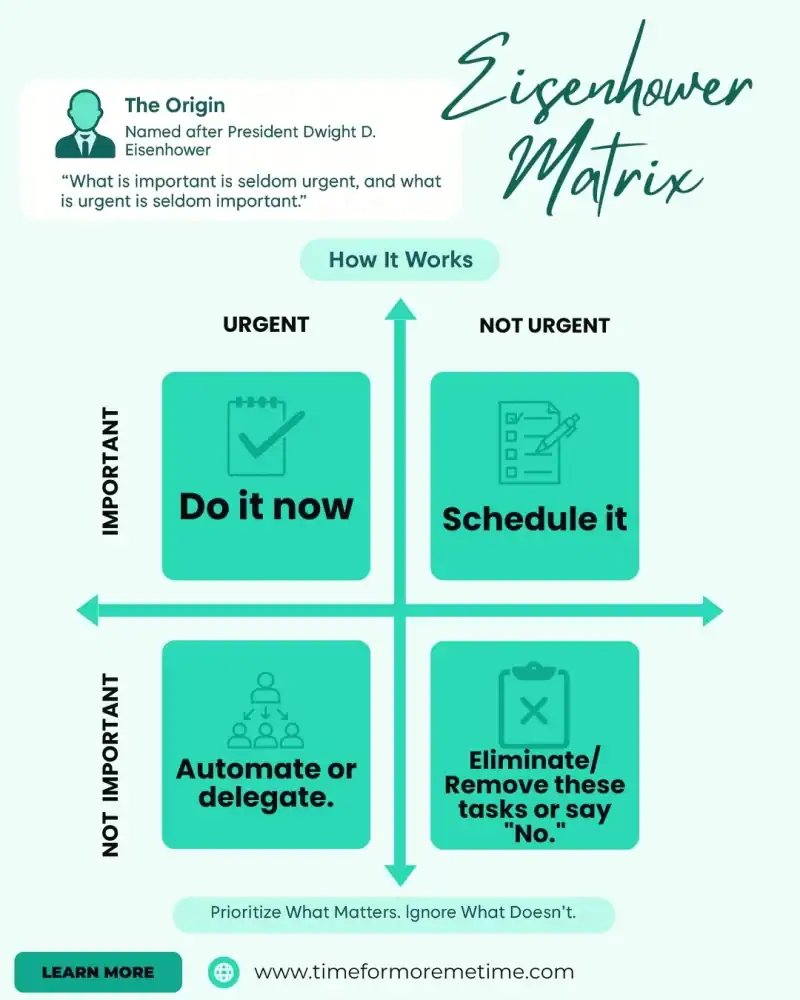
The Eisenhower Matrix, often referred to as the urgent-important matrix, is a decision-making tool named after former US President Dwight D. Eisenhower. He famously stated, “What is important is seldom urgent, and what is urgent is seldom important.”
Eisenhower attributed the quote to a college president he knew. Originally, this quote was not intended for discussions about productivity; instead, it was used in the context of addressing a global crisis.
This time management technique divides your tasks into four boxes based on urgency and importance:
- Urgent and Important: Do it now.
- Important but Not Urgent: Schedule it.
- Urgent but Not Important: Delegate it.
Not Urgent and Not Important: Eliminate it.
You may see the matrix used in different ways—some use it for daily planning, others for big-picture goal setting. In this article, we’ll stick with the original version and show you how to apply it easily to everyday decisions.
The goal of the Eisenhower Matrix is to help you focus on what truly matters while minimizing time spent on things that don’t. It’s a great tool for anyone who feels buried in tasks or unsure how to prioritize.
Why Should You Use The Eisenhower Matrix
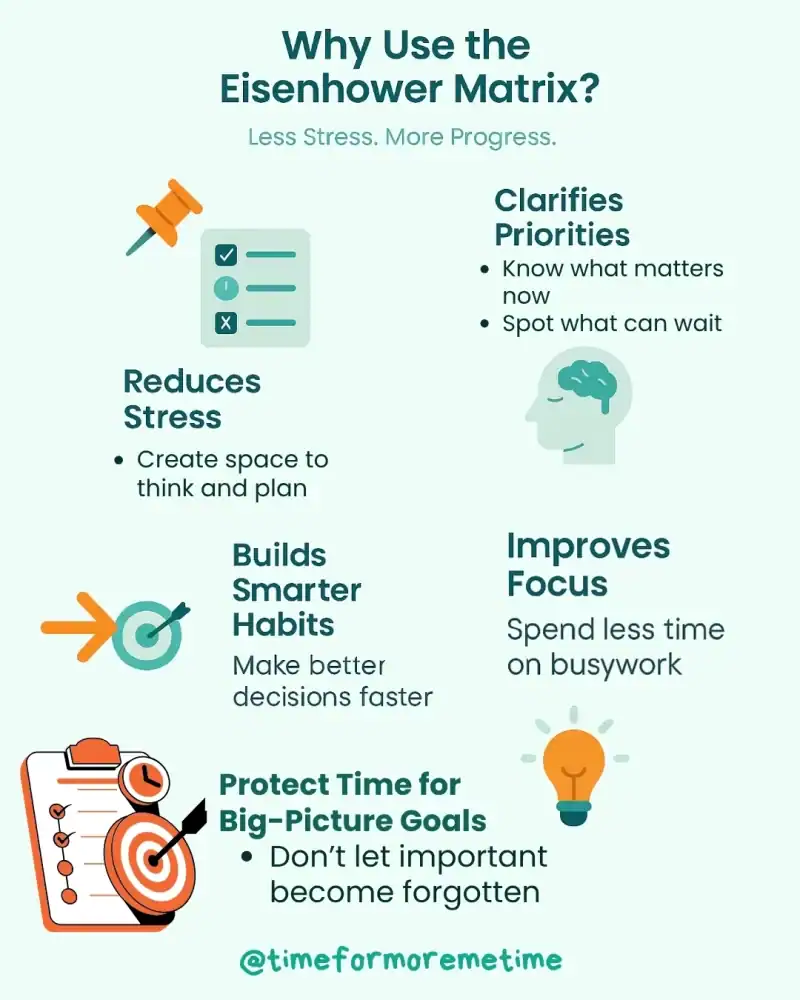
The Eisenhower Matrix is especially helpful if you constantly feel pulled in different directions—like answering emails, handling last-minute requests, and still trying to make time for long-term goals like learning a new skill or starting a side project. It brings clarity by showing you which tasks truly matter right now, which ones can be scheduled for later, and which ones don’t deserve your time at all.
Instead of reacting to every new task like it’s an emergency, the matrix gives you a simple way to pause, prioritize, and plan. This not only reduces stress, but also helps you stay focused on progress—not just activity.
Over time, it trains you to make smarter decisions quickly, enhancing your ability to assess and manage your workload effectively. You’ll also find it easier to protect time for your big-picture goals—the ones that often get pushed aside because they’re not urgent yet.
As you build the habit of using the matrix, you’ll start recognizing busywork for what it is and give more attention to the tasks that actually move you forward. It’s a simple but powerful way to regain control of your time and energy.
How To Start Using The Eisenhower Matrix
You can start using the Eisenhower Matrix with just a piece of paper or a digital planner. Here are the steps to get you started:
- Understand the Matrix: The matrix is divided into four quadrants.
- Quadrant I (Urgent and Important): Tasks that need immediate attention. These are crises or deadlines.
- Quadrant II (Not Urgent but Important): Tasks that are important for long-term goals but do not require immediate action. These include planning, relationship building, and personal development.
- Quadrant III (Urgent but Not Important): Tasks that require immediate attention but are not crucial to your long-term goals. These often involve interruptions or requests from others.
- Quadrant IV (Not Urgent and Not Important): Tasks that are neither urgent nor important. These are often distractions or time-wasters.
- List Your Tasks: Write down all the tasks you need to complete. This can include work-related tasks, personal errands, and long-term projects.
- Categorize Tasks: Go through your list and categorize each task into one of the four quadrants:
- Quadrant I: Identify tasks that are both urgent and important.
- Quadrant II: Look for tasks that are important but not urgent.
- Quadrant III: Identify tasks that are urgent but not important.
- Quadrant IV: Find tasks that are neither urgent nor important.
- Prioritize and Plan: Each quadrant will require you to take different action and approach.
- Focus on Quadrant I: Address these tasks first as they are critical.
- Schedule Quadrant II: Allocate time in your calendar for these important tasks to prevent them from becoming urgent.
- Delegate Quadrant III: If possible, delegate these tasks to others or find ways to minimize their impact on your time.
- Eliminate Quadrant IV: Reduce or eliminate these tasks from your schedule to free up time for more important activities.
- Review Regularly: Regularly review your tasks and adjust your priorities as needed. This could be done weekly or monthly to ensure you stay on track with your goals.
The key is to be honest about the value of each task. Don’t let urgency trick you into giving attention to things that aren’t truly important. Over time, you’ll spot patterns and make better time choices automatically.
What Are The Drawbacks Of The Eisenhower Matrix
The Eisenhower Matrix is useful, but it’s not perfect. Here are some common drawbacks to watch out for:
- Misjudging Importance: It can be hard to tell what’s truly important, especially when everything feels urgent. Try to connect tasks to long-term goals.
- Overthinking the Matrix: Spending too much time deciding where tasks belong can slow you down. Use the matrix as a quick guide, not a time-consuming ritual.
- Ignoring the Not Important Box: People often skip delegating or deleting tasks, which defeats the purpose. Practice letting go of what doesn’t matter.
- Treating All Tasks Equally: Not everything fits neatly into one box. Be flexible and adjust as needed throughout the day.
- Burnout from Too Much Urgency: Constantly working in the “Urgent & Important” box can be draining. Aim to spend more time in the “Important but Not Urgent” quadrant for long-term growth.
Proper use of the matrix takes more effort than drawing four boxes—it demands ongoing reflection and recalibration. Being aware of these challenges will help you use the matrix effectively—so it works for you, not against you.
Conclusion
The Eisenhower Matrix is a practical and easy-to-use tool for organizing tasks and improving focus. Dividing your to-do list into clear categories helps you prioritize what matters most and avoid wasting energy on unimportant tasks. It’s simple enough for beginners but powerful enough to make a real difference.
To receive more helpful tips, subscribe to our blog, follow us on social media, and visit our YouTube channel for engaging and insightful videos.
Sources
- Photos: Unsplash:
Sable Flow