


Staying in one job long-term can feel impossible in today’s work culture, where job-hopping seems like the new normal. Nearly 65% of American workers say they’re open to changing jobs within the next year, showing how rare loyalty has become. If you’ve ever wondered whether it’s smarter to stay or move on, you’re not alone, and there’s a smarter way to do it.
I’ve had moments when leaving felt more exciting than staying. I was born in New York and have spent the last decade working in San Francisco. There, I learned that growth doesn’t always mean switching companies. Through trial, burnout, and guidance from great mentors, I discovered how to stay productive in one place without losing momentum.
This guide shows how to become someone your employer—and you—can imagine sticking with for years. Let’s get started.
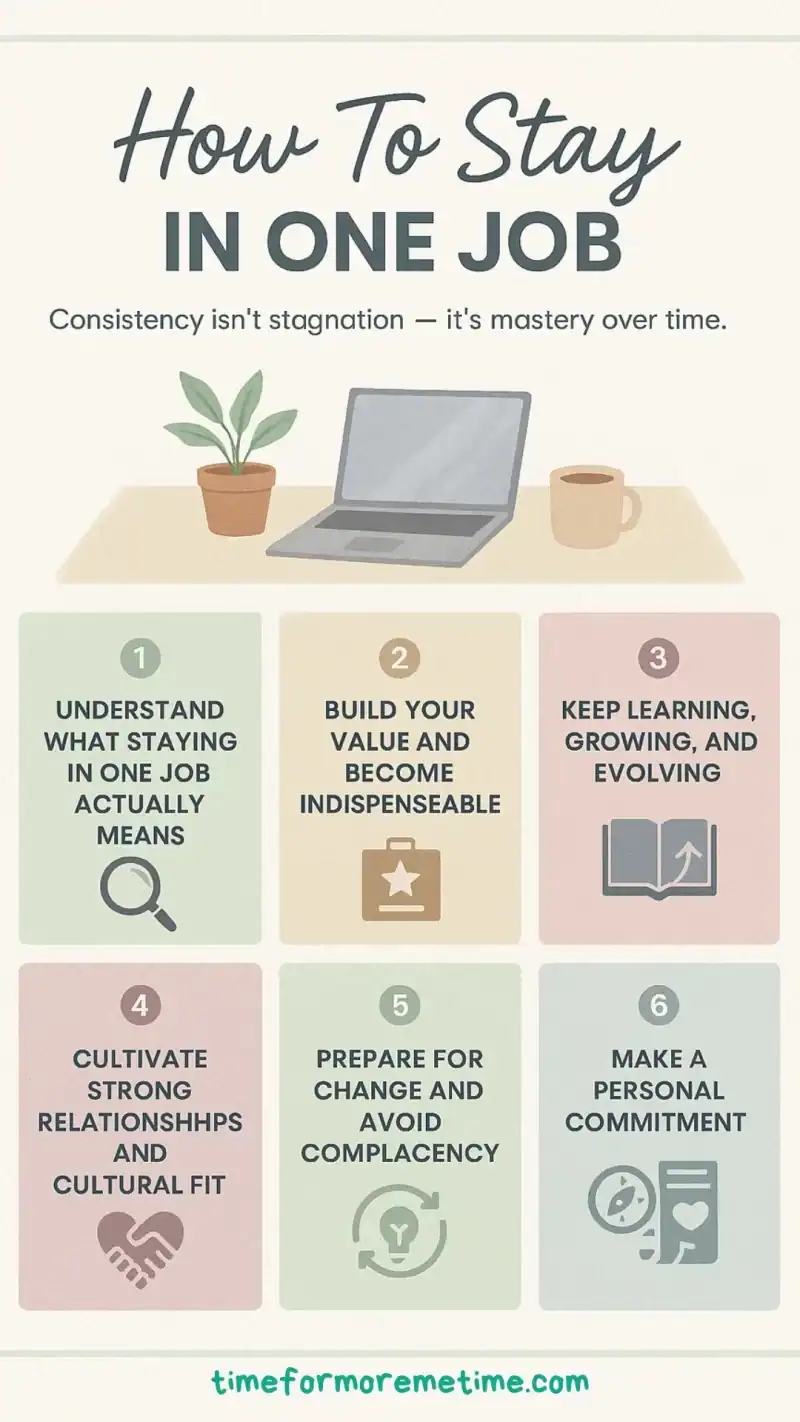
1. Understand What Staying In One Job Actually Means
Don’t do the same thing forever if you want to stay in one job. Stay engaged, build expertise, and continuously find ways to grow within your role. I realized this during my early years in San Francisco when I began taking on new projects that challenged me. This helped me see that growth isn’t tied to a new employer. Instead, it’s tied to your willingness to evolve where you are.
According to the Bureau of Labor Statistics (BLS), the average American stays at a job for about four years, which makes long-term employees increasingly rare. Don’t be just a part of a statistic for short-term employees. Stay, grow, and stand out in a culture of constant change. Staying longer gives you the chance to master your craft, build credibility, and become the person others rely on for insight and stability.
Think back to the last time you felt truly challenged at work. Did you look for the exit, or did you look for a way to learn something new? Staying is the foundation for your next breakthrough if you treat your current role as an opportunity.
2. Build Your Value And Become Indispensable
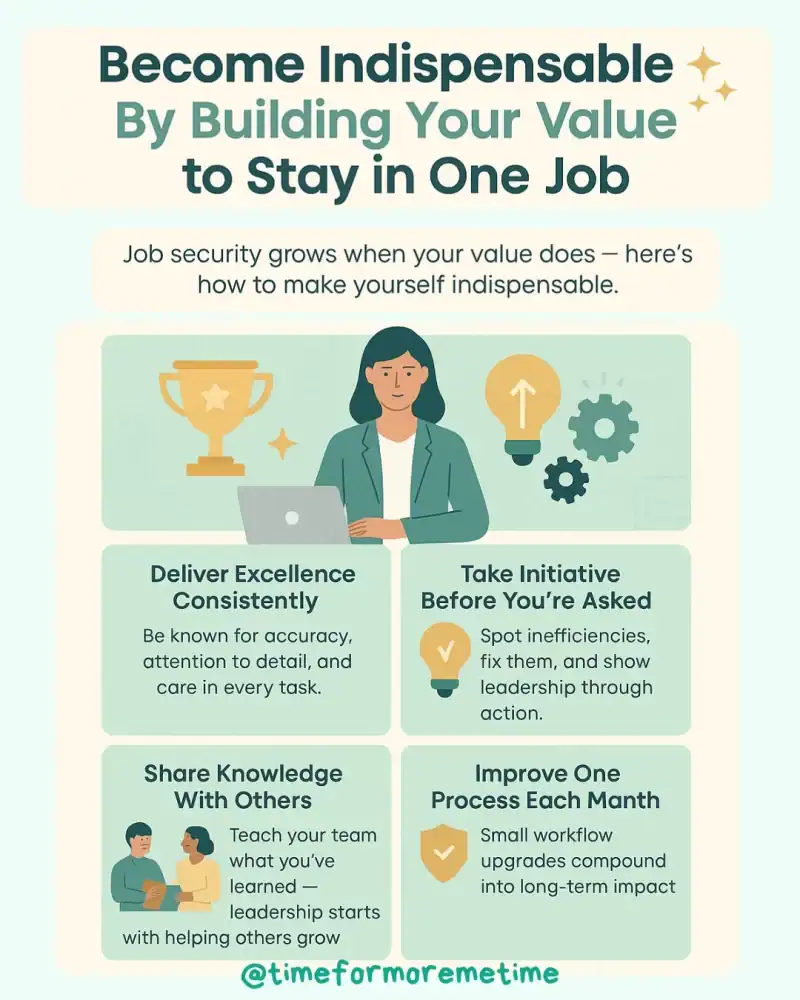
The best way to secure your position is to make your contributions matter. People often ask, “How do I become indispensable at work?” The answer is simple: deliver excellent work and take initiative before being asked. Early in my career as a dosimetrist in San Francisco, I noticed inefficiencies in how treatment plans were organized. I streamlined our workflow, saving the team hours each week and proving that small changes can create a big impact.
Supervisors notice employees who take ownership and drive results. Many long-term healthcare workers often earn greater trust, promotions, and pay growth once they consistently demonstrate value. If you’re worried about falling into a routine, look for one process you can improve or one task you can teach others to master. Progress keeps you engaged and relevant.
Being indispensable is about being reliable and proactive. When your team knows they can count on you to deliver accuracy and care, they’ll invest in your growth. Once that happens, you’ll find more stability and satisfaction in your role.
3. Keep Learning, Growing, And Evolving
Long-term success comes from staying curious. In any career, but especially in dosimetry, technology and best practices are always changing. I’ve learned that the moment you stop learning is the moment your work starts to feel repetitive.
Healthcare data show that continuous education increases both confidence and job satisfaction among medical professionals. The same applies to every field. Growth keeps you sharp and makes you harder to replace. When I pursued advanced radiation-planning courses a few years ago, it not only improved my accuracy but also reignited my motivation to stay in my role.
Ask yourself when you last learned something new that improved your workday. It doesn’t have to be a full certification. It could be mastering a new planning tool or shadowing a colleague with a different skill set. The more you keep learning, the more you’ll realize that career growth can happen without ever changing your workplace.
4. Cultivate Strong Relationships And Cultural Fit
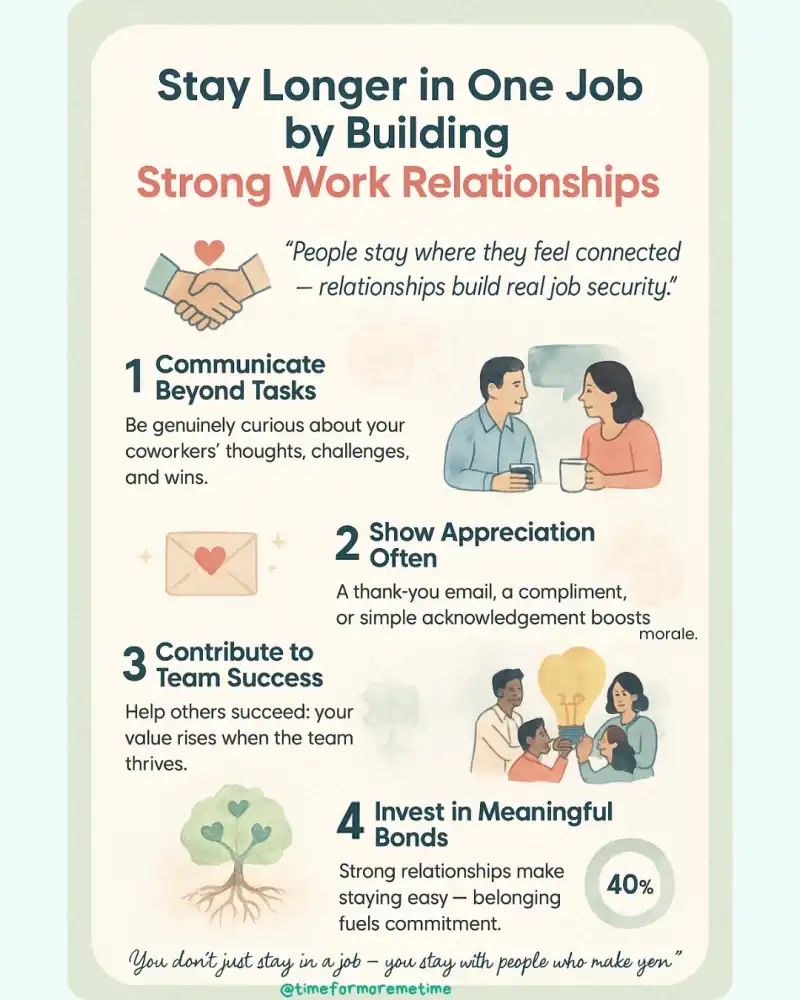
Staying in one job is easier when you genuinely connect with the people you work with. In healthcare, collaboration is essential and not optional. Every treatment plan I create as a dosimetrist depends on open communication with oncologists, physicists, and therapists. And those relationships have been a major reason I’ve stayed in my role for years.
Studies show that professionals who feel supported by their teams are 40% more likely to remain with their employer. Strong connections make the workplace less stressful and more meaningful. When you feel respected and understood, it’s easier to show up every day with purpose.
Think about how often you engage with your coworkers beyond the day’s checklist. Take time to ask questions, share insights, or simply express appreciation. The more effort you put into relationships, the more your job starts to feel like a place you belong and not just a place you work.
5. Prepare For Change And Avoid Complacency
Even if you plan to stay in one job for years, the workplace around you will always change. Technology evolves, leadership shifts, and new systems appear faster than most people expect. I’ve learned that adaptability—not just experience—is what truly secures your place when change happens.
In the next five years, technology will continue to shape how organizations operate. More than 85% of companies expect digital tools and advanced technologies to be the main forces driving transformation in their industries. Staying open to innovation isn’t optional anymore. It will be essential for long-term success.
Take a moment to consider how you’d respond if your workplace adopted a new system or workflow tomorrow. Would you adjust quickly or struggle to catch up? Stay prepared and don’t fear change. Welcome change as part of your growth. The more adaptable you are, the longer your career will thrive.
6. Make A Personal Commitment
Staying in one job for the long run doesn’t happen by chance. It’s a deliberate choice built on clear goals and self-awareness. Over time, I’ve learned that intentionally recommitting to your role can reignite both motivation and purpose.
Career experts recommend assessing your role at least twice a year to gauge your progress and satisfaction. I follow this practice by asking myself three questions: Am I still learning? Am I still valued? Am I still aligned with my goals? This quick check-in helps me avoid burnout and reminds me that staying is something I choose.
If you ever feel uncertain about your direction, take a moment to list what still excites you about your work and where you can keep growing. Clarity gives stability its meaning. When you stay for the right reasons, commitment becomes just as powerful as change.
7. Practice The Growth Mapping Method
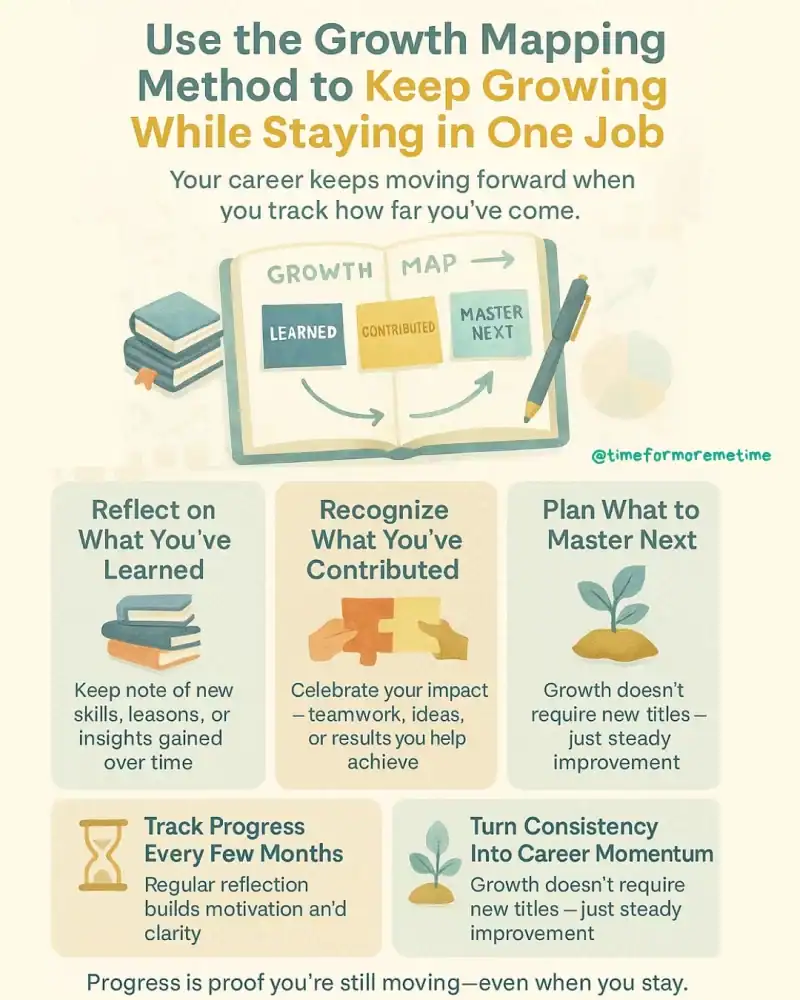
After years of working in a structured environment, I created my own system to stay motivated in long-term roles. I call it the Growth Mapping Method—a simple way to visualize how you’re improving without needing a promotion or title change.
Every few months, I map out three areas of progress: what I’ve learned, what I’ve contributed, and what I want to master next. Seeing that growth laid out reminds me that staying can still mean moving forward.
Based on my personal observation, around 70% of my coworkers who track their growth regularly feel more satisfied and less likely to consider leaving their jobs. It’s not a formal study, but it reflects what I’ve consistently seen in teams that prioritize reflection over restlessness. Taking the time to acknowledge progress keeps motivation alive, even when the job itself hasn’t changed much.
The Growth Mapping Method is my go-to approach because it turns consistency into momentum. It’s quick, visual, and easy to sustain—unlike vague New Year goals or one-time career plans. By mapping out where I’ve been and where I’m going, I turn staying in one job into a continuous path of progress instead of a pause in my career.
Conclusion
Staying in one job is a powerful way to build depth, stability, and purpose in your career. With the right mindset and consistent growth habits, you can turn longevity into an advantage instead of a limitation.
To receive more practical and inspiring career tips, subscribe to our blog, follow us on social media, and visit our YouTube channel for engaging and helpful videos.
Source
- Photo: Pexels: Jopwell