


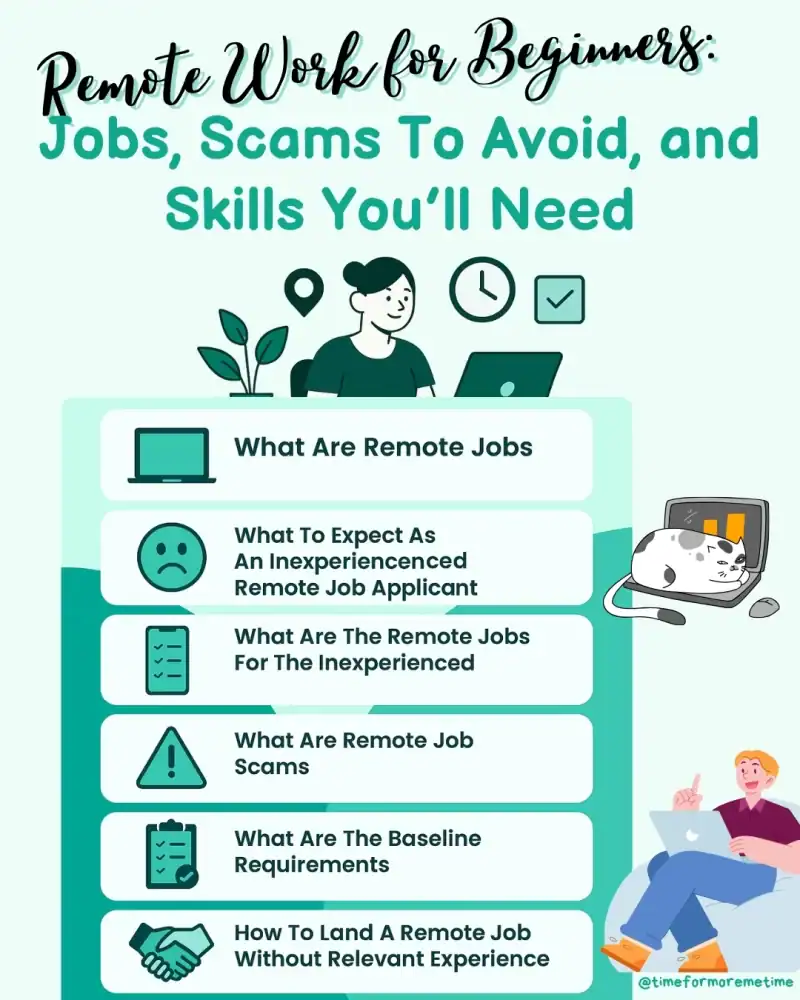
The online world offers many opportunities, but starting can be overwhelming. This post provides some fundamental knowledge and practical tips and strategies to help you secure a remote job. Let’s get started!
What Are Remote Jobs
Remote jobs allow you to work from anywhere, breaking free from traditional office spaces. They require a reliable internet connection and a quiet workspace—on top of some achievable baseline requirements—making them accessible even for those with no prior experience. The flexibility to choose your work environment—be it a home office or a beachside café—transforms the work experience.
The appeal of remote jobs lies in their ability to balance work and personal life, eliminating long commutes and crowded trains. As more people seek this balance, employers recognize that happy teams lead to better productivity.
So, why consider a remote job? Here are some compelling reasons:
- No Commuting Costs or Time: Save money and time by eliminating daily travel.
- Customizable Workspaces: Create an environment that suits your preferences and boosts your productivity.
- Increased Flexibility: Enjoy the freedom to set your own hours and work when you are most productive.
- Access to a Global Job Market: Remote work opens up opportunities with companies worldwide, expanding your job options.
- Improved Work-Life Balance: Achieve a better integration of work and personal life, allowing for more time with family and personal pursuits.
Remote jobs provide valuable opportunities and flexibility for both employees and employers. If you want to enhance your work-life balance, embracing remote work could be the change you need.
However, it’s important to remember that the same reasons that make remote jobs appealing can also have negative effects. Remote work can create a false sense of comfort and ease. This is especially true if you struggle with setting boundaries, dealing with isolation, or managing stress.
Anyway, now, you might be wondering: what can you expect as someone who does not have experience trying to land a remote job? Let’s explore that next.
What To Expect As An Inexperienced Remote Job Applicant
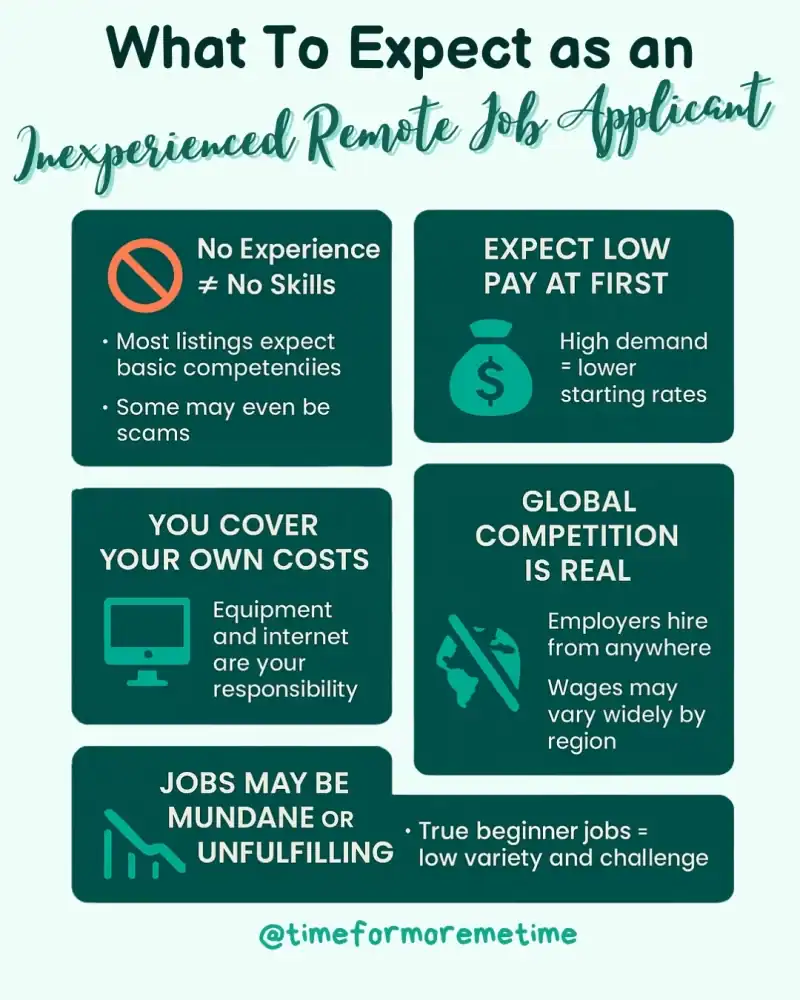
First, it’s important to set realistic expectations: truly zero-experience jobs are rare. While you may find job listings that claim no experience is required, they often expect applicants to have basic skills and competencies.
Additionally, many job ads that state they require no experience may be scams. Hiring scams are prevalent, and I will discuss how to identify them in a later section.
Regarding earnings, be prepared for low pay. Many entry-level remote jobs offer minimal compensation due to high demand and a large supply of inexperienced applicants seeking work.
You should also be aware that you will likely need to cover your own expenses for equipment and utilities. This means having a reliable computer and internet connection ready to go, and you will be responsible for these costs.
Competition in the remote job market is fierce. Since remote work can be done from anywhere, employers can hire from a global talent pool, often opting for lower-cost labor from other countries. Conversely, some employers based abroad may not be able to pay competitive wages compared to top markets like the U.S. However, do note that some but offer competitive pay to attract talent.
Lastly, be prepared for the most basic jobs. While there are many entry-level positions available for remote work, most of these roles come with high requirements. As a result, the jobs that are truly suitable for complete beginners can often be either too mundane, too difficult, or simply unfulfilling.
With these factors in mind, it’s clear that finding a remote job as an inexperienced applicant can be challenging. In the next section, I will outline common remote jobs that you can pursue, even without prior experience.
What Are The Remote Jobs For The Inexperienced
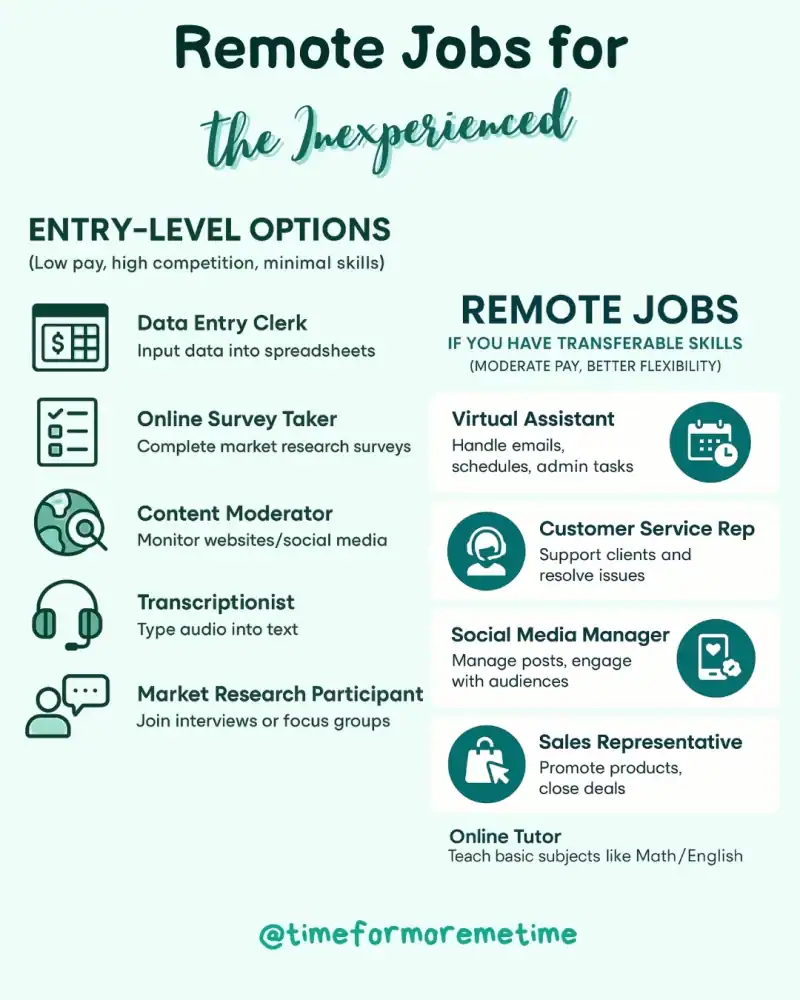
If you are completely inexperienced and feel you have a limited skill set, there are several potential remote jobs available to you. While these positions tend to be with a lot of competition, mundane, and low-paying, they can serve as a starting point. Here are some options:
- Data Entry Clerk: Involves inputting information into databases or spreadsheets. The work can be repetitive and often pays minimum wage.
- Online Survey Taker: Participates in surveys for market research. This job is very low-paying and can be tedious, but it requires no experience.
- Content Moderator: Reviews and moderates user-generated content on websites or social media platforms. This role can be dull and often pays low wages, with minimal experience required.
- Transcriptionist: Listens to audio recordings and types out what is said. This job can be repetitive and may pay low rates, especially for beginners.
- Market Research Participant: Engages in focus groups or interviews to provide opinions on products or services. While it can be easy, the pay is usually low and inconsistent.
Meanwhile, if you believe you have transferable skills, higher education, and some relevant experience outside of formal employment, you can seek better-paying jobs that are a step above the ones mentioned. Here are some options:
- Virtual Assistant: As a virtual assistant, you’ll manage emails, schedule meetings, and handle social media—all from home. Think of it as being a versatile support person in a business setting.
- Customer Service Representative: Use your people skills as a customer service representative. You’ll address inquiries and resolve issues, all while enjoying the comfort of your home attire.
- Social Media Manager: If you love social media, turn that passion into a job. As a social media manager, you’ll create content, engage with communities, and analyze trends to enhance brand presence online.
- Sales Representative: A sales rep role requires enthusiasm and strong communication skills, not years of experience. You’ll persuade potential customers that a product or service is a must-have.
- Online Tutor: Tutor students in basic subjects like Math or English. While the pay may be on the lower side, it can still be a fulfilling experience.
These remote jobs offer the flexibility to work from anywhere. Just remember to set your expectations appropriately as you explore these opportunities.
What Are Remote Job Scams
Remote jobs are appealing to many due to their flexibility and potential benefits. However, this attractiveness also attracts scammers who exploit those new to remote work. As a newcomer, it’s crucial to recognize these scams to protect yourself. Here are key signs to watch for:
- Too Good to Be True: Be cautious of job ads that promise high pay for minimal work. If it sounds unrealistic, it probably is.
- Upfront Fees: Legitimate jobs do not require you to pay fees or buy starter kits.
- Vague Job Descriptions: If a job posting lacks clear details about the responsibilities and requirements, it’s a red flag.
- Unprofessional Communication: Misspellings and poor grammar in job postings can indicate a lack of credibility.
- Invasive Requests: Be wary of employers asking for personal financial information early in the application process.
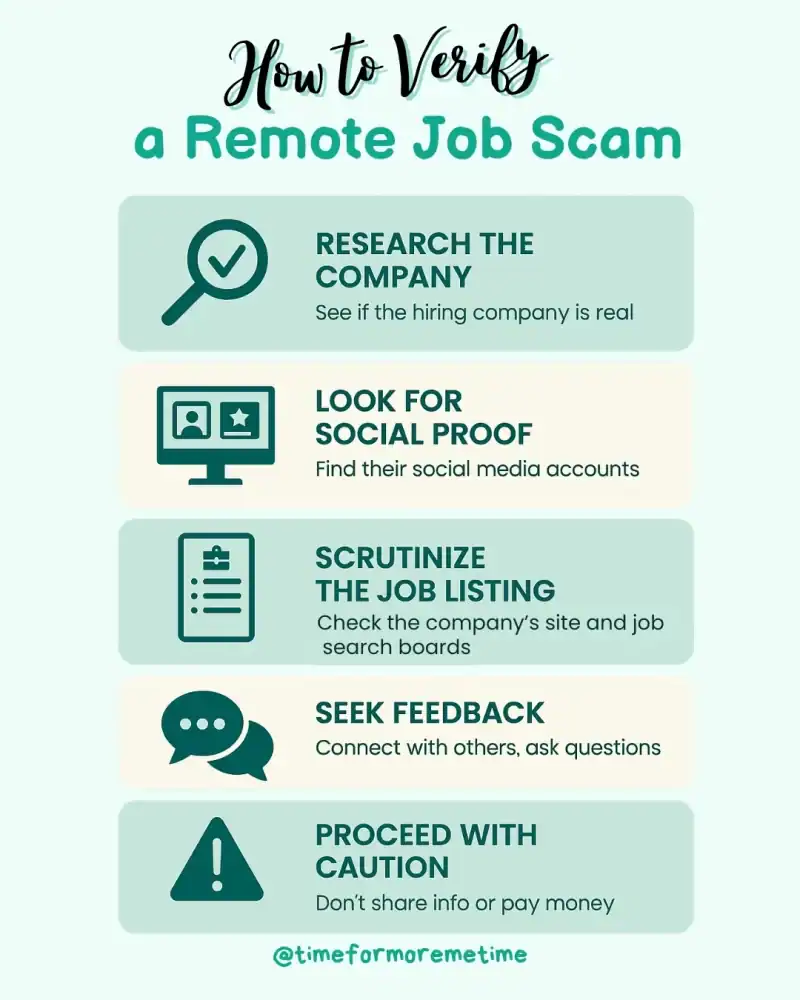
If you notice these signs, it’s best to avoid the opportunity. However, some scammers are skilled at disguising their intentions. Here’s what you can do to verify a job offer’s legitimacy:
- Research the Company: Check if the hiring company is real. Look for a valid address and contact number.
- Look for Social Proof: Does the company have social media accounts? While some companies may not have had social media in the past, it’s now common for businesses to maintain at least one account.
- Scrutinize the Job Listing: Ensure the job is listed on the company’s official website and social media, as well as on reputable job search platforms.
- Seek Feedback: Try to find other applicants or current employees. This can be challenging, but you can ask questions about the company and job listing on forums like Reddit and Quora.
- Proceed with Caution: If the job listing seems legitimate, be careful not to provide any personal information or money until you have verified that the company is genuine and the job offer is real.
By following these steps, you can better protect yourself from potential scams in the remote job market.
What Are The Baseline Requirements
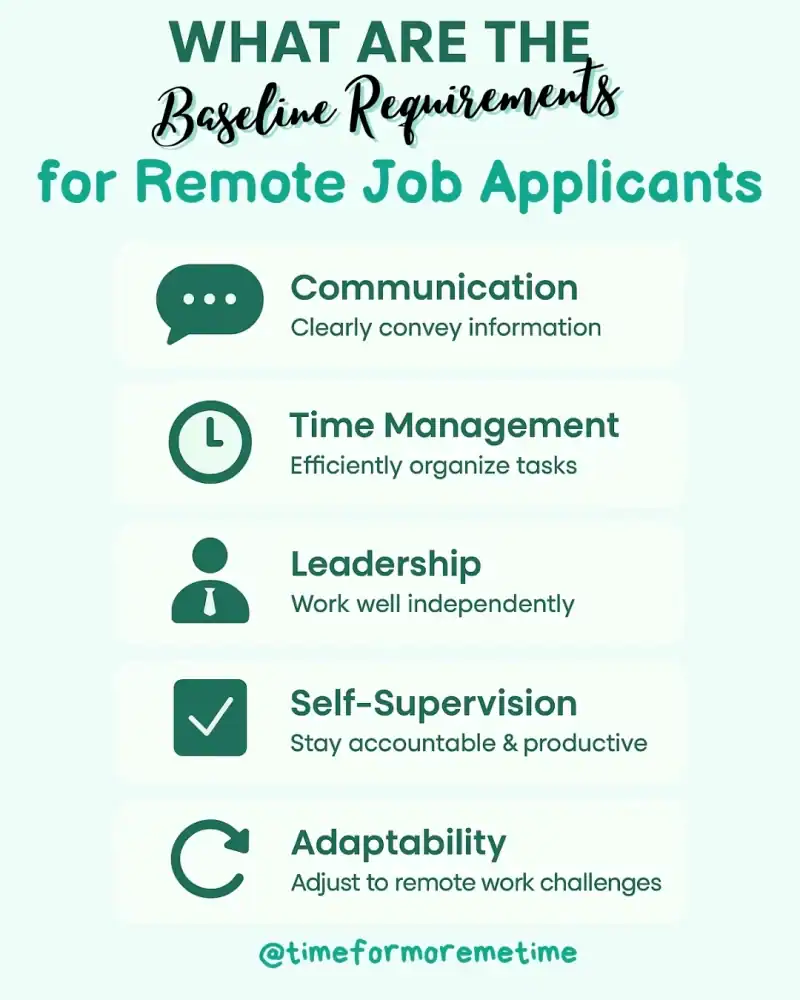
As mentioned in the expectations section, zero-experience remote jobs do have standard requirements, including a set of essential skills. Having these skills will significantly increase your chances of landing the job you want. Remember, these positions require more than just a good internet connection and a comfortable chair. Here are the key skills you need:
- Communication: Effective communication is vital in a remote work environment, especially when team members are in different time zones. Clear messaging through common communication platforms like Slack, Zoom, or email ensures that everyone stays aligned and informed.
- Time Management: Strong time management skills are crucial for success in remote work. Efficiently organizing tasks helps you meet deadlines and maintain a healthy work-life balance.
- Leadership: Leadership is not just for managers; it also involves self-leadership. Being able to set personal goals, stay disciplined, and navigate challenges independently is essential for thriving in a remote environment.
- Self-supervision: In a remote setting, you often lack direct oversight, making self-supervision a critical skill. This means holding yourself accountable for your work and maintaining productivity without constant supervision.
- Adaptability: The ability to adapt to changing circumstances is essential in remote work. This includes being open to new tools, processes, and collaboration methods. Flexibility and a willingness to adjust your approach will help you thrive in the face of unexpected challenges.
In addition to these skills, having a higher level of education and relevant training can give you an edge in the job market. Participating in seminars, whether in-person or online, can also enhance your qualifications and improve your standing among other applicants.
How To Land A Remote Job Without Relevant Experience
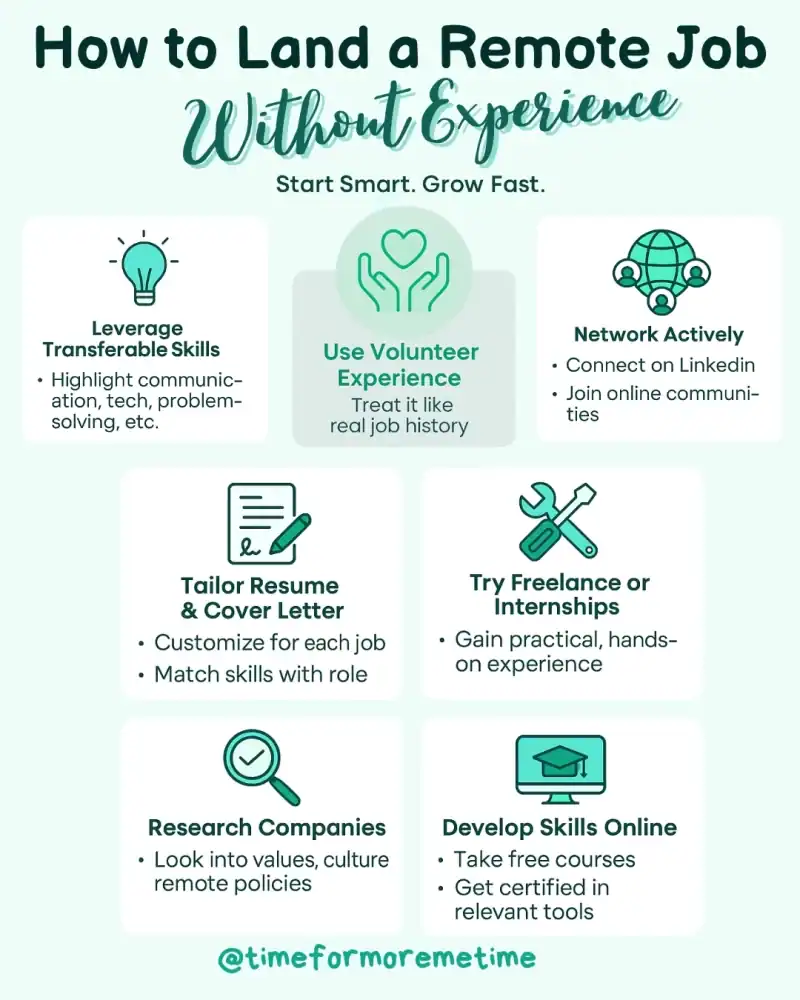
Searching for remote jobs without experience will be challenging, but it’s all about how you navigate the process. Here’s how to get started:
- Leverage Transferable Skills: You have valuable skills, even if they aren’t from traditional jobs. Consider your strengths—like social media management, problem-solving, or teamwork—and how they apply to remote work.
- Use Volunteer Experience: Volunteer work is valuable and should be treated as real job experience. If you organized events or managed social media for a cause, emphasize these achievements on your resume. Focus on what you contributed rather than just listing tasks.
- Network Actively: Connect with professionals in your desired field through platforms like LinkedIn. Attend virtual networking events and engage in relevant online communities to build relationships and learn about job openings.
- Tailor Your Resume and Cover Letter: Customize your resume and cover letter for each application. Highlight relevant skills and experiences that align with the job description, making it clear why you’re a good fit for the role.
- Consider Internships or Freelance Work: Look for internships or freelance opportunities that can provide valuable experience. These roles can help you build your resume and gain practical skills while working remotely.
- Research Companies Thoroughly: Before applying, ensure the company’s hiring policies align with your preferences. Investigate their culture, values, and work environment to determine if they are a good fit for you.
- Develop Relevant Skills: Invest time in learning new skills that are in demand for remote jobs. Online courses, certifications, and workshops can enhance your qualifications and make you a more attractive candidate.
These strategies can improve your chances of landing a remote job, even without prior experience. However, keep in mind the expectations mentioned earlier: your first job may not be the highest paying, and you shouldn’t expect to secure a lucrative or easy position right away.
Conclusion
Getting a remote job without any prior experience is possible, but it can be challenging. It’s important to be cautious of scams, set realistic expectations, and ensure you meet the basic requirements for the positions you’re interested in. And by applying the strategies mentioned here, you’ll increase your chances of landing your first job.
If you found this post helpful, please subscribe to my newsletter. You can also follow my social media accounts and watch my videos on my YouTube channel. See you later!
Sources
- Photo: Unsplash: Kristin Wilson