

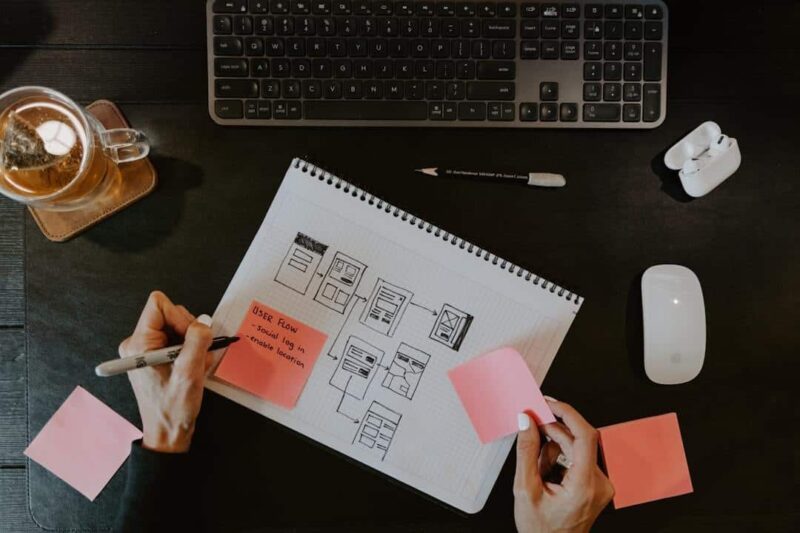
Graphic design is a creative process that blends art and technology to communicate messages visually. It uses elements like typography, imagery, color theory, and layout techniques to create compelling compositions across different media. With the right skills, graphic design can also be a smart way to earn money.
Did you know graphic design can be a rewarding career? That’s because businesses rely on strong visuals for branding, websites, marketing, and social media. If you’re not sure where to begin, this guide on how to become a graphic designer will walk you through the process.
Graphic designers do a little bit of everything. They’re part artist, part problem-solver, and part messenger. Robert Half’s 2026 salary range is $52,000 to $79,500. The US Bureau of Labor Statistics (BLS) also projects around 20,000 openings each year from 2024 to 2034. And this makes this a field worth considering if you enjoy turning ideas into visuals.
First things first: education. A degree in graphic design can help you learn the fundamentals, but it’s not the only route to success. I’ve seen plenty of self-taught designers have built impressive careers through hard work and a standout portfolio.
In fact, you can learn how to become a graphic designer without a degree. This guide breaks the journey into eight clear steps, so you’ll know exactly what to do next, from mastering the tools to building a portfolio that gets you hired.
Intrigued? Let’s get started.
Step 1: Be Creative

First and foremost, you’ve got to have creative skills or spark. You’ll need that because graphic design is all about thinking outside the box and coming up with fresh ideas that capture people’s attention.
But don’t worry if you don’t consider yourself an artistic genius. Creativity is a muscle that can be strengthened with practice. Take a moment to gaze at the world around you. Graphic designers understand that art, nature, or even the smallest everyday objects can spark inspiration.
That’s why some of the professional graphic designers I know carry sketchbooks. Others keep a digital note-taking app handy to jot down fleeting ideas and experiment with different concepts.
You can also use that as a way to develop skills that you’ll need in graphic design jobs. The more you apply your creative muscle, the stronger it’ll become, and who knows what amazing ideas will unfold.
Step 2: Familiarize Yourself With The Job
Yes, that’s mentioned above. This is vital because mastering graphic design requires more than talent. It demands a solid foundation in the basics. From color theory to typography, invest time in learning the fundamentals.
However, don’t stop at graphic design theory. Get hands-on experience with various design software to develop your style and find your voice.
Also, brush up on the financial side of things—think pricing strategies, contracts, and taxes. The more you know, the better equipped you’ll be to succeed. Don’t hesitate to seek guidance from fellow freelancers or industry experts.
Lastly, with knowledge how to do correct budget management, you can ensure that you have a steady cash flow.
Step 3: Become A Problem Solver
Design services aren’t just about making things look nice. It’s about tackling the tough stuff. When you’re a graphic designer, you’re part detective, part storyteller. And it’s your job to communicate ideas that resonate.
When tackling a design challenge, dissect it into smaller, bite-sized pieces. Start by asking yourself questions like “What’s the end goal?” and “Who’s the target audience?” to guide your approach. Then, feel free to brainstorm and test out different ideas. Then iterate on your designs until you land on the best solution.
Step 4: Learn The Tools
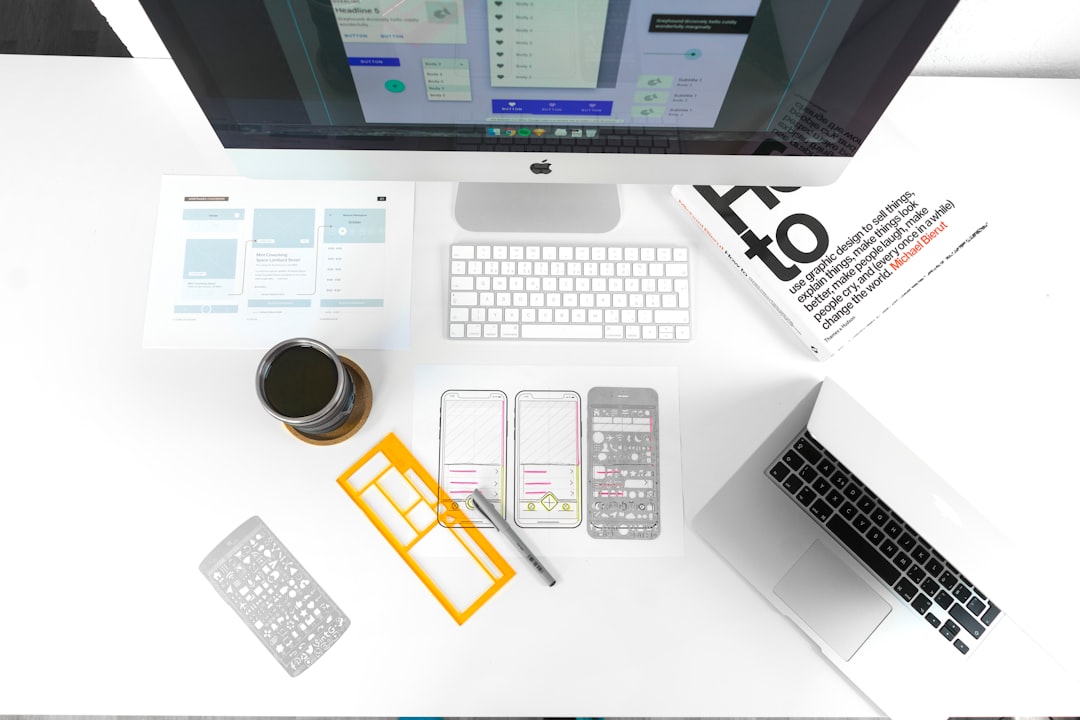
Have a design in mind? The digital world is now full of tools to bring your creative visions into stunning visuals. Some of them are:
Adobe Creative Suite- Canva
- CorelDraw Graphics Suite
These are just some of the popular graphic design tools you must know. If you’re thinking about the initial hurdle that discourages you, know that there are plenty of online resources and tutorials that can help you master the skills you need. Find tutorials that let you experiment with different tools and techniques. Doing so allows you to develop your own style and voice.
But don’t forget the more innovative graphic design tools out there. With the popularity of artificial intelligence (AI), many designers create specialized designs in a snap. Yes, you read that right!
Graphic design takes time to finish using traditional graphic design software. That changed when AI surfaced. It took over some tedious graphic design jobs that may take hours to complete. Now, with the right prompt and graphic design program, you can create images or designs in minutes.
That’s why you need to be up-to-date on the innovations to keep your graphic design career thriving.
Step 5: Take A Graphic Design Course
As mentioned, you can learn how to become a graphic designer even without a bachelor’s degree. Formal education isn’t the sole pathway to becoming a talented graphic designer, but taking a course can certainly provide a rock-solid foundation in design principles and cutting-edge techniques.
Sometimes, potential employers looking for long-term graphic designers want those who have finished a graphic design program. Thus, having one can make you stand out. You can even use your graphic design degree program to ask for a higher salary.
So, if you plan to upgrade your graphic design knowledge, look for programs that offer a dynamic mix of classes. Enroll in programs that include typography, color theory, and layout design. Even better if you can find programs accredited by trusted third parties.
And your graphic design skills develop if you have hands-on experience through internships or client projects, which are often part of many courses. This real-world exposure helps you build a solid portfolio and forge industry connections that can open doors to your graphic design career.
Step 6: Master The Fundamentals
The foundation of your graphic design knowledge should contain the basics. That’s because designing with intent requires the need to understand the why behind the rules of color theory, typography, composition, and layout.
Memorization isn’t enough; you need to grasp the underlying principles to create designs that genuinely connect with people.
How? Well, start messing around with different color combos, font duos, and layout arrangements to see how they impact the vibe of your designs. And don’t be afraid to break the rules on purpose. It’s often where the most magic happens.
And, of course, that’s where the degree program in graphic design comes in vital. When you take in programs in graphic design or UX (user experience) design, you can learn the fundamentals before you start experimenting.

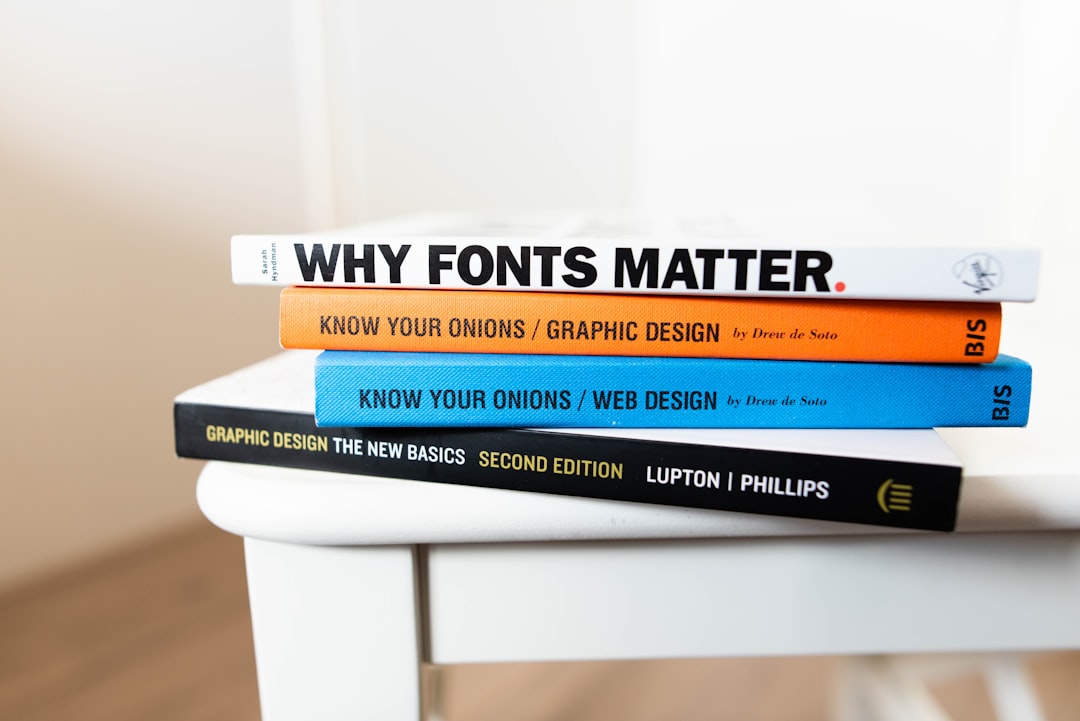
But finishing a degree doesn’t end there. Want to take your graphic design skills to new heights? Then, keep on learning. From classic tomes on the fundamentals of design to the latest publications on cutting-edge techniques, there’s a book out there that can help you achieve your goals.
I’m a big fan of classic design books like Robert Bringhurst’s “The Elements of Typographic Style” and Josef Müller-Brockmann’s “Grid Systems in Graphic Design.” Reading these design bibles can really help you grasp the underlying principles and philosophies that make great design work so well and even inspire you to push your own creative boundaries.
However, if you’re not a reader, that’s fine. These days, we can watch many tutorials or listen to podcasts about anything. Use these opportunities to keep upgrading your design skills.
Step 7: Build a Portfolio
Think you’re ready to help businesses reach their audience through graphic design? Start building your portfolio. Your graphic design portfolio can make a real difference because it shows proof, not just potential.
One study reviewed 30 graphic design job advertisements on Facebook and found that employers expected candidates to show what they could deliver, what they knew, and what skills they already had. The study also found that nearly all job ads required digital technical skills and design expertise, making a strong portfolio even more important.
For instance, if you’ve handled UX design projects or assisted a professional graphic designer, then add them to your portfolio.

And, of course, your potential clients may not believe that you’re into graphic design if your portfolio has a lousy user interface. Ensure that your portfolio is easy to navigate and clearly spells out your design process and problem-solving chops.
Doing so lets people know that you’re a professional graphic designer, even without you telling them so.
Step 8: Look At Job Postings
Now, it’s time to hunt for a project. Scan the market for opportunities that marry your skills with your passions, whether that’s working for an agency, in-house at a company, or striking out on your own as a freelancer.
Step 9: Let Your Brand Shine
Beyond employment, you need to have a brand yourself. Regardless if you’re a freelancer or an in-house designer, your logo and visual identity can help clients remember you faster. A 2024 systematic review examined logo studies published from 2019 to 2023 and found that logos can influence brand awareness, brand perception, brand attitude, brand image, and purchase intention.
That matters because your logo is often one of the first things clients notice. Pair it with consistent colors, fonts, and portfolio design so your freelance brand looks clear, polished, and easy to recognize.
Step 10: Overdeliver
When you land those first few clients, it’s time to wow them with your work. Go above and beyond to deliver designs that exceed their expectations and communicate clearly and professionally throughout the process. Satisfied clients are more likely to come back for repeat business or refer you to others. Plus, those early projects will be crucial when creating a portfolio and establishing your reputation as a graphic designer.
Graphic design is a career path that’s not for the faint of heart. It demands tenacity, creativity, and a willingness to continually push yourself outside your comfort zone. But for those who are up for the challenge, the payoff can be a truly fulfilling career that brings a sense of purpose and excitement.
Graphic design is about using creativity and technical skills to communicate ideas visually. Designers craft everything from logos to websites, solving problems and thinking strategically.
Conclusion
So there you have it. A roadmap for how to become a graphic designer. It’s not an easy journey, but with hard work and dedication, you can turn your love of design into a fulfilling career.
Becoming a skilled graphic designer requires more than just creating visually appealing images. It’s about using your skills to solve real problems, convey important messages, and continuously develop your expertise.
Whether you choose to work for a company or hit the ground running as a freelancer, always strive to deliver your best work and never stop learning. With the right mindset and a commitment to your craft, you can achieve great things in the world of graphic design.
Sources
- Robert Half. (2026). Graphic designer. https://www.roberthalf.com/us/en/job-details/graphic-designer
- U.S. Bureau of Labor Statistics. (2025). Graphic designers. https://www.bls.gov/ooh/arts-and-design/graphic-designers.htm
Indeed. (2025). 10 graphic design careers you can pursue without a degree. https://www.indeed.com/career-advice/finding-a-job/graphic-design-jobs-without-degree- ResearchGate. (2023). The value of digital portfolio on placing graphic design graduates from worker-to-work matches in online advertisement. https://www.researchgate.net/publication/367733770_The_Value_of_Digital_portfolio_on_Placing_Graphic_Design_Graduates_from_Worker-to-Work_Matches_in_Online_Advertisement
ResearchGate. (2024). Logo impact on consumer’s perception, attitude, brand image and purchase intention: A 5 years systematic review. https://www.researchgate.net/publication/379216337_Logo_Impact_on_Consumer%27s_Perception_Attitude_Brand_Image_and_Purchase_Intention_A_5_Years_Systematic_Review