


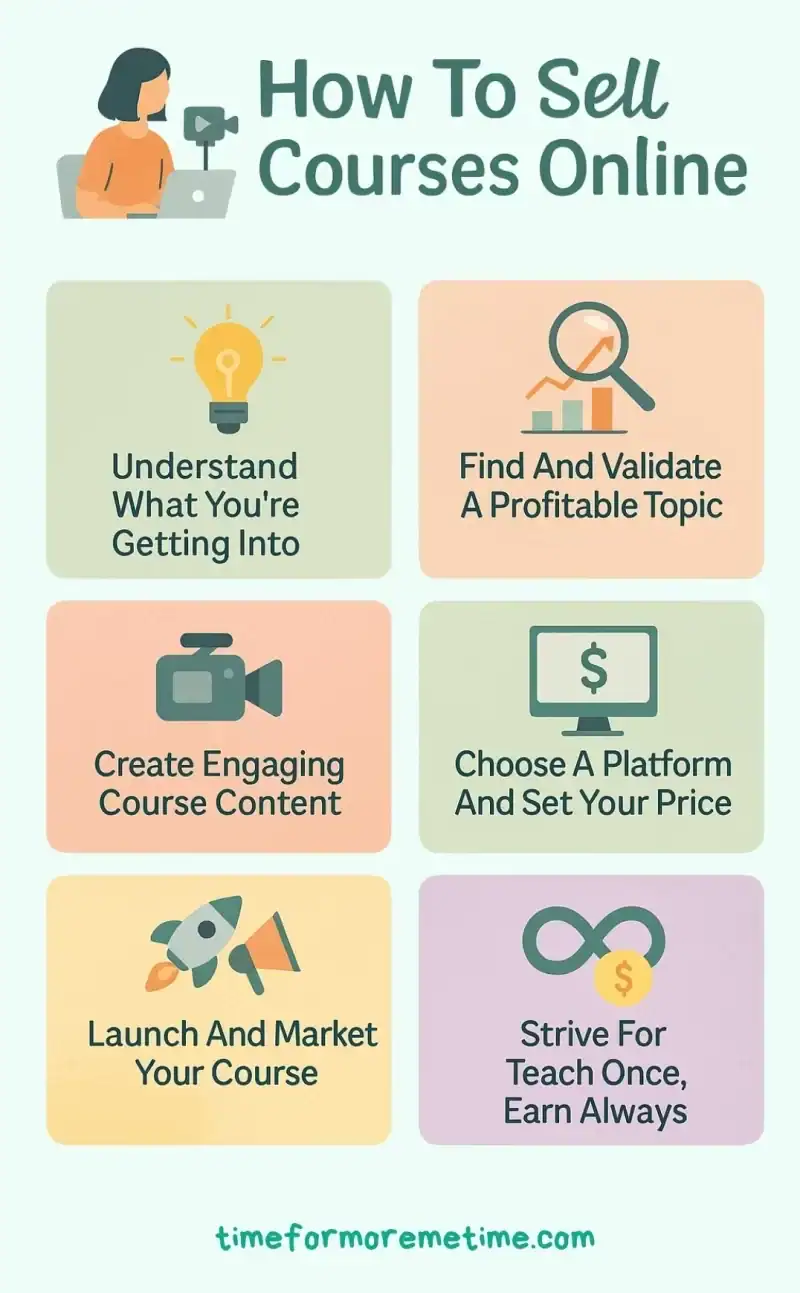
Most people dream of earning money while they sleep, but few realize their knowledge could make it happen. With e-learning now worth hundreds of billions worldwide, online courses have become one of the most profitable ways to share what you know and earn steady income. If you’ve ever wanted to teach, inspire others, and earn passively, you can absolutely do it.
Like many entrepreneurs, I once thought creating an online course required a big audience or fancy setup. Back in 2019, I spent hours taking courses and researching creators across California. I wanted to start a blog and teach finance—the blog came first, but the course never happened due to time.
Now, I want to share what I’ve learned. In this guide, you’ll discover how to find profitable ideas, create engaging content, choose the right platform, and launch with confidence—all while building real passive income. Let’s get started.
1. Understand What You’re Getting Into
Selling online courses can be one of the most rewarding ways to earn money and make an impact. You build it once—and get paid repeatedly as new students enroll. John, a friend I helped with his podcast business in Los Angeles, woke up one morning to five new enrollments—it felt like magic.
On average, successful online courses can have profit margins of up to 90%. This high margin means you keep most of what you earn—unlike businesses with heavy inventory or overhead. Of course, this doesn’t mean instant success. It still takes time, testing, and a willingness to learn from mistakes.
So what does it really take to make your first course successful? It starts with understanding your niche, validating your topic, and treating your course like a real business. Once you see it that way, your potential for growth multiplies.
2. Find And Validate A Profitable Topic
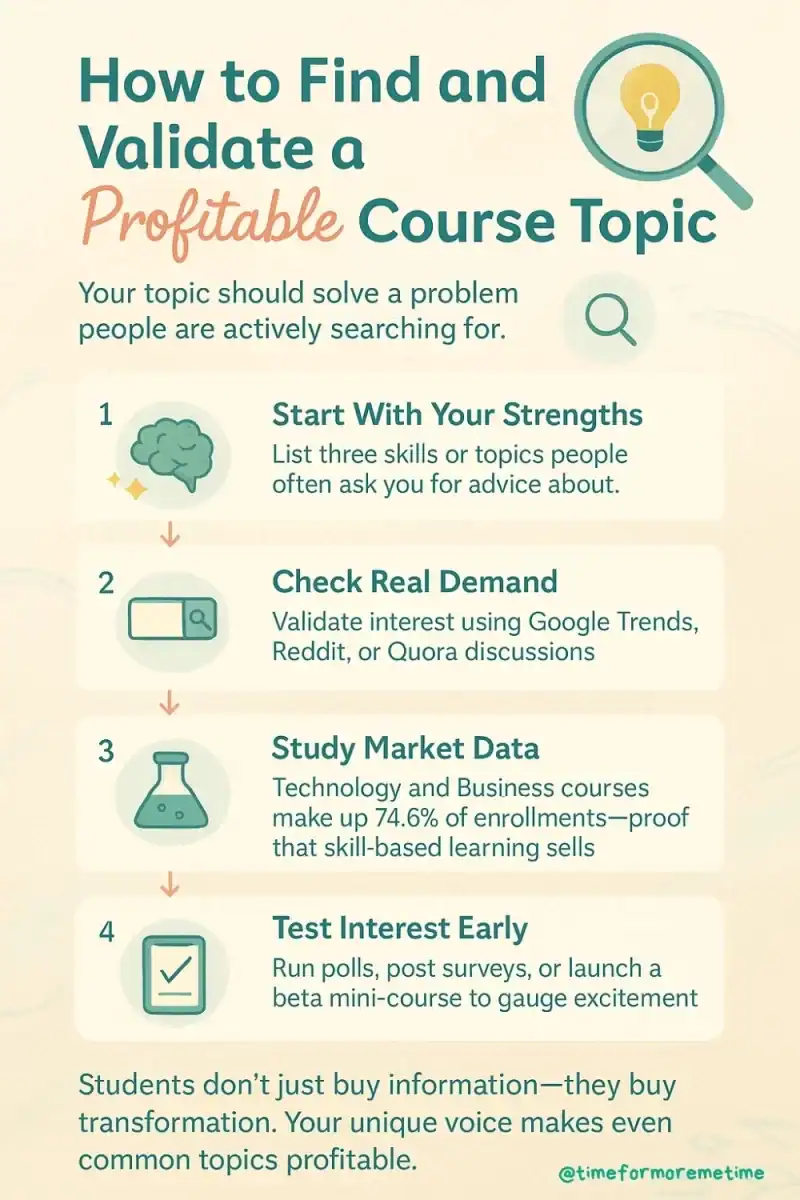
Your course’s success depends on solving a real problem for your audience. The best topics come from combining what you know with what people are actively searching for. I once noticed dozens of Reddit posts about burnout, so I checked how similar courses performed. They turned out to be among the hottest sellers online.
According to data for Udemy, Technology and Business course categories together account for about 74.6% of all enrollments on the platform. This proves people aren’t just buying information—they’re investing in transformation. You might worry your topic feels common, but remember: students value your unique experience and teaching style.
Ask yourself: “What do people always ask me for advice about?” List three skills you’re confident in, check their demand via Google Trends, and then test interest using a poll or beta class. When your audience validates your idea, you’re ready to move forward with confidence.
3. Create Engaging Course Content
Great courses keep students learning, motivated, and coming back for more. Structure your lessons from beginner to advanced. Mix formats like video, text, and quizzes for variety. I noticed that most of the online courses I took followed this pattern.
Studies show that courses with interactive elements have significantly higher engagement and retention rates. For example, learners retain 25-60% more information when engaging with interactive content instead of traditional lectures. When learners feel involved, they’re more likely to finish—and recommend your course to others.
If creating videos feels intimidating, remember that clarity beats perfection. Would you rather learn from a flawless script or someone who genuinely cares about your progress? Use tools like Canva for visuals and Loom for quick recordings. Always gather student feedback to improve.
Over time, your course will evolve into a polished, impactful product that represents your best work.
4. Choose A Platform And Set Your Price

Your platform and pricing strategy can make or break your success. Popular platforms like Teachable, Thinkific, or Kajabi handle payments, hosting, and student access. I have chosen Teachable’s free plan as the platform on which I will release my first course.
Many creators find that premium pricing—$197 to $497 for a typical 4-6 week course—often leads to better student commitment and perceived value. When you charge based on transformation, not just hours of content, your course becomes an investment, not an expense.
If pricing scares you, remember: undercharging can hurt both your income and your students’ motivation. So how much should you charge? Choose an amount that reflects your course’s value without ruling out access. Research competitors, factor in platform fees, and test early-bird or tiered pricing options. Your price should feel fair to students and rewarding for your effort.
5. Launch and Market Your Course
A powerful launch can turn your hard work into real income. Start by building anticipation weeks before your launch by using your email list or social media. For John’s last project launch, he hosted a free mini-class on TikTok Live—it led to 10 new enrollments in 24 hours (a modest number, but a strong start).
Research shows that courses promoted through pre-launch campaigns often outperform quiet launches. Marketing isn’t just selling—it’s storytelling. You’re inviting people on a journey that changes their lives. If you’re nervous about self-promotion, remember: you’re offering genuine value.
What’s one small action you can take today to start building awareness? Post a short video, share a student testimonial, or create a landing page with a clear call to action. Momentum builds when you consistently show up and share your mission.
6. Strive For Teach Once, Earn Always
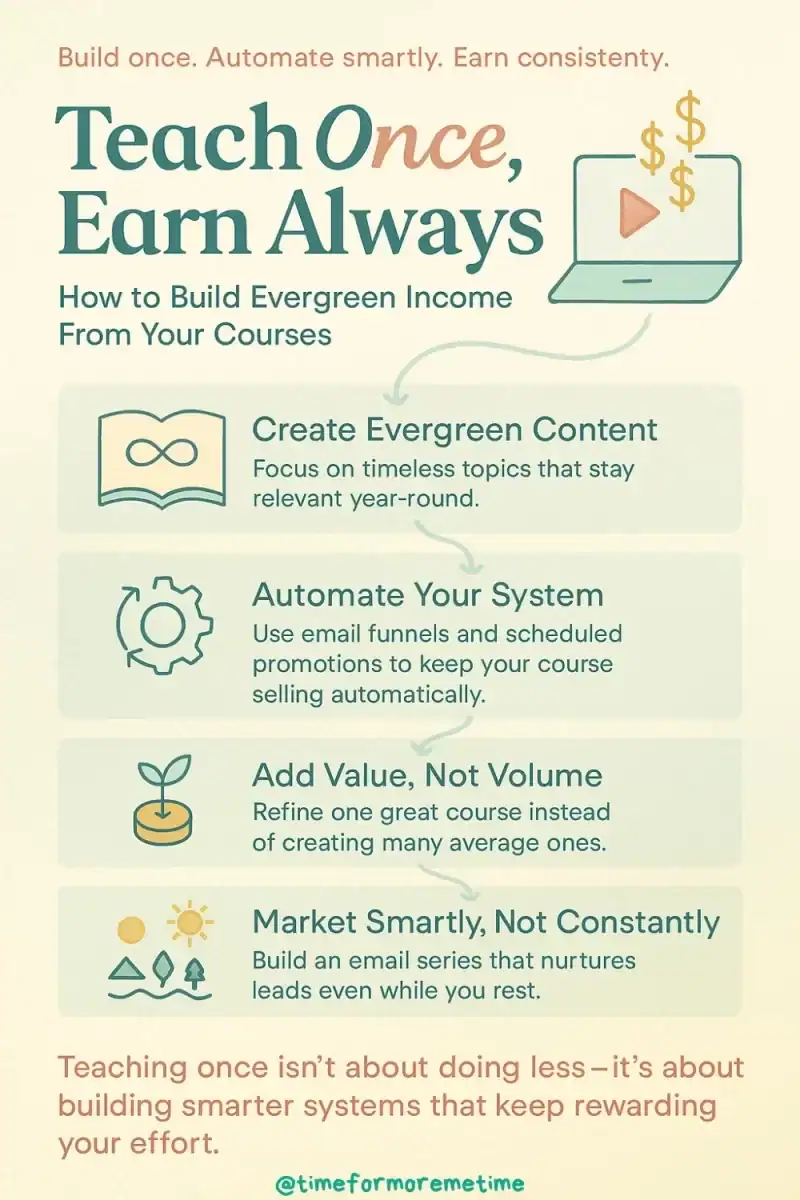
After extensive learning about course creation, gathering insights from content creators, and mixing the things I learned from business school, I’ve found that the most effective strategy in the online course market is to create content once and let it generate ongoing income.
In essence, develop an evergreen course that continues to sell through automation and smart marketing. Utilize email funnels to automate your courses. If done well, you can achieve a steady monthly income without consistently promoting or creating new content.
This approach emphasizes sustainability rather than constant launching. Automation allows your business to operate quietly in the background, even if you’re busy or introverted.
Imagine earning income while traveling, spending time with family, or pursuing other goals. Set up an evergreen funnel with email automation, occasional discounts, and consistent audience engagement. This is the key to building passive income—teach once and earn for years.
Conclusion
Selling online courses isn’t just another side hustle—it’s a path to turning your passion into freedom. When you share your knowledge, test your ideas, create meaningful lessons, and market them wisely, you build an income stream that keeps growing over time.
Want more tips like this? Subscribe to our blog, follow us on social media, and visit our YouTube channel for more practical guides and insights.
Source
- Photo: Pexels: Vanessa Garcia