


Choosing the right online-course platform can feel overwhelming. There are so many options, each claiming to be the best, and none clearly tailored for you. With the global e-learning market projected to reach over US $341 billion by 2025, it’s no wonder creators feel stuck.
Back in 2019 I helped my friend John launch his first course (and then a print-on-demand business in 2020), so I know how you feel: buried in choices when all you want is to share your knowledge and earn a fair income.
In this guide, I’ll walk you through the 10 most important factors to make the right platform choice with confidence and clarity.
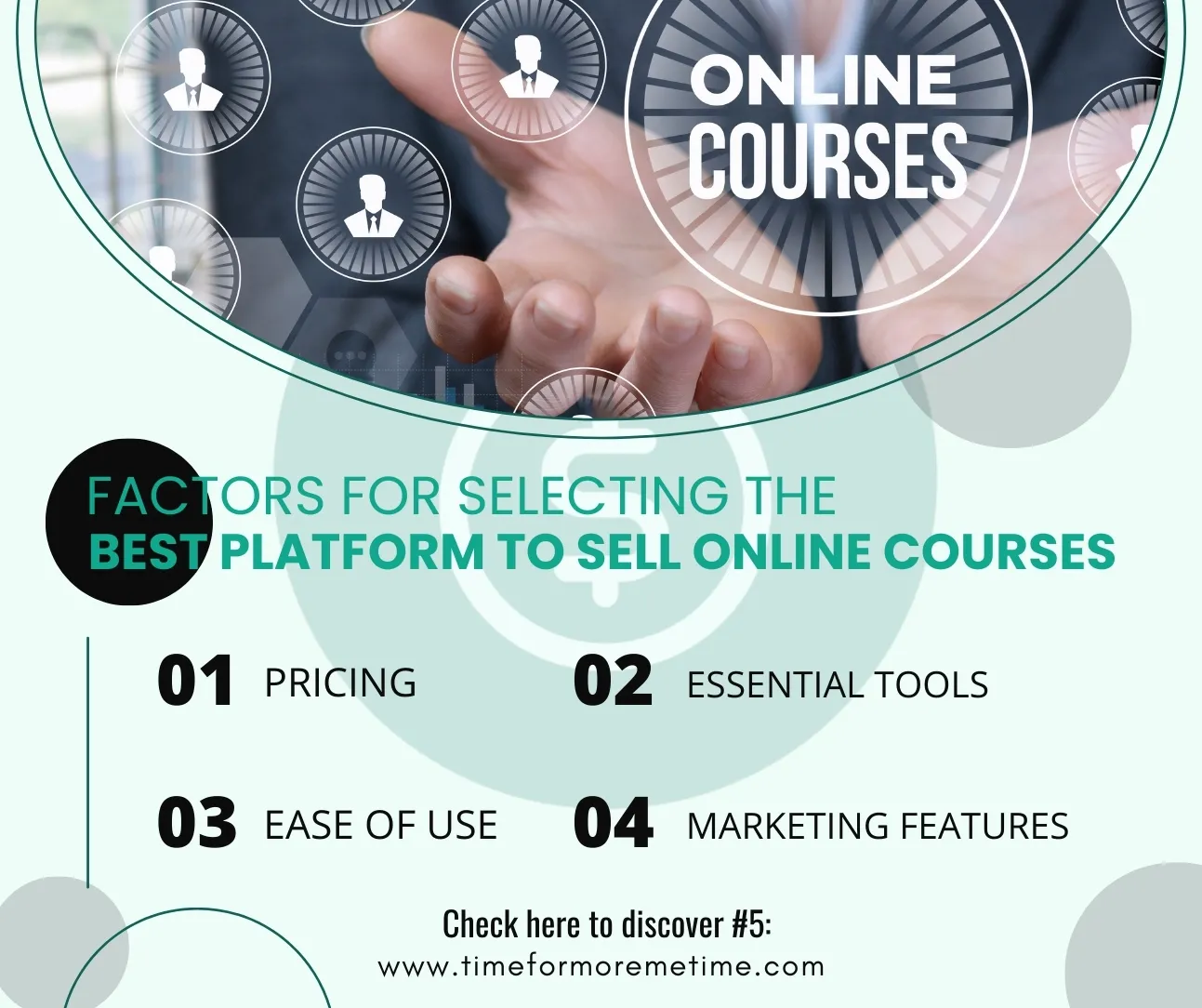
1. Pricing
Choosing the right pricing model is critical because it directly affects your profits and long-term course success. Platforms typically ask you to pay either a monthly fee, a cut of each sale, or both. When I helped John launch his first course, we found a platform with low transaction fees far better for a beginner than a high flat monthly cost.
Industry data shows platform transaction fees can range between 1% and 7.5% of each sale, which can add up quickly as your volume grows. This means your cost structure must match your revenue expectations and business stage. If you’re just starting, a platform that only charges when you sell makes sense. If you’re already generating steady income, a flat-rate model may reduce your total cost.
Ask yourself: are you testing an idea or already scaling a course business? Choose a pricing setup that supports growth and not one that drains your margin. Once you’ve settled on pricing, you’re ready to evaluate the value you’re getting for that cost.
2. Essential Tools

Deciding on a platform with the right built-in tools shapes how engaging and effective your course will be. In simple terms, these tools include video hosting, quizzes, certificates, file downloads and discussion boards. John fully utilized these tools and his students immediately felt more engaged.
Research shows that interactive features like quizzes and trackers can boost student engagement by up to 60% compared to passive formats. The right tools don’t just help you teach, but they also help students stay motivated and complete the course. I know from working with creators how easy it is to be excited about building, only to find students dropping off because the course feels lifeless.
Do you want to offer just a video series or a full interactive experience? Match your platform’s toolkit to your teaching style. Think of tools as your classroom gear: they should empower your vision, not limit it. Move next into how easy it’ll be to use
3. Ease Of Use
Selecting a platform that’s easy to navigate matters just as much as its features. That’s because when your tools are intuitive, you can focus on teaching instead of tech-troubles. When we spent an entire weekend untangling a platform where even simple settings were hidden under confusing menus—lesson learned: simplicity saves sanity.
Creators using intuitive platforms can spend significantly more time improving content rather than fixing glitches. This will result to fewer frustrations for you and a smoother experience for students.
Think about it: Would you rather spend an hour teaching or an hour figuring out how to add a quiz? Choose a platform that feels straightforward from your free trial; if you can use it easily, your students probably will too.
4. Marketing Features

Effective marketing tools are essential for turning a great course into a profitable business. These tools include built-in features like email automation, discount codes, landing pages and affiliate programs. In John’s case, we used a platform with coupon codes and automated email reminders. It allowed his sales to increase modestly in just one month.
Platforms that offer integrated marketing features can help boost conversion rates. If you’ve ever poured hours into setting up ads or wondering why your launch fell flat, you know how important this is.
What would happen if your platform handled much of the marketing while you focused on teaching? Choose a platform with built-in funnels, affiliate tracking and automation. With one, you spend more time creating and less time chasing students.
5. Customer Support
Picking a platform with prompt and dependable customer support is vital because tech issues will happen. For instance, during one of John’s course launches the checkout button failed, and thanks to responsive live chat we avoided losing dozens of sales.
According to industry data, 73% of learners say customer service influences their loyalty and 58% have stopped using a course because of poor support.
Support isn’t just nice to have—it’s a business safeguard. Are you comfortable running your course business on a platform that leaves you hanging when things go wrong? Before choosing, test their responsiveness, read user reviews, and make sure you’re not just buying features—you’re buying reliability.
6. Customization Options
The platform you choose should reflect your brand, not just your content. This means aligning the design, color scheme, logo, and integrations so that everything feels part of your identity. When I helped John rebrand his print-on-demand business in 2020, we matched his course platform’s look to his store. This made the experience feel seamless and professional.
Data shows that 69% of customers cite brand reputation and trust as crucial when choosing learning platforms. That tells us: when your course and platform look like a cohesive brand, students are more likely to stick around.
Doing this helps you avoid a generic-looking course page and create one that instantly says, “this is me.” Choose a platform with theme editors, drag-and-drop builders, and strong integrations so your site reflects your unique style and vision. Your platform should highlight you and not just your lessons.
7. Payment Processing
Finding a platform with seamless checkout is crucial because technical hiccups can silently kill sales. If your students can’t pay easily or their preferred method isn’t supported, they might leave even if they were ready to buy. I witnessed this firsthand when, while helping John sell internationally.
Often, online shopping carts are abandoned because preferred payment methods aren’t available. Remember that your payment setup directly impacts your global reach and conversion rate. If you’ve ever clicked “Checkout” and hesitated because you didn’t see your region’s method. That’s a feeling your students have too.
I’m sure you don’t prefer losing a sale because of a missing payment option. So, test platforms by simulating payments from key countries you’re targeting. Also, check for multi-currency support, fast payouts, and recognized gateways. A platform that gets payments right keeps your business running smoothly and your students buying confidently.
8. Student Management Tools
Searching for a platform with strong student-management features makes it much easier to track and engage your learners. These tools—like dashboards, progress trackers, and analytics. They can help you monitor how students move through your course. When John’s course had hundreds of learners, we used analytics to identify which lessons were skipped and improved them accordingly.
Analytics-enabled platforms give instructors insights into completion, engagement, and drop-off points—essential data to improve outcomes. Doing so allows you to adapt and grow based on real student behavior.
Have you wondered why students stop halfway through your course? Choose a platform that lets you monitor progress, send personalized messages, and set up automatic nudges. It will help you stay connected, informed, and proactive in supporting your learners.
9. Platform Type
Picking between a marketplace and a self-hosted platform matters because it defines your control, branding, and profit. Marketplaces like Udemy let you tap into a ready audience, while self-hosted platforms like Teachable or Thinkific give you full ownership of pricing and branding.
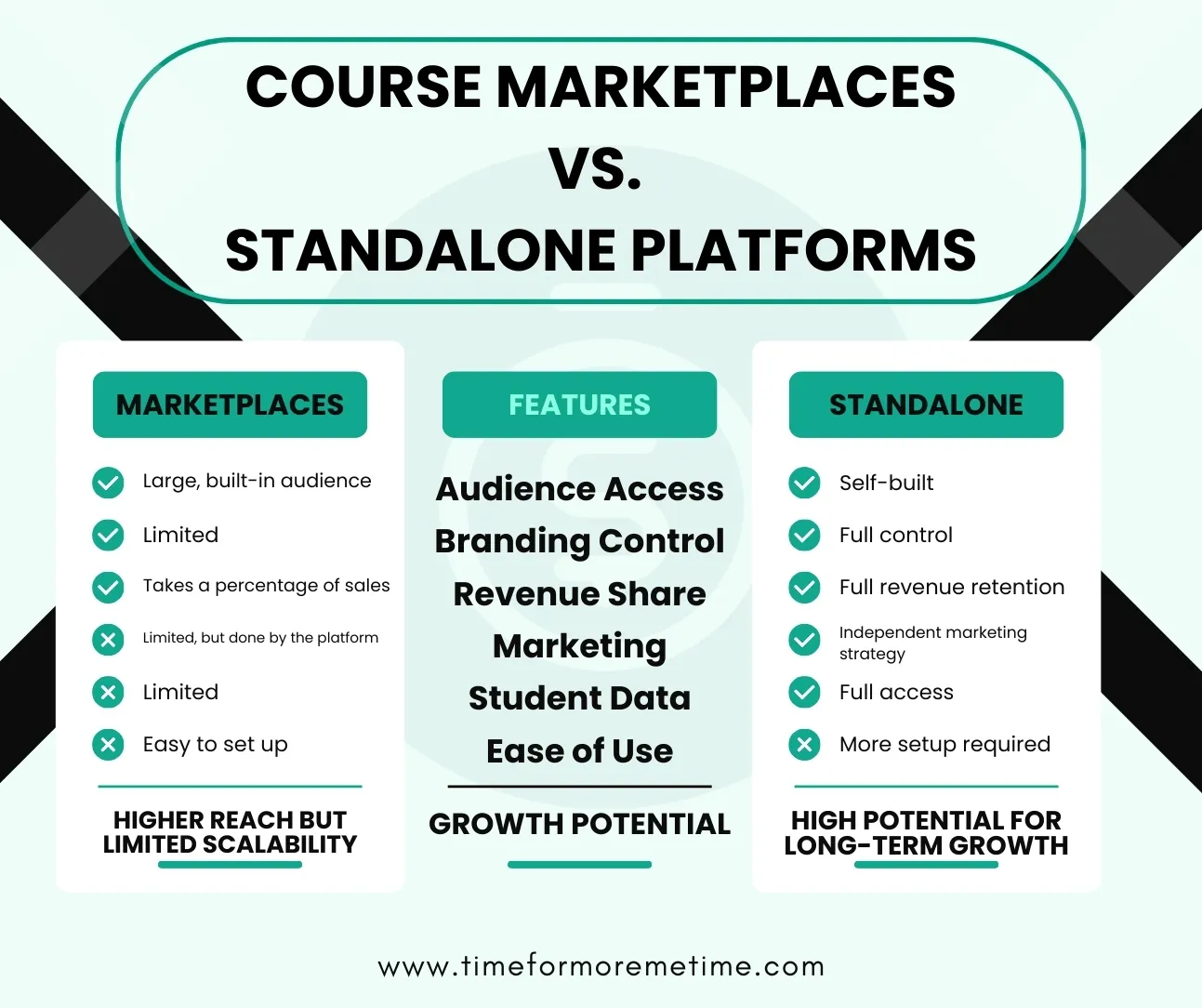
Data shows that creators on marketplaces often earn much less. This highlights how platform choice directly impacts your bottom line and long-term business potential. If you’ve ever felt frustrated by another platform setting your pricing or handling your audience, know that many creators face this limitation as well.
Do you want to be one of thousands of instructors on someone else’s site or build a brand where every sale feels like yours? If you’re just starting out, a marketplace can be a quick test. Once you have traction, consider shifting to a self-hosted platform to regain control, boost profits, and build a sustainable business.
10. Hosting Type
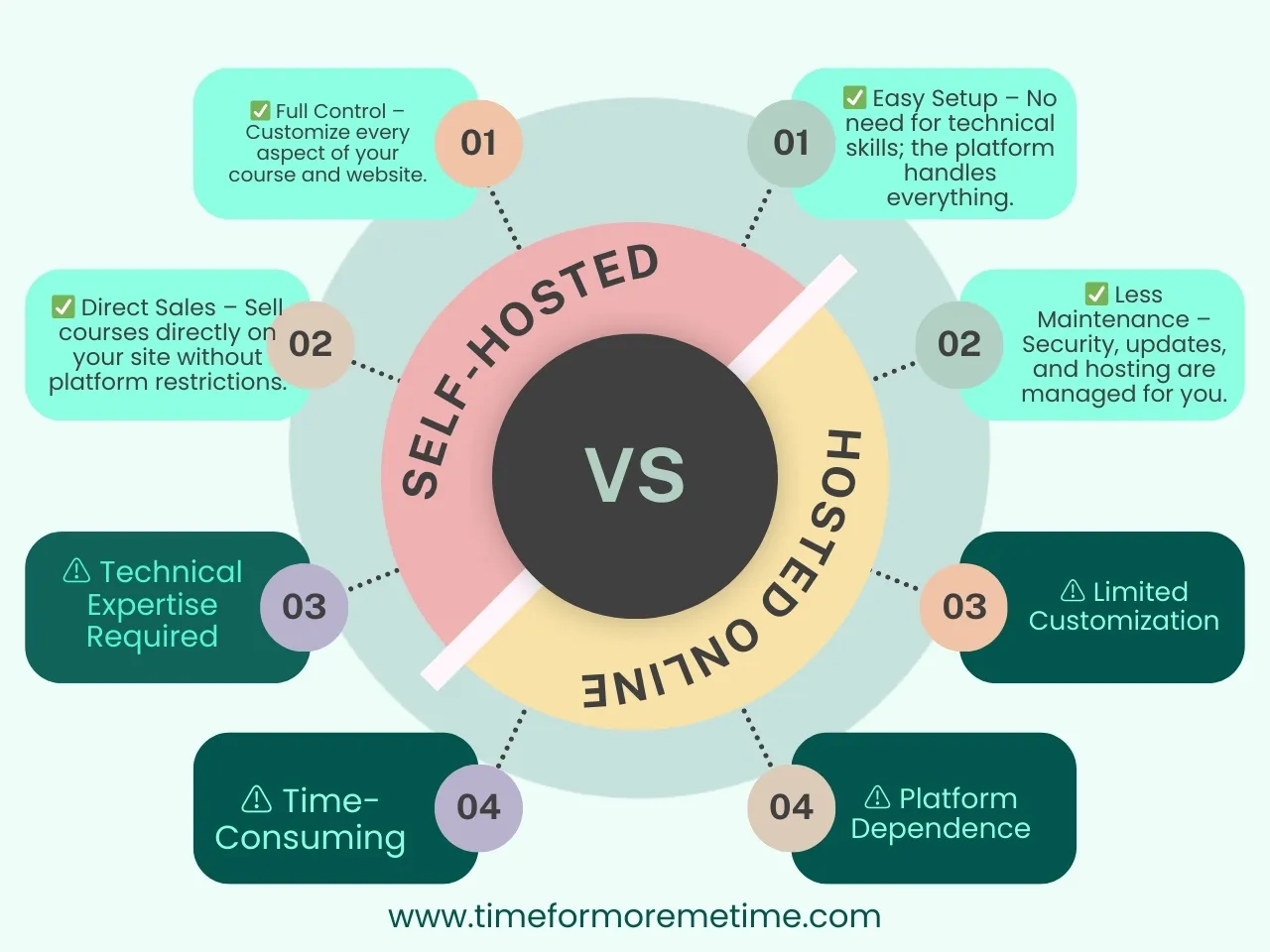
The type of hosting you choose determines how secure, fast, and reliable your course delivery will be. You can opt for self-hosting (you manage everything on your own website) or a fully hosted platform (where the provider handles hosting, updates, and maintenance).
Professional hosting services often guarantee uptime of 99.9% or higher, which translates to minimal downtime and more consistent access for students. Being in one means you’ll spend less time troubleshooting and more time teaching.
It would be a relief to know your students always have access and you’re not stuck fixing server crashes during a launch. If you’re not tech-savvy, a hosted solution is usually the best starting point. It offers reliability, ease of use, and peace of mind.
11. Fit
Here’s a bonus tip and it’s one John and I laser-focused on during his online course journey: find the right fit.
Choose a platform that matches your current stage and can grow with you. Many creators rush into expensive, complex platforms before they’re ready and end up overwhelmed. When John and I started, we used a simple setup that covered the basics. As his audience grew, we gradually upgraded to platforms with stronger analytics, automation, and branding tools. That steady scaling boosted retention and kept growth consistent.
The key is momentum. Your platform should evolve with you, not hold you back. Start small, refine your process, and only upgrade when your course truly needs it. The best platform isn’t always the most popular—it’s the one that fits your goals, supports your students, and makes teaching smoother, not harder.
Conclusion
If you’ve ever dreamed of earning from what you know, selling online courses is one of the smartest and most fulfilling ways to do it. You don’t need a massive following or a marketing degree—you just need structure, consistency, and a willingness to help others learn.
Do you need more information like this? Subscribe to our blog, follow us on social media, and visit our YouTube channel for more practical guides and insights.
Sources
- Photo: Unsplash: Samantha Borges