
Starting a business shouldn’t drain your savings—or your sanity. Nearly half of small businesses fail within five years because of high startup costs and inventory problems. That’s why many entrepreneurs are turning to print-on-demand (POD)—a low-risk model that eliminates warehouses, stockpiles, and financial stress.
Like you, I wanted extra income without managing inventory or large upfront costs. During the 2020 pandemic, I helped my friend John launch his POD business—overseeing finances and operations before he could hire help. Together, we turned his first few designs into steady income, and along the way, I learned what truly makes a POD business succeed—and even earned a bit from the venture myself.
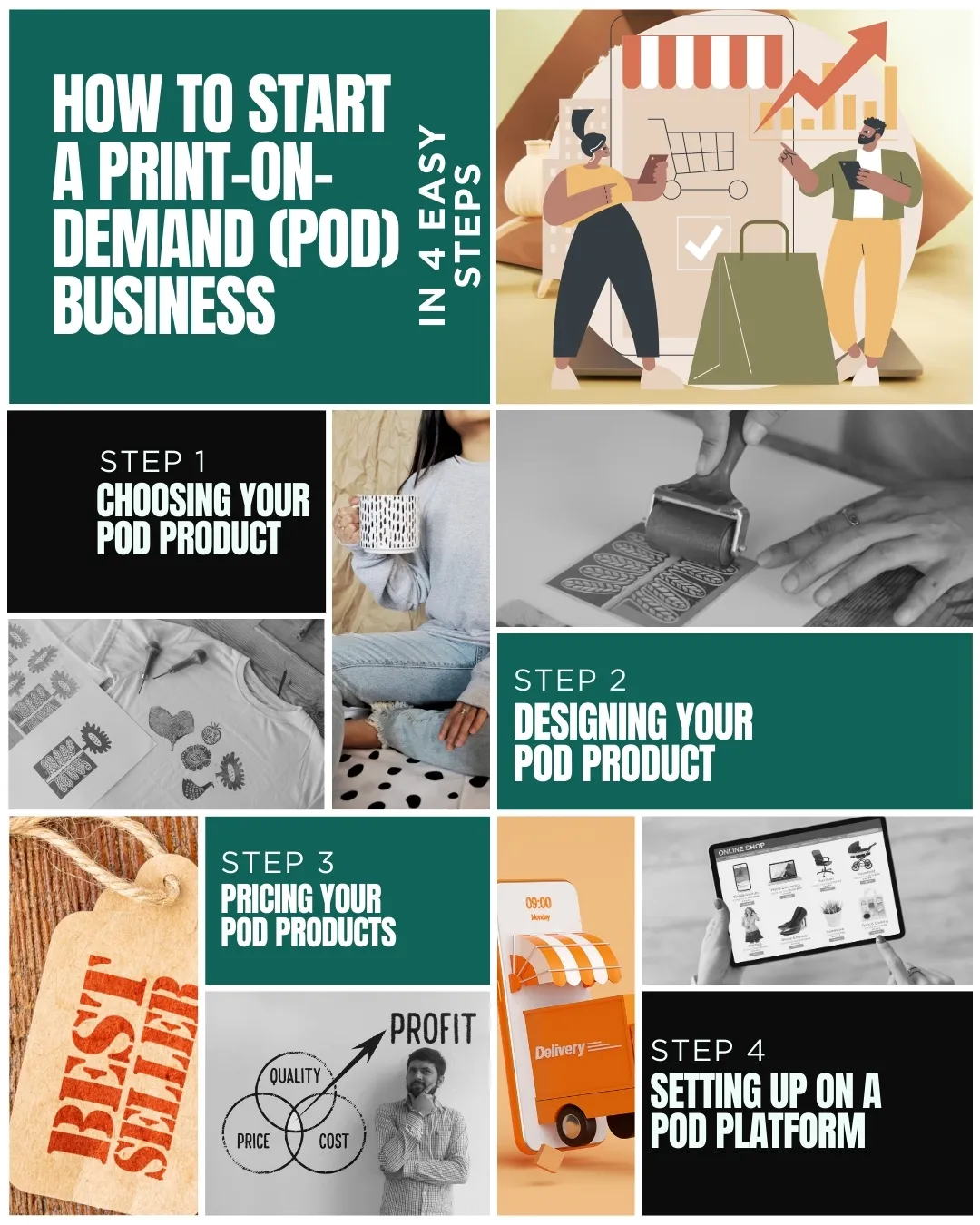
This guide walks you through every step—from choosing your first product to setting prices and picking the right platform. Let’s get started!
1. Choosing Your POD Product
Deciding on the right product is the foundation of your print-on-demand business—it determines how quickly you attract customers and make sales. In simple terms, POD works by letting you sell products that are printed and shipped only after customers place an order. It’s beginner-friendly because you don’t need to manage inventory, packaging, or shipping—everything happens automatically through your chosen supplier.
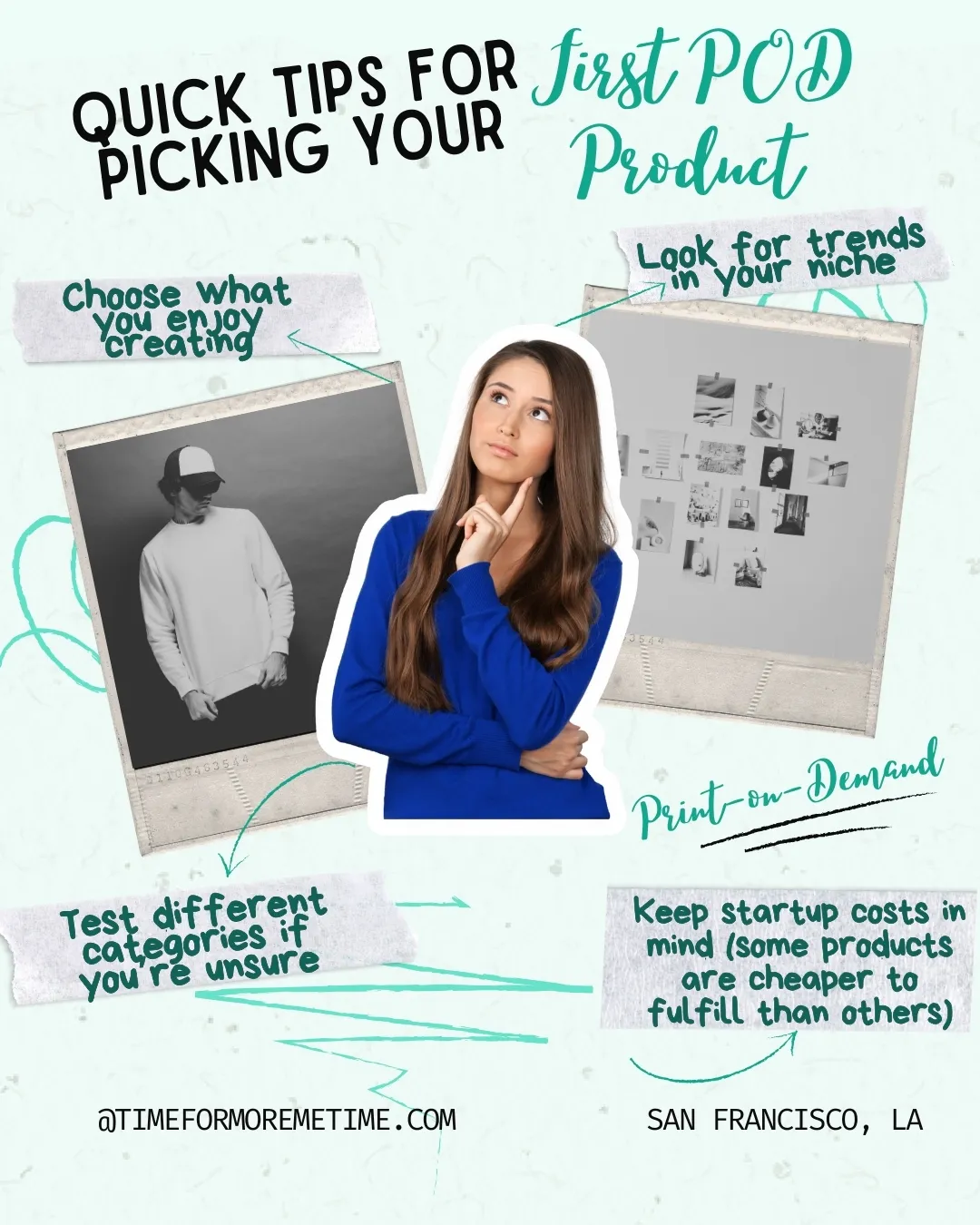
Ever notice how certain online stores instantly speak to their audience? Their products usually target a clear interest. Choosing a niche you genuinely enjoy can also sharpen your products and brand message. In 2024, 69% of US adults said they tend to buy from brands reflecting their personal values. Your passion cannot guarantee repeat sales, but it can help you create designs that feel relevant to shoppers who share your interests.
The print-on-demand market reached $10.78 billion in 2025, with apparel producing 39.5% of its revenue. If fitness is your thing, design gym shirts. Pet lovers could create mugs or tote bags instead. Your supplier prints and ships each order, so you can test ideas from home without buying inventory first.
If you’re unsure what to sell, ask yourself one question: What would I proudly wear or use every day? That single thought often reveals your ideal niche. When my friend started, we chose custom hoodies—we both loved streetwear, and I enjoyed creating designs that felt personal and authentic.
Starting costs can be surprisingly low, often between $0 and $50, depending on your platform and design tools. Many creators start with free trials, and since there’s no inventory, your main expenses are your time and creativity. When passion aligns with your product, your energy shows in your brand—and customers can feel it. That’s what builds loyalty and repeat sales.
2. Designing Your POD Product
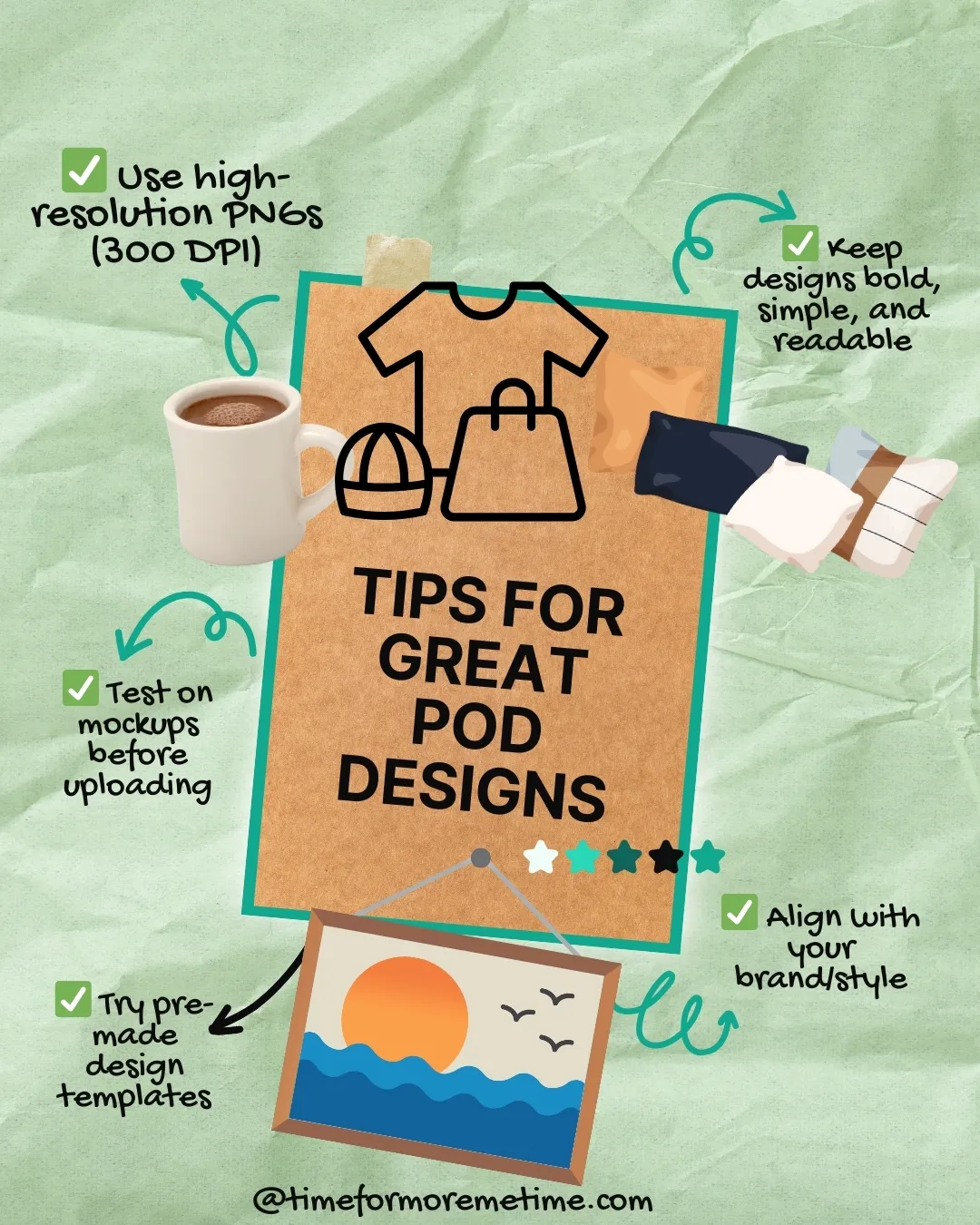
Your design makes your product stand out—it’s the difference between getting noticed and getting ignored. It visually communicates your brand’s message through colors, fonts, and artwork that connect with your audience.
Most online shoppers judge a brand’s credibility by design quality, proving visuals directly influence sales. People don’t just buy products—they buy how those products make them feel. Clean, cohesive designs always outperform random or trendy ones.
You do not need professional design skills to create print-on-demand products. Among 1,261 small-business Canva reviews analyzed by G2, 96.59% rated the platform at least 8 out of 10. Another 17.76% specifically praised its easy-to-use interface, while 43.54% valued its ready-made templates. You can also use Photopea, Pixlr, or hire a Fiverr freelancer for custom artwork.
AI tools can help you develop ideas faster. Adobe’s survey of 16,000 creators found that 48% used generative AI for brainstorming and 52% used it to create images or videos. Still, customize each design and avoid protected characters, logos, and phrases.
When John’s freelancer missed the deadline, we used Canva to create simple San Francisco-inspired T-shirts. The clean designs helped us finish the collection, though no reliable data proves minimalist artwork sells better.
3. Pricing Your POD Products
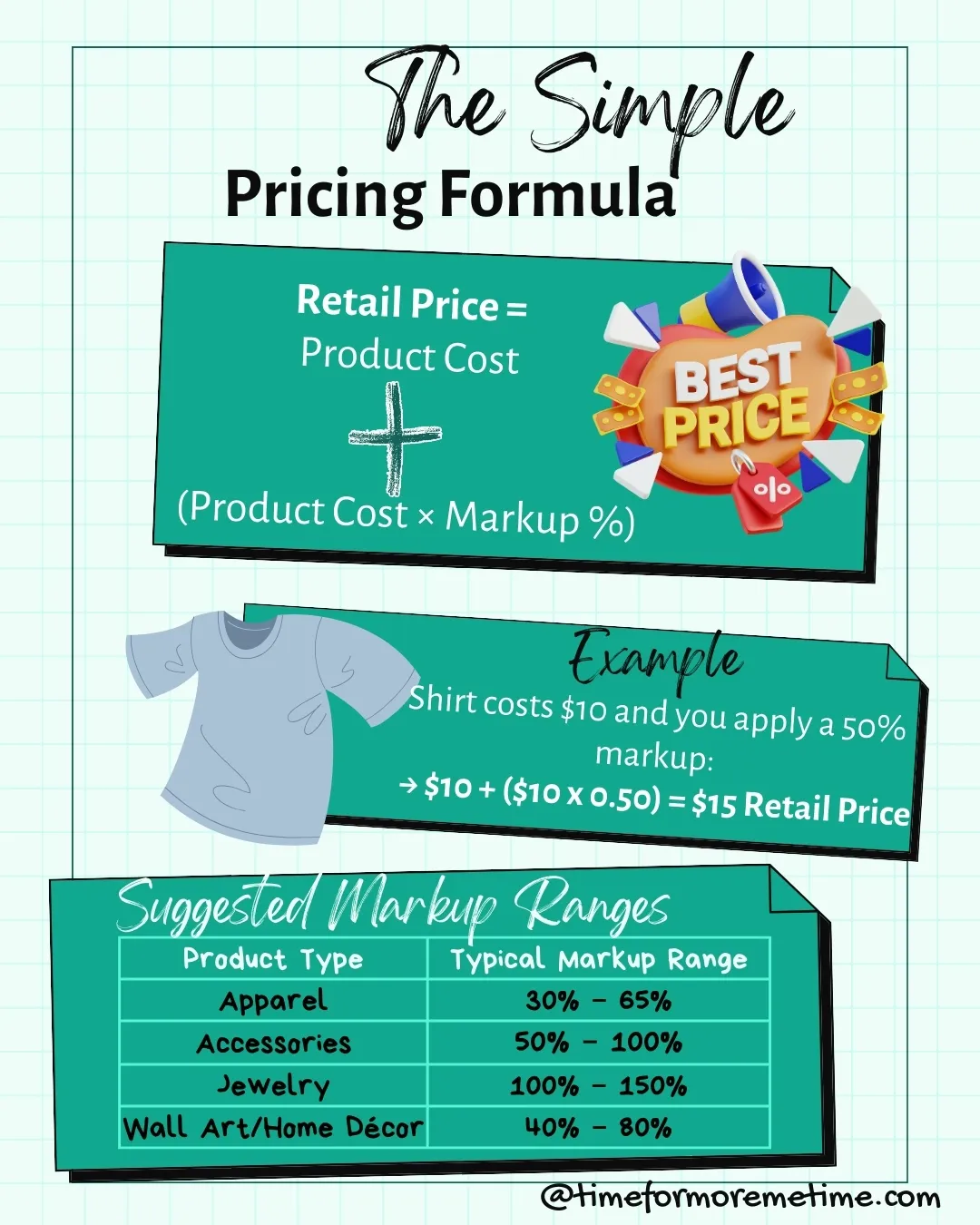
Pricing trips up many new POD sellers. It’s a careful balance between profit and affordability. You need a price high enough to earn income but low enough to stay competitive.
When John sold his first batch of custom mugs on Printify, he priced them at $10 and barely made a profit after shipping. He underpriced his products out of fear of losing customers. That mistake taught us how crucial proper pricing is. But underpricing damages your brand—it makes products look cheap and limits your ability to scale.
When John’s POD venture started doing well, he was earning anywhere from $200 to $2,000 per month. A good POD profit margin usually ranges from 20% to 40%, depending on product type and supplier. To find your pricing sweet spot, calculate your base costs (product, printing, shipping), then add a markup that reflects your effort and value.
Retail Price = Product Cost + (Product Cost × Markup %)
Remember that platforms like Etsy, Shopify, and Redbubble also charge transaction or listing fees, which should factor into your pricing strategy. Once you launch, test different price points and track your sales. Pricing isn’t one-and-done—it’s something you refine with experience and market feedback. Over time, you’ll learn how small adjustments can boost both sales and profit.
4. Setting Up On A POD Platform
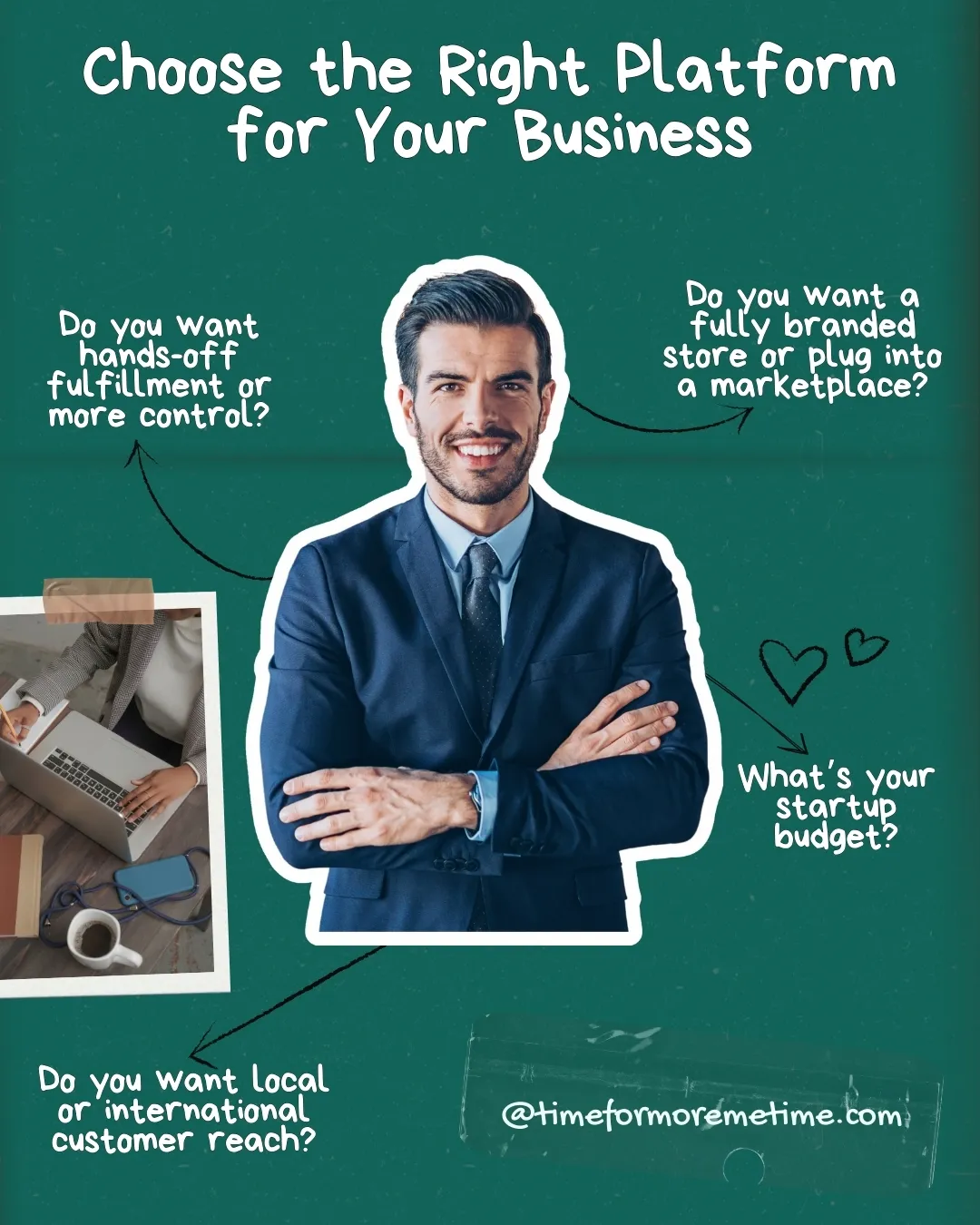
Choosing the right platform can make or break your POD business. It determines how you reach customers, manage products, and handle sales—all without technical skills or inventory.
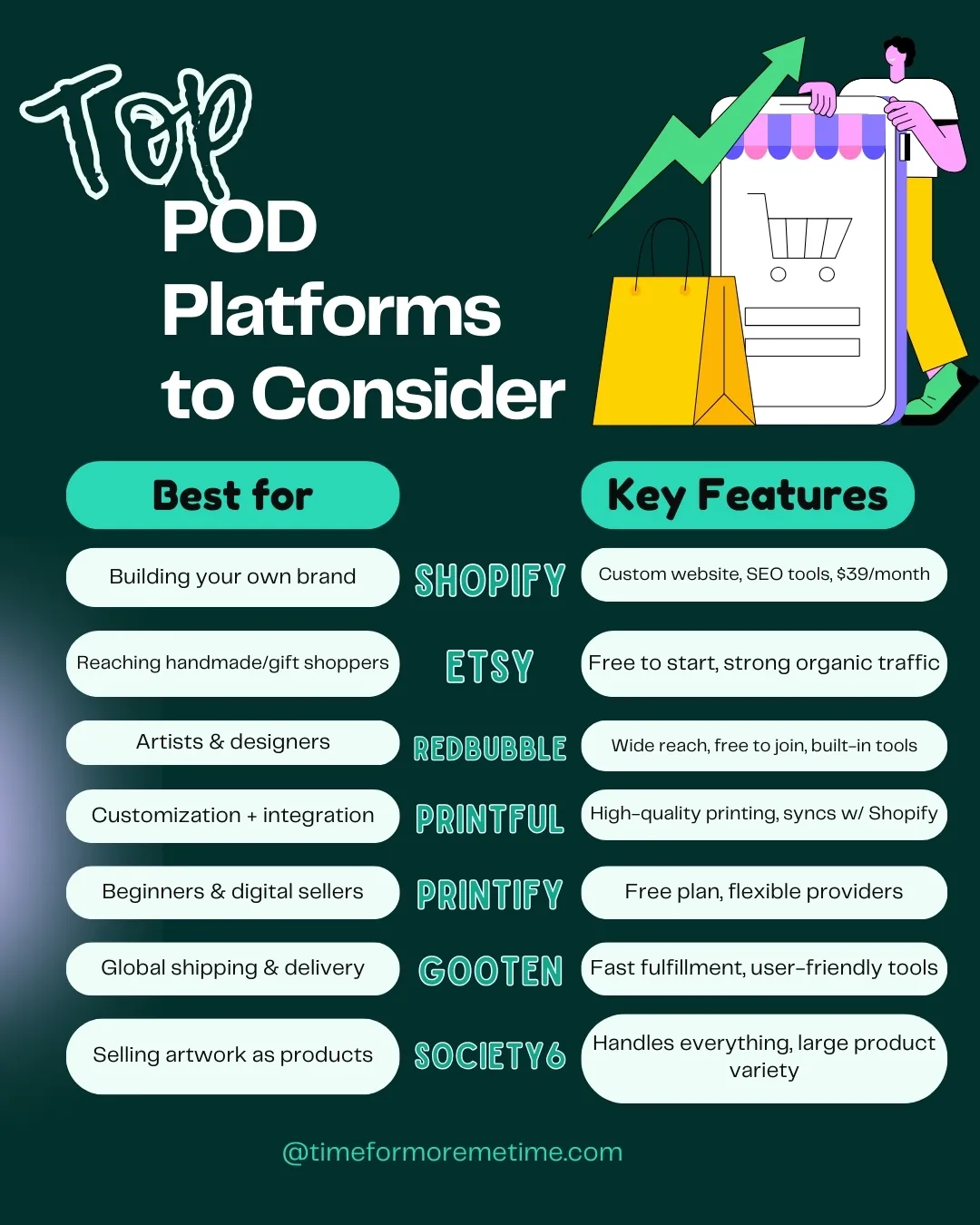
John first tried Shopify, but after days of testing integrations, we found Printful fit his workflow best. Each platform has strengths: Shopify gives you full creative control, Etsy provides built-in traffic and trust, and Redbubble handles everything—from marketing to shipping—making it ideal for beginners.
Many POD sellers are on Shopify, Etsy, or Redbubble. Most creators don’t build websites from scratch—they rely on existing marketplaces where marketing, payments, and logistics are already integrated. This makes it possible to start selling with zero coding skills.
You can manage your store entirely from your laptop or even your phone. Once you’ve uploaded your designs, the platform automatically syncs with your POD provider to fulfill orders. Some sellers even connect multiple platforms to reach more customers—though it’s best to start with one and grow steadily.
Customer service plays a huge role here, too. Fast replies and clear communication turn first-time buyers into repeat customers. Many POD platforms let you automate responses or use templates to save time while maintaining professionalism.
5. Utilizing Brand-First Method
While helping John grow his POD business, we developed what I now call the Brand-First Method—a mindset that prioritizes identity before sales. Instead of listing random designs, this approach builds a recognizable story that connects emotionally with your customers.
We discovered this when John’s nature-themed shirts outperformed others—not because of the artwork, but because people connected with the message. In POD, storytelling sells just as much as design.
When I researched POD businesses, I found stronger evidence that building a clear brand is more effective than chasing every viral trend. In a survey of 452 business professionals, respondents estimated that consistent branding could increase revenue by 10% to 20%. A recognizable style and message can help buyers remember your shop and return, turning occasional sales into a lasting business.
A Brand-First store uses the same fonts, tone, and message across all products—hoodies, tote bags, or posters. Consistency builds recognition, and recognition builds trust. Use social media to reinforce your brand voice; platforms like Instagram, Pinterest, and TikTok are powerful for showcasing lifestyle photos and design stories.
Promoting your POD store doesn’t require big budgets. Organic marketing—through social media, blog posts, or email newsletters—often drives the most loyal audience. Paid ads on Facebook or Etsy can help later once you’ve validated your products.
People don’t just buy your products—they buy your story. Make sure it’s one worth following.
Conclusion
Print-on-demand isn’t just a business—it’s a mindset of freedom, creativity, and smart earning. You’ve learned how POD removes inventory stress, helps you choose winning products, and lets you build a brand that connects emotionally with customers.
It’s a long game—most sellers take 3 to 6 months to get consistent sales, and success comes from testing, learning, and improving, not overnight luck. I know it can feel overwhelming—designing, marketing, pricing—but every successful store started with one brave upload. Don’t wait for perfection; progress comes from action, not endless planning.
You can start your POD business today with no upfront inventory and minimal risk, using free tools and beginner-friendly platforms. All you need is creativity, persistence, and a clear brand vision. My journey with John taught me that curiosity can evolve into independence—and that kind of freedom is worth pursuing.
That’s it for now. If you’d like to learn more about online business and financial freedom, follow my site, social media, and YouTube channel! Thanks for reading!
Sources
- Photo: Unsplash: Dohyuk You
- Grand View Research. (2025). Print-on-demand market size to reach $57.49 billion by 2033. https://www.grandviewresearch.com/press-release/global-print-on-demand-market
- Ipsos. (2024). Public poll findings and methodology. https://www.ipsos.com/sites/default/files/ct/news/documents/2024-01/Topline%20Ipsos%20Consumer%20Tracker%20Wave%2089_0.pdf
- G2. (2025). G2 data reveals how non-designers are taking over Canva. https://learn.g2.com/how-non-designers-are-taking-over-canva
- Adobe. (2025). Inaugural Adobe Creators’ Toolkit report. https://news.adobe.com/news/2025/10/adobe-max-2025-creators-survey
- Printful. (2024). What is a good profit margin for print-on-demand? https://www.printful.com/blog/what-is-a-good-profit-margin-for-print-on-demand
- Marq. (2021). The state of brand consistency. https://info.marq.com/resources/report/brand-consistency