


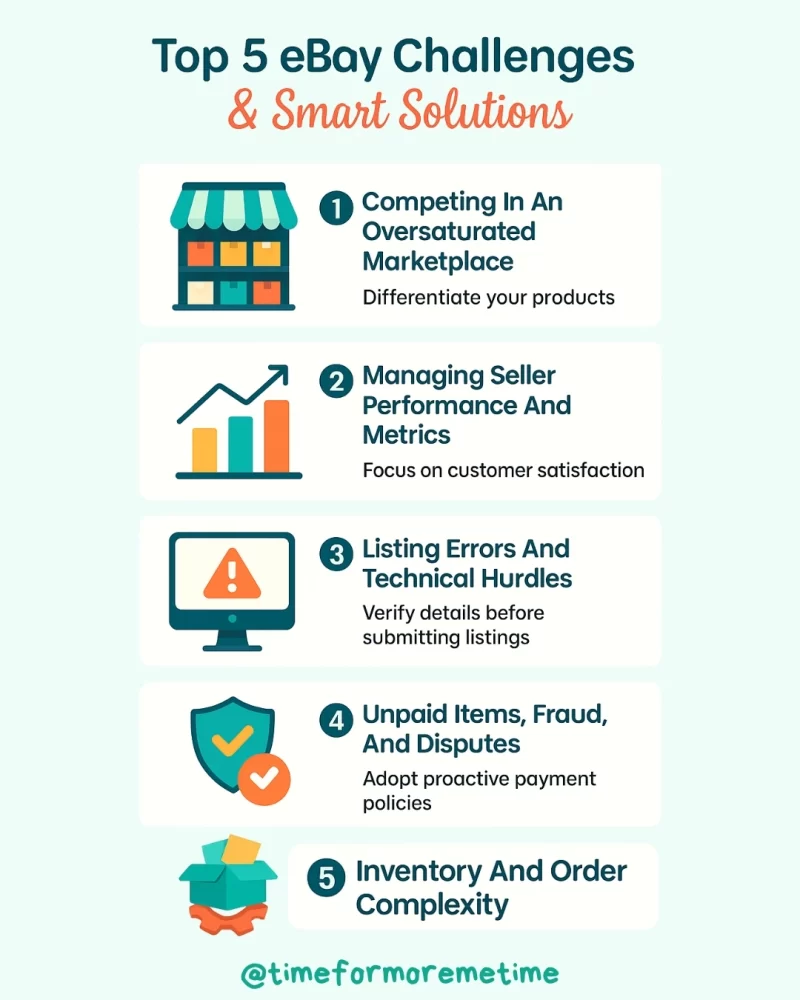
Selling on eBay can be a great way to make money, but it’s not always smooth sailing. Whether you’re just starting out or have years of experience, knowing how to navigate these common issues is key to staying ahead. In this post, we’ll walk through the top problems sellers face on eBay—and more importantly, how to solve them so you can grow with confidence. Let’s get started!
1. Competing In An Oversaturated Marketplace
Competing on eBay can be tough, especially when the marketplace is saturated with similar products. With so many sellers offering comparable items, it’s easy to get lost in the crowd. To stand out, do these simple tricks:
- Create detailed, well-optimized listings with clear photos.
- Craft accurate descriptions.
- Focus on competitive pricing.
- Carve out a niche—selling unique or hard-to-find items that fewer sellers offer.
- Provide excellent customer service and ensure fast shipping services.
With these, you can earn better reviews, which in turn boosts your visibility. Success in a crowded marketplace isn’t just about having the lowest price—it’s about building trust, offering value, and creating a shopping experience that keeps buyers coming back.
2. Managing Seller Performance And Metrics
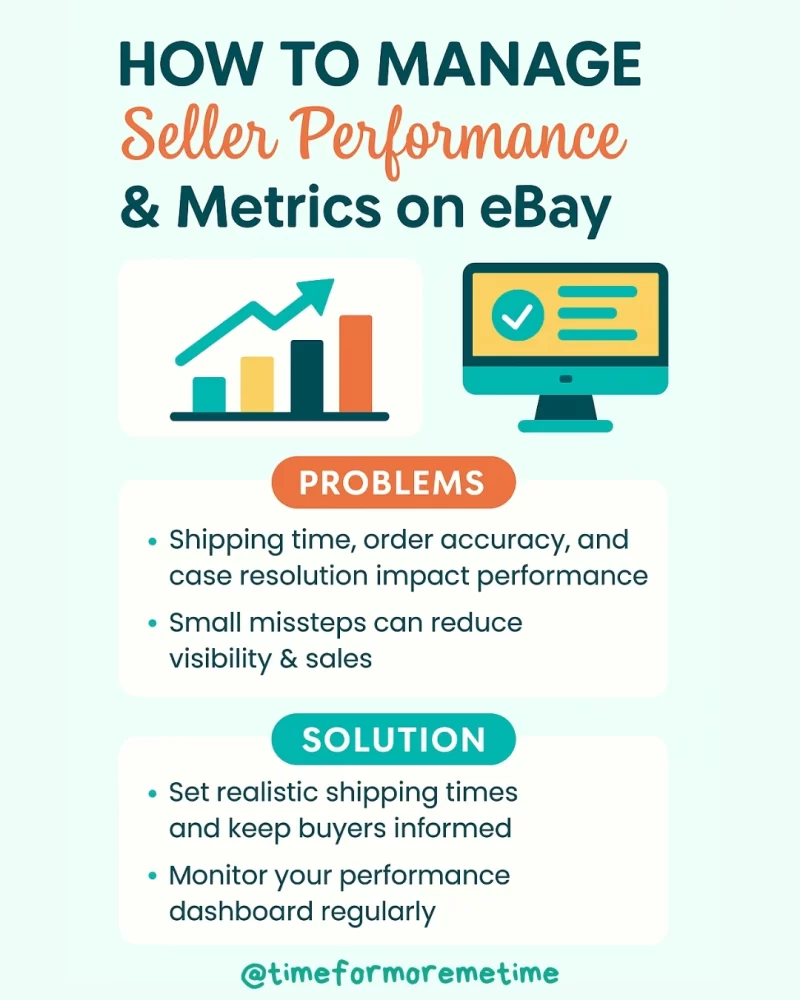
Your seller performance on eBay has a direct impact on how often your listings are seen and how much buyers trust your store. Metrics like shipping time, order accuracy, and case resolution all contribute to your overall standing—and even small missteps can affect your visibility and sales.
Rather than waiting for issues to pile up, it’s best to take a proactive approach. Set realistic shipping times and keeping buyers informed throughout the process. Monitor your performance dashboard regularly so you can catch problems early.
3. Listing Errors And Technical Hurdles
Even with strong performance metrics, sellers can still run into issues that interrupt sales—especially when technical problems or listing errors come into play. Here are some of them:
- Glitches in the eBay app
- Incorrect item specifics
- Missing product identifiers
These issues can all cause delays or prevent your listings from going live altogether. To avoid these setbacks, double-check your listings for accuracy before publishing and stay updated on any changes to eBay’s listing requirements.
If the app isn’t functioning correctly, switch to a desktop browser for more stability. Addressing these hurdles quickly helps you stay visible in search results and ensures your store runs smoothly, even when the platform doesn’t.
4. Unpaid Items, Fraud, And Disputes
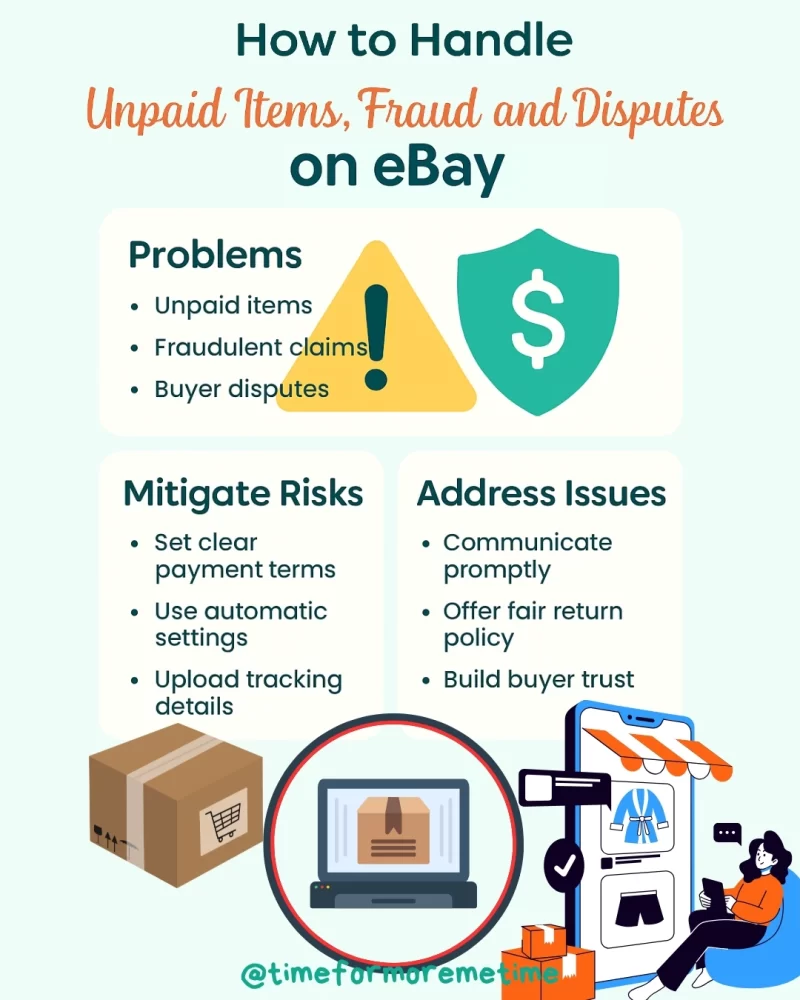
Fixing listing errors is only part of the equation—once your items are live and selling, the focus shifts to making sure transactions go smoothly. Unfortunately, issues like unpaid items, fraudulent claims, and buyer disputes can still get in the way, even when you’ve done everything right.
To minimize these risks, it helps to set clear payment terms and use eBay’s automatic unpaid item settings when possible. Providing honest, detailed descriptions and uploading tracking information can also reduce the chance of misunderstandings.
When problems do arise, prompt communication and a fair return policy go a long way. Handling post-sale issues with care not only protects your profits—it also builds buyer trust and strengthens your reputation over time.
5. Inventory And Order Complexity
Even with strong listings and smooth transactions, managing inventory and fulfilling orders can become overwhelming—especially as your business grows. Handling multiple listings, restocks, and deliveries across platforms can lead to costly mistakes if not streamlined early on.
Here are some practical ways to simplify your inventory and order flow:
- Use Inventory Tools: Sync your stock across eBay and other platforms to reduce errors and overselling.
- Automate Where Possible: Rely on systems that handle tracking updates and low-stock alerts.
- Create Packing Systems: Set up an organized process for packaging and shipping to avoid last-minute delays.
- Schedule Inventory Checks: Block time weekly or monthly to review stock levels and reorder fast-moving items.
- Keep It Centralized: Store product information, sales data, and shipping details in one place for quick access.
By keeping your inventory organized and your order process clear, you can scale your store with less stress and more confidence.
Conclusion
Succeeding as an eBay seller is possible when you understand the challenges and apply simple, effective solutions. With the right habits and tools, you can stay competitive, protect your store, and grow with confidence.
If you find this post helpful, subscribe to our blog, follow us on social media, and check out our YouTube channel.
Sources
- Photo: Pexels: Tima Miroshnichenko