


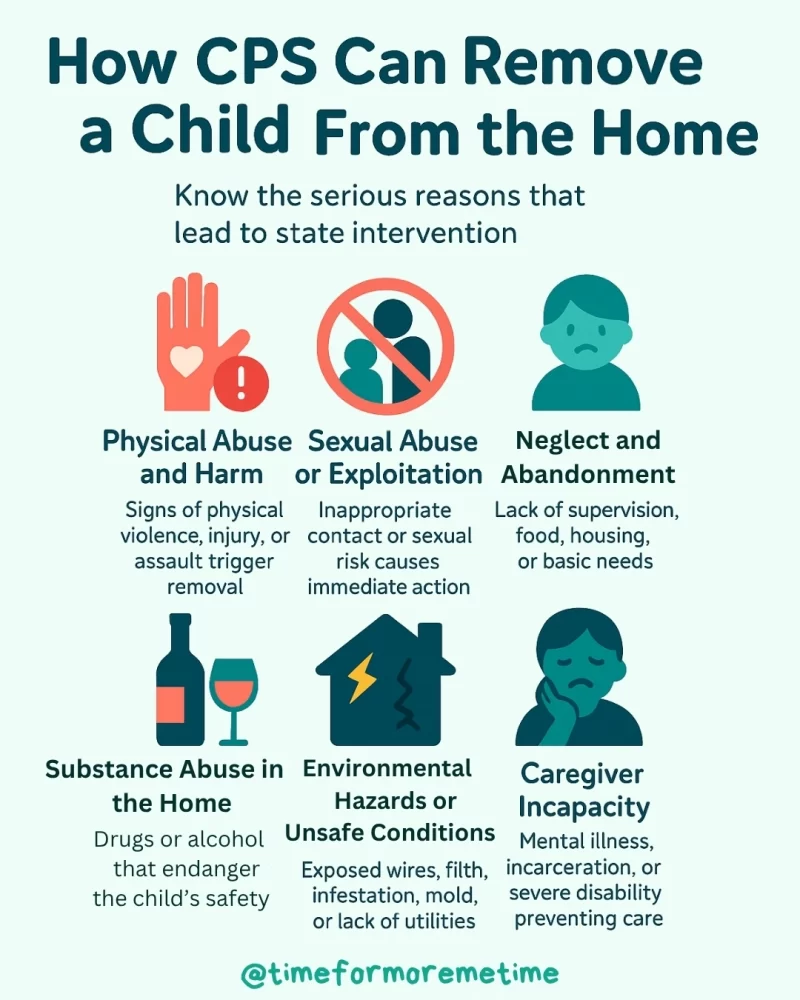
No parent wants to imagine losing their child, but it’s important to understand what could lead Child Protective Services (CPS) to step in. In this post, we’ll walk you through the most common reasons CPS may remove a child from the home, explain what each one means, and help you recognize what to avoid or look out for. Let’s get started!
1. Physical Abuse And Harm
Child Protective Services (CPS) may take immediate action when there’s clear evidence of physical harm that wasn’t accidental. This can include bruises, burns, broken bones, or head injuries.
In many cases, rib fractures or patterned bruises are seen as strong signs of abuse. While some injuries may not seem life-threatening, repeated harm or vague explanations often raise serious concerns.
Discipline that causes pain or injury—especially when driven by anger or frustration—is often considered abuse. That’s why learning to pause before reacting is so important.
2. Sexual Abuse Or Exploitation
Sexual abuse includes any form of inappropriate sexual contact or exposure, such as unwanted touching, coercion, or showing explicit content to a child. These actions can cause lasting emotional harm and are taken very seriously by CPS.
Once a report is made, the case is handled as an emergency and prioritized for investigation. While CPS works to remove children from dangerous situations, it’s also important to guide them toward safer uses of technology.
Encouraging teens to explore positive outlets—such as learning new skills or creating age-appropriate digital products—can help shift their online experience in a healthy direction and build confidence over time.
3. Neglect And Abandonment
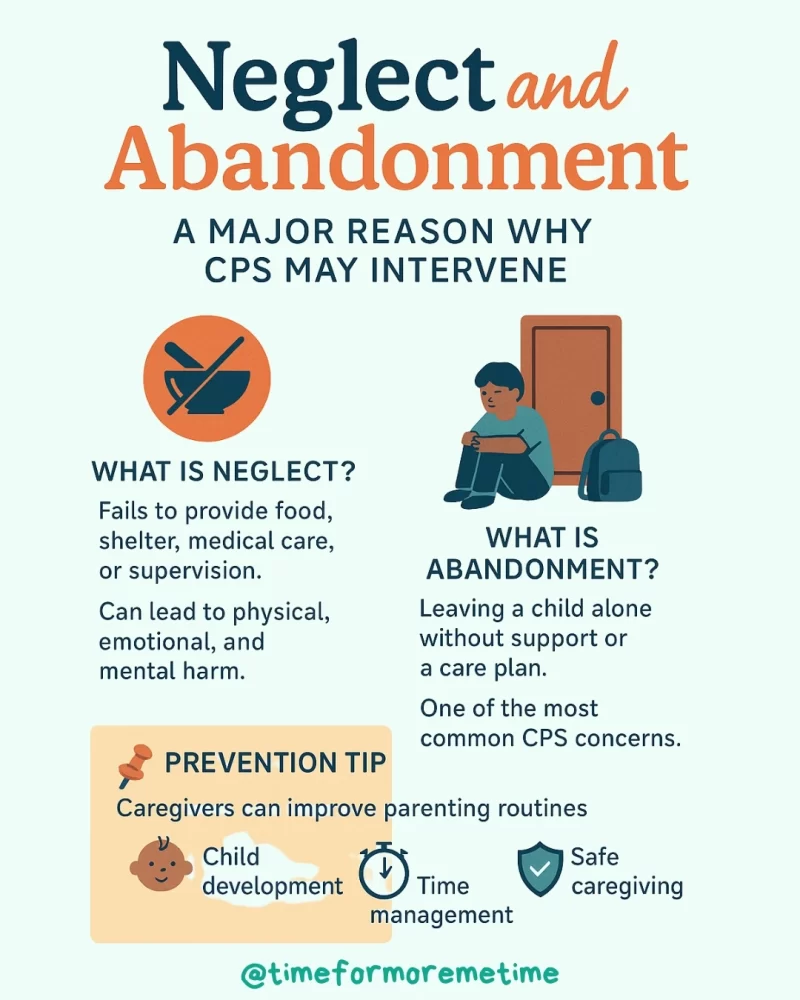
Neglect happens when a caregiver fails to provide for a child’s basic needs, like food, clothing, safe shelter, medical care, or proper supervision. Over time, chronic neglect can lead to serious physical, emotional, and developmental issues.
Abandonment goes a step further, involving situations where a child is left alone for long periods without any support or plan for their care. These are among the most common reasons CPS intervenes.
One way families can prevent these situations is by improving parenting skills and routines. For example, caregivers can now access free or low-cost parenting resources through an online course platform, helping them better understand child development, time management, and safe caregiving practices.
4. Substance Abuse In The Home
CPS may intervene when drug or alcohol use by a caregiver creates a dangerous environment for a child. This includes situations where substances are used in front of children, where kids are left unsupervised while the adult is intoxicated, or when drug paraphernalia is within reach.
Homes affected by substance abuse tend to be unstable, and that unpredictability can put children at serious risk.
For caregivers trying to break harmful habits, strategies like the 5-second rule—a simple decision-making tool that encourages immediate action—can be helpful. The idea is to count backward from five (5-4-3-2-1) and take action before hesitation sets in. It’s often used to stop negative impulses and replace them with better choices.
In the context of substance abuse, this technique can help someone pause before reaching for a substance and instead redirect their behavior toward something healthier. Small steps like these support a safer home and help build long-term stability for the child.
5. Environmental Hazards Or Unsafe Conditions
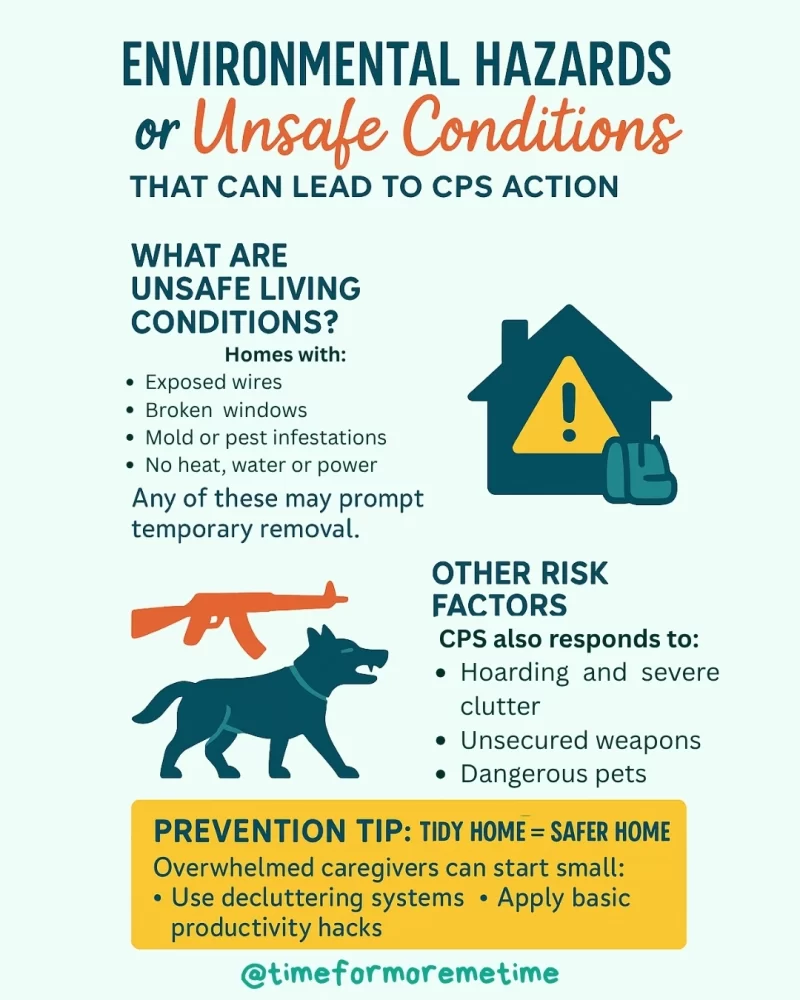
Unsafe living conditions are another reason CPS may step in. This includes homes with serious hazards, such as exposed wiring, broken windows, pest infestations, black mold, or missing utilities, including running water and heat.
Other concerns include hoarding, unsecured firearms, or aggressive pets that could pose a threat to a child’s safety. If the overall environment poses an immediate risk to a child’s health, CPS may remove the child until the issues are resolved.
For overwhelmed caregivers, especially those struggling with clutter or disorganization, applying simple productivity hacks can make a big difference. Basic systems for cleaning, decluttering, and managing household tasks can help restore order and create a safer, more stable environment. Even small improvements can prevent more serious issues and reduce the chances of CPS involvement.
6. Caregiver Incapacity
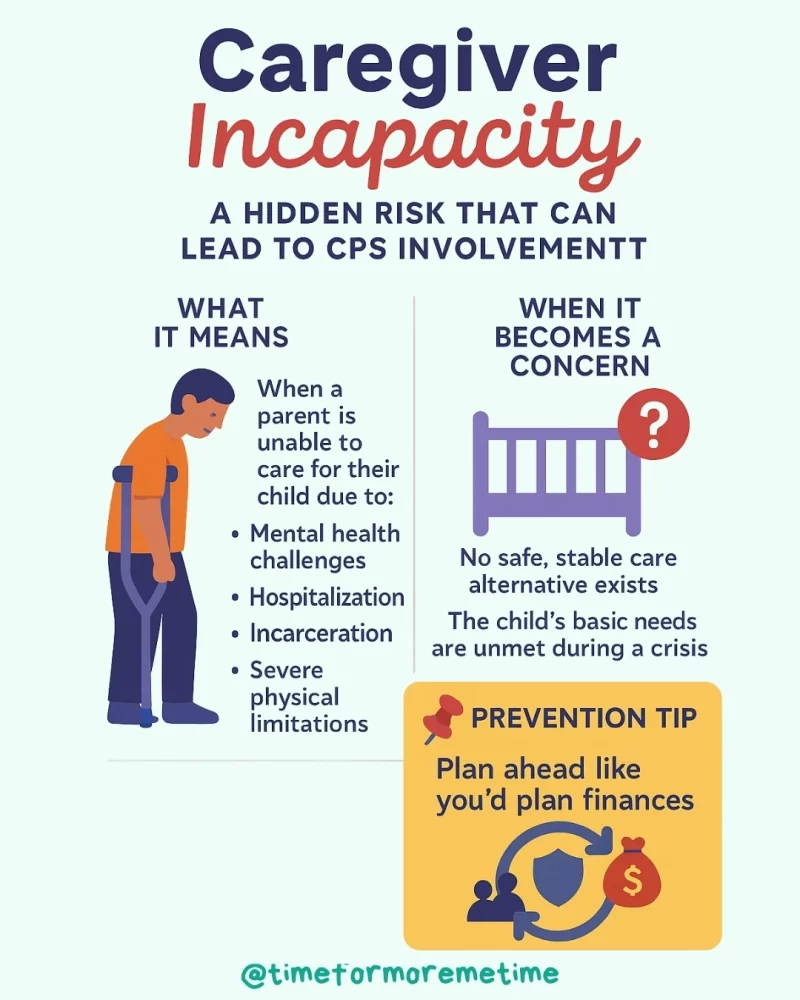
If a parent or guardian is physically or mentally unable to care for a child, CPS may step in to ensure the child’s safety. This can happen in situations involving serious mental health conditions, long-term hospitalization, incarceration, or severe physical limitations.
While caregiver incapacity alone doesn’t always result in removal, it becomes a major concern when there’s no safe and stable alternative in place for the child’s care.
In situations like this, planning ahead can make a meaningful difference. Just as families think about investing money to secure their financial future, planning for caregiving support—whether through extended family, guardianship, or community resources—can help provide stability during a crisis. Being proactive about long-term care can reduce the need for CPS involvement and help protect the child’s well-being when unexpected challenges arise.
Conclusion
Understanding the reasons Child Protective Services might remove a child from the home is never easy, but it’s necessary. Recognizing these warning signs enables you to take action promptly, create a safer environment for your child, and make more informed decisions as a parent or guardian. The more you know, the more you can do to protect your family and prevent unnecessary intervention.
If you found this helpful, subscribe to our blog for more practical tips on protecting your family, managing your time, and building a more secure financial future—one smart decision at a time. Follow us on social media, check out our YouTube channel, and share this post with someone who could use it.
Sources
- Photos: Unsplash: Jordan Whitt