
You’ve probably felt it: a deadline is coming, your to-do list is too long, and distractions keep popping up. Lots of people feel this way. Then you hear about productivity hacks, and you wonder what productivity really means.
Productivity means getting more done with what you already have—your time, your energy, and your focus. It can look different depending on your goals. At work, it might mean finishing more tasks. In your personal life, it might mean making more time for fun, learning, or rest.
Productivity does not mean working yourself to exhaustion or becoming a workaholic. It means finding a plan you can stick with. It also means working in a way that gives you better results without wasting time. For example, since 1947, the US business sector has increased how many goods and services it makes about nine times, even though hours worked did not grow as much.
So yes—simple productivity hacks can help you get more done each day. When you use smarter strategies, set up your space, and choose how you spend your time, your day can feel more calm and under control.
This is not about working harder. It’s about working smarter. With that said, let’s get started!
1. Identify Common Productivity Obstacles
You probably know how productivity can slip. We all have days or weeks where nothing feels smooth. Maybe emails take over your morning. Maybe meetings never stop. Or maybe your task list feels so big that you feel stuck.
- Procrastination: That familiar voice tempting you with ‘I’ll do it later’ can really put a dent in productivity.
- Distractions: Emails, phone calls, and notifications. The constant barrage of distractions can derail even the most focused among us. But whatever that was, you can minimize these distractions.
- Uncertainty: Feeling scattered and uncertain about priorities can leave you feeling unproductive.
- Perfectionism: Striving for perfection can trap you in a cycle of re-working and refining, holding you back from moving on to other important things.
- Burnout: Ignoring your well-being and consistently pushing beyond your capacity will leave you depleted and far from your best.
The hack here is simple: figure out which problem is happening to you. Then fix the main cause. For example, if distractions are the problem, change how you handle emails, calls, and notifications. You can use Do Not Disturb (DND) so you’re not interrupted all day. That small change can help you get things done faster and feel more in control.
2. Master Your Morning
Morning routines get talked about a lot because they help you start the day with focus, energy, and direction. How you begin your morning often affects how the rest of your workday goes. Here are a few simple morning habits that many successful people use:
- Get Up Early: If the thought of being an early bird makes you cringe, stick with me. A study of 54 students compared those who woke before 4:30 AM with those who woke at 7 AM. Both groups slept 7.5 hours. After 20 days, the early risers improved their scores in attention, verbal memory, and spatial memory. Wake earlier only if you can also move your bedtime earlier and protect your sleep.
- Get Moving: Yes, you read that right. A 2024 review of 113 studies involving 4,390 young adults found that one exercise session slightly improved cognitive performance and reaction time. It also supported working memory and self-control. Try a brisk walk, light cycling, or stretching before a demanding task to help prepare your mind for focused work.
- Get Fueled Up: We’ve all heard it since we were kids—breakfast is the most important meal of the day. There’s a reason for that, especially when it comes to productivity. Providing your body with a sustained release of energy will help you stay focused, sharp, and less prone to dips in energy throughout the morning.
Morning routines help you start strong. Up next, let’s make your workspace even better, so it supports your focus and helps you stay on track.
3. Improve Your Workspace
Picture starting work and feeling ready. Now imagine your desk is messy—papers everywhere, and an old coffee mug still there. It’s hard to focus when your space is messy.
A messy room can pull your attention away and make it harder for your brain to process information. A 2024 Yale study found that clutter reduced the efficiency with which visual information moved through the brain. Another study of 202 US office workers linked clutter to lower job satisfaction and a higher risk of burnout. Spend five minutes clearing papers, trash, and unused supplies before starting work, though no study identifies five minutes as a proven threshold.
So before you start, take a few minutes to clean up trash and papers. Here’s what to do:
- Declutter And Organize: Put papers away, group similar things, and set up a simple place for “inbox” and “outbox.”
- Use Comfortable Setup: Don’t let your body get stuck in a bad position. Use ergonomic chair or desk height so you don’t feel pain while you work.
- Get Good Lighting: Natural light can help you feel more awake. Use bright, comfortable lighting so your eyes don’t get tired.
When your workspace is clean and comfortable, your mind can focus better. Next, we’ll tackle on we can use tools and tech to improve productivity.
4. Use Tools And Tech
Productivity is not only about where you work. It’s also about what you use to get things done. The right tools can help you plan faster, work more clearly, and finish tasks sooner.
Here are some useful tool types:
- Task Management Apps: Think productivity apps like Todoist and Trello for prioritizing, setting deadlines, and even collaborating with others on tasks.
- Digital Note-Taking Tools: Capturing those flashes of inspiration or jotting down crucial points from meetings: think apps like Evernote and Notion.
- Time Tracking Apps: Are you really using your time as effectively as you think you are, or are you wasting time? Toggl and RescueTime can give you concrete data about where your time is being spent, offering a clear picture of what your workflow actually looks like.
The right tools help you stay organized, save time, and work with less stress. Up next we’ll discuss how to choose and learn the right time management techniques.
5. Learn Time Management Techniques
So, you’ve sorted your workspace, mastered the morning routine, and feel pretty confident, right? Well, here’s the hard truth: without proper time management techniques, even the most optimized setup can leave you feeling frustrated and unproductive.
Some of these time management techniques to maximize productivity are:
- The Pomodoro Method: Developed by Francesco Cirillo, this time management technique suggests working in short bursts, interspersed with equally brief breaks.
- The Eisenhower Matrix: If your to-do list feels way too long and overwhelming, this technique might help. The core concept? Split your to-do list into four quadrants based on whether tasks are urgent and important, not urgent but important, urgent but not important, or not urgent and not important. By using the matrix, you will become better at assessing urgent tasks.
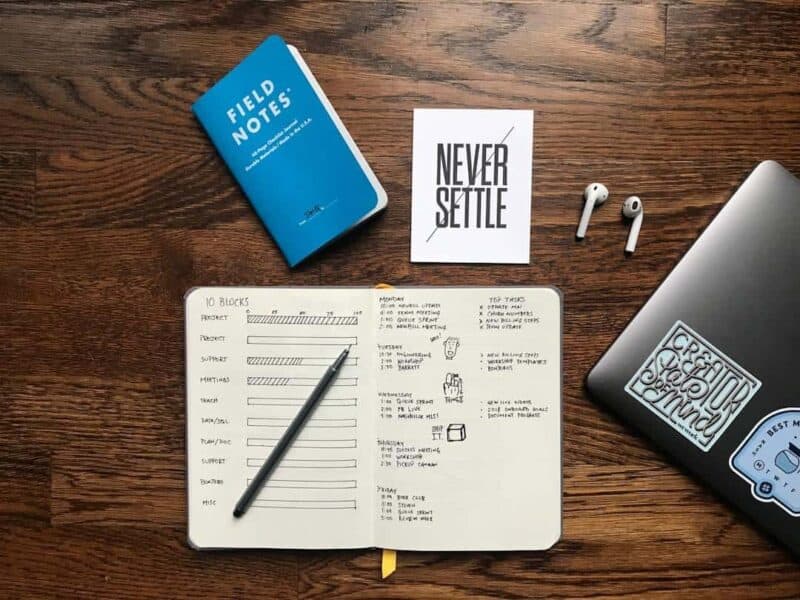
- Time Blocking: Ever finish your day feeling like you spent your hours being busy but in reality, you have wasted time during your working day. The concept of time blocking addresses exactly that. This involves scheduling your entire day into blocks of time devoted to specific tasks.
These are just some time management techniques; if you want to learn 21 more, check out our post about them. When you do, you’ll essentially be working with a roadmap each day.
6. Avoid Multitasking
If multitasking is your go-to, prepare to be challenged. We tend to think of juggling tasks as efficient, even a skill. However, multitasking actually hinders productivity, increasing errors and decreasing output. Why? When your focus is constantly pulled in different directions, your brain struggles to engage fully with each task.
A 2009 Stanford University study found that 19 heavy media multitaskers became less accurate as distractions increased, while 22 light multitaskers showed little decline. In another test, heavy multitaskers responded 77 milliseconds slower when irrelevant information appeared.
If the desire to multitask strikes, remind yourself that shifting your attention isn’t a good way to manage your time effectively. Instead, you’re dividing your cognitive resources and often end up not finishing anything from your long to-do lists. Thus, it’s better to avoid multitasking and instead prioritize tasks one at a time. It’s not a waste of time, but working on a single task until completion is one of the most powerful productivity tips I can recommend.
7. Boost Focus And Concentration
Staying focused on one task at a time might sound easier than it actually is. So, how do you train your brain to shut out those nagging distractions and tap into true focus? There are some effective and simple strategies for training your attention and boosting productivity.
First, embrace quiet time. Meditation and mindfulness aren’t just about zen vibes—although they’re excellent for that, too. They actually boost productivity by enhancing focus and promoting a calm, centered mindset. Studies suggest that even a few minutes of mindfulness meditation can dramatically enhance attention span.
It can help calm your thoughts and clear your head, making a big difference in your overall productivity and mindset throughout the day. It allows you to approach tasks with greater clarity and less mental chatter.
Second, do some deep work. Imagine tapping into a state of hyper-focus, achieving those flow-like moments where distractions simply fade away. This isn’t just for monks or naturally focused individuals. Cal Newport’s book Deep Work discusses this as a skill you can hone to dramatically boost your productivity and quality of work output. It’s about setting aside specific, uninterrupted chunks of time for your most demanding cognitive tasks.
This could look like designating distraction-free blocks on your calendar for deep work sessions. You could also try finding environments that naturally promote deep focus (a library, coffee shop, or a quiet corner at your home office, for example). Try different strategies until you find what unlocks this state for you. Your ability to get deep work done can vary from day to day and is super influenced by your surroundings, energy levels, and the task you’re tackling, so experiment with what works best.
Finally, take a break. Don’t underestimate the power of short, intentional breaks. Think about the Pomodoro technique. As tempting as it may be to work for hours without stopping, short pauses can help you manage mental fatigue. A review of 22 studies involving 2,335 people found that breaks lasting 10 minutes or less reduced fatigue and increased energy.
Try stretching, walking outside, or briefly stepping away from your screen. Longer breaks may be more useful after mentally demanding work.
8. Create Healthy Habits
Optimizing your workflow, creating an inspiring work environment, and mastering those time management strategies will propel you towards greater productivity. However, you shouldn’t forget one of the best productivity hacks that you can’t live without is to build healthy habits that fuel your body and mind.
Prioritize sleep. It’s one thing to plan your day strategically and another to operate on half-charged batteries. The impact of quality sleep on our productivity cannot be overstated. It promotes attention, focus, and even that flash of brilliance we all hope for—creativity.
If your workday feels more like dragging your brain through mud than firing on all cylinders, maybe it’s time to make a radical change in the bedroom. Prioritizing those restful, quality sleep hours might be one of the biggest and simplest productivity hacks you need.
Then, eat healthy. Ever notice how a lunch laden with carbs seems to send your brain straight into nap mode? Yeah, I’ve been there. It turns out there’s science behind this. The foods we fuel our bodies with directly impact how much energy we have and how well we can focus. Thus, aim to stay hydrated, drink plenty of water, and choose foods that provide lasting energy.
While those chips might be tempting, focus on nutrient-rich options like lean proteins, complex carbohydrates (whole grains are a lifesaver), healthy fats, and colorful fruits and vegetables. You might even try incorporating some brain-boosting power snacks—think berries, nuts, dark chocolate, or green smoothies. That way, eating nutritious food and drinking water doesn’t have to be bland.
Be active as well. While morning exercises are great, you can also choose other times to become active. And when we say staying active, we don’t mean becoming marathon runners or gym fanatics.
The CDC recommends at least 150 minutes of moderate-intensity activity each week, which could mean 30 minutes a day for five days. Adults should also complete muscle-strengthening activities twice weekly. You do not need intense workouts or long training sessions. Brisk walking, cycling, dancing, and yard work can count, and even small amounts of movement provide health benefits.
That’s because movement and exercise have far-reaching benefits beyond simply feeling fitter. Their impact on mental clarity, sustained energy, and mood will significantly affect how well you tackle tasks throughout the day.
And of course, don’t forget your mental health. In addition to keeping our bodies healthy, we should focus on our mental health. Mental well-being is often the missing ingredient in many people’s productivity quests.
Prolonged stress, feelings of overwhelm, and failure to address anxieties impact our capacity to work effectively. Learning stress management techniques like meditation or mindfulness, or incorporating relaxing rituals into your daily routine, is essential for sustained productivity.
Sometimes, seeking guidance or support from mental health professionals or supportive communities can make a world of difference. It’s a huge factor and not something to underestimate.
Conclusion
Ultimately, there’s an incredible array of productivity hacks out there. From tools, strategies, and resources, we can maximize our output. Remember, effective productivity hacks involve far more than to-do lists or achieving a single goal. They also include honing effective time management skills, prioritizing self-care and well-being, and creating an environment for focused success.
All of these can contribute to helping us stay productive. Try them out now, and see what works best for you.
Sources
- U.S. Bureau of Labor Statistics. (n.d.). Why is productivity important? https://www.bls.gov/k12/productivity-101/content/why-is-productivity-important/home.htm
- ResearchGate. (2012). Influence of early rising on performance in tasks requiring attention and memory. https://www.researchgate.net/publication/239940415_Influence_of_early_rising_on_performance_in_tasks_requiring_attention_and_memory
- Springer Nature. (2024). A systematic review and Bayesian meta-analysis provide evidence for an effect of acute physical activity on cognition in young adults. https://www.nature.com/articles/s44271-024-00124-2
- Yale News. (2024). ‘Visual clutter’ alters information flow in the brain. https://news.yale.edu/2024/10/22/visual-clutter-alters-information-flow-brain
- ResearchGate. (2021). Office clutter: Comparing lower- and upper-level employees on work-related criteria. https://www.researchgate.net/publication/349250890_2021_IJPRR_OFFICE_CLUTTER_Ferrari_Swanson_Patel
- Stanford.edu. (2009). Cognitive control in media multitaskers. https://web.stanford.edu/group/memorylab/papers/OPH_PNAS09.pdf
- Cyberpsychology. (2021). “Cognitive control in media multitaskers” ten years on: A meta-analysis. https://cyberpsychology.eu/article/view/13303
- PLOS ONE. (2022). “Give me a break!” A systematic review and meta-analysis on the efficacy of micro-breaks for increasing well-being and performance. https://journals.plos.org/plosone/article?id=10.1371/journal.pone.0272460
- Centers for Disease Control and Prevention. (2025). Adding physical activity as an adult. https://www.cdc.gov/physical-activity-basics/adding-adults/index.html