

Most parents want to teach their teens how to handle money, but it’s not always clear how much they should give or what teens should be responsible for. In this post, I’ll break it down for you—how much money teenagers should have, why it matters, and what it can teach them about saving, spending, and earning. Let’s get started!
What Is The Purpose Of Teen Allowance
Giving teenagers an allowance isn’t just about handing over money—it’s a simple way to teach real-world money skills early on. When teens manage their own spending, they begin to understand the basics of saving, spending wisely, and setting priorities.
Allowance can be a simple way to start regular money conversations between parents and teens. These small, everyday exchanges help build healthy financial habits over time.
Since most parents still give allowance in cash, it creates a hands-on opportunity to teach teens how money works. From there, you can introduce basic budgeting tools and show them how to manage spending, saving, and setting simple goals.
How Much Money Teens Typically Receive
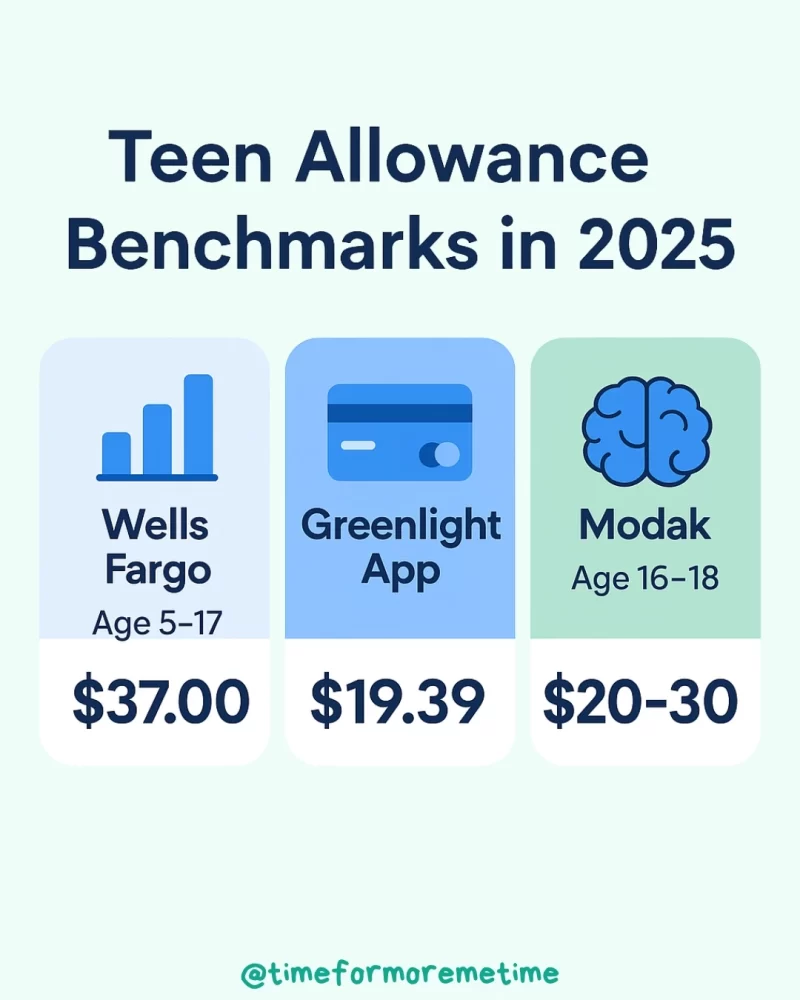
Once you start having money conversations with your teen, the next question is: how much should they actually receive? There’s no fixed rule, but recent studies offer helpful benchmarks.
According to a 2025 report by Wells Fargo, the average weekly allowance for kids aged 5 to 17 is $37. That number might sound high, but it often reflects more than just pocket money—it can include payments for chores, school lunches, or small personal expenses.
Meanwhile, Greenlight, a debit card app for teens, reports that the average allowance falls closer to $19.39 per week. Modak, a financial education platform, recommends $20–$30 weekly for teens aged 16 to 18, depending on their responsibilities.
These differences show that what you give should reflect your teen’s needs, your household budget, and what you expect them to pay for. If they’re covering more of their own expenses—like meals out with friends or phone bills—it makes sense to offer a bit more.
On the other hand, if you’re looking to cut expenses or shift more financial responsibility to them, setting a clear allowance and budget can help them plan and prioritize.
The key is to match the amount with your goals: are you just giving spending money, or helping them learn how to manage a basic budget? Either way, the allowance becomes more than just a number—it becomes an integral part of the learning process.
How Much Allowance To Give Based On Age
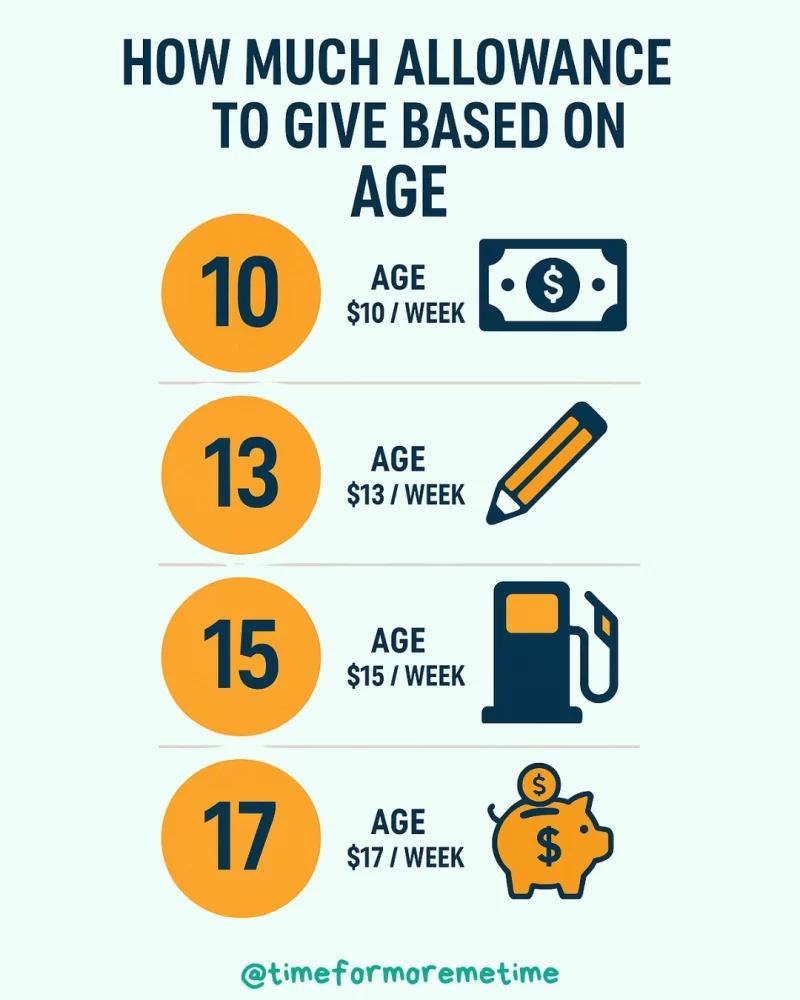
Once you have a rough idea of how much to give, it helps to look at age-based guidelines. These aren’t strict rules, but they provide a useful starting point for families seeking consistency.
A common method is the “dollar-per-year” rule—giving $13 a week to a 13-year-old, $15 to a 15-year-old, and so on. This simple approach keeps things fair and easy to adjust as your teen grows. Some financial education platforms support this structure, with most teens receiving between $15 and $30 per week, depending on their age and responsibilities.
You can also scale the allowance based on what you expect your teen to manage. For example, younger teens may only need money for snacks or small outings. Older teens might handle more, like gas, school supplies, or gifts for friends.
Matching allowance to age and responsibility teaches teens more than just how to spend—it helps them build real-life planning skills. As they start managing more of their own money, they’ll begin to think through choices, weigh short-term wants against long-term goals, and stay organized.
Pairing this with a savings account encourages them to set goals, track progress, and see the value of saving over time. These early habits create a strong foundation for confident money decisions in the future.
How Allowance Is Earned: Chore-Linked Vs. Flat Rate
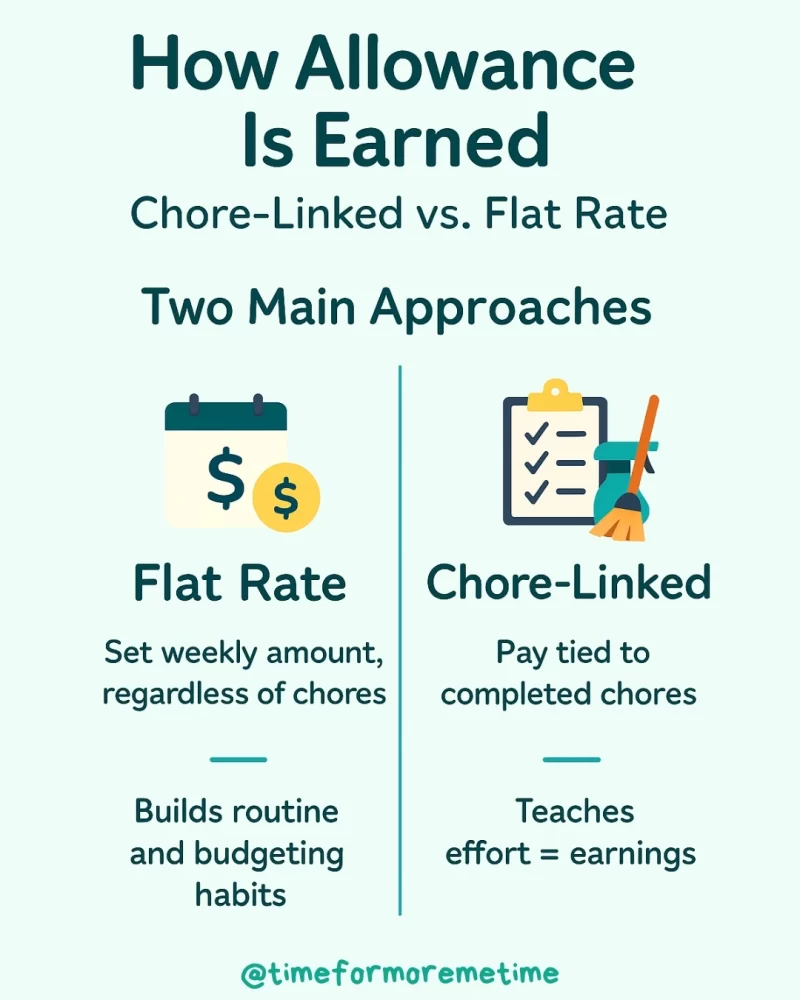
After deciding how much to give and when to increase it, the next step is figuring out how your teen should receive their allowance. Most families follow one of two approaches: a flat weekly amount or a chore-based system.
With a flat rate, your teen gets a set amount each week regardless of chores. This method treats allowance as a tool for learning how to manage money, not as a payment for helping out. It also creates a routine, making it easier for teens to plan and build consistent habits over time.
In contrast, a chore-linked system ties allowance to completed tasks, like taking out the trash, cleaning their room, or doing dishes. This model teaches that money is earned, not given. It also encourages responsibility and gives teens a chance to connect effort with reward.
Some parents even mix both approaches: a base allowance for essentials, with opportunities to earn more through extra chores.
Choosing between the two depends on your goals and your teen’s personality. If you’re focused on developing everyday life skills, the flat-rate model offers structure. If your teen needs more motivation or is learning the value of work, chore-linked payments may be more effective.
Either way, using a clear system helps you avoid misunderstandings, and it can even provide an opportunity to introduce efficiency tips that make household tasks faster and easier for everyone. By showing your teen how to organize their time and effort, you’re not just teaching money skills—you’re also helping them become more productive and independent.
Conclusion
The right allowance amount depends on your teen’s age, responsibilities, and what you want them to learn about money. Whether you choose a flat rate, link it to chores, or mix both, allowance can help your teen build real-world skills in budgeting, saving, and planning ahead. It’s a simple way to support smarter habits and more confident decisions as they grow.
For more practical money tips, subscribe to our blog, follow us on social media, and check out our YouTube channel.
Source
- Photos: Unsplash: Pat Ferranco