


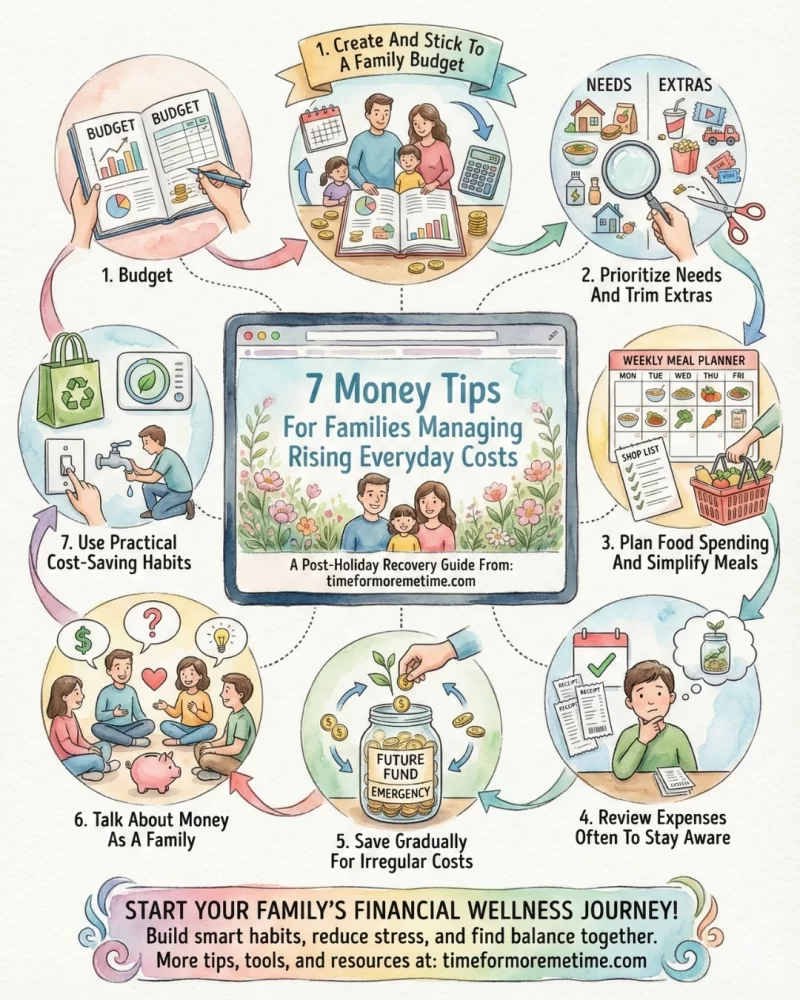
Handling money as a family involves more than paying bills on time. It affects everyday choices, long-term plans, and how secure everyone feels at home. I began paying closer attention to this when small financial decisions started piling up. Groceries, school needs, household costs, and unexpected expenses all come from the same place. It became clear that money habits quietly shape family life.
What makes money tricky for families is timing. Saving, spending, and covering surprises often happen all at once. Without simple systems, even a steady income can feel stretched too thin.
In this post, I’ll share practical money tips for families who want more clarity and less stress. Let’s get started!
1. Create And Stick To A Family Budget
A family budget is a simple plan for how money will be used each month. It shows income, regular expenses, and money set aside for future needs. When spending isn’t planned, even routine costs can start to feel unpredictable.
I saw this during a period when we were fixing parts of our home while also managing daily expenses. Renovation materials, small tools, and service fees came in alongside work-related spending. Writing everything down helped separate what was personal from what was business and showed where money needed clearer limits.
That clarity made daily decisions easier. Once expenses were visible and organized, it felt more natural to slow spending and prioritize what mattered most. A simple budget creates that same sense of control by guiding decisions instead of forcing them in the moment.
2. Prioritize Needs And Trim Extras
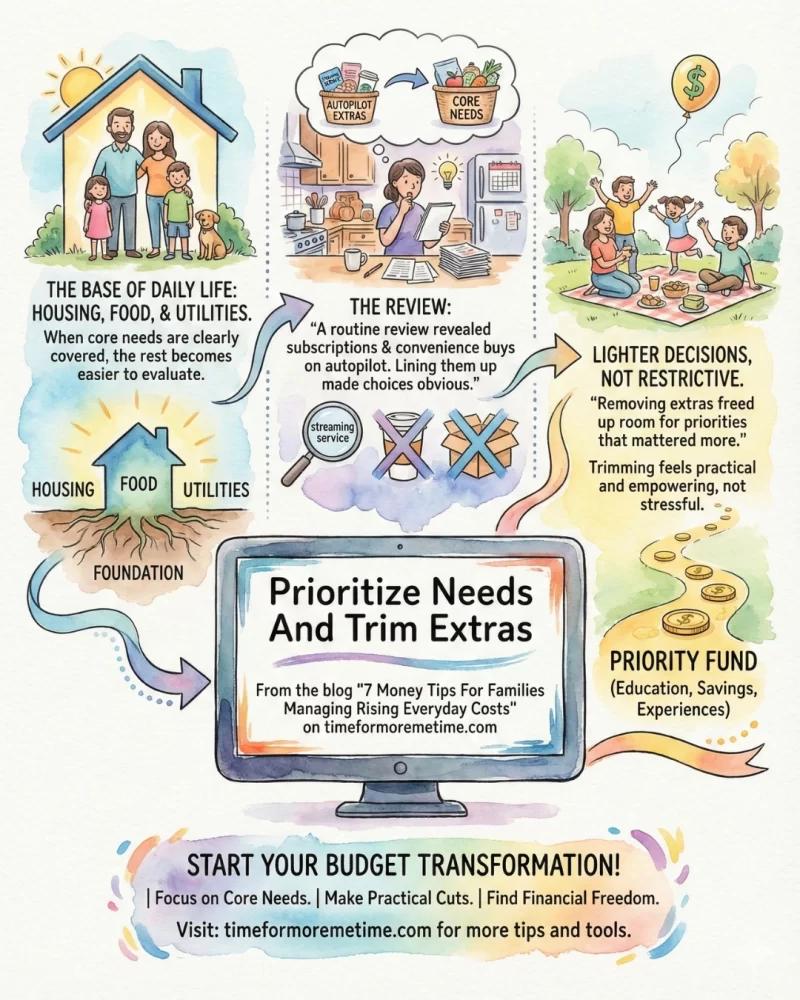
Every family has expenses that must come first. Housing, food, and utilities form the base of daily life. When those are clearly covered, the rest of the spending becomes easier to evaluate.
This became clear during a routine review of my family’s monthly expenses. A few subscriptions and convenience purchases had stayed in place simply because they were set on autopilot. Once I lined them up next to essential costs, it was obvious which ones no longer needed a spot in the budget.
That comparison helped spending decisions feel lighter instead of restrictive. Removing a few extras freed up room for priorities that mattered more. When families focus money on core needs first, trimming the rest feels practical rather than stressful.
3. Plan Food Spending And Simplify Meals
Food is usually where family spending feels the most unpredictable. A few extra grocery trips, quick snacks, or last-minute meals can quietly push costs higher without much warning. When meals are decided on the spot, food spending becomes harder to control.
That pattern tends to show up during busy weeks. When schedules fill up, we usually let convenience win, and we make food choices late in the day. Spending follows those rushed decisions. That’s why food and dining costs tend to shift more than most household bills.
But once we can see the clear connection, we can implement small changes. For me, planning a handful of repeat meals and shopping with a short list keeps spending steady and removes daily guesswork. When I make food decisions earlier, I can easily manage both the budget and the week.
4. Review Expenses Often To Stay Aware
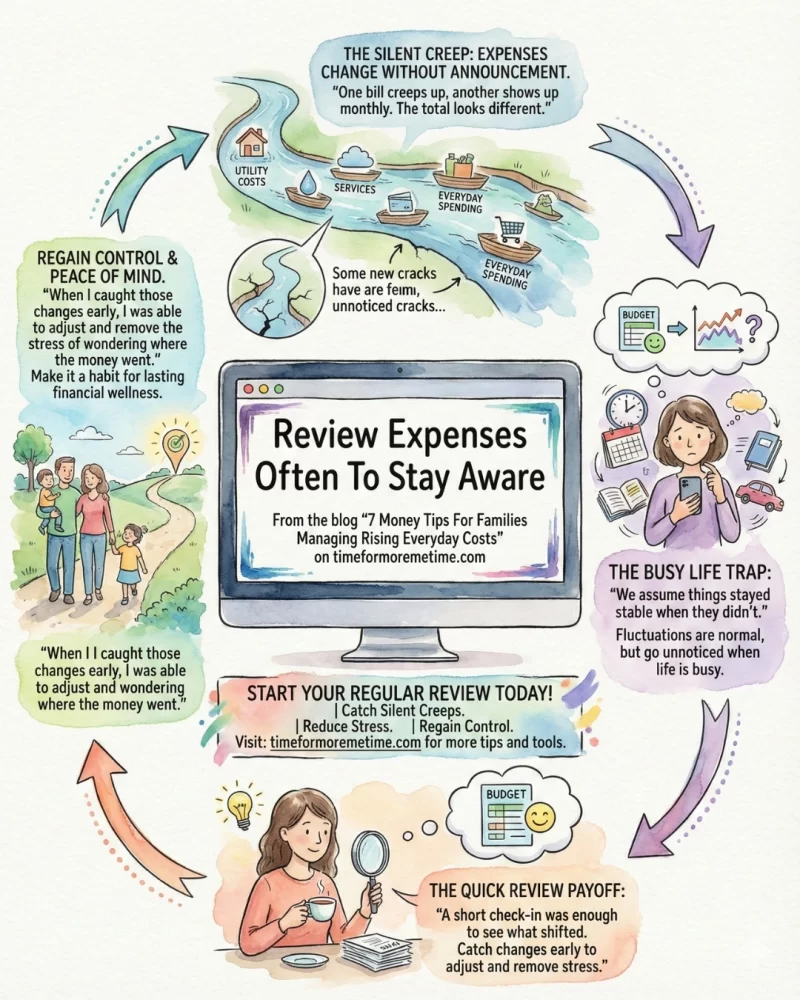
Expenses have a way of changing without making a big announcement. Have you noticed that when one bill creeps up, another charge starts showing up monthly? And suddenly the total looks different from what you expected. If you don’t pause to look, those changes blend into the background.
That happens because most family expenses don’t stay the same from month to month. Utility costs, services, and everyday spending often fluctuate, so many families end up paying more over time. Some don’t even realize when the increase began. It’s normal because when life gets busy, we often assume things stayed stable when they didn’t.
In this situation, a quick review can pay off. A short check-in was enough for me to see what had shifted without digging into every detail. When I caught those changes early, I was able to adjust and remove the stress of wondering where the money went.
5. Save Gradually For Irregular Costs
Some expenses never show up on a monthly schedule. Birthdays, medical visits, and seasonal activities tend to arrive when other bills are already due. When they hit together, they feel heavier than expected.
I experienced this when I was handling home repairs alongside regular family expenses. One planned fix led to another, and then a separate bill followed soon after. Situations like this come up several times a year for most families, even though the timing changes each time. And roughly one in three Americans reports that a $400 unexpected expense would be difficult to handle with cash on hand. These situations are common, but they often sit outside the monthly plan until they demand attention.
Preparing ahead shifts how those moments feel. Setting aside small amounts throughout the year made those expenses easier to handle when they came up. The money was already there, which helped me avoid last-minute stress from abrupt decisions.
6. Talk About Money As A Family

Money shows up in more places at home than we expect. It’s there when plans are made, when repairs come up, and when everyday choices stack together. When those decisions stay in one person’s head, pressure builds before anyone realizes it.
I felt this when I stopped keeping money conversations to myself. Once I started sharing my spending plans and priorities, I was able to prevent small decisions from becoming surprises. Talking things through made it easier to explain why some purchases had to wait and why others mattered right now.
That openness changed the tone at home. Money stopped feeling like a pressure point and became a shared responsibility. Choices feel calmer and expectations stay realistic when everyone understands the plan.
7. Use Practical Cost-Saving Habits
Saving money often comes down to small choices that repeat. The kind you make without thinking much about them. Over time, those choices shape how far your paycheck can stretch.
I leaned into this when everyday expenses started feeling tighter than they should. Buying certain items secondhand, reusing what we already had, and skipping upgrades that didn’t matter made a noticeable difference. At first, I couldn’t feel dramatic changes in each of them, but together they eased the pressure.
Those habits stuck because they fit into normal life. My spending slowed down without needing constant effort, and more money stayed available for the things that mattered most. That’s why they’re easier to keep since savings come from routines rather than rules.
Conclusion
Money tips for families work best when they’re practical and flexible. Clear planning, shared responsibility, and steady habits reduce stress and build confidence over time.
Start with one change that fits your family’s current situation. If you want to learn more about money-saving hacks, read our latest posts, follow us on social media, and visit our YouTube channel. See you there!
Source
- Photo: Pexels: Mikhail Nilov