


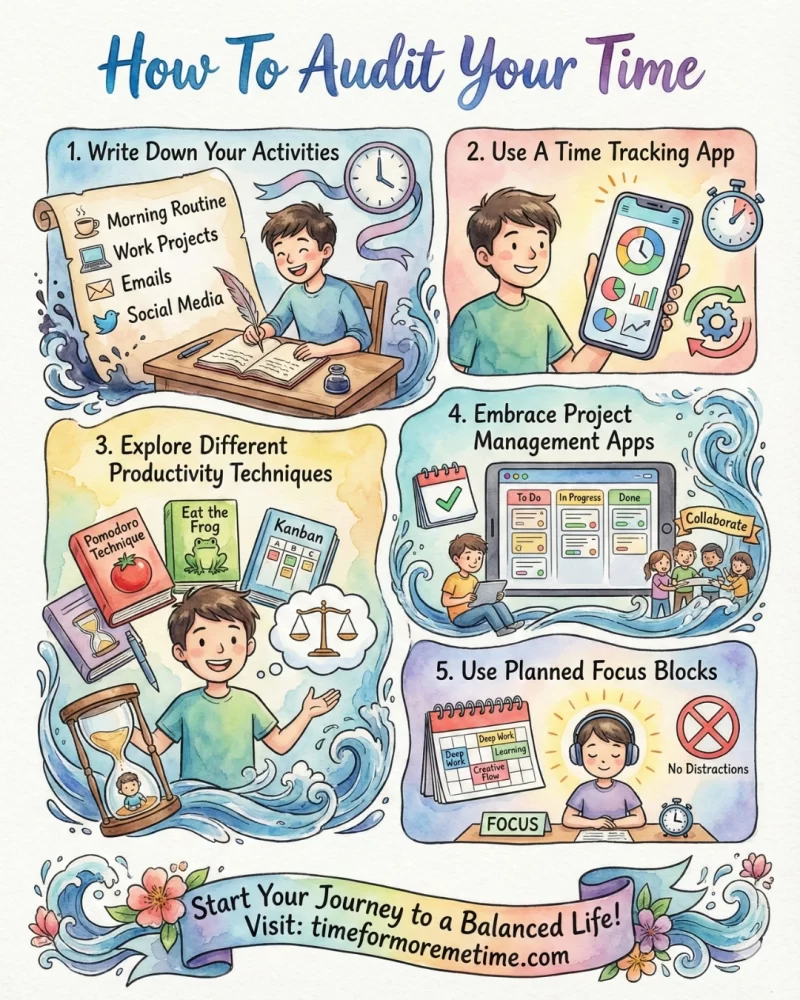
Tracking your time seems simple, but many people feel stressed because their days seem to slip away without clear results. Research shows that people often lose about two to three hours a day to distractions they don’t even notice. This is important because time affects both your income and energy.
That’s why you should examine how you spend your day. I learned this lesson during my early years in California. I thought checking emails took only 20 minutes, but a time audit revealed it actually took nearly two hours.
This realization showed me how easy it is to misjudge time and why having a structure is essential. It made me take time management seriously. In this article, you’ll learn how to audit your time, try simple productivity methods, and find useful tools. Let’s get started!
Write Down Your Activities
Writing down your activities helps you see where your day really goes instead of relying on guesses. By recording every task, even small ones, patterns become clear. Research shows that awareness alone can reduce wasted time by up to 20%. This simple habit sets the stage for better control.
Seeing your habits on paper makes it easier to spot problems and fix them. When deadlines are tight and energy is low, this clarity becomes even more important. Knowing how you spend your time puts you back in charge. From there, improving your schedule feels possible.
Use A Time Tracking App
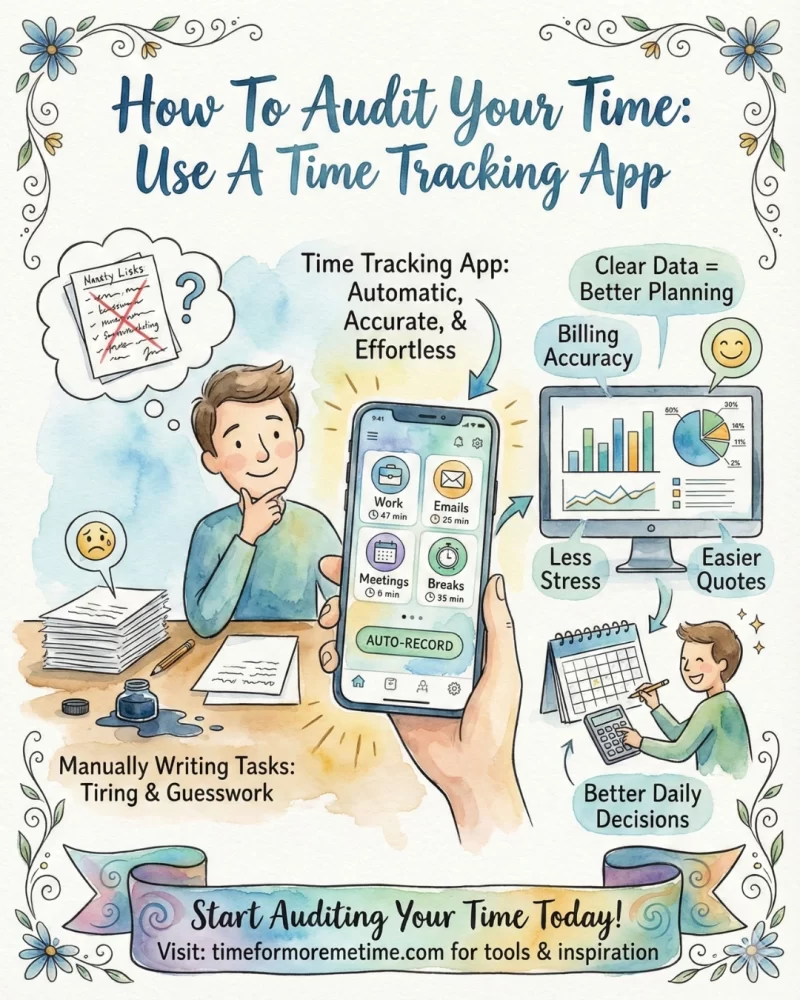
Manually writing down tasks can feel tiring, especially if most of your work happens on a computer or phone. A time tracking app can automatically record what you do during the day. This removes guesswork and saves effort. It also creates accurate data you can trust.
Clear data often changes how people plan their time. Many users report better billing accuracy and less stress once they see the numbers. When you know exactly how long tasks take, planning and quoting become easier. That clarity leads naturally to better daily decisions.
Explore Different Productivity Techniques
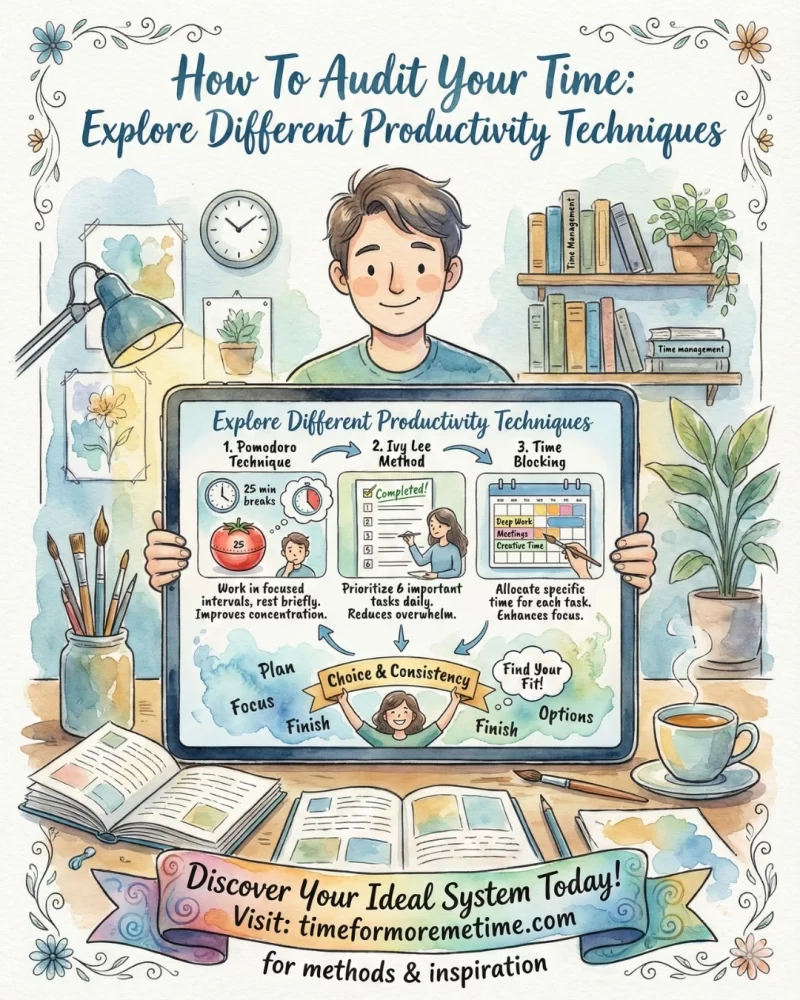
Productivity methods focus on managing time wisely instead of working longer hours. Each method offers a different way to plan, focus, and finish tasks. This gives you options rather than forcing one system on everyone. Choice makes it easier to stay consistent.
I started with the Pomodoro technique and later tested others. The Ivy Lee method worked better for me because it limits daily tasks to six important items, which many people say lowers stress and improves completion rates. Trying one method for a week gives honest feedback. This helps you find a system that fits your life.
Embrace Project Management Apps
Project management apps organize tasks, deadlines, and time in one place. They go beyond basic time tracking by reducing mental clutter. I used Clockify to track time and Asana to plan tasks. Together, they made my days smoother.
Many freelancers report fewer billing mistakes when using these tools. Clear records protect your income and build trust with clients. This is especially helpful when juggling multiple projects. Strong systems support fairness and focus.
Use Planned Focus Blocks
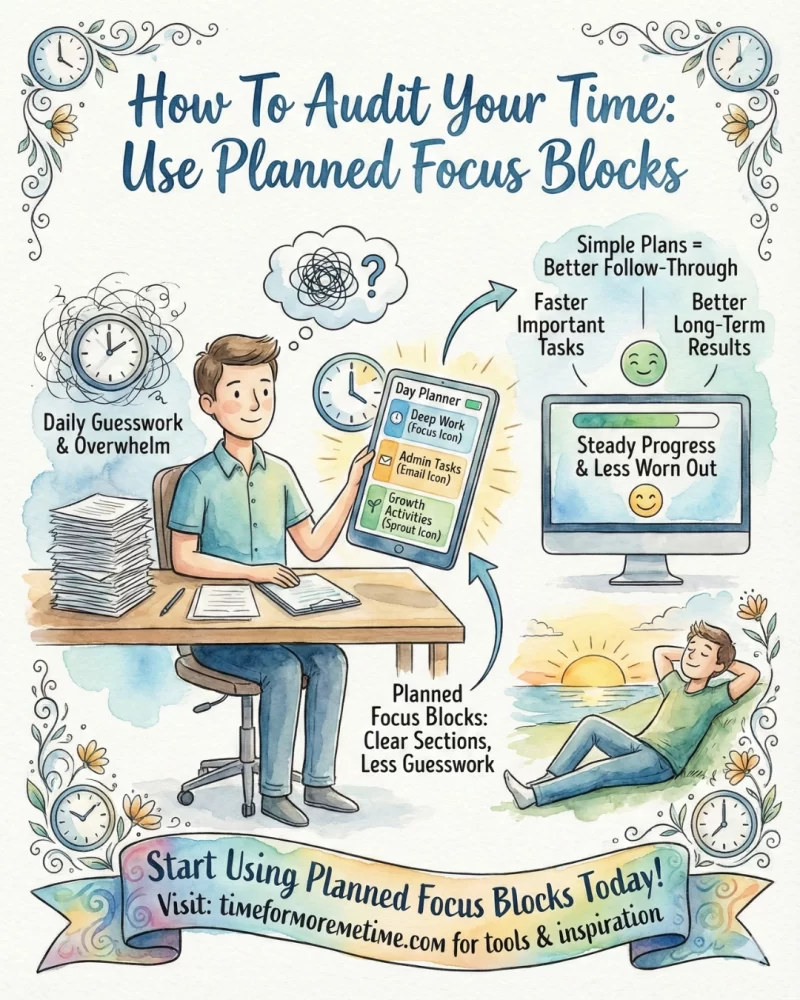
Planned focus blocks divide your day into clear sections for deep work, admin tasks, and growth activities. This structure removes daily guesswork. It works well for both freelancers and employees. Simple plans often lead to better follow-through.
On my most productive days, I followed this approach. I finished important tasks faster and felt less worn out by the end of the day. Having set blocks makes progress feel steady. That consistency leads to better long-term results.
Conclusion
Managing your time starts with awareness. By auditing how you spend each day, you can make small changes that add up over time. Even saving one hour a day adds up to more than 300 hours a year. That extra time can improve both work and life.
If you found this helpful, follow my social media accounts and subscribe to this blog. You can also check out my YouTube channel for more tips. I’ll see you there.
Sources
- Photo: Unsplash: Veri Ivanova