

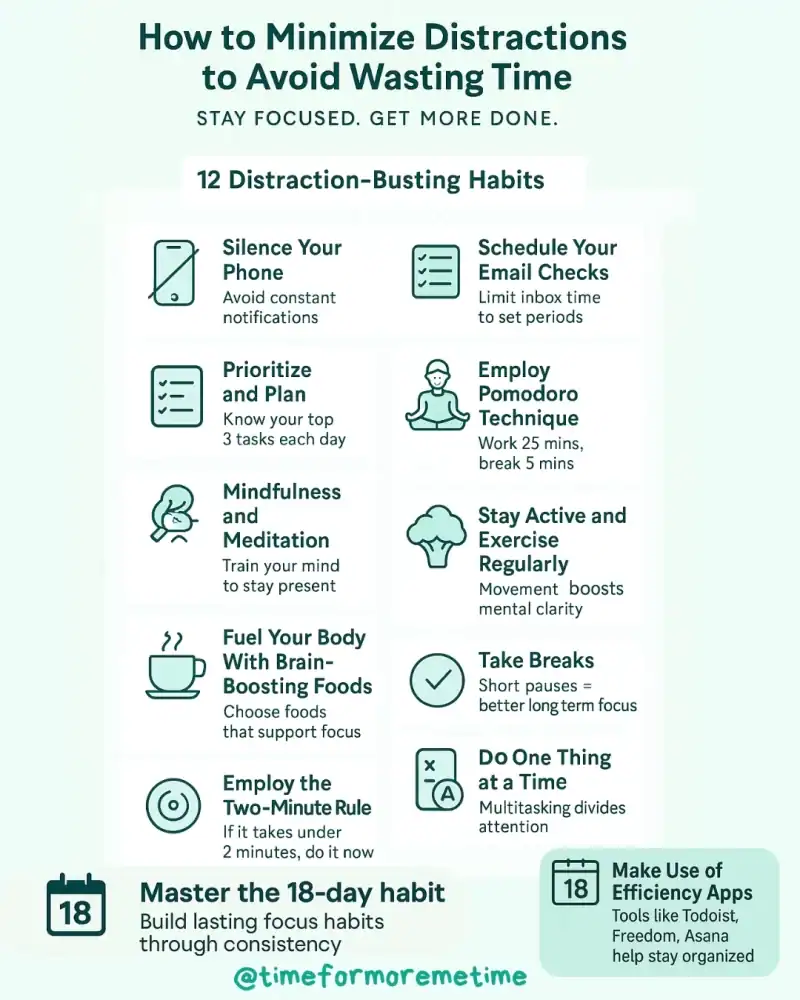
While occasional distractions are normal, constant interruptions can disrupt your life. It’s essential to learn how to minimize distractions, whether you’re a student or an entrepreneur. So, how can you minimize distractions? Here are some actionable tips to help minimize distractions. Let’s get started!
1. Silence Your Phone
People’s attention spans have decreased significantly, largely due to digital distractions. The report behind this is disputed, but you can try to observe it yourself. And unfortunately, these digital distractions come from essential devices and technology that we rely on.
So, what’s the solution? Use the distraction-minimizing features on your devices. For your phone, consider setting it to silent or enabling Do Not Disturb (DND) mode. If you want to avoid distractions entirely, you can also switch to airplane mode.
2. Schedule Your Email Checks
To avoid getting into a time sink when browsing your emails, only check it at a set time or a time block—like the first hour in the morning and an hour before evening every day. This is one of the best techniques in time management skills that can help avoid distractions.
3. Prioritize And Plan
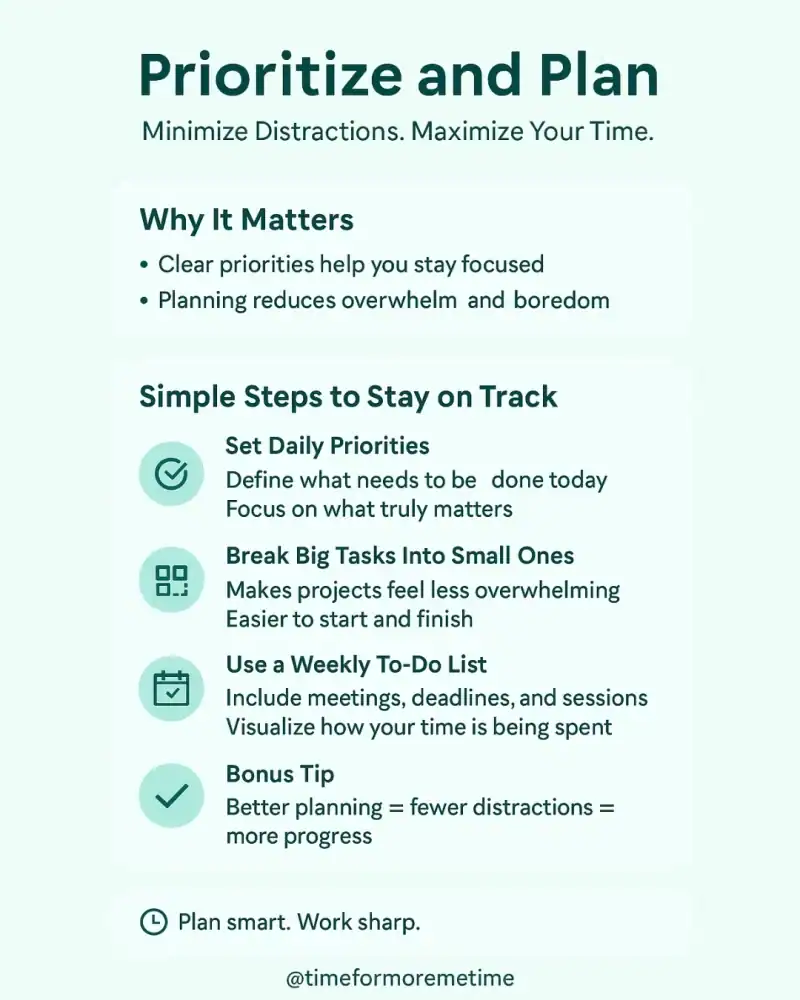
To effectively manage your time, start by clearly defining your priorities for the day. Break larger tasks into smaller, more manageable ones to avoid feelings of intimidation or overwhelm. With better time management, you can go through your day getting bored or distracted.
For instance, create a weekly to-do list that includes all your work-related activities, such as attending meetings, completing projects, or participating in training sessions. By listing these tasks, you’ll gain a clear understanding of how you’re spending your time.
4. Employ Pomodoro Technique
The Pomodoro technique is an effective time management method that helps you maintain focus while working on smaller goals. This can effectively pull you away from distractions.
To use this technique, set a timer for 25 minutes and concentrate on a single task without distractions. After 25 minutes, take a five-minute break. Repeat this cycle four times, and then take a longer break of 15 to 20 minutes.
5. Mindfulness And Meditation
Mindfulness and meditation enhance concentration and reduce distractions by focusing attention on the present moment without judgment. Short mindfulness exercises can lower stress, improve focus, and increase awareness of distracting habits.
Additionally, mindfulness boosts productivity by reducing stress, enabling better focus and collaboration with colleagues.
6. Stay Active And Exercise Regularly
Prioritize at least 30 minutes of moderate exercise most days to improve blood flow to the brain, boost cognitive flexibility, and enhance focus, all of which help minimize distractions. Even small amounts of physical activity, such as 15-20 minutes daily, can positively impact your work outcomes. Building this habit is essential for long-term benefits, even amidst busy schedules.
7. Fuel Your Body With Brain-Boosting Foods
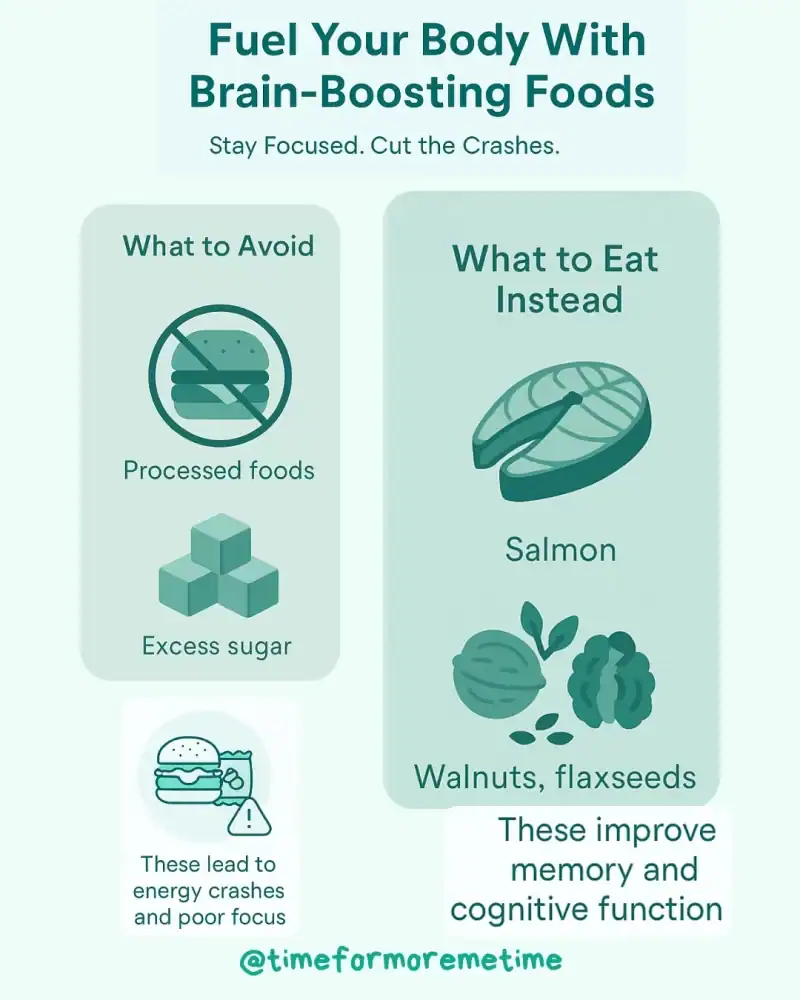
Avoid processed foods, excess sugar, and unhealthy fats, as they can cause energy crashes and hinder concentration. Instead, focus on Omega-3 fatty acids found in salmon, walnuts, and flaxseeds, which enhance cognitive function and memory, helping you stay focused and reduce distractions.
8. Take Breaks
Strategic purposeful breaks can enhance focus and productivity. While distractions can prompt necessary pauses, ensure your breaks are purposeful. Engage in activities like a 15-20 minute nap, a walk, or deep breathing to rest your mind and recharge. Avoid unproductive distractions like scrolling social media during these breaks..
9. Employ The Two-Minute Rule
The two-minute rule is an effective way to minimize distractions. If a task takes less than two minutes, complete it immediately—whether it’s responding to an email, filing a document, or sending a quick text. This prevents small tasks from interrupting larger projects.
10. Do One Thing At A Time
Multitasking is a myth; research shows it leads to inefficiency and distractions. Constantly switching tasks—like answering texts or attending last-minute meetings—hinders true focus and prolongs completion times. Instead, practice single-tasking by concentrating on one task at a time.
This approach fosters a productive state of flow, allowing you to work deeply and efficiently without losing focus.
11. Make Use Of Efficiency Apps
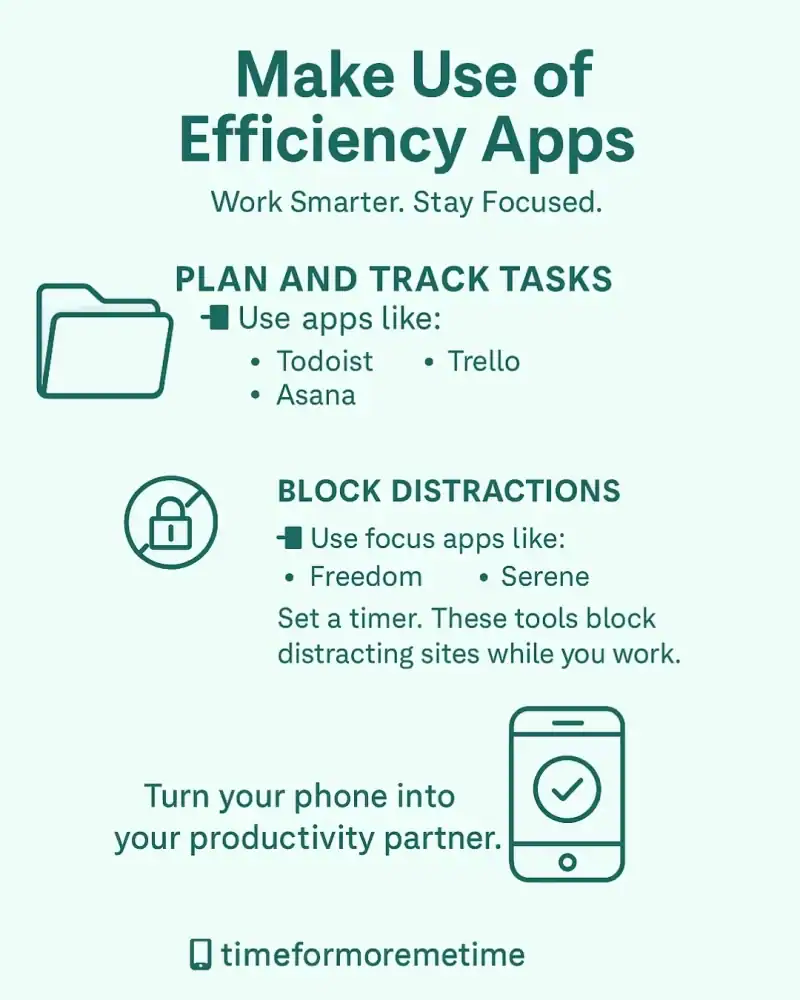
Utilize productivity apps like Todoist, Trello, and Asana to plan your day, track progress, and meet deadlines, helping to centralize your tasks and reduce mental juggling. Additionally, apps like Freedom and Serene can block distracting websites, allowing you to focus better. Simply set a timer, and these apps will restrict access to distractions, increasing your chances of completing important tasks.
12. Mastering The 18-Day Habit
To eliminate distractions and develop productive habits, commit to a consistent schedule for at least 18 days. Research indicates that 18 days is often necessary to establish solid habits. However, it’s important to note that there are many conflicting studies regarding the exact time required to form a habit.
Regardless of the specific timeframe, it’s essential to remain disciplined, even when you feel tempted to procrastinate, as putting off work will not lead to success. Consistency in your tasks and schedule is crucial for training your mind and body to complete tasks on time.
FAQs
Before I wrap this up, let me address a few frequently asked questions about this topic.
What are the most common types of distractions?
The most common types of distractions include digital notifications from smartphones and computers, social media browsing, and environmental noise. Internal distractions, such as wandering thoughts or stress, can also significantly impact focus.
How can I identify my personal distractions?
To identify your personal distractions, keep a distraction journal for a week, noting when and what interrupts your focus. Reflect on patterns in your entries to determine specific triggers, such as certain environments or times of day. This self-awareness will help you develop strategies to minimize these distractions effectively.
Are there specific times of day when distractions are worse?
Distractions often peak during busy hours, such as early mornings when people are starting their day or late afternoons when energy levels dip. Moreover, times when colleagues or family members are most active can lead to increased interruptions. Recognizing these patterns can help you schedule focused work periods during quieter times.
Conclusion
Minimizing distractions is crucial for productivity. Use the tips I provided here to save time and complete tasks effectively. Experiment with different methods until you find what works best for you.
If you find my content helpful, be sure to subscribe to my newsletter. You can also follow my social media accounts and watch my videos on my YouTube channel.
Sources
- Photos: Unsplash: Marco Palumbo