


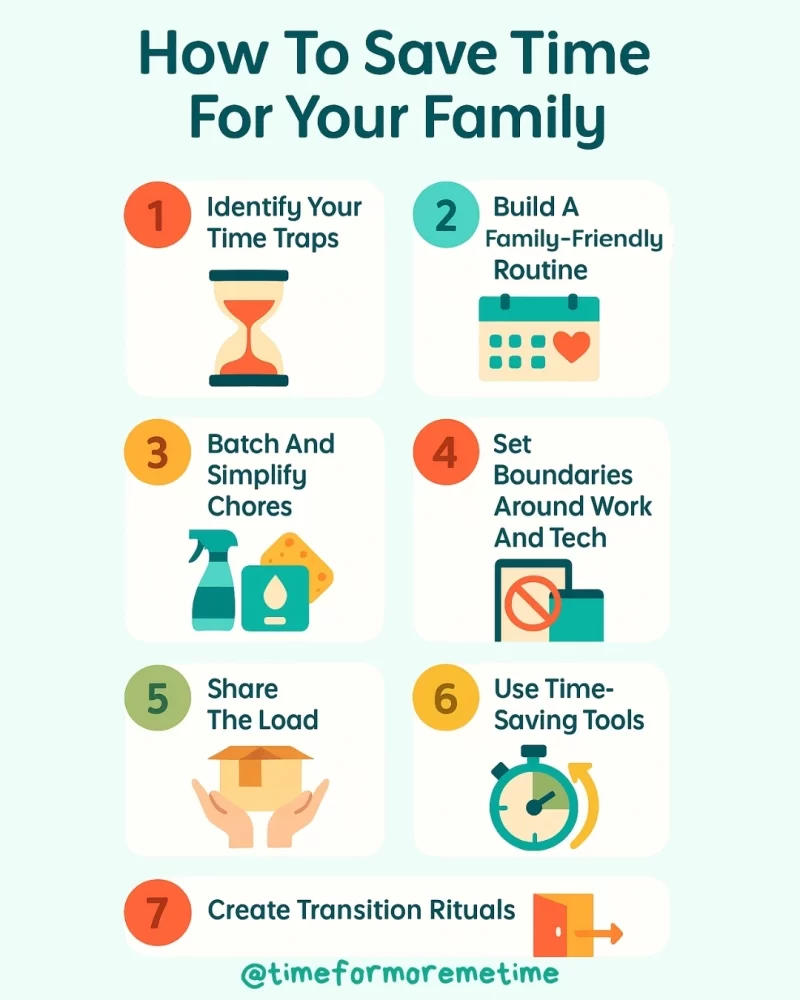
Feeling like you’re always busy but still missing out on family time? You’re not alone. Many people today struggle to balance work, chores, and personal life—leaving little energy for the moments that matter most. In this post, I’ll show you time-saving tips you can start using today to make more room for your family. Let’s get started!
1. Identify Your Time Traps
Many people feel too busy for family time, but the problem often isn’t the number of hours in the day—it’s how those hours are used. Start by identifying your time traps: activities that take up more time than they should without adding real value. Common traps include excessive scrolling, multitasking, or scattered errands.
Track your day in 30-minute blocks for one week to spot patterns. Once you find where time slips away, you can make smarter decisions about what to eliminate or simplify. Just like using budgeting tools to monitor your spending, a time audit helps you take control. When you know where your time goes, you can redirect it toward what matters most—your family.
2. Build A Family-Friendly Routine
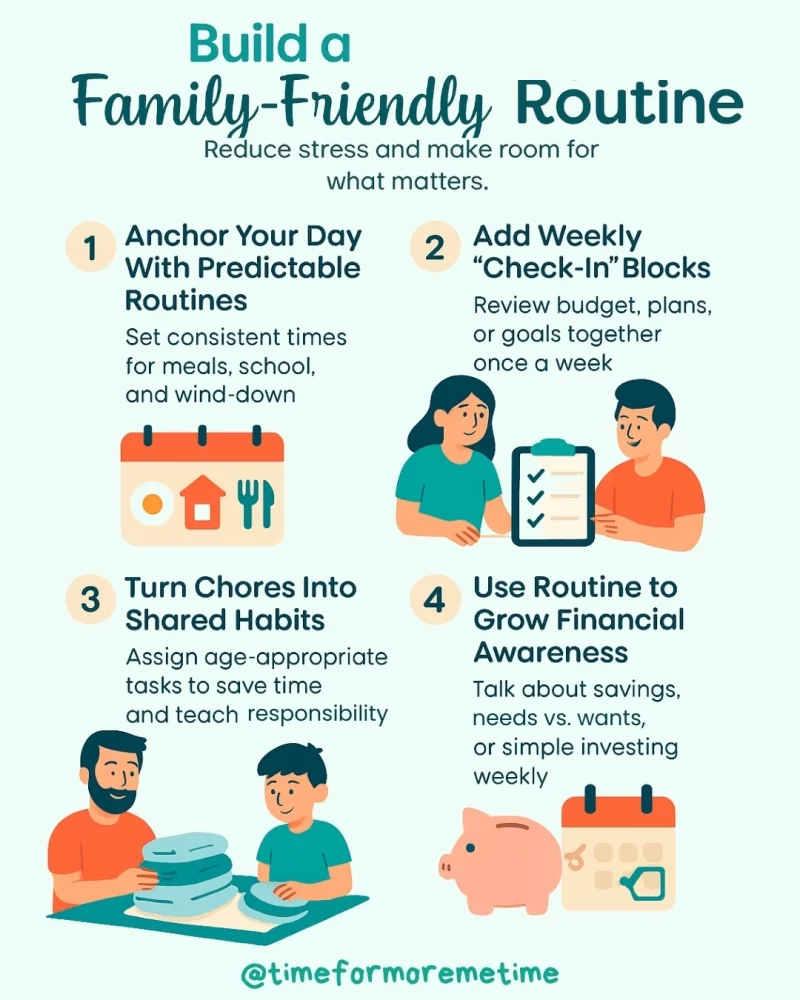
Creating a family-friendly routine means designing your days to reduce stress and make space for what matters most. Start by setting consistent times for meals, school prep, and evening wind-downs. These routines help everyone know what to expect and free up time you’d otherwise spend juggling last-minute tasks.
It’s also a good moment to align your schedule with your long-term goals. For example, blocking time each week to review your budget or talk about family savings can reinforce healthy habits. Some families even build in short windows to explore simple investment strategies, turning routine moments into opportunities to grow both time and money intentionally.
3. Batch And Simplify Chores

Batching and simplifying chores is one of the easiest ways to free up time for your family. Instead of spreading tasks throughout the day, group similar ones together—like folding all the laundry at once or meal prepping for the week in one session. This reduces mental load and cuts down on transition time between activities.
Simplifying also means letting go of perfection. Use shortcuts like one-pot meals, shared to-do lists, or rotating chore charts for kids. These small systems help maintain order without constant effort.
Over time, these changes can also help you cut expenses—less takeout, fewer last-minute store runs, and more efficient use of household supplies. The goal is more time together and less time managing the mess.
4. Set Boundaries Around Work And Tech
Setting boundaries around work and technology is key to making room for real family time. When your phone or laptop is always within reach, it’s easy to let work or distractions spill into evenings and weekends. Define a clear end to your workday, mute non-essential notifications, and create screen-free zones—especially during meals or bedtime.
These boundaries help you be fully present and reduce stress for everyone at home. They also encourage a slower, more intentional pace—one that supports frugal living by shifting focus away from convenience-based habits like late-night online shopping or constant entertainment subscriptions. Less screen time often means fewer impulse purchases and more meaningful use of your time and resources.
5. Share The Load
Sharing the load at home is one of the most effective ways to save time for your family and reduce daily stress. When responsibilities are divided fairly, no one feels overwhelmed, and everyone contributes to a smoother household. Start by assigning age-appropriate chores to your kids and involve your partner in weekly planning or task rotations.
It’s not just about saving time—it’s about building teamwork and accountability. Sharing tasks like cooking, cleaning, or organizing also creates teachable moments for children.
Over time, this approach can impact your family’s finances too. By managing your home more efficiently, you’re less likely to rely on outside help and can redirect that money toward smarter uses, such as savings or even bonds for your children’s future.
6. Use Time-Saving Tools
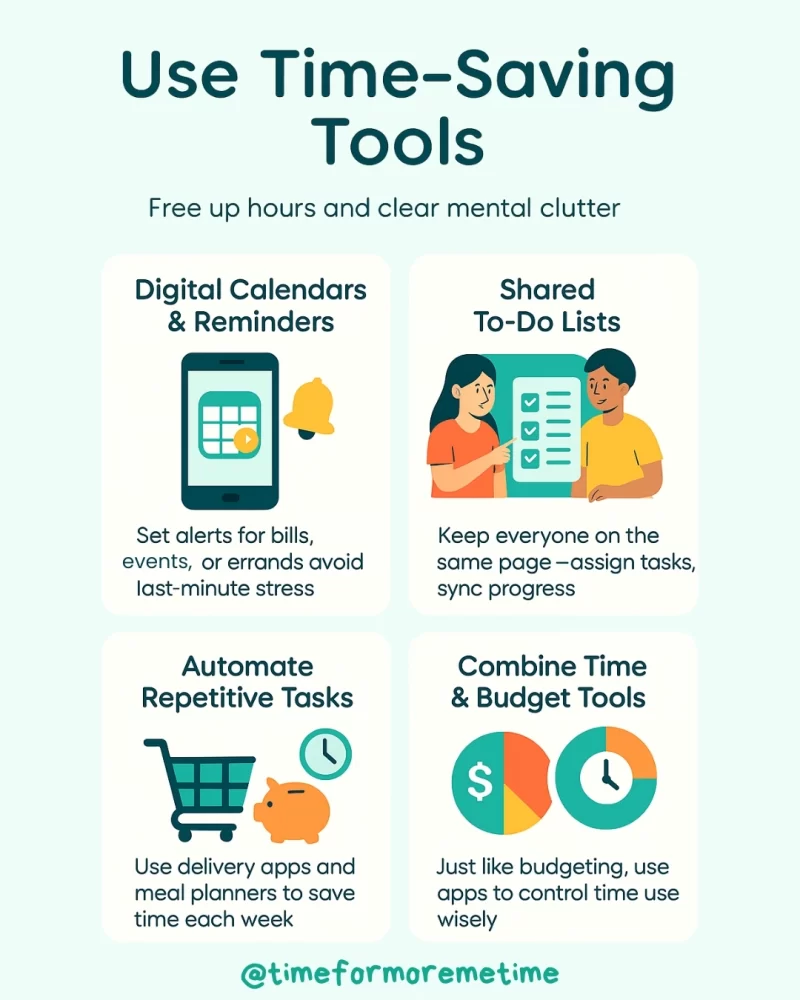
Using time-saving tools can simplify your daily routine and help your family stay organized. Digital calendars, reminder apps, and shared to-do lists can reduce mental clutter and make sure nothing slips through the cracks. Set alerts for appointments, school events, or bill payments so you don’t waste time scrambling at the last minute.
Tools that automate tasks—like grocery delivery apps or meal planning platforms—can also free up hours each week. These small efficiencies add up quickly and create more space for family time. Just as you’d use smart budgeting tools to manage your money, using the right time tools helps you manage your day with more clarity, less chaos, and a greater sense of control.
7. Create Transition Rituals
Creating transition rituals helps you mentally shift from work mode to family time, especially when your roles overlap. Without a clear break, it’s easy to bring work stress into your home life, making it harder to relax or connect.
Simple habits—like changing into casual clothes, going for a quick walk, or turning off notifications—can signal that your focus is now on your family. These small actions work like a savings trigger, which is a habit tied to a routine (like saving $5 every time you skip takeout). It’s a prompt that builds consistency. In the same way, transition rituals help you step into a better routine—one where family time isn’t rushed or distracted, but intentional and refreshing.
Conclusion
Saving time for your family isn’t about doing more—it’s about doing what matters with more intention. These simple, proven strategies can help you take back your time as each tip is designed to bring more clarity, connection, and calm into your home.
Time is one of the few things we can’t earn back. But with the right habits, we can make more of it for the people we love. Start with one change today—your future self and your family will thank you. For more practical guides like this, subscribe to the blog, follow us on social, and check out our YouTube channel.
Source
- Photo: Unsplash: Jessica Rockowitz