

Busy families often feel like the day runs out before they even get a chance to breathe. Many working professionals feel this pressure because long shifts, tight budgets, and home responsibilities all compete for the same small window of time.
Many adults struggle with time management, which makes each day more stressful than it needs to be. These feelings are real and they can weigh on you. I went through the same thing while working long hours at UCSF Medical Center, running errands across the city, and trying to be present for my family. It felt like life kept pulling me in every direction.
That is why I want to share simple ways to help you manage time better at home. Let’s get started!
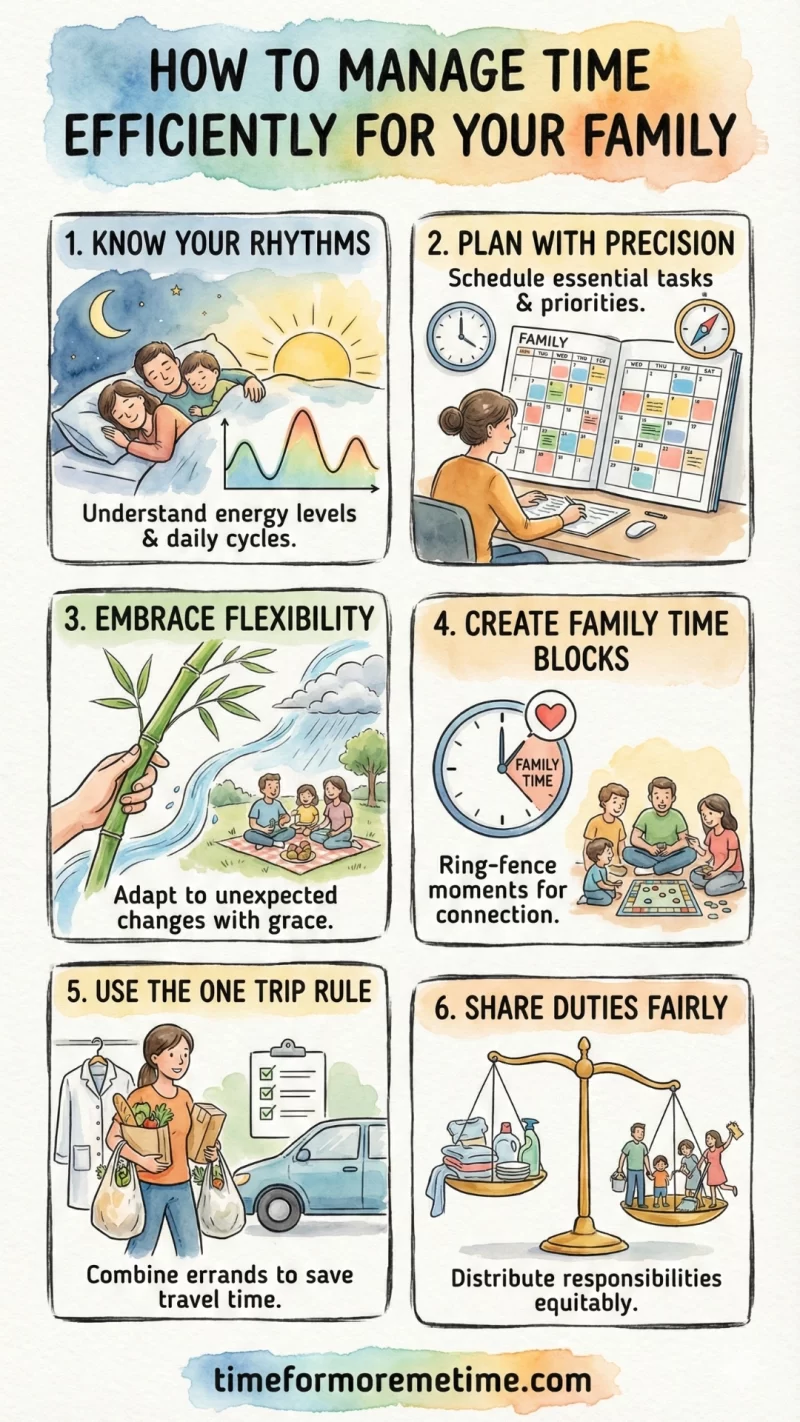
1. Know Your Rhythms
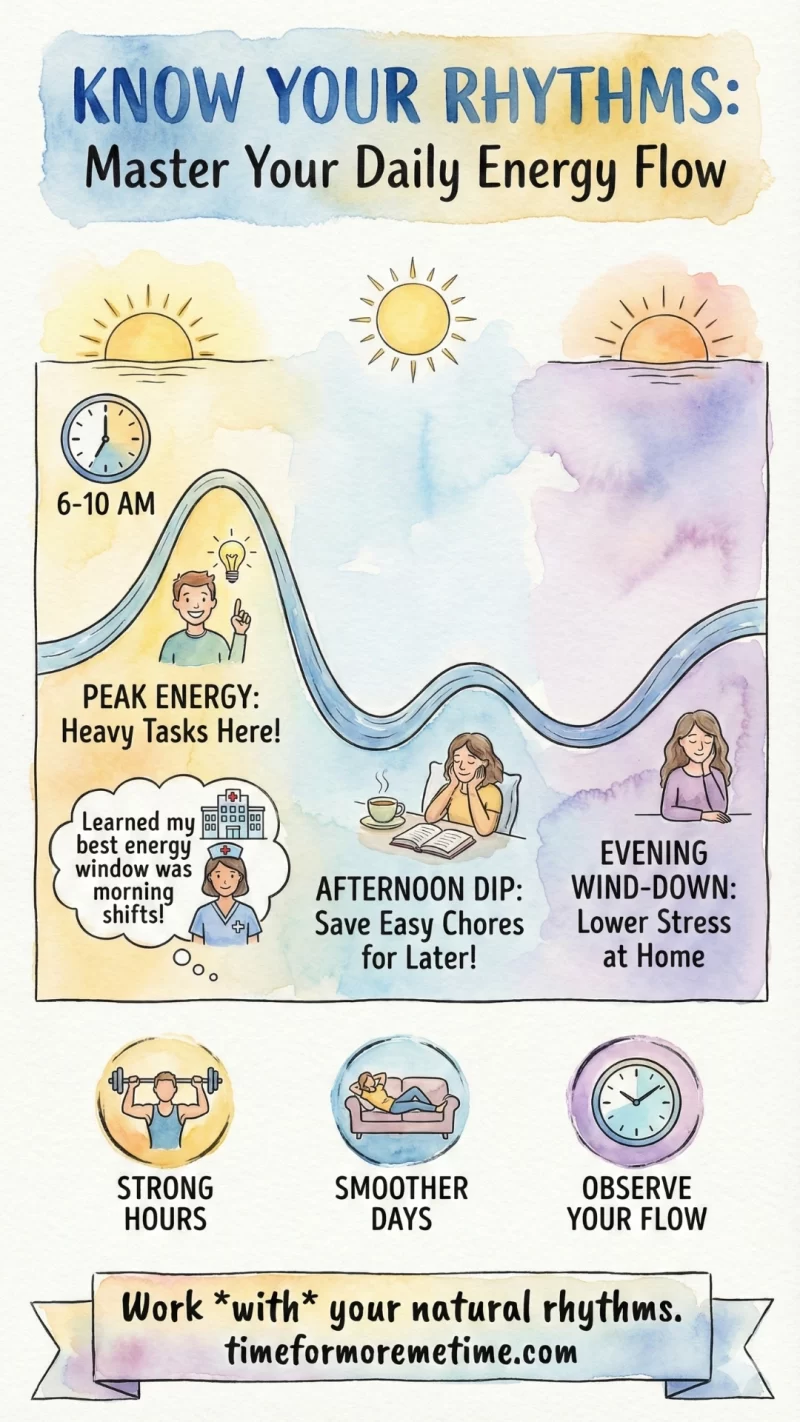
Knowing your natural rhythms can make your day easier. Your rhythm is the time of day when you feel alert or tired. When I worked early shifts at the hospital, I learned that my best energy window was from six to ten in the morning.
I believe that people feel slow by the afternoon because the body naturally dips in energy. When you understand this, you can place your heavy tasks in your strong hours and save easy chores for later. This helps your day run smoother and lowers stress at home. Try watching your daily flow and see where your energy feels strongest.
2. Plan With Precision
Planning with more detail can help your family avoid wasted time. Big tasks become easier when you break them into small steps. I learned this while studying radiologic technology in Buffalo because it was the only way I could keep up with school, work, and chores.
Do you know that people often finish tasks faster when they follow smaller steps because it keeps the mind focused? You may feel overwhelmed when your to-do list looks long, but breaking it down can make it feel lighter.
Give each task a small time limit so you know exactly what to do next. This keeps your home running even when work gets busy.
3. Embrace Flexibility
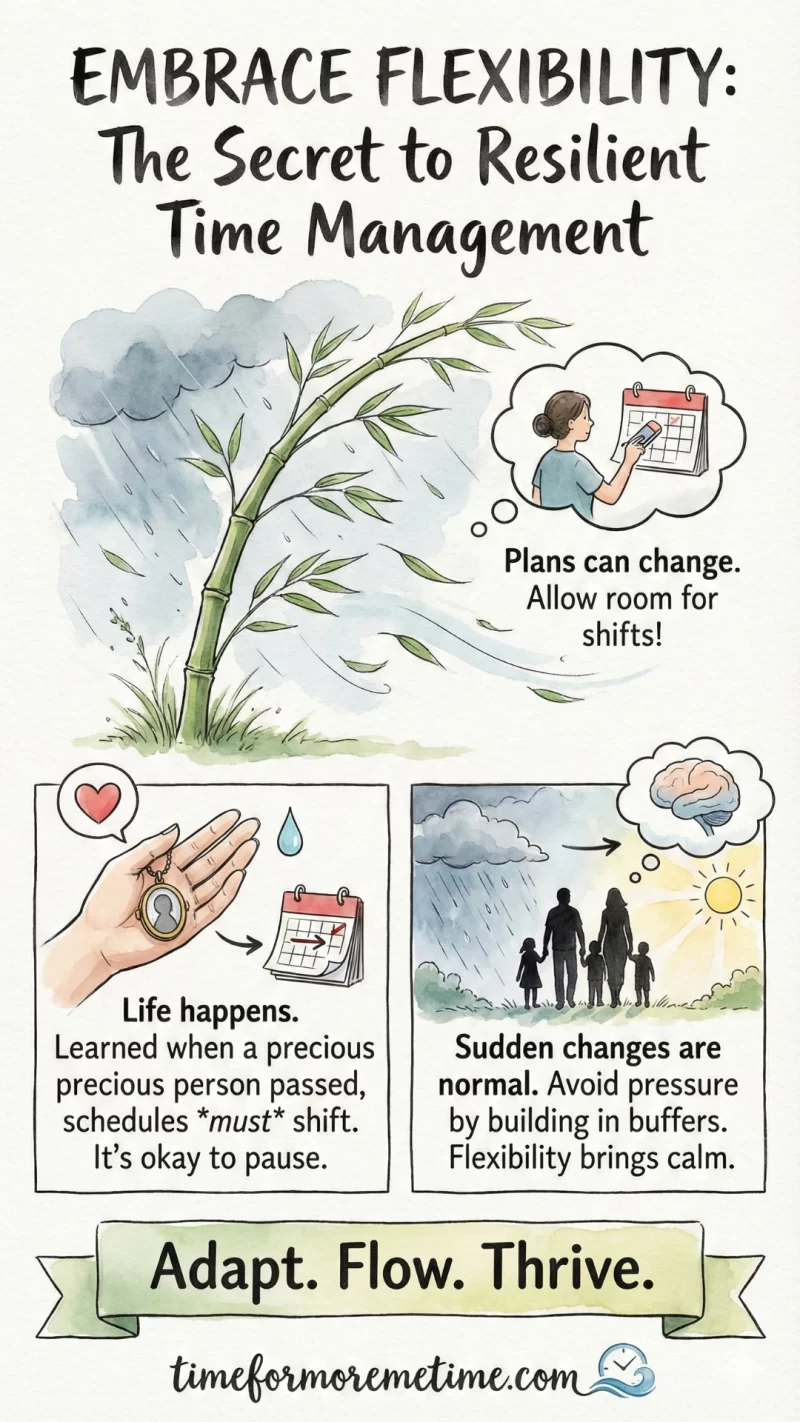
Flexibility is another key to good time management. Plans can change without warning. When a precious person in my life passed away, life stopped for a while. I learned that schedules must shift when life demands it.
Families face sudden changes each week, and it is normal to feel stressed when plans fall apart. You can avoid pressure by allowing room for changes in your schedule. Having a schedule can make you feel calm even when your day does not go as expected.
4. Create Family Time Blocks
Creating family time blocks can help everyone know what comes next. A time block is a simple chunk of the day assigned to one activity.
Having blocked time can make routines clear because it reduces guesswork. If your home feels chaotic, try building blocks for meals, homework, chores, and rest. This gives your family structure without making the day too strict.
5. Use The One Trip Rule
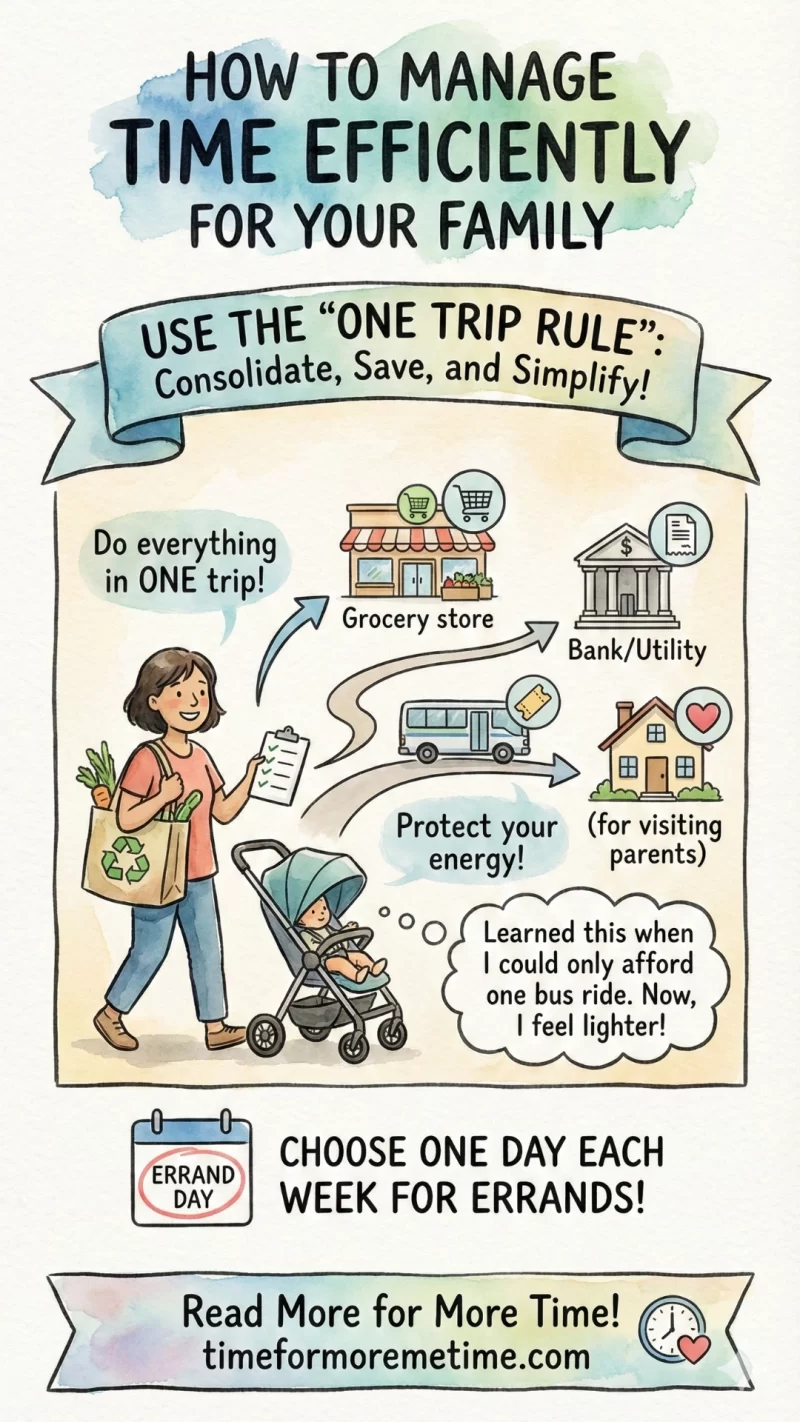
Another helpful idea is what I call the one trip rule. This rule helps busy and low income families save time and money. You do everything you need in one trip instead of going back and forth.
I learned this during times when I could only afford one bus ride to get groceries, handle bills, and visit my parents. Many families lose hours each week because of repeated errands. One trip protects your energy and keeps you from wasting money on travel. So, choose one day each week for errands so the rest of your week feels lighter.
6. Share Duties Fairly
Sharing duties is a simple way to ease your load. When one person carries everything, it causes stress for the whole home. When I helped my parents remodel their house, my brothers and I split the tasks so we finished faster and stayed close as a team.
Families who share work create a smoother home atmosphere because the load becomes light for everyone. If you feel like you do everything yourself, try giving each person one small daily task. This builds teamwork and reduces tension.
Conclusion
Managing time for your family is not about adding pressure; it is about giving yourself simple steps that fit into your daily life. Start small and adjust as you grow. Your family deserves a life that feels balanced and steady.
If you enjoyed this content, consider subscribing to my blog. Also, follow me on my social media and check out my YouTube channel. See you there!