


If your to-do list keeps growing and your time keeps shrinking, the 1-3-5 rule might be the fix you need. This planning method is a time management technique that helps you focus only on what truly matters. In this post, I’ll introduce you to the 1-3-5 rule, so you can move through your day with clarity and control. Let’s get started!
What Is The 1-3-5 Rule
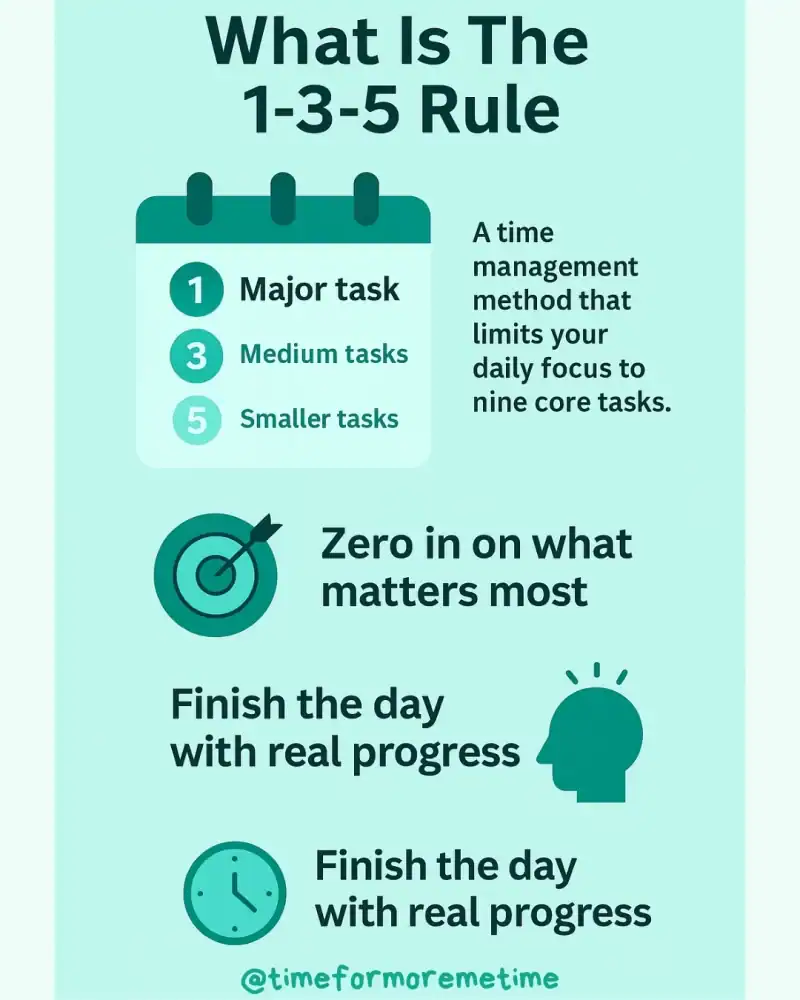
The 1-3-5 rule is a time management method that limits your focus each day to one major task, three medium tasks, and five smaller tasks. That’s it—just nine thoughtfully chosen items per day: no more endless to-do lists or scattered priorities.
This approach helps you draw clear boundaries and make intentional decisions about how to spend your time. Instead of juggling everything, you zero in on what matters most and finish the day with real progress.
It’s a favorite among productivity experts as well as professionals such as executives and solopreneurs. At its core, the 1-3-5 Rule is about working smarter, not harder. It’s especially beneficial when you’re trying to reclaim your schedule and save time by planning with purpose.
Additionally, incorporating the 10% rule can enhance this method. The 10% rule suggests that you should allocate 10% of your time to unexpected tasks or interruptions that may arise throughout the day. This allows for flexibility while still maintaining focus on your primary tasks.
Why Should You Use The 1-3-5 Rule
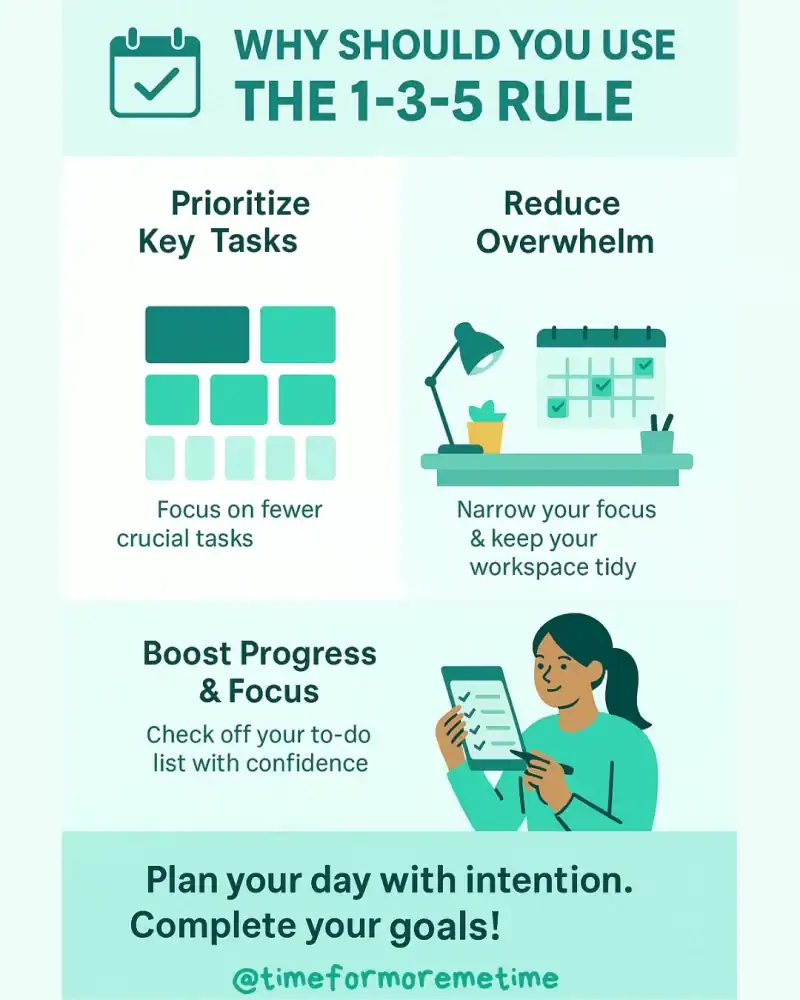
The strength of the 1-3-5 rule lies in its balance—it’s structured enough to guide your day, yet simple enough to use consistently. With just nine tasks, you avoid decision fatigue and gain momentum from completing manageable items. This method helps you plan with intention rather than reacting to whatever pops up.
It simplifies your workflow by limiting you to just a handful of tasks, which instantly makes your day feel less chaotic and more organized. Defining one big task ensures you prioritize what matters most. Three medium tasks keep your productivity flowing, while five small tasks deliver satisfying progress without draining your energy.
You also reduce wasted time by removing the guesswork. You’re no longer stuck deciding what to do next—it’s already laid out. Plus, this structure encourages you to act with clarity, avoid multitasking, and finish your day with a sense of accomplishment.
Following this rule is basically like using budgeting tools to allocate your budget. But instead of money, you’re going to allocate tasks instead.
How To Start Using The 1-3-5 Rule
The 1-3-5 rule is simple to adopt and doesn’t require special tools. You can use a notebook, digital planner, or even sticky notes. What matters most is building the habit. Here’s how to apply it:
- Pick Your Big Task: Choose one major task that matters most. It should move you forward meaningfully, even if it’s not the most time-consuming.
- Add Three Medium Tasks: Select three supporting tasks. These are important but less demanding and should complement your big task.
- List Five Small Tasks: Add five quick, simple tasks that are easy to complete, like replying to messages or tidying your workspace. You can also apply the 2-minute rule here: if a task takes less than two minutes, do it immediately instead of adding it to your list.
- Write It Down: Lay out your 1-3-5 list clearly for the day. Having it visible keeps you focused and less distracted.
- Review Daily: At day’s end, check off what you completed. Move unfinished tasks forward only if they still deserve your time. Reflect briefly on what worked—and what didn’t—so you improve daily.
When used consistently, the 1-3-5 rule creates a sense of structure without overcomplicating your routine. It saves time by helping you stay organized, focus on impact, and manage energy across your workday.
What Are The Drawbacks Of The 1-3-5 Rule
While the 1-3-5 rule is simple and effective, it’s not immune to mistakes. If misused, it can waste more time than it saves. Below are common pitfalls that you might want to consider:
- Unrealistic Task Sizes: Mislabeling tasks can lead to underestimating the actual time they’ll take, disrupting your entire plan.
- Overstuffing the List: The rule works best when you stick to the structure. Adding extra tasks defeats their purpose and increases overwhelm.
- Skipping Prioritization: Choosing tasks just because they’re easy can leave important ones undone. Focus on what brings the most value.
- Being Too Rigid: Life happens. If your day shifts, allow flexibility to move tasks around without guilt.
- Inconsistent Use: Using the rule only occasionally weakens its benefits. For best results, make it part of your daily routine.
By avoiding these pitfalls, you’ll keep your 1-3-5 system smooth, effective, and truly time-saving.
Conclusion
The 1-3-5 rule is a powerful yet simple way to save time, prioritize what matters, and feel in control of your day. With just one big task, three medium ones, and five small ones, you create structure without stress. It’s a time-saving habit that turns chaos into clarity and intention into action.
For more tips on simplifying your schedule and getting more done, subscribe to our blog, follow us on social media, and visit our YouTube channel for smart, doable time hacks
Sources
- Photos: Unsplash: Jexo