


If your day always feels busy but your to-do list barely moves, you’re not alone. In this post, I’ll introduce you to time blocking—a simple way to plan your day with purpose, reduce distractions, and finally make time for what matters. Let’s get started!
What Is Time Blocking
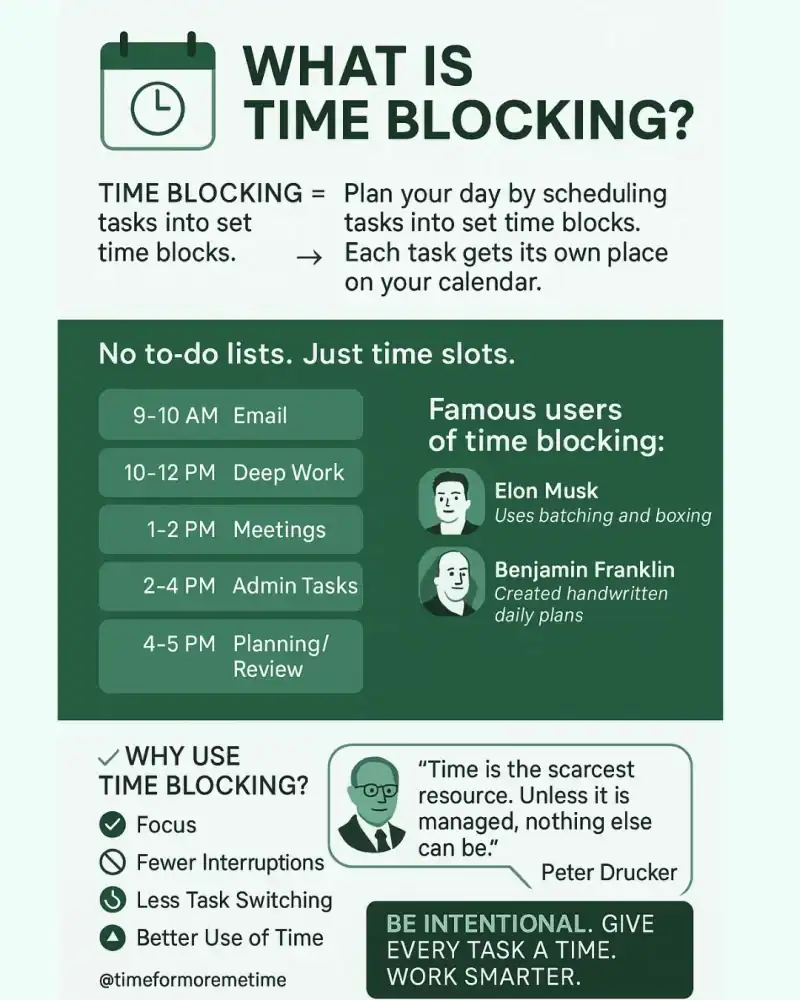
Time blocking is a planning method where you divide your day into blocks of time, and each block is assigned a specific task or type of activity. Instead of working through a long to-do list at random, you decide when you’ll do each task by giving it a fixed time slot on your calendar.
Fun fact: Elon Musk effectively manages his busy schedule by using time blocking techniques, specifically time batching and timeboxing. Similarly, Benjamin Franklin utilized a more informal version of time blocking by creating handwritten schedules to organize his daily tasks.
Many advocates support time blocking. Peter Drucker, the father of modern management, highlighted time as a valuable resource and promoted intentional task planning. More recently, Cal Newport popularized the method in his book “Deep Work,” demonstrating how it enhances focus and reduces distractions.
At its core, time blocking is about intention. It helps you stay focused by giving every task a place on your schedule, which means fewer interruptions, better concentration, and less time wasted switching between tasks.
Why Should You Use Time Blocking
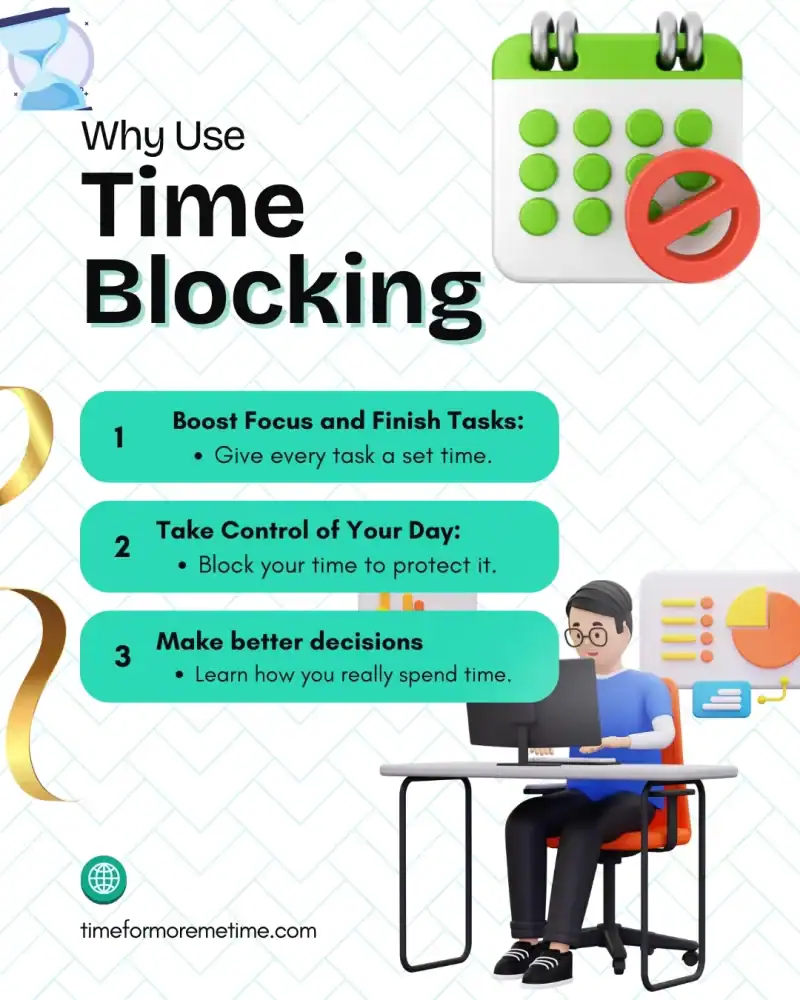
Time blocking helps bring structure to your day, making it ideal for people who feel overwhelmed or scattered. By assigning time slots to tasks, you’re more likely to focus, finish on time, and avoid the trap of multitasking.
This technique also prevents your calendar from filling up with other people’s priorities. When your time is blocked off, it becomes easier to say no to distractions and protect your most productive hours.
Over time, time blocking helps you make better decisions about how you spend your day. You’ll start noticing how long things really take, avoid overcommitting, and create more space for the things that matter—whether it’s deep work, learning, or rest.
How To Start Using Time Blocking
Time blocking can be implemented in various ways. Some people divide their day into hour-long segments, while others group similar tasks into morning or afternoon sessions.
If you’re new to time blocking, begin with a calendar—either digital or paper—and a list of your tasks. Start by identifying your most important tasks and assigning them specific time slots. Remember to include buffer time between blocks to accommodate any overruns. The goal of time blocking is not perfection but rather to provide structure and direction to your day.
You can apply time blocking to all areas of your life, anytime and anywhere. Here are some examples:
- At Work: Allocate time for emails, meetings, focused work, and even short breaks to help you stay organized.
- At Home: Set aside blocks for chores, errands, cooking, or quality time with family.
- In Your Routine: Reserve early hours for reading, journaling, or planning your day before distractions arise.
- While Studying: Dedicate specific time chunks for reviewing notes, completing assignments, or preparing for exams.
- For Breaks: Schedule short 10–15 minute breaks between intense tasks to prevent burnout.
As you can see, time blocking allows you to be efficient and organized by giving you the opportunity to save time. However, while time blocking can improve productivity and provide structure, it may not work for everyone. In the next section, we will look at its drawbacks.
What Are The Drawbacks Of Time Blocking
Time blocking works well, but it isn’t flawless. Here are some drawbacks to keep in mind:
- Rigid Schedules Can Backfire: Life is unpredictable, and sticking to a strict schedule can feel frustrating when unexpected things pop up.
- Overplanning Can Lead to Burnout: Trying to fill every minute of your day can leave no space for creativity or rest.
- Tasks Might Take Longer Than Expected: If you’re not sure how long a task will take, underestimating it can throw off your whole schedule.
- Constant Adjusting Can Be Draining: You may find yourself moving blocks around often, especially when your plans change.
- Not Ideal for Unstructured Thinkers: Some people feel boxed in by schedules and prefer a more flexible, flow-based approach.
To make time blocking work, allow flexibility and adjust as needed. Treat your time blocks as a guide, not a contract, and leave room for real life.
Conclusion
Time blocking is a simple yet powerful time management method that helps you take control of your day, reduce distractions, and get more done without feeling overwhelmed. By assigning specific times for each task, you create structure, focus, and balance. It’s a beginner-friendly technique that works well for both personal and professional goals.
To get more helpful tips, subscribe to our blog, follow us on social media, and check out our YouTube channel for cool and insightful videos.
Sources
- Photos: Unsplash: Alexandr Podvalny