


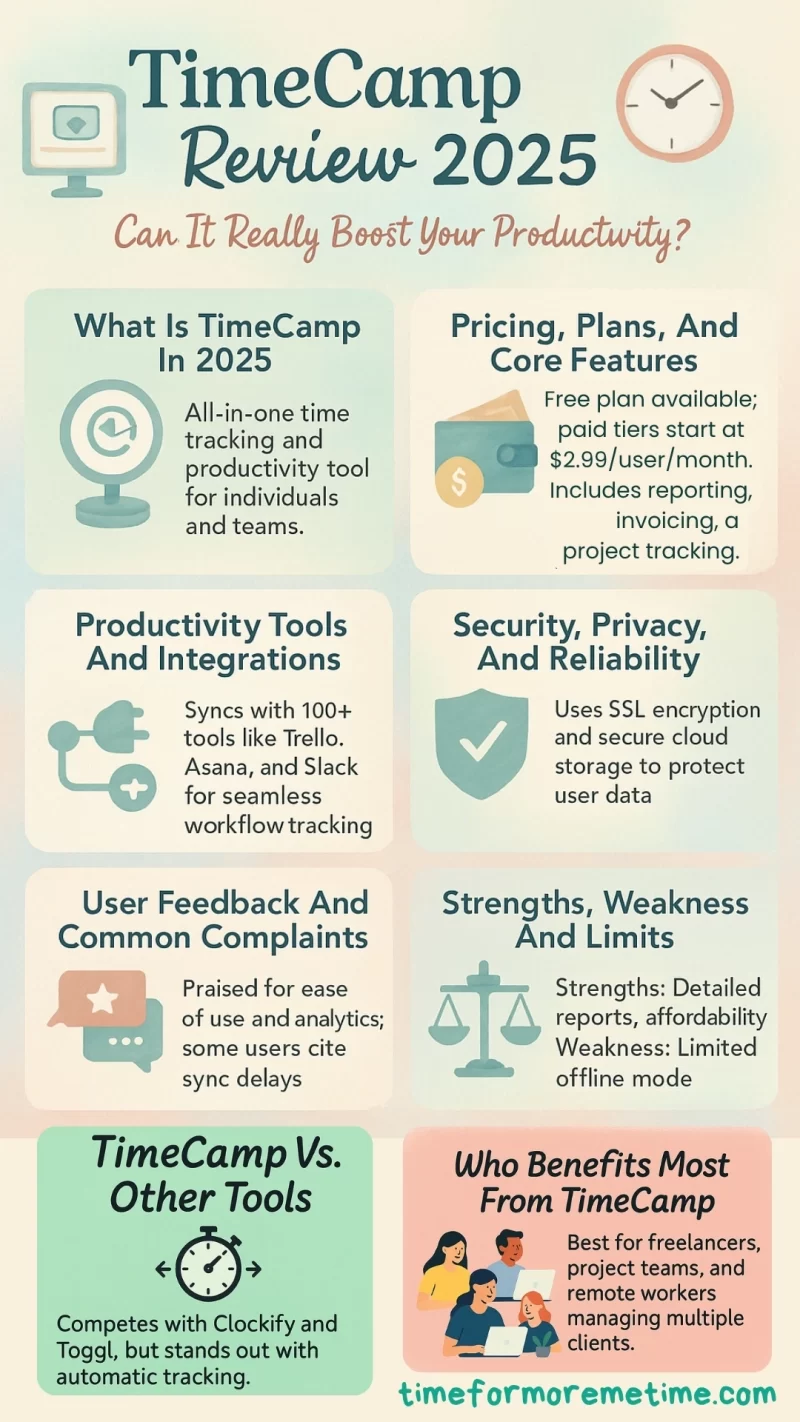
Tracking your time sounds simple, but when work piles up, it’s easy to lose track of where the hours go. That’s where productivity tools come in, especially for many teams and freelancers who rely on these tools to balance projects, clients, and productivity goals. Still, not every time tracker delivers the results it promises. So, can TimeCamp truly make a difference in how efficiently you work? Let’s get started!
What Is TimeCamp In 2025
TimeCamp is a time-tracking and productivity management tool designed for individuals, teams, and businesses. In 2025, it continues to stand out for its simplicity and automation. The platform automatically records work hours, categorizes tasks, and provides detailed reports on time spent. This makes it easier to spot inefficiencies and improve focus throughout the day.
Over the years, TimeCamp has evolved from a basic time tracker to a full productivity solution. It now supports remote and hybrid teams, giving users insight into both individual performance and overall project progress.
Pricing, Plans, And Core Features
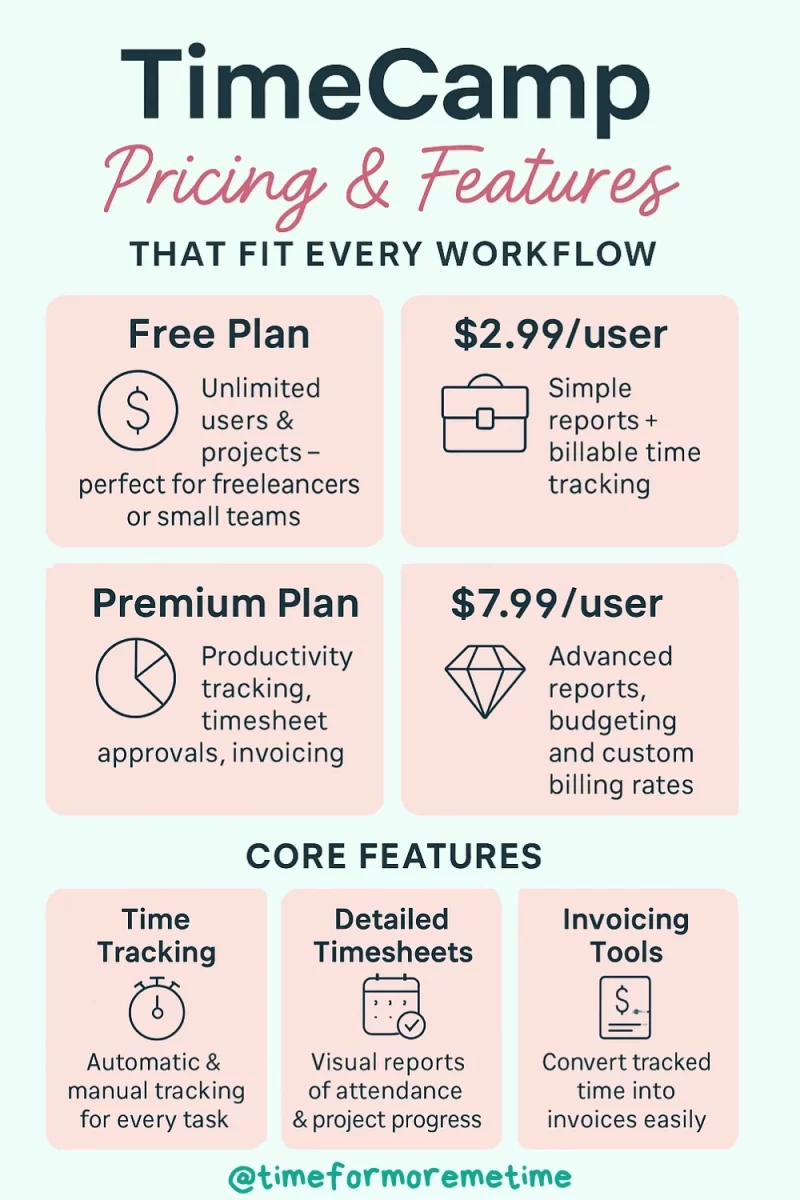
TimeCamp offers flexible pricing to fit different needs. The Free Plan supports an unlimited number of users and projects, making it ideal for freelancers or small teams just starting out.
The Starter Plan costs $2.99 per user per month, providing simple reports and billable time tracking. If you want to add team productivity tracking, timesheet approvals, and invoicing, you can avail of its Premium Plan for $4.99 per user per month. Meanwhile, the Ultimate Plan, priced at $7.99 per user per month, unlocks advanced reporting, budgeting, and custom billing rates.
Core features include automatic and manual time tracking, detailed timesheets, and invoicing tools. The platform also enables users to track attendance and establish productivity goals. With transparent pricing and scalability, TimeCamp makes it easy to find a plan that fits any workflow.
Productivity Tools And Integrations
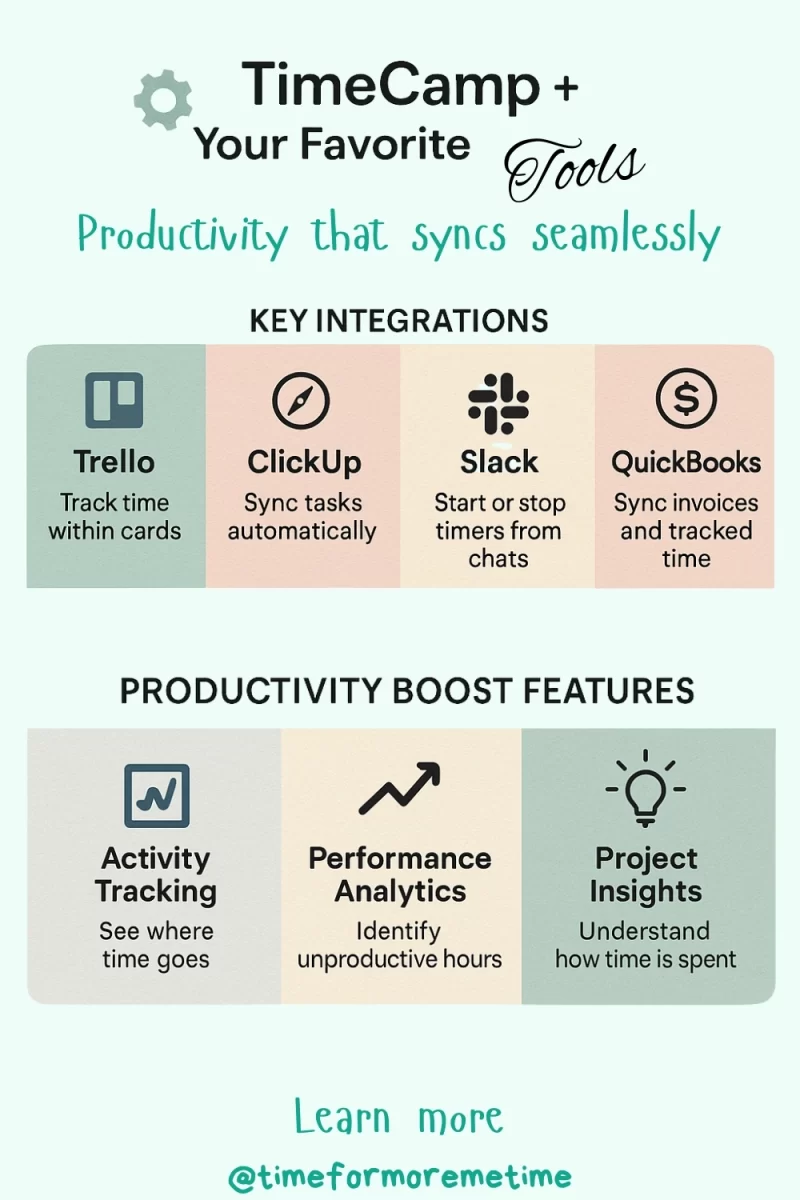
What makes TimeCamp especially valuable in 2025 is its seamless integration into existing workflows. It integrates with popular tools like Trello, ClickUp, Slack, Asana, and QuickBooks, letting teams track time directly within the platforms they already use.
Beyond integration, TimeCamp enhances productivity through activity tracking and performance analytics. Teams can identify unproductive hours, track project budgets, and generate reports that highlight where time can be better spent. These insights make it more than just a timer—it becomes a strategic tool for improving focus and efficiency across every level of work.
Security, Privacy, And Reliability
TimeCamp takes security seriously, ensuring that users’ data is protected through encryption, secure servers, and regular system updates. It complies with GDPR standards, giving users control over how their information is stored and used. Two-factor authentication and permission-based access add an extra layer of protection for teams managing sensitive projects.
In terms of reliability, TimeCamp maintains high uptime and stable performance across devices. Its cloud-based design allows users to track time seamlessly from desktop or mobile, even when switching between projects. These features give users confidence that their productivity data remains private and accessible when needed.
User Feedback And Common Complaints
In 2025, TimeCamp continues to receive positive reviews for its clean interface, accuracy, and automation. Many users praise the ease of integration with other apps and the ability to generate detailed reports without manual effort. Teams also appreciate the visibility it provides into work habits, helping them plan time more effectively.
However, not all experiences are flawless. Some users mention occasional syncing issues between devices or delays in data refresh. A few also report slower customer support response times during peak periods. While minor, these drawbacks highlight areas where TimeCamp could further enhance the user experience.
Strengths, Weaknesses And Limits
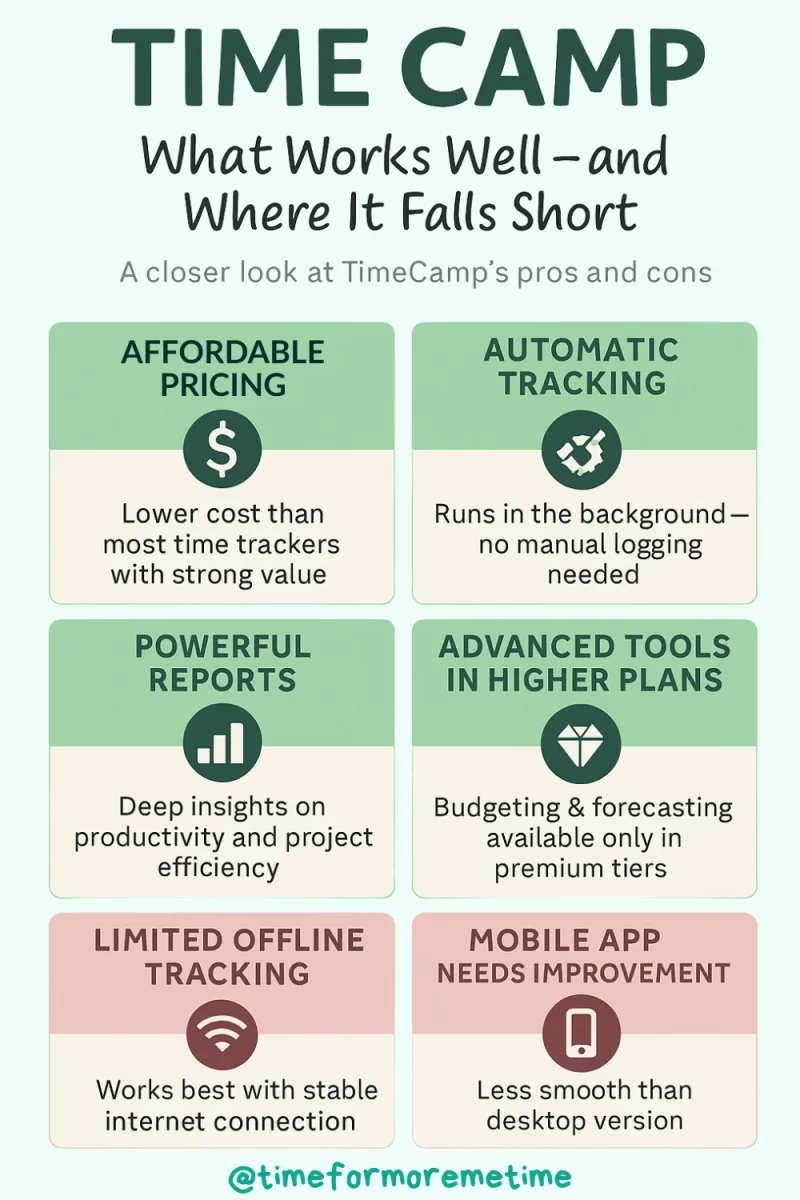
TimeCamp’s strengths lie in its affordability, automatic tracking, and deep reporting features. It’s flexible enough for freelancers yet powerful enough for businesses that manage multiple clients and projects. The wide range of integrations also makes it easy to fit into existing workflows.
Still, there are limitations. Offline tracking remains basic, and mobile functionality is sometimes less smooth than the desktop version. Some advanced features, such as budget forecasting, are only available with higher-tier plans. Despite these constraints, TimeCamp remains one of the most reliable and cost-effective tools for managing time and improving productivity in 2025.
TimeCamp Vs. Other Tools
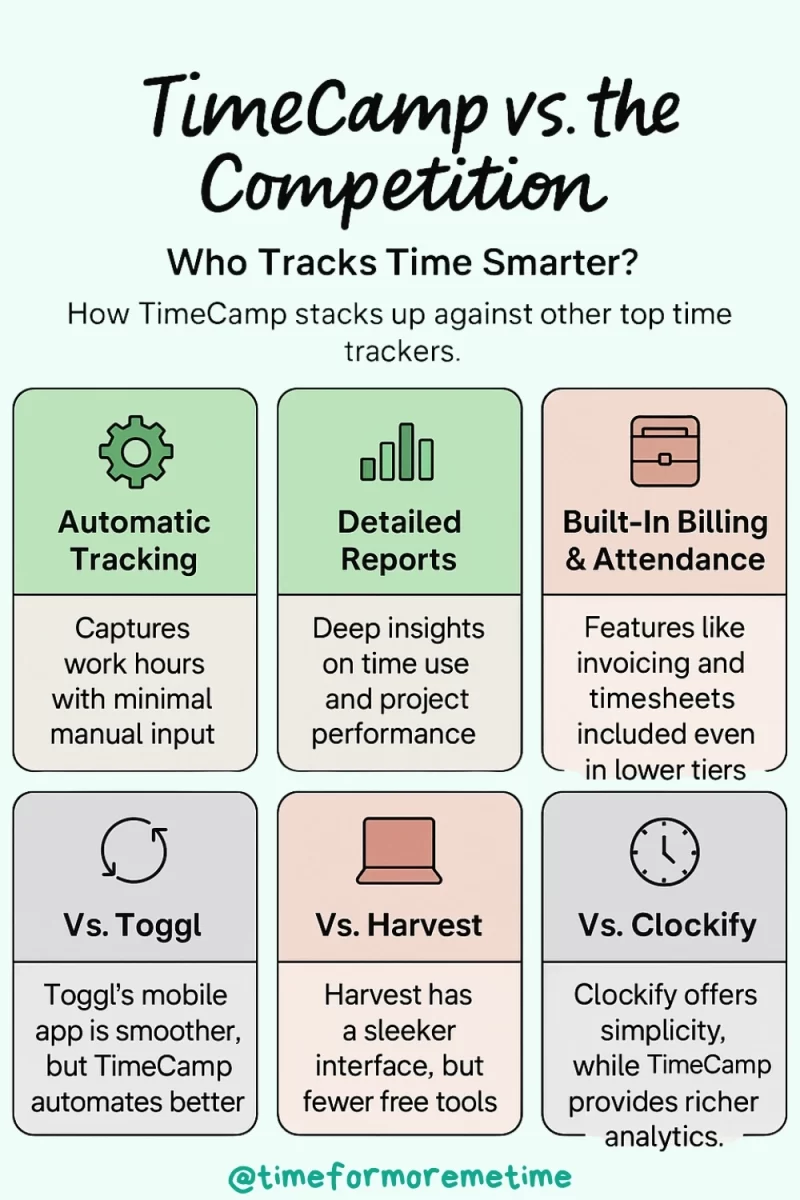
Compared to competitors like Toggl, Harvest, and Clockify, TimeCamp offers one of the best balances between affordability and functionality. Its automatic time tracking and detailed reporting stand out, while other tools often require more manual input. TimeCamp also includes attendance tracking and billing tools that some rivals only offer in higher-priced tiers.
However, TimeCamp’s mobile app can feel less polished than Toggl’s, and its interface, while clear, isn’t as modern as Harvest’s. Despite this, its wide integration support and generous free plan make it a strong contender among productivity and time-tracking tools in 2025.
Who Benefits Most From TimeCamp
TimeCamp is best suited for freelancers, small teams, and agencies that need a reliable way to manage time across projects. Freelancers can track billable hours effortlessly, while managers can monitor team productivity and allocate resources efficiently. It’s also ideal for businesses that work with multiple clients and need to generate detailed reports for invoicing and budgeting.
However, larger enterprises or field-based teams may find it less tailored to their complex needs. For digital and hybrid teams, though, TimeCamp offers a balance of automation, simplicity, and insight that makes it a dependable productivity partner.
Verdict: Can TimeCamp Boost Productivity?
TimeCamp shows that managing time well isn’t just about counting hours—it’s about working smarter. With its automation, flexible features, and insightful reports, it enables users to make better decisions and achieve measurable productivity gains. While not flawless, its balance of simplicity and depth makes it a solid tool for anyone aiming to stay focused and organized in 2025.
If you want more reviews on time management tools, subscribe to our blog, follow us on social media, and visit our YouTube channel. Here, you’ll get honest product reviews and smart tools that make managing work and life easier.
Source
- Pexels: energepic.com