


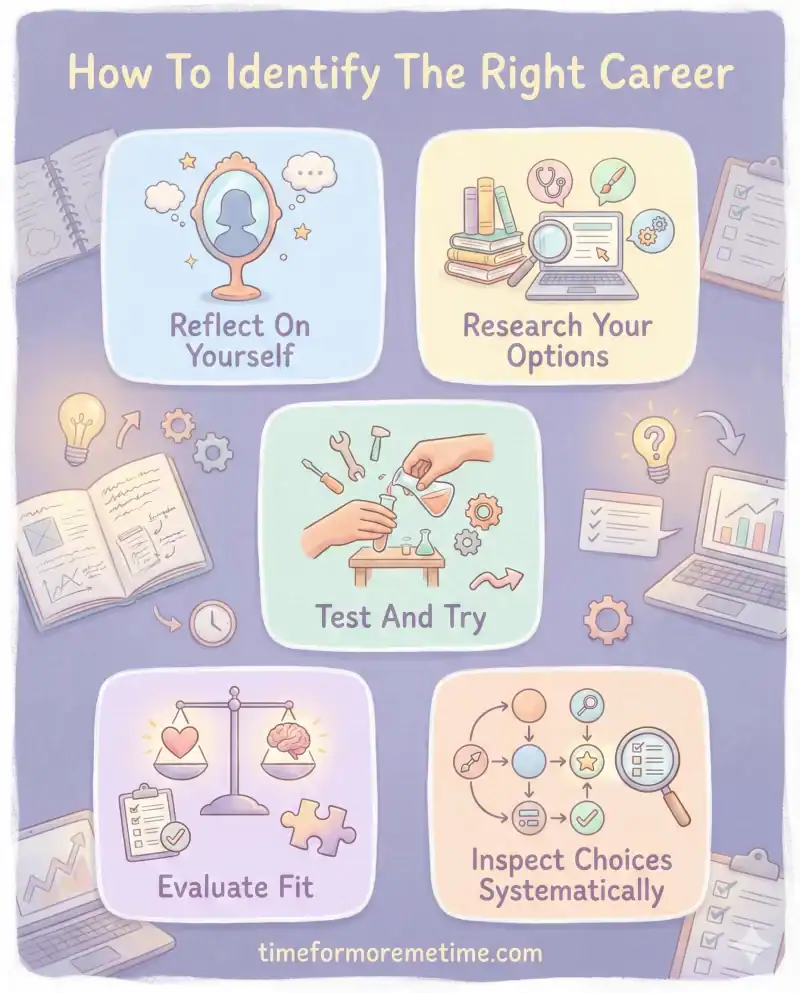
Finding the right career can be tough when you’re unsure about your strengths and passions. Many people take years to find the right job and often change careers multiple times before feeling satisfied. If you’ve ever wondered if you’re on the right path, know that you can gain clarity with a clear plan.
I’ve had moments when I wasn’t sure if my job matched my true abilities or was just what others expected. Early in my career, I took roles that left me exhausted and unhappy. Then, when my grandmother was diagnosed with cancer, I realized what I wanted to do: become an oncologist.
Back then, I had no money and I was already in my 30s. Because of this, while I wanted to be an oncologist, I chose to become a dosimetrist instead. That decision brought me fulfillment and helped me see it was the right career for me.
I don’t see myself as lucky to know my calling, especially since it took someone suffering for me to realize it. After spending a decade learning about this, I’ve gathered valuable insights on how to find the right career. Let me share what I learned. Let’s get started!
1. Reflect On Yourself
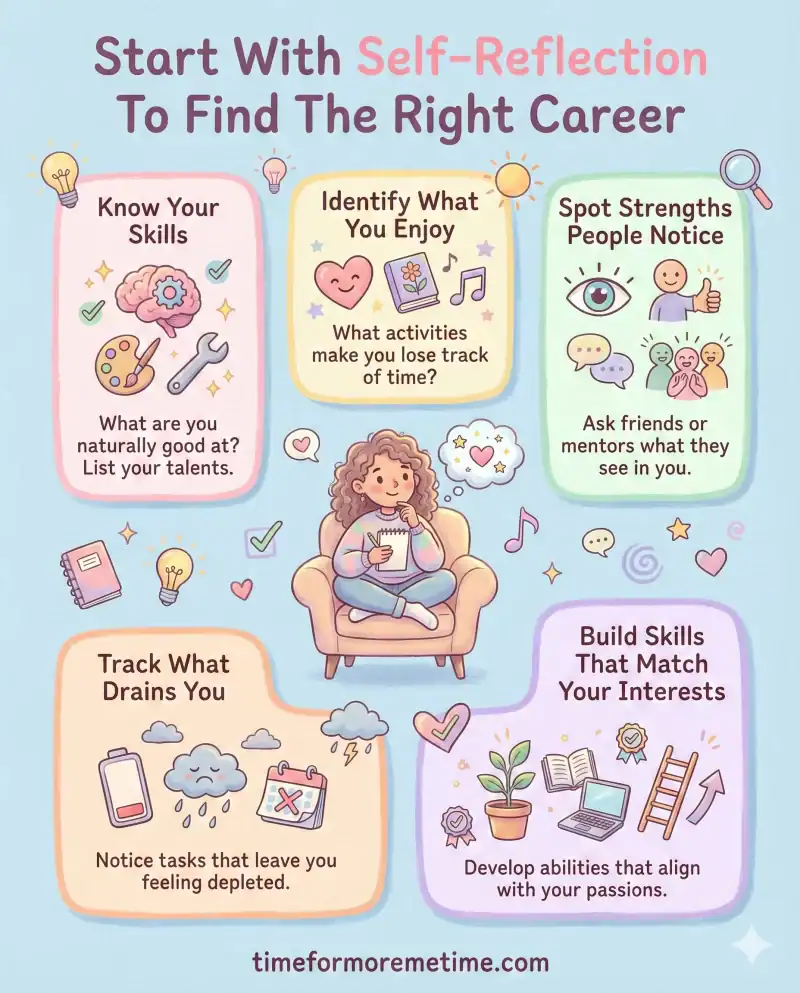
Identifying the right career begins with understanding yourself. It means knowing your skills, interests, personality, and values. I once listed the tasks I enjoyed and those I dreaded and realized that half my dream job ideas were built on others’ expectations rather than what genuinely fulfilled me.
If you’re unsure where to start, look at what you enjoy doing and where others often praise your results—your strengths and weaknesses tend to appear there. Personality tests can offer clues, but should only guide you alongside real-life experiences.
List what excites you and what drains you for 15 minutes this week to gain the insight needed for your next career move. And if your skills don’t yet match your interests, that’s okay. You can build them over time or pivot toward areas where you already shine.
Career experts describe values, interests, and skills as the three legs of a sturdy career foundation. if one is weak, the structure won’t stand for long. Taking time to reflect deeply gives you clarity and direction that no job title alone can provide.
2. Research Your Options
Exploring multiple career possibilities increases your chances of finding a path that fits your strengths and interests. Start by listing potential careers, learning what each requires. It maybe education, responsibilities, and growth opportunities. Then narrow your list to the ones that genuinely excite you. I once explored fifteen different roles I hadn’t considered before, and those experiments revealed skills I still rely on today.
When you begin researching, keep your search broad enough to compare at least ten to twenty possibilities before focusing on one. Reliable information can come from the Bureau of Labor Statistics (BLS) or professional groups that outline tasks, salaries, and job outlooks. Salary matters, but the best choice balances income with personal satisfaction, flexibility, and long-term growth.
Research from Yale’s Office of Career Strategy shows that people who follow a step-by-step process can make more confident career decisions. That proves choosing a career evolves as you explore and learn. Try expanding your search this week by browsing new roles or talking to people in different fields to see what sparks genuine interest.
3. Test And Try Before You Commit
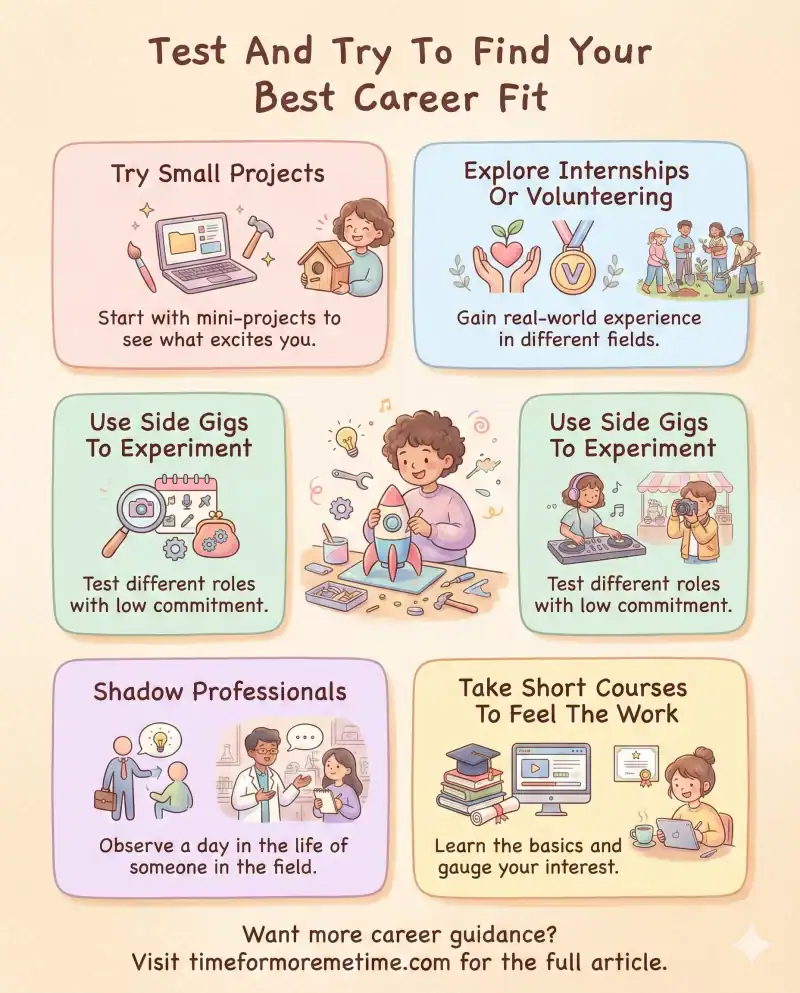
The right career often reveals itself through experience. Try internships, volunteering, or short projects to see what aligns with your strengths and values.
If you’re wondering whether you must quit your current job to explore something new, the answer is no. You can test ideas through part-time work, side projects, or informational interviews while staying employed. Career coaches often recommend small experiments first because they provide clarity without risking stability.
Many professionals who test out different roles before making a career change found out that they’re more satisfied in the long term. That’s because hands-on experience provides proof of fit, while pure theory invites second-guessing. This week, try shadowing someone in your field of interest or take a short online course to see how it feels in practice.
4. Evaluate Fit And Make The Decision
Choosing the right career means balancing your personal goals with practical realities. Think about how each option aligns with your values, income needs, and lifestyle priorities. I once compared two roles I loved, but one demanded travel that clashed with my long-term plans, so I chose the one that supported my ideal routine.
If you’re unsure how to evaluate fit, start by making a simple must-have and deal-breaker list. Ask yourself whether the job’s workload, culture, and growth potential fit the life you want. Reports show that jobs in fields that match both skills and interests lead to higher satisfaction and better retention.
Remember that a great career needs to be the most sustainable for you. If a job looks perfect on paper but drains your energy, it’s probably not the right match. Take your time to review what truly matters so your decision feels confident, not rushed.
5. Inspect Career Choices Systematically
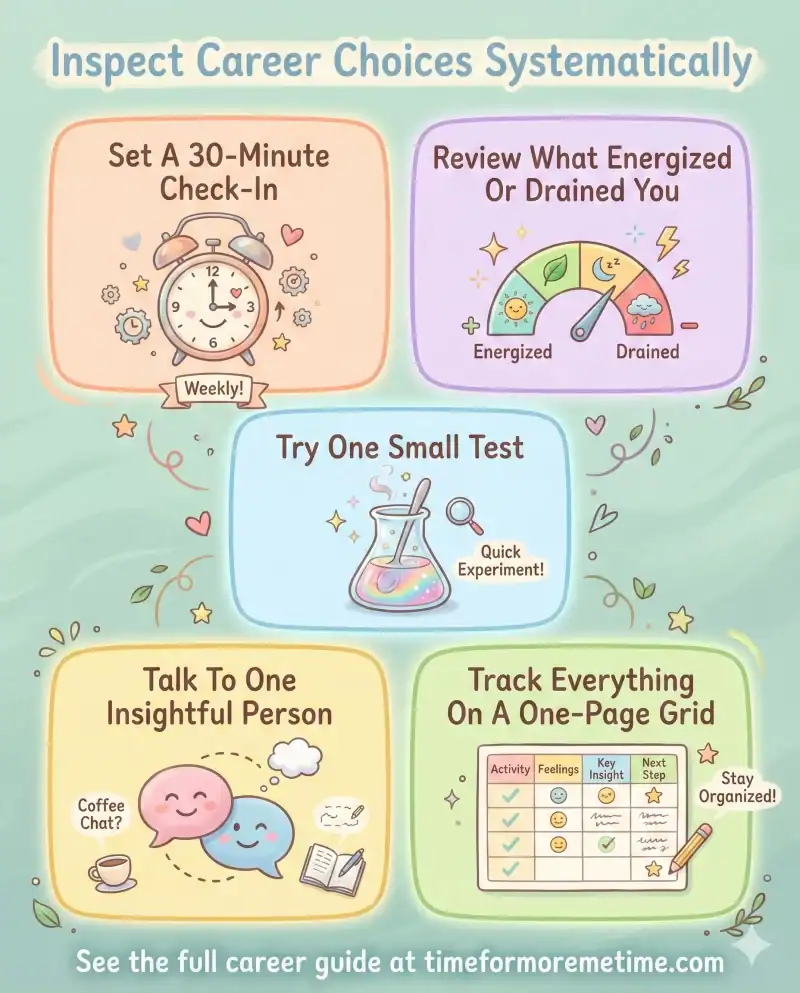
Turn your career uncertainty into simple, repeatable steps. Set aside 30 minutes every two weeks to focus on three items: what you learned, one small test to try, and one person to talk to. Afterward, review what energized you and what drained you. Use a one-page grid with columns for Learn, Test, People, and Fit to keep it organized and easy to track.
Several friends who were lost in their careers used this method, and it helped them find clearer direction in just two months. Short, low-risk experiments reveal preferences much faster than overthinking. This approach keeps you moving without needing a huge leap.
I like this method because it builds on what you’ve already done in a way that you can maintain. It’s different from typical career lists because it creates a system you can actually follow. When you build momentum over a few months, your doubt starts to fade away.
Conclusion
Finding the right career is about small, intentional steps that lead you closer to work that truly fits who you are. When you reflect, research, test, and evaluate with purpose, every step builds clarity and confidence in your direction.
To receive more practical career tips, subscribe to our blog, follow us on social media, and visit our YouTube channel for insightful videos that help you grow with purpose.
Source
- Photo: Pexels: Ron Lach